
Geneva II: Lavrov, “No Deal With Terrorists Under Any Circumstance”
nsnbc international
Jan 26, 2014
Christof Lehmann (nsnbc) : Russia’s Foreign Minister Sergei Lavrov has emphasized Russia’s red line with regards to terrorism, saying that “a dialog with terrorist groups fighting in Syria will not be held under any circumstance”. Iran’s President Hassan Rouhani backed up Russia’s position in an interview on CNN, saying that “the first step for solving the crisis in Syria lies in expelling terrorists”. Meanwhile, UN/AL envoy to Syria, Lakhdar Brahimi has held talks with both the Syrian government’s and the foreign-backed opposition and indicates that talks continue in Geneva on Monday.
 In February 2013 a US veto to a Russian sponsored UN Security Council resolution, condemning all forms of terrorism, regardless by whom and under which circumstances they are being committed, threw the two partners for peace into a state of diplomatic deep freeze.
Rusia drafted the resolution, following a devastating terrorist attack in Damascus, and Lavrov responded to the US veto by blasting the US administration for double standards.
On Sunday, in Geneva, the Russian Foreign Minister underlined Russia’s red line with regards to terrorism, saying:
“A dialog with terrorist groups fighting in Syria will not be held under any circumstance. … We refuse holding a dialog with terrorist groups, it is against our principles, and we wouldn’t advise others to do that. … The negotiation process has no room for groups like Jabhat al-Nusrah, the Islamic State of Iraq and al-Sham (ISIS), and other branches of the al-Qaeda organization. … Finding a solution for the humanitarian crisis in Syria will be sure to promote confidence in the Geneva II negotiations”.
Sergei Lavrov recalled the words of the British Prime Minister, David Cameron, at the 2013 G8 summit in Northern Ireland, when Cameron called for addressing the Syrian government and the opposition for cooperation in eradicating terrorism from Syria.
Lavrov emphasized, that considering the scale of the terrorism that is endemic to Syria and Iraq, the eradication of it must be considered a prime priority. Without mentioning the United States in particular, the Russian Foreign Minister deconstructed recent attempts of the US administration to position certain of the terrorist organizations as good or moderate and worth supporting, while positioning others as radical and extremist, by including both the ISIS and “any other al-Qaeda brigades” in his denunciation of terrorism.
NSA Able to Target Off-Line Computers Using Radio Waves
 by Chris Carrington
Activist Post
Jan 15, 2014
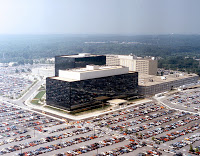
A report by RT states that the NSA has implanted software in computers around the world that enables them to use surveillance of those machines even when they are off-line.
According to the report:
The secret technology uses covert radio waves transmitted from small circuit boards and USB cards clandestinely inserted into targeted computers, The New York Times reported. The waves can then be sent to a briefcase-sized relay station intelligence agencies can set up just miles away, according to NSA documents, computer experts and US officials.
The radio frequency technology – which often needs to be physically inserted by a spy, manufacturer or unwitting user – has helped US spies access computers that global adversaries have gone to great lengths to protect from surveillance or cyber-attack.
The NSA calls use of the infiltration software and radio technology – all part of a program known as Quantum -“active defense”against cyber-attacks, though it has condemned use of similar software by Chinese attackers against American companies or government agencies.
“What’s new here is the scale and the sophistication of the intelligence agency’s ability to get into computers and networks to which no one has ever had access before,”James Andrew Lewis, cyber security expert at the Center for Strategic and International Studies in Washington, told The Times.“Some of these capabilities have been around for a while, but the combination of learning how to penetrate systems to insert software and learning how to do that using radio frequencies has given the U.S. a window it’s never had before.”
Russia and China have been frequent targets of the technology, as have Mexican authorities and drug cartels.
Edward Snowden has released documents showing the locations of around 100,000 implanted computers around the globe, and last month Der Spiegel published details of the NSA ANT product data.
 (Image from spiegel.de)
The NSA maintains that the implanted systems gives an early warning of cyber attacks aimed at the US…something that many technology experts say is not strictly true.
The debacle over the NSA and its techniques has circled the globe, and there’s no sign yet that the firestorm of accusation against the department is going to stop anytime soon.
Chris Carrington is a writer, researcher and lecturer with a background in science, technology and environmental studies. Chris is an editor for The Daily Sheeple, where this first appeared. Wake the flock up!
New Hampshire House Passes Recreational Pot, Legalization Unlikely
 by Elizabeth Renter
Natural Society
Jan 25, 2014
Last week, the New Hampshire House gave preliminary approval to legalize recreational pot. And though the measure isn’t likely to become law, with a state Senate opposed to ending marijuana prohibition, the passage by the House marks a significant step and a sign that things are changing.
The bill is reportedly modeled by those in Washington and Colorado and would allow people to possess up to one ounce of marijuana. It would tax and regulate pot and also allow citizens to grow a total of six plants.
The first attempt to pass the measure failed, with two lawmakers tipping the scales to the opposing side. Only an hour later, they tried again and the bill passed 170-162, according to AlterNet. The House voted 170-162 after a 2 ½-hour heated debate to send the bill to its tax committee to review before taking a final vote.
The France reorganized its military presence in the Sahel around four bases

StratRisks
Jan 26, 2014
This is a huge field of operations as large as Europe, but almost entirely desert. “Armed terrorist groups” (GAT, according to military acronym) that travel does not know national boundaries, with a line drawn by former colonial administrations in the middle of … nothing. As his enemies, the French army, which is at the forefront in the war against the jihadists in the Sahel, decided to abstract these boundaries. To this end, the Ministry of Defence in depth reorganizes its military presence in Africa.This “regionalization of the Sahel” is being implemented: no ads mirobolantes but a discrete adjustment work here are the highlights.
Everything starts with an analysis of the threat after defeating – but not entirely removed – TGA in northern Mali in the first half of 2013, the French army and intelligence services, not surprisingly, found that these were, in part, scattered in neighboring states. Particularly in the south-western Libya, where has been a real “safe black hole” in the Fezzan around the triangle Oubari-Sebha-Mourzouk. It is from this base that the jihadists back back north Mali – nineteen of them were killed during a special operation in December – and Niger, where a significant terrorist act has recently been thwarted. The GAT borrow a line more than a thousand kilometers, after the pass of El Salvador, following the border between Niger and Algeria. The tracks also borrowed going well on the Algerian territory that Nigerian. France’s strategy is to cut the jihadists their rear base in Libya, where it is impossible to speak openly.
For the French military, three states in the region now form a single theater Mali, Niger and Chad.Their three governments involved in the fight against terrorism and cooperate with France.
In the region, France will have four main bases: N’Djamena (Chad), Niamey (Niger), Gao (Mali) and Ouagadougou (Burkina Faso). A N’Djamena: combat aircraft Rafale and Mirage 2000, supported by tankers and ground forces – and the staff who will control operations in the Sahel. In Niamey, intelligence assets, including two new Reaper drones purchased in the United States and will be operational in the coming days. These monitoring devices controlled from the ground in Niamey are collocated with those of the U.S. Air Force. This base can also accommodate combat aircraft and Atlantique 2 maritime patrol, used both above the desert of the ocean. In Gao, land forces, with a large helicopter detachment. Finally, more discreetly, in Ouagadougou, the group of special forces Sabre operates throughout the area from the rear base. These four main bases, the French army will add support points further north, that is to say, closer to possible interception areas of terrorist groups. Two of them were chosen: Tessalit, in the far north of Mali, and Faya-Largeau in northern Chad. Another is still being sought in the north-eastern Niger, knowing that special forces are already present in the Arlit mining (northwest) area. These support points must have airstrip, even briefly, for depositing light vehicle or implement helicopters. Not to mention the collection of intelligence, human or electronic … In total, this device in the Sahel mobilize 3,000 French soldiers permanently with air assets nearly thirty aircraft (fighter, transport, helicopters, drones, etc).
The whole of this new device, which has not received baptism generic name, will be supported by three rear bases in Africa: Dakar (Senegal), Abidjan (Côte d’Ivoire) and Libreville (Gabon). To compensate for the rise in the Sahelian zone, the number of Dakar and Libreville and those of Djibouti will be revised downwards. The abandonment of Abidjan, a time considered, is no longer valid, quite the contrary. Logistical role is even considered as a priority towards the Sahel. Djibouti, turned to another theater of operations – including Somalia – will see its numbers continue to decline.Relations between France and Djibouti government are no longer what they were … A regiment, the 13th DBLE has already left the country to settle in the United Arab Emirates.
In total, about 6,000 French soldiers who remain active in Africa, permanently, half the Sahel. That’s a lot. More so than any other Western country. The idea to withdraw from the continent, caressed in the drafting of the previous White Paper of Defence (2008), fizzled. France remains more than ever, a permanent African military power far beyond operations decided by François Hollande, Serval Sangaris Mali and the Central African Republic.
[…CONTINUE READING THIS ARTICLE]
[h/t: MediaMonarchy]
Illinois proposes ‘legalizing’ medical marijuana as long as patients surrender Second Amendment rights
 by L.J. Devon, Staff Writer
Natural News
Jan 25, 2014
(NaturalNews) Lawmakers from the state of Illinois have proposed new medical marijuana rules that coerce patients to surrender their Second Amendment right in the application process.
The new medical marijuana “legalization” bill requires Illinois citizens to undergo a background check, be fingerprinted and pay an additional $150 fine for using marijuana for medical purposes.
On top of that and most disturbing of all, Illinois citizens will also be required to sign away their right to own a firearm in the application process.
Personal liberty and responsibility has become a dead idea in the state of Illinois, as the right to bear arms becomes a perishable right dictated through laws regulating strict control of a plant.
Illinois forcing citizens to give up their guns if they want medical pot
Under the new rules, people who want to treat themselves with something other than dangerous pharmaceutical drugs will be required to give up their guns in the process.
Both caregivers and patients will be required to surrender their firearms, and any state-approved FOID cards or concealed carry permits. According to the proposal, state police will be in charge of enforcing the gun control sanctions.
Moreover, the Department of Agriculture will be enlisted to develop rules for cultivation centers, and the Illinois Department of Financial and Professional Regulation will be employed to draw up rules for dispensaries. More power to the state!
The plan also dictates the reasons for which caregivers can prescribe cannabis, outlining 41 specific medical conditions that pre-qualify patients to seek a patient registry medical marijuana ID card. The ID card will permit approved patients access to 2.5 ounces of medical marijuana every two weeks, to be administered by a certified caregiver.
Isn’t it strange how the state limits the potential of a plant but turns a blind eye toward the mass distribution, destruction, and death coming from many pharmaceutical drugs?
Regulations like these encourage continual, exaggerated health complaints
Additional rules require that patients be at least 18 years old and have a “bona fide” relationship with their caregiver. The caregiver will be required to certify a patient’s medical condition. This may inevitably encourage many people to exaggerate their medical condition while caregivers overprescribe just so users can get a recreational high. This will weaken entire defenseless generations who have given up their Second Amendment right just to get high. Regulations like these will make users more likely to mentally fabricate and overstate their “medical condition” just to “legally” obtain pot.
Breakthrough allows scientists to watch how molecules morph into memories (w/ video)
medicalxpress.com
Jan 23, 2014

Credit: Albert Einstein College of Medicine
In two studies in the January 24 issue of Science, researchers at Albert Einstein College of Medicine of Yeshiva University used advanced imaging techniques to provide a window into how the brain makes memories. These insights into the molecular basis of memory were made possible by a technological tour de force never before achieved in animals: a mouse model developed at Einstein in which molecules crucial to making memories were given fluorescent “tags” so they could be observed traveling in real time in living brain cells.
Efforts to discover how neurons make memories have long confronted a major roadblock: Neurons are extremely sensitive to any kind of disruption, yet only by probing their innermost workings can scientists view the molecular processes that culminate in memories. To peer deep into neurons without harming them, Einstein researchers developed a mouse model in which they fluorescently tagged all molecules of messenger RNA (mRNA) that code for beta-actin protein – an essential structural protein found in large amounts in brain neurons and considered a key player in making memories. mRNA is a family of RNA molecules that copy DNA’s genetic information and translate it into the proteins that make life possible.
“It’s noteworthy that we were able to develop this mouse without having to use an artificial gene or other interventions that might have disrupted neurons and called our findings into question,” said Robert Singer, Ph.D., the senior author of both papers and professor and co-chair of Einstein’s department of anatomy & structural biology and co-director of the Gruss Lipper Biophotonics Center at Einstein. He also holds the Harold and Muriel Block Chair in Anatomy & Structural Biology at Einstein.
In the research described in the two Science papers, the Einstein researchers stimulated neurons from the mouse’s hippocampus, where memories are made and stored, and then watched fluorescently glowing beta-actin mRNA molecules form in the nuclei of neurons and travel within dendrites, the neuron’s branched projections. They discovered that mRNA in neurons is regulated through a novel process described as “masking” and “unmasking,” which allows beta-actin protein to be synthesized at specific times and places and in specific amounts.

 PN
PN 