HIGHLY POTENT NEWS THAT MIGHT CHANGE YOUR VIEWS

Author Archive

VIDEO — Violence as Bangladeshi Islamists demand execution of blasphemers

Russia Today
May 5, 2013

Several people were injured after hardline Islamic activists calling for the enactment of an anti-blasphemy law clashed with Bangladesh police. The Bangladeshi government has rejected the demand, saying the country is governed by secular liberal laws. Hefajat-e-Islam, a newly formed group, organised the protest. “The main aim of this protest is to press for the implementation of the 13-point demand by Hefajat-e-Islam as per the direction of the Quran,” said Hefejat activist Hossain Soliman Abdullah. The protesters also rallied against bloggers who support secularism, and demanded capital punishment for them.

RT LIVE http://rt.com/on-air

Subscribe to RT! http://www.youtube.com/subscription_c…

Like us on Facebook http://www.facebook.com/RTnews
Follow us on Twitter http://twitter.com/RT_com
Follow us on Google+ http://plus.google.com/+RT

RT (Russia Today) is a global news network broadcasting from Moscow and Washington studios. RT is the first news channel to break the 500 million YouTube views benchmark.


Unprovoked Attack on Syria: US-backed Israel Commits Egregious International Crime

by Tony Cartalucci
Land Destroyer

The US feigns disassociation with Hitlerian act of Israeli aggression – as was planned since 2007.

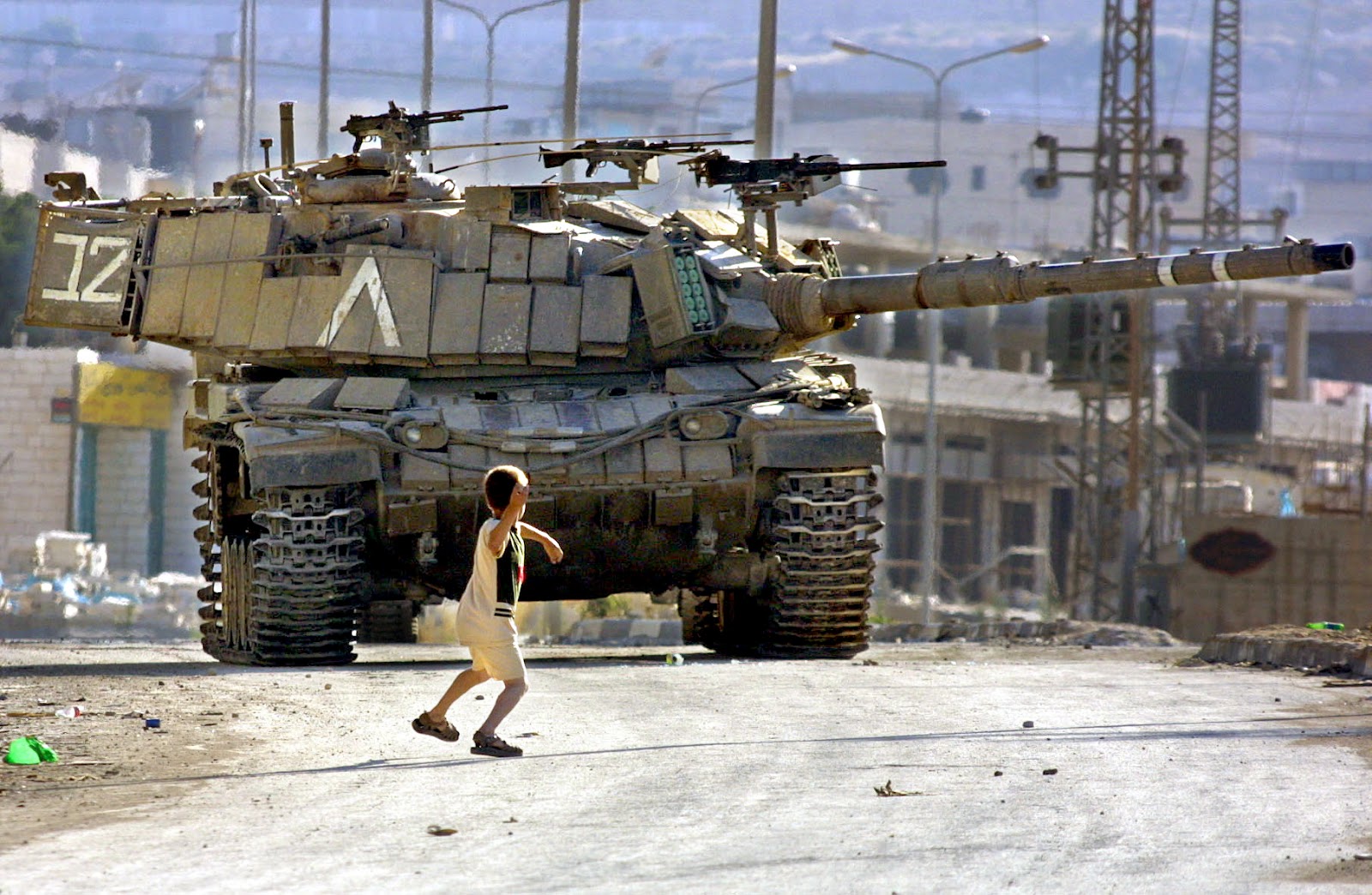
Image: The West has carefully cultivated Israel into “regional bully.” Immune from international condemnation, it is now being used to commit egregious war crimes against neighboring Syria, in hopes of provoking a retaliation and giving the US and its regional axis the justification it has long sought to militarily intervene.

….

May 5, 2013 (LD) – Unprovoked, Israel has attacked Syria numerous times over the past 2 days, including attacks on the Syrian capital of Damascus, in what appears to be a series of intentional provocations designed to drag the region into a wider conflict its US sponsors can then enter militarily. Neither attacked directly by Syria, nor able to cite credible evidence in regards to perceived threats Israel claims to be reacting to, the assault on Syria represents a Chapter VII breach of the United Nations Charter.

What’s more, is that while the US feigns disassociation with Israel’s breach of international peace, after jointly fueling a genocidal sectarian conflict within Syria’s borders for the past two years, it is documented fact that the US and Saudi Arabia planned to use Israel to conduct military attacks against Iran and Syria, they themselves could not justify politically, legally, or strategically.

What is now hoped is that Syria and Iran retaliate militarily, allowing the “other shoe to drop,” and for the US, UK, France, and their regional axis to directly intervene in Syria, and with any luck, Iran.

Insidious Ploy Engineered and Documented in 2007-2009

As early as 2007, it was reported that a US-Saudi-Israeli conspiracy to overthrow the governments of Iran and Syria by arming sectarian terrorists, many linked directly to Al Qaeda, was already set in motion. Pulitzer Prize-winning journalist Seymour Hersh in his 2007 New Yorker article, “The Redirection,” stated (emphasis added):

“To undermine Iran, which is predominantly Shiite, the Bush Administration has decided, in effect, to reconfigure its priorities in the Middle East. In Lebanon, the Administration has coöperated with Saudi Arabia’s government, which is Sunni, in clandestine operations that are intended to weaken Hezbollah, the Shiite organization that is backed by Iran. The U.S. has also taken part in clandestine operations aimed at Iran and its ally Syria. A by-product of these activities has been the bolstering of Sunni extremist groups that espouse a militant vision of Islam and are hostile to America and sympathetic to Al Qaeda.”

Of Israel and Saudi Arabia’s partnership it specifically stated:
“The policy shift has brought Saudi Arabia and Israel into a new strategic embrace, largely because both countries see Iran as an existential threat. They have been involved in direct talks, and the Saudis, who believe that greater stability in Israel and Palestine will give Iran less leverage in the region, have become more involved in Arab-Israeli negotiations.”

Additionally, Saudi Arabian officials mentioned the careful balancing act their nation must play in order to conceal its role in supporting US-Israeli ambitions across the region. It was stated even then, that using Israel to publicly carry out attacks on Iran would be preferable to the US, which would ultimately implicate the Saudis. It was stated:

“The Saudi said that, in his country’s view, it was taking a political risk by joining the U.S. in challenging Iran: Bandar is already seen in the Arab world as being too close to the Bush Administration. “We have two nightmares,” the former diplomat told me. “For Iran to acquire the bomb and for the United States to attack Iran. I’d rather the Israelis bomb the Iranians, so we can blame them. If America does it, we will be blamed.””

This ploy was further developed in 2009 by the Fortune 500-funded (page 19) Brookings Institution in their document, “Which Path to Persia?” In regards to Iran, and now clearly being utilized against Syria, the gambit was described as follows (emphasis added):

…it would be far more preferable if the United States could cite an Iranian provocation as justification for the airstrikes before launching them. Clearly, the more outrageous, the more deadly, and the more unprovoked the Iranian action, the better off the United States would be. Of course, it would be very difficult for the United States to goad Iran into such a provocation without the rest of the world recognizing this game, which would then undermine it. (One method that would have some possibility of success would be to ratchet up covert regime change efforts in the hope that Tehran would retaliate overtly, or even semi-overtly, which could then be portrayed as an unprovoked act of Iranian aggression.) ” –page 84-85, Which Path to Perisa?, Brookings Institution.

And:

“Israel appears to have done extensive planning and practice for such a strike already, and its aircraft are probably already based as close to Iran as possible. as such, Israel might be able to launch the strike in a matter of weeks or even days, depending on what weather and intelligence conditions it felt it needed.  Moreover, since Israel would have much less of a need (or even interest)  in securing regional support for the operation, Jerusalem probably would feel less motivated to wait for an Iranian provocation before attacking. In short, Israel could move very fast to implement this option if both Israeli and American leaders wanted it to happen.

However, as noted in the previous chapter, the airstrikes themselves are really just the start of this policy. Again, the Iranians would doubtless rebuild their nuclear sites. They would probably retaliate against Israel, and they might retaliate against the United States, too (which might create a pretext for American airstrikes or even an invasion).” page 91, Which Path to Perisa?, Brookings Institution.

And Israel not waiting for a plausible justification to attack Syria is exactly what has just happened. It should also be noted in particular, the last paragraph which gives insight into what the US-led axis plans to do after this egregious international crime – that is – to incrementally engulf the region into a conflict it finally can justify its own entry into open military aggression.

What Should Syria and its Allies Do? 

Syria, Iran, Russia and other nations that support the besieged nation most certainly were aware of the Brookings document “Which Path to Persia?” and familiar with this strategy. It would be hoped that anything of value that the Israelis would seek to attack in order to provoke a much desired retaliation and subsequent war, would have been provided additional protection, or moved entirely out of range of potential Israeli attacks.

A media campaign to illustrate the hypocritical and very revealing convergence between Al Qaeda (the so-called Free Syrian Army or FSA) and Israeli interests would undermine whatever remaining support the battered and failing Western-backed terror campaign inside Syria may still have.

Additionally, Israel’s selection by the US to carry out this attack was done specifically because Israel has long-ago exhausted its international legitimacy. What it is doing in Syria is a blatant international crime, in direct violation of international law. Currently, Syria and its allies hold the moral high ground against an enemy who is no longer fooling the world. If it is calculated that Syria can survive Israel’s unprovoked brutality, it would be best to do little or nothing, and incur internationally the same outrage that accompanies Israel’s brutality against the Palestinians.

In light of the US using Israel as its proxy against Syria, should Syria and its allies retaliate, it would be best to do so through any proxies they themselves have at their disposal. Just as Hezbollah and the Palestinians now routinely defeat Israel both strategically and politically, Syria now faces an opportunity to do so again, only on a much bigger scale.

The outrageous actions of Israel, the despicable double-game the US attempts to play by feigning disassociation with its regional beachhead in Tel Aviv, and the silent complicity of the UN, has people around the world desperately seeking retaliation from Syria, or Iran, or both. In reality, this is precisely what the West hopes to achieve – a wider conventional war in which they hold the advantage. By refusing to retaliate directly, Syria cripples the West politically, highlighting the unprovoked nature of their attacks on a nation they claim is a threat, yet fails to strike back even when its capital is under bombardment. By responding through its own plausibly deniable proxies, tactical and political pressure can be put on Israel to end its aggression.

It appears that the Western-backed terrorist front in Syria has been dealt a fatal blow and is in the process of complete collapse. The attack by Israel is a sign of desperation, seeking to expand a conflict that is about to end. Syria and its allies face difficult decisions and dangerous desperation in the coming days and weeks – with an axis of rogue states committing increasingly heinous atrocities in search of a response.



VIDEO — BREAKING: Isreali Rocket Attacks Hitting Damascus, Huge Explosions

YouTube — sofilianews
May 4, 2013

YouTube — D.C PULSTATION
May 4, 2013

RELATED LINKS:

[hat tip: What Really Happened]


VIDEO — Blatant Blitz: Israel bombs Syria, targets chem weapons depot?

Russia Today
 May 4, 2013

Israel has openly intervened in Syria for the second time this year, according to US officials. They say Tel Aviv has carried out another bombing run on a target inside Syria following a previous strike in January. RT gets reaction from Conn Hallinan, contributing editor for the U.S. think tank Foreign Policy in Focus and the latest from RT’s Middle East correspondent Paula Slier.

RT LIVE http://rt.com/on-air

Subscribe to RT! http://www.youtube.com/subscription_c…

Like us on Facebook http://www.facebook.com/RTnews
Follow us on Twitter http://twitter.com/RT_com
Follow us on Google+ http://plus.google.com/+RT

RT (Russia Today) is a global news network broadcasting from Moscow and Washington studios. RT is the first news channel to break the 500 million YouTube views benchmark.


Anti-drone protest in UK over domestic opening of Reaper control center

Russia Today
April 27, 2013

Edited time: April 28, 2013 16:29

[VIDEO]

Anti-war groups have held a protest at a UK airbase from which the country has begun controlling its fleet of assassination drones in Afghanistan. Previously, the remote pilots were deployed only in the US.

Four anti-war groups – including CND, the Drone Campaign Network, Stop the War and War on Want – are staging a nonviolent protest on Saturday over drone use by the Waddington base in Lincolnshire.

About four hundred peace campaigners marched from the city of Lincoln to RAF Waddington.

The British Royal Air Force (RAF) has opened drone control stations at the base located south of Lincoln this week to work in tandem with those already in place at Creech Air Force Base in Nevada. In 2010, the Ministry of Defence decided it needs the capability to remotely operate its armed drones from its own soil following a strategic security review.

Waddington is home to the new 13 squadron created for this purpose in October last year. The unit consists of about 100 personnel, including pilots, systems operators and engineers.

Together with the Nevada unit, the squadron will be remotely controlling UK’s drones, including the armed Reaper drones, which can drop laser-guided bombs and launch Hellfire missiles.

Image from twitter.com @ domlinley

“We aren’t flying any more operations than we were before, but with the time differences between the US, Afghanistan and the UK, it is now possible for pilots at Waddington to work in relay with the those in the US,” a source told the Guardian while explaining the rationale behind the new unit.

The UK deploys a relatively small, but still sizable, drone fleet in Afghanistan, mostly consisting of surveillance aircraft. There are five British Reapers deployed in the region, and the MoD plans to double that number this year.

Protesters expressed fears over the UK’s development of the drone program, which is marred by its association with its US counterpart. Washington uses CIA-operated drones in the targeted killings of suspected militants, which critics say results in an unacceptable number of civilian deaths and has shaky legal and moral grounds.

“Drones, controlled far away from conflict zones, ease politicians’ decisions to launch military strikes and order extra-judicial assassinations, without democratic oversight or accountability to the public,” Rafeef Ziadah, War on Want senior campaign manager said. “Now is the time to ban killer drones – before it is too late.”

The British military insist that their use of drones saves soldiers’ and civilians’ lives, and is no different from that of piloted aircraft.

“UK Reaper aircraft are piloted by highly trained professional military pilots who adhere strictly to the same laws of armed conflict and are bound by the same clearly defined rules of engagement which apply to traditionally manned RAF aircraft,” an MoD spokesman said.

Image from twitter.com @ CNDuk


The Return of ACTA: U.S. Dictating Canada’s Intellectual Property Laws

by Dana Gabriel
Be Your Own Leader

April 22, 2013

In March, the Canadian government introduced a bill that would bring about sweeping changes to its copyright and trademark laws. This includes giving more power to customs and border protection agents without any judicial oversight. The move is intended to prevent counterfeit goods from entering the country, but has been criticized for being less about protecting Canadians and more about caving to American demands. With the U.S. dictating global intellectual property standards, the new legislation represents the return of ACTA and would pave the way for Canada to ratify the controversial international treaty.

Over the years, the U.S. has been critical of Canada’s efforts in addressing trade in counterfeit goods and has been pressing for intellectual property reform. In the 2009 United States Trade Representative (USTR) Special 301 Report, Canada was placed on a priority watch list of countries that do not provide adequate intellectual property enforcement. As part of its 2013 Trade Policy Agenda, the USTR is now pushing Canada to comply with the Anti-Counterfeit Trade Agreement (ACTA). The multinational treaty is designed to standardize intellectual property laws around the world. Although it has been signed by a number of countries, including Canada, so far only Japan has ratified ACTA. It was the result of public pressure associated with risks to internet privacy and online freedom of speech which lead to ACTA being rejected by the European Parliament in July of 2012. At the time, many assumed that ACTA was dead, but it still remains a top priority for the U.S. and they are attempting to revive the discredited agreement by trying to get the six necessary ratifications for it to come into force. In an effort to satisfy U.S concerns, Canada recently announced legislation which is aimed at bringing them in line with ACTA.

Last month, the Conservative government introduced Bill C-56, also known as the Combating Counterfeit Products Act. Academic researcher and law professor Michael Geist explained how the proposed legislation would, “ensure that Canada is positioned to ratify ACTA by addressing border measures provisions. The core elements of the bill include the increased criminalization of copyright and trademark law as well as the introduction of new powers for Canadian border guards to detain shipments and work actively with rights holders to seize and destroy goods without court oversight or involvement.” He emphasized that, “Customs officials are not copyright and trademark experts, yet they may now be forced to assess infringement cases including determining whether any copyright exceptions apply.” Mike Masnick of techdirt acknowledged that, “For many years, Canada has strongly resisted U.S.-style copyright laws, despite tremendous pressure to do so. Watching them cave on ACTA is certainly a disappointment.” He went on to say, “It shows a Canadian government who doesn’t seem to care about what the public wants, but rather feels the need to kowtow to U.S. entertainment and pharmaceutical lobbying interests.”

The Council of Canadians have questioned whether the anti-counterfeiting bill, “is one of the conditions the U.S. government put on Canada joining the Trans-Pacific Partnership (TPP) trade negotiations.” The group is urging that intellectual property rights be taken out of the TPP and the Canada-European Union (EU) Comprehensive Economic and Trade Agreement (CETA) talks. There have already been attempts to use CETA negotiations to sneak in parts of ACTA. Stuart Trew, trade campaigner with the Council of Canadians wondered since, “The Harper government seems to have just collapsed in front of U.S. demands for border enforcement of Hollywood’s intellectual property rights despite the global controversy with ACTA. Can we expect Harper to bend this easily to European demands in CETA and U.S. demands in the TPP that will increase the price of drugs and undermine access to affordable medicines?” ACTA also favours Big Pharma with patent protections that would limit generic competition and would lead to higher drug costs.

On March 20, the USTR officially notified Congress of its intention to enter into negotiations with the EU on a Transatlantic Trade and Investment Partnership (TTIP) agreement. In the letter, they also outlined specific goals in different areas such as intellectual property rights. As part of the transatlantic talks, the USTR, “Seek to obtain, consistent with U.S. priorities and objectives, appropriate commitments that reflect the shared U.S.-EU objective of high-level IPR protection and enforcement, and to sustain and enhance joint leadership on IPR issues.” A Civil Society Declaration signed by European and U.S. groups is insisting that the upcoming negotiations, “exclude any provisions related to patents, copyright, trademarks, data protection, geographical indications, or other forms of so-called intellectual property. Such provisions could impede our rights to health, culture, and free expression and otherwise affect our daily lives.” Some have warned that the TTIP could be used as a way to implement ACTA through the backdoor.

ACTA is part of the international agenda of patent, trademark and copyright lobbies. The agreement favours big businesses over individual innovators and creators. It was designed to protect the interests of multinational corporations at the expense of fundamental civil rights. ACTA is being used by the U.S. to pressure other countries into adopting a new global standard for intellectual property enforcement. The supranational treaty would impose draconian laws which threaten the sovereignty of member nations.

Related articles by Dana Gabriel:
Final Push for CETA and the Coming NAFTA-EU Free Trade Zone
Growing Opposition to the Canada-EU Trade Agreement
Using the TPP to Renegotiate and Expand NAFTA
U.S.-EU Trade Deal is the Foundation For a New Global Economic Order

Dana Gabriel is an activist and independent researcher. He writes about trade, globalization, sovereignty, security, as well as other issues. Contact: beyourownleader@hotmail.com Visit his blog at Be Your Own Leader


UN report wants to terminate killer robots, opposes life-or-death powers over humans

Wikimedia Image (click robot for source)

GlobalPost.com
May 2, 2013

The Canadian Press

Killer robots that can attack targets without any human input “should not have the power of life and death over human beings,” a new draft U.N. report says.

The report for the U.N. Human Rights Commission posted online this week deals with legal and philosophical issues involved in giving robots lethal powers over humans, echoing countless science-fiction novels and films. The debate dates to author Isaac Asimov’s first rule for robots in the 1942 story “Runaround:” ”A robot may not injure a human being or, through inaction, allow a human being to come to harm.”

Report author Christof Heyns, a South African professor of human rights law, calls for a worldwide moratorium on the “testing, production, assembly, transfer, acquisition, deployment and use” of killer robots until an international conference can develop rules for their use.

His findings are due to be debated at the Human Rights Council in Geneva on May 29.

According to the report, the United States, Britain, Israel, South Korea and Japan have developed various types of fully or semi-autonomous weapons.

In the report, Heyns focuses on a new generation of weapons that choose their targets and execute them. He calls them “lethal autonomous robotics,” or LARs for short, and says: “Decisions over life and death in armed conflict may require compassion and intuition. Humans — while they are fallible — at least might possess these qualities, whereas robots definitely do not.”

[READ MORE…]

[hat tip: Luke Rudowski]