
Canada and Mexico to Join U.S. in NAFTA of the Pacific
By Dana Gabriel
BE YOUR OWN LEADER
November 28, 2011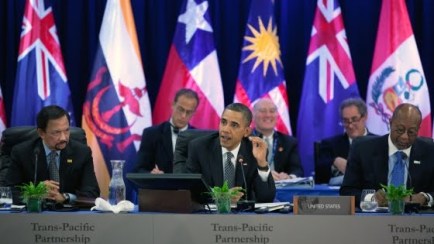
At the recent APEC meetings, Canada and Mexico announced their interest in joining the U.S., along with other countries already engaged in negotiations to establish what has been referred to as the NAFTA of the Pacific.
The leaders of the nine countries that are part of the Trans-Pacific Partnership (TPP) met at the Asia-Pacific Economic Cooperation (APEC) summit in Hawaii and agreed on the broad outlines of a free trade agreement. The current members include the U.S., Australia, New Zealand, Malaysia, Vietnam, Singapore, Brunei, Peru and Chile. The TPP has been hailed as a, “landmark, 21st-century trade agreement, setting a new standard for global trade and incorporating next-generation issues.” Key features of the TPP are that it would provide comprehensive market access and be a fully regional agreement designed to facilitate the development of production and supply chains. Various working groups have been discussing issues such as financial services, government procurement, intellectual property, investment, rules of origin, telecommunications and trade remedies. The next round of talks will take place in December and there are hopes of concluding negotiations before the end of 2012. Apart from Canada and Mexico, Japan has also expressed interest in being part of the TPP. The door is also open for other countries to join which is why many consider it to be a building block for an Asia-Pacific free trade zone.
Following the APEC forum, President Barack Obama held a bilateral meeting with Canadian Prime Minister Stephen Harper. Originally, it was scheduled to be a North American Leaders Summit, but Mexican President Felipe Calderon could not attend due to the death of Interior Minister Francisco Blake Mora. According to a Readout by the Press Secretary, the leaders look forward to a rescheduled trilateral summit. During his meeting with Prime Minister Harper, President Obama, “noted the important progress being made on the Beyond the Border and Regulatory Cooperation initiatives.” He invited Harper to Washington in early December where an action plan that would work towards a North American security perimeter could finally be released. Both leaders also discussed the announcement by the State Department to seek additional information regarding the Keystone XL Pipeline project. A final ruling on the pipeline which would carry oil from western Canada to the gulf coast of Texas will not be made until after the November 2012 presidential election. The move has prompted Canada to further diversify its trade ties and shift its focus on the Asia-Pacific region.
New Documents Expose Police Spying at G20 (video)
Global Research TV
December 1, 2011
TRANSCRIPT AND SOURCES: http://www.corbettreport.com/?p=3351
Documents released under the Access to Information Act in Canada earlier this month reveal what Canadian activists have long known: that a massive RCMP-led intelligence dragnet worked for 18 months to infiltrate, surveil, and ultimately arrest activists across the country for their participation in Vancouver Olympic and Toronto G20 activism.
Funny Money, Syria Psiphon, DeCONtamination – New World Next Week (video)
New World Next Week
December 1, 2011
Chossudovsky: Al Qaeda and the Global War on Terrorism (audio)
Global Research TV
December 1, 2011
“Al Qaeda and the Global War on Terrorism” with Michel Chossudovsky. The broad consequences of 9/11 with regard to US military doctrine, and more broadly the pretext and justification which the lies surrounding 9/11 have given to waging a war of conquest under the banner of what we call the Global War on Terrorism; Libya, Syria; Q and A.
“Guns & Butter” investigates the relationships among capitalism, militarism and politics. Maintaining a radical perspective in the aftermath of the September 11th attacks, “Guns & Butter: The Economics of Politics” reports on who wins and who loses when the economic resources of civil society are diverted toward global corporatization, war, and the furtherance of a national security state.
Produced and hosted by Bonnie Faulkner.
Originally aired on KPFA, November 30, 2011
Hemp bootstraps superior technologies, rescues capitalism from cannibalistic culture
By Justin Michels
Contributing writer for End the Lie

Synopsis: Our economic crisis is directly associated with a crippling dependence on unsustainable resources and their ever-growing scarcity. Developing sustainable resources is a necessary precursor to rebuilding the various manufacturing industries, which must again become the backbone of this great nation. True to legend, the industrial hemp plant stands ready for this monumental task. Offering not only an infinitely valuable resource, but also sobering lessons for the evolution of capitalism and American culture.
The cutting edge of our green economy
In February of 1938, Popular Mechanics magazine touted hemp as the “New billion Dollar Crop”; just a few short months after Congress had passed the infamous Marihuana Tax Act, effectively outlawing the industrial crop. Henry Ford’s dream to “grow our transportation” became a distant memory, as unsustainable resource extraction remained a cash cow for the likes of William Randolph Hearst and others hell-bent on quick profit instead of lasting prosperity.
However, as Lotus proved in 2008 with their Eco Elise pictured below, not all companies are driven only to maximize profit. Some have far better motives, resulting in a far superior product:

According to the Lotus engineers, “..Sustainable hemp technical fabrics have been used as the primary constituent in the high quality “A” class composite body panels and spoiler. The renewable hemp has exceptional material properties that make for a very strong fibre…”
Thanks to a remarkable set of physical characteristics and beneficial environmental impact, hemp allows for the evolution of products far superior in performance when compared to those derived from trees, cotton and petroleum products; among many others. Displayed below are more examples of current hemp products:
- Credit: Studio Aisslinger

- Credit: Guitar Site

- Credit: North American Hemp Co.

Credit: Kirei USA
Credit: Rawganique


Credit: CarGuideBlog


Credit: Patagonia
Credit: Dornob
Credit: LivingHarvest
Credit: Manitoba Harvest


Shortages of hemp fiber abound — but for how long?
My original intent was to include a material called Crailar in the above list; however, it turns out the manufacturer recently switched away from hemp to flax. Simply because the limited availability of reasonably priced hemp fiber cannot presently sustain the overwhelming market demand for this remarkable material. Their recently inked contracts include the likes of Carhartt, Levi and Hanes.
Then again, Naturally Advanced Technologies (manufacturers of Crailar) also states on their website that “..As a result of the commercialization of the Advanced Materials division, a surplus of hemp seed will be created…” Which they plan on turning into the most advanced and ecologically-sound fuel on earth.
For those of us who think hemp can replace our dependence on foreign oil, this is where things get interesting. Is there any possible way we can grow enough hemp to fuel our vehicles and our starving economy? The short answer is yes, but not so much in the short term. Although China is already well on their way:
The first quarter of 2010, the economic operation of China’s hemp industry
“..According to customs statistics, 1 February 2010, China’s hemp fiber, textile and products (excluding apparel) imports and exports amounted to 240 million U.S. dollars, up 26.66 percent, of which 161 million U.S. dollars export value, up 25%; imports the amount of 78.64 million U.S. dollars, up 30.2%.”
In order to overcome our dependence on fossil fuels altogether and supply manufacturers with the highly-prized hemp fiber, our agriculture industry must be effectively turned on its ear. A task which doesn’t sound very easy, until you consider how much farmers have to gain from the situation. In addition to how much we, as consumers, have to gain by fueling our vehicles and ourselves with hemp instead of petroleum or corn. (please note the slow pun)
The benefits of eating hemp nuts (or seeds) constitute a remarkably broad topic, which is perfectly contrasted by the detriments of consuming highly-processed forms of corn. Something the vast majority of Americans do unknowingly, thanks to a variety of factors I won’t go into here; except to point out that a healthy, happy person requires far less money to survive than a typical consumer.
If Americans can somehow be persuaded to incorporate protein-rich hemp in their diets, as a replacement for meat and source of essential nutrients we typically lack; it will free up an awful lot of extra land for hemp cultivation. In order for that to happen on a large scale, the price of hemp seeds and the many delicious products they are in need to fall a long way. One of countless catch-22’s which still haunt this otherwise phenomenally successful industry.
Getting over these obstacles will undoubtedly require an end to our insane prohibition of hemp in the U.S. and abroad, however a simple change of perception among cannabis activists and entrepreneurs ought to be a great start.
Medical cannabis cultivation has already developed a completely sustainable, multi-billion dollar industry in the United States. An industry which has also revolutionized many parts of agriculture and will continue doing so for decades to come. Perhaps most notably in the form of vertical farms and the various technologies which they employ.
In an odd twist of fate, the high price of cannabis which prohibition has caused is also helping drive the evolution of technologies necessary for developing the sustainable resources we must rely on in the near future. Meanwhile, industrial hemp fibers are already growing abundantly right here in the U.S.; in the form of medical cannabis stalks.
Hemp is obviously not marijuana, yet medical Cannabis “waste” actually is hemp

A while back, I started considering the idea of opening a hemp processing facility here in my home state of Montana — where the industrial plant has already been technically legal for years, but nobody has harvested a single crop (to the best of my knowledge.) There was one farmer who applied for and received a state-issued permit back in 2009; then decided not to plant, because it would have been impossible to process and sell the harvest without a huge upfront investment.
Seeing the medical cannabis industry take off and boom for a while (before the feds decided to play jihad in Montana) gave me an idea: why not try processing medical cannabis stalks into industrial hemp? There was no indication from my Googling efforts that anybody else had attempted doing so, but the physical properties looked similar enough to warrant an experiment.
Luckily, state law regards the stalks and stems as waste instead of medicine; meaning there were no legal hoops to jump through or even a marginally-justifiable reason for persecution. The traditional process of water retting yielded fibers indistinguishable from the industrial hemp fibers displayed in various books and online. Then I quickly learned how difficult it is to manually process the strongest fiber on earth.
A task which has been described by some as the most frustrating physical labor known to man, with the end result being one of the most highly coveted raw materials imaginable. In addition to creating organic fertilizer as a natural bi-product of the retting process. Turning my little experiment into a potentially very lucrative business venture (and strength-building exercise.) Providing the means to bootstrap a hemp processing facility into existence before any hemp has even been planted in the state!
Upon speaking with the Montana Cannabis Industry Association and others about the possibility of starting a hemp processing facility, I soon discovered there is already a group looking into the possibility of turning the abandoned paper mill near Missoula into just such a facility. We are now in the process of collaboration and actively looking for others interested in helping to develop this project or possibly start one of their own. For more information, please contact me at gonzo0013@gmail.com.
Capitalism is our friend, corruption is the enemy
Beyond the cannabis industries themselves, the impact of these plants ranges far and wide. Ushering in a new era of sustainable resource development. While also helping to expose the various corruptions which plague capitalism today.
Somewhere in Europe, there are already a handful of giant state-of-the-art greenhouses full of cannabis being legally grown for medical use. An extraction process is used by the “manufacturer”, GW Pharmaceuticals; in order to produce their trademarked pharmaceutical, Sativex.
Personally, I see a lot of benefits which can stem from developing ingestion methods superior to smoking the herb; but this particular product has been around in various forms for a number of years and gained a reputation of being far inferior to the raw plant available on the street and in pseudo-legal pharmacies at a more reasonable price (but definitely not covered by Medicare.)
Pills containing synthetic THC have also rated poorly among those who’ve had a chance to try the real thing. The DEA has already conceded there are roughly 60 facilities across the United States producing medical cannabis for use in pills, under-tonque sprays and who knows what else. But, in order to keep us from growing our own and cutting dependence on these giant corporations, they must lie by claiming this most famous of all medicinal plants has absolutely no medical value.
While our ‘public servants’ continue to shut down co-ops and non-profits who help people gain access to safe, organic medicine; consensus opinion across the U.S. and abroad has firmly supported the protection of medical liberties in the face of unchecked corporate greed. A few politicians have already woken up; but, more importantly, the citizens have taken matters into their own hands — bypassing our inept representatives and bureaucratic jungle altogether through voter referendums and ongoing lawsuits.
Up here in Montana, the medical cannabis industry made history earlier this year by formally challenging the validity of our recently passed, highly-controversial new cannabis law. The lawsuit, filed by the Montana Cannabis Industry Association (MTCIA), was already partially successful in protecting our once-booming industry from total annihilation.
The MTCIA also helped inspire similar lawsuits which have reportedly been filed in Colorado and California; challenging our government’s insane drug war at a time when even the United Nations has conceded it is time to take the power away from terrorists and criminal organizations everywhere by dismantling our failed prohibition.
My overall point here is we already have the tools in place to finally put an end to this insanity; but we also must recognize the broader need for government reform and develop ways to overcome corruption in both business and government (which, as some of us know thanks to the following clip from the 1976 classic, “Network“; are really one-in-the-same.)
http://www.youtube.com/watch?v=zI5hrcwU7Dk
Finally, as perceptions about cannabis in America continue to change and the numerous industries surrounding the plant keep growing; the government will soon be forced into acknowledging the vast utility of both hemp and medical cannabis. It is now up to us, the legions of cannabis supporters across the world, to finish the job by educating our public officials and fellow citizens about the proven virtues of this plant. Taking it upon ourselves to create a new American dream, truly worth chasing.
More manufacturers wise enough to already be using hemp fibers include the following:
Adidas, American Lime Technology, LLC; BMW; Dr. Bronner’s Magic Soaps; Calfee Design; Converse; Cushe Footwear; EnviroTextiles, LLC; Foods Alive; Gramicci; Green Field Paper Company; Green Solutions Printing; Hemp Technologies, LLC; Hemp Hoodlamb; Hemp House/ Maui Sun & Surf; Hemp Traders; Hempfields Natural Goods; Hempy’s; Innocent Oils; Jung Maven; Lazy Dog Designs; Mercedes Benz; Mountain Hardware; Mountains of the Moon; Nature’s Hemp; Nature’s Path Organic Foods; Nutiva; Patagonia; Prana; Ruth’s Hemp Foods; Sanuk; Satori Movement; Sequel Naturals; Solay Lifestyle; Sympatico Clothing; Terran Apparel; The Merry Hempsters; The Hempest; Ultra Oil for Pets; Vital Hemp clothing; Way Out Wax; Whole Foods Market; Zendulgence Hemp Gelato; Zelfo Technology
A few key, charitable organizations aligned to help end the drug war and in need of our support:
Law Enforcement Against Prohibition (LEAP)
National Organization for the Reform of Marijuana Laws (NORML)
Americans for Safe Access (ASA)
Marijuana Policy Project (MPP)
Multidisciplinary Association for Psychedelic Studies (MAPS)
Dr. Jerome Corsi: World War 3 is About to Begin! (video)
The Alex Jones Show
November 29, 2011
Author and columnist Jerome Corsi talks about Obama and the orchestrated attacks inside Iran. Alex also talks about Kentucky Senator Rand Paul’s proposed amendment to the National Defense Authorization Act that will kill a provision allowing the military to detain individuals, including American citizens, without trial or due process. Alex also covers the latest breaking news and takes your calls.
Chavez brings first shipment of gold to Venezuela from foreign vaults as global economy slides
By Madison Ruppert
End the Lie
November 26, 2011
 Venezuelan President Hugo Chavez on the left
In August Venezuela’s President Hugo Chavez announced that he would be repatriating the foreign-held gold reserves in American and European banks and they received the first shipment of gold from European countries on Friday.
The Venezuelan central bank reports that about $300 million in gold was brought in to Caracas by plane and they plan to bring 160 tons held abroad back to Venezuela.
The president of the central bank, Nelson Merentes said that the first shipment came from “various European countries” by way of France and called the arrival of the gold bullion a “historic” moment for his country, according to the Wall Street Journal.
Hugo Chavez said, “Now [the gold] will go to a place from which it should have never left: the central bank vaults [in Caracas]; not those in London or in Europe, but our own land.”
This is likely quite a good move as Western banks are becoming increasingly exposed to massive amounts of derivatives and sovereign debt crises that are wracking several economies.
These crises very well might be engineered by central banks and their “too big to fail” cronies just as the crash in 2008 was, and Chavez might preempting a possible gold run by demanding physical delivery of his gold now before there is no gold to deliver.
While Merentes would not give the specific number of tons of gold brought shipped to Venezuela on Friday, he said that the shipment was worth roughly $300 million.
This comes as U.S. stocks see the worst Thanksgiving drop since 1932 and all indicators show the European sovereign debt crisis continuing to worsen.
Chavez’s repatriation of gold reserves is part of his initiative to nationalize the Venezuelan gold sector, something which the Wall Street Journal says “puzzled economists.”
The Wall Street Journal published speculation that it could have to do with internal arbitration cases involving nationalizations and Venezuela seeking to prevent having their assets seized abroad.
They claim that it reduces transparency and would “raise more questions over the central bank’s declining reserves.”
How exactly they know the status of the reserves is not said, and Venezuelan figures posit a much more logical explanation for the move.
Venezuelan officials said that they were seeking to minimize exposure to the overly indebted Western economies of the United States and Europe, while leveraging the high price of gold that only seems to be rising.
They also said that they were seeking to invest in developing allies like Russia and China which have also been investing in the Venezuelan economy and continue to grow at rates not seen in the West.
There has also been a steady attack on Chavez coming from the United States and the West in general so his choice to demand his gold now prevents Western nations from seizing his assets held abroad as they did to Gaddafi.
The Wall Street Journal does seem to be able to pin down a number of how much gold Venezuela actually has.
First they say that before Friday, Venezuela held nearly $11 billion worth of gold, or 211 tons, out of 365 tons of reserves stored in banks in the United States, Canada and Europe.
According to the World Gold Council, Venezuela holds the 15th-largest gold reserves and Chavez said, “It’s the economic reserve for our kids. It’s growing, and it’s going to keep growing, both gold and economic reserves.”
Unfortunately you’ll never hear Bernanke or one of the countless criminal Western banksters saying such things, all they care about is robbing us blind and making sure we are enslaved by debt for generations to come.
That is not to say that Chavez is a saint, but the fact that a leader would even talk about working for the well being of his people is something wholly foreign to someone like myself in the United States.
“Venezuela is going to become an economic power, not for the bourgeois or capitalism, but for the Venezuelan people,” Chavez added.
Later, they say that the Central Bank of Venezuela holds 154 tons of gold bullion domestically, a number considerably different from the 211 tons cited earlier in the article.
Regardless, the Venezuelans seem to see the writing on the wall, with American stocks seeing the worst loss during the Thanksgiving week since 1932, Belgium getting its credit rating slashed and reports saying Greece is telling bondholders they will have to accept larger losses.
This fueled the pervasive concern that the European debt crisis is worsening and treasuries fell in response.
The S&P 500 continued to slump for the seventh straight day in a row, marking a weekly drop of 4.7% and a daily loss of 0.3%.
The euro declined as well, losing 0.9% along with the S&P GSCI commodity index dropping 0.3% with Bloomberg reporting, “The Markit iTraxx SovX Western Europe Index of credit- default swaps on 15 governments lingered near a record, up 6 basis points at 386.”
The signs are not looking good and Chavez demanding physical delivery of his gold just reflects the global awareness that something is seriously wrong with the world economy and it is not getting better any time soon.


