
CONFIRMED: US Shipping Weapons to Syria – Al Nusra’s “Mystery” Sponsors Revealed
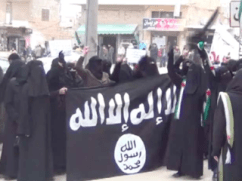 by Tony Cartalucci
Land Destroyer
March 25, 2013 (LD) – While US President Barack Obama and the Western media lied in concert to the world regarding America’s role in supporting terrorists operating in Syria, it is now revealed that the US Central Intelligence Agency (CIA) has been shipping weapons to Syria via NATO-member Turkey and Jordan since at least early 2012. The New York Times in their article titled, “Arms Airlift to Syria Rebels Expands, With C.I.A. Aid,” admits that:
With help from the C.I.A., Arab governments and Turkey have sharply increased their military aid to Syria’s opposition fighters in recent months, expanding a secret airlift of arms and equipment for the uprising against President Bashar al-Assad, according to air traffic data, interviews with officials in several countries and the accounts of rebel commanders.
The airlift, which began on a small scale in early 2012 and continued intermittently through last fall, expanded into a steady and much heavier flow late last year, the data shows. It has grown to include more than 160 military cargo flights by Jordanian, Saudi and Qatari military-style cargo planes landing at Esenboga Airport near Ankara, and, to a lesser degree, at other Turkish and Jordanian airports.
The New York Times piece attempts to spin America’s role in arming militants in Syria. The Times continues by stating:
The American government became involved, the former American official said, in part because there was a sense that other states would arm the rebels anyhow. The C.I.A. role in facilitating the shipments, he said, gave the United States a degree of influence over the process, including trying to steer weapons away from Islamist groups and persuading donors to withhold portable antiaircraft missiles that might be used in future terrorist attacks on civilian aircraft.
This is categorically false. Already, in 2007, US officials had divulged plans to destroy Syria by arming sectarian extremists, using Saudi Arabia and other regional actors as proxies to launder US and Israel support through – maintaining a degree of credibility amongst the terrorist receiving the aid, as well as a degree of plausible deniabiliy for Washington and Tel Aviv politically. In Pulitzer Prize-winning journalist Seymour Hersh’s 2007 New Yorker article, “The Redirection: Is the Administration’s new policy benefiting our enemies in the war on terrorism?” the strategy was described as follows:
To undermine Iran, which is predominantly Shiite, the Bush Administration has decided, in effect, to reconfigure its priorities in the Middle East. In Lebanon, the Administration has coöperated with Saudi Arabia’s government, which is Sunni, in clandestine operations that are intended to weaken Hezbollah, the Shiite organization that is backed by Iran. The U.S. has also taken part in clandestine operations aimed at Iran and its ally Syria. A by-product of these activities has been the bolstering of Sunni extremist groups that espouse a militant vision of Islam and are hostile to America and sympathetic to Al Qaeda.
Perhaps more importantly, the report would also state:
Some of the core tactics of the redirection are not public, however. The clandestine operations have been kept secret, in some cases, by leaving the execution or the funding to the Saudis, or by finding other ways to work around the normal congressional appropriations process, current and former officials close to the Administration said.
[hat tip: End the Lie]
Syria and Russia demand independent Investigation into Aleppo Chemical Weapon Attack
nsnbc international
March 21, 2013

Russia´s EU Ambassador Vladimir Chizov “NATO repetition of Libya-like scenario in Syria a flagrant and outrageous strategic mistake”.
Russia´s EU Ambassador; NATO´s Repetition of Libya-like Scenario in Syria would be a flagrant and outrageous strategic Mistake
Christof Lehmann(nsnbc),- After the chemical weapons attack that killed at least 25 and injured more than 100 in the outskirts of the Syrian city Aleppo on Tuesday 19 March, both the Syrian and the Russian government are demanding an independent investigation by the United Nations. Russian officials criticize France and the UK for a repetition of the Iraq war scenario, obstructing an investigation, and stated, that an attempt by NATO, to repeat a Libya-like scenario in Syria would be a flagrant strategic mistake.
After Tuesday´s unprecedented use of an internationally banned weapon by state-sponsored terrorists in the Kan al-Asal district of Aleppo, the Syrian government has requested, that the Secretary General of the United Nations forms an independent and neutral technical mission to investigate the incident. The Syrian government affirmed its commitment to uncover the details of the crime to refute all allegations and lies which had been propagated by the circles that support terrorism and terrorists.
Already on Tuesday, the Syrian Minister of Information emphasized the significance of the fact, that the unprecedented use of a chemical weapon by state-sponsored terrorists had been committed by means of a rocket, that had been fired from an area, in which both terrorists and members of foreign intelligence services are known to operate side by side. (1
The Syrian government has already informed the UN Secretary General of its worries on 8 December 2012 and warned, that some of the countries which are providing weapons to the terrorist groups were providing chemical weapons to them.
Insurgent groups had repeatedly threatened the use of chemical weapons which they manufacture by chemicals and small laboratory equipment. Official Syrian sources had previously released information and evidence for, that small, portable chemical weapons laboratories was provided for for insurgents via Saudi-Arabia.
Videos with insurgents either threatening with the use of the weapons, with insurgents demonstrating the lethal effect of the gas on rabbits and threatening, that the Syrians would die like those rabbits, as well as videos with insurgents showing off deliveries of chemicals, and statements that “everything was permissible” have repeatedly been shown on “opposition” websites, YouTube and other media.
The development of chemical weapons capabilities by Saudi-Arabia and US – backed terrorist organizations with ties to the Al-Qaeda network is not a novelty. Chemical weapons capabilities for Al Qaeda were, according to Malaysian intelligence sources and the state prosecutor of Malaysia, already developed for Al-Qaeda in Afghanistan during the 1980s.
In February 2012, Malaysian police arrested the former Malaysian army colonel Yazzid Sufaat and his female associate in a Kuala Lumpur suburb. The Kuala Limpur State Prosecutor charged Sufaat with recruiting Malaysian youth for fighting in Syria and his female associate with aiding him. Yazizd Sufaat has previously been charged with helping Al-Qaeda in Afghanistan with the development of chemical weapons capabilities. (2
Also Russian government officials expressed concerns, demanded an investigation, and sharply criticized those governments who are supporting terrorist in Syria.
Russia´s Deputy Foreign Minister, Gennady Gatilov announced that Russia hopes, that UN Secretary General ban Kyi-moon will answer Syria´s request for an independent, technical investigation into the incident in Aleppo´s countryside. Using his Twitter account, Gennady Gatilov said “We expect that the UN Secretary General soon will answer Syria´s request, to hold an investigation into the use of a chemical weapon on March 19″. Gatilov added, that it was “necessary to form a neutral and professional team of experts to achieve objective outcomes”.
Also Russia´s Ambassador to the United Nations, Vitaly Churkin called for a thorough, neutral and full investigation. The Russian UN Ambassador and current President of the UN Security Council, reiterated, that Russia is calling for a neutral, thorough and objective investigation into the terrorists use of chemical weapons in Syria. The website of the Russian news channel RT quoted the Russian UN Ambassadors statement after closed consultations at the UN security Council on Wednesday, when Gatilov said, “We ask the Syrian government to investigate the incident and we have experts from several countries, including Russia… I think that the UN Secretary General will form a team, including highly experienced members, and we expect that this investigation will be neutral and objective… This issue will be considered carefully”.
Vitaly Churkin also indicated, that France and Great Britain have resorted to undue tactics in attempts to hinder consultations. Churkin described the French and British attempts as similar to what happened in Iraq, when the USA tried to justify its invasion of the country by fabricating information, and by claiming, that Iraq possesses weapons of mass destruction.
Also Russia´s Permanent representative to the European Union (EU), Vladimir Chizhov has issued statements about the incident and warned, that the repetition of a Libyan scenario by NATO in Syria would be a “flagrant and outrageous strategic mistake”. The Russian EU Ambassador also criticized France and Great Britain for announcing, that they would lift the embargo imposed by the EU on importing weapons to the “Syrian Opposition”.
The strong statement by Russia´s Ambassador to the EU is one more in a series of increasingly clear signals from Russian top-diplomats which reiterate, that Russia is not willing to accept further abuse of UNSC resolutions by NATO, the abuse of the ICC for politicized trials against leaders of targeted nations, and the use of NATO forces in the Middle East for regime change under the guise of a responsibility to protect. The diplomatic stand off between Russia, the USA and the EU has lasted since September 2011, when Russia drew a clear line in the Syrian sand and began preventing a similar abuse of UN resolutions as the abuse of UNSC resolution 1973(2011) on Libya.
The statement by Vladimir Chizov, that a repetition of a Libya like scenario in Syria would be a flagrant and outrageous strategic mistake, is most likely an implicit reference to statements by NATO top-bras Ivo H. Daalder and James G. Stavridis.
In an article published in the April-March 2012 issue of Foreign Affairs, Daalder and Stavridis described NATO´s intervention in Libya as “teachable moment and model for future interventions”. (3 Daalder and Stavridis`statement has been repeated during NATO´s 25th Summit in Chicago in May 2012, where NATO implicitly adopted the Libyan model, that is, regime change by use of terrorist organizations, interfacing with special forces, to procure a UN resolution that justifies a NATO intervention, leading to regime change, as part of NATO´s military doctrine for a modern NATO that faces the security challenges of a modern world. (4
On Thursday the United Nations has responded to the Syrian, Russian and international pressure by agreeing to an independent investigation. No details about who will be staffing the investigation team, who will develop its methodology and specify its goals or other details have yet been published.
Notes:
3) Ivo H. Daalder, James G. Stavridis (2012). NATO`s Victory in Libya. The Right Way to Run an Intervention. Foreign Affairs. March/April 2012. Pp.2 – 7.
4) NATO`s 25th Summit in Chicago in Preparation of Global Full Spectrum Dominance
About the Author

Syria teeters on Obama’s “Red Line”
by Nile Bowie
NileBowie.blogspot.ca
March 21, 2013
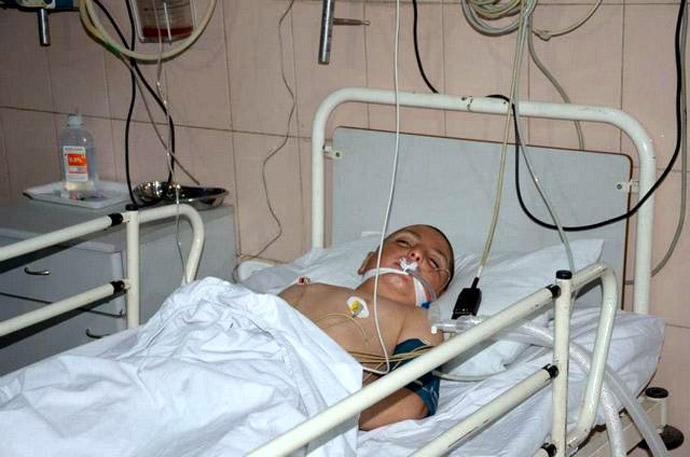
The pages of history tell us that beautiful civilizations emerged and prospered in the ancient cities of Damascus and Aleppo, some of the oldest continually inhabited cities on earth. The harrowing circus of brutality that is the Syrian conflict, now in its third year, will soil and blacken those pages indefinitely. No matter the political outcome of this horrible war, a once tolerant and diverse state has been shattered and terror itself has eaten into the destiny of Syria’s people, inexorably changing the courses of their lives forever. Children have been orphaned; parents have faced the loss of their children – and by uncompromising means. Infants have been beheaded, the fates of innocent men and women have been sealed through summary executions, and families have been torn apart or destroyed all together. Recent developments in Syria are alarming.
Spokesmen of the Assad government recently accused foreign-backed militants of launching scud missiles containing chemical weapons in the city of Aleppo, killing dozens. Witnesses claim to have seen powder emanate from the rocket, causing those who inhaled the substance to suffocate or require immediate medical attention. An unnamed chemical weapons expert cited by Al-Jazeera claimed that the causalities were not consistent with Syria’s reputed stockpile of chemical agents, stating, “If it’s a chemical warfare agent, it’s not working very well.” Syria’s ambassador to the UN, Bashar Ja’afari, called on the UN Secretary-General to form an independent technical mission to investigate the use of chemical weapons by terrorist groups operating in Syria.
There are a myriad of reasons why Bashar al-Assad must go in the eyes of policy makers in Washington and Tel Aviv, and the destruction of his tenure could not have been possible without the financial muscle of Saudi Arabia and Qatar’s wretchedly opulent Sunni Monarchs. These glittering kingdoms of disaster-capitalism are not only responsible for supplying weapons and cash; a major incentive of theirs is exporting the Wahhabist and Salafist ideologies that many of Syria’s imported jihadists subscribe to, a warped and primal interpretation of Islam that has fueled the sectarian nature of the Syrian conflict and deepened social divisions to their most dangerous point – in a country that was once renowned for its tolerance of religious diversity. These Gulf kingdoms, which are more-or-less given a trump card to commit deplorable human rights violations institutionally, are also responsible for propping up the political arm of their militant foot soldiers, and that comes in the form of the Muslim Brotherhood.
Syria’s opposition coalition, which is itself entirely a creation of foreign powers, has recently elected its own interim prime minister – enter, Ghassan Hitto, a virtually unknown political novice with a US passport and a computer science degree from Purdue University. Hitto is an Islamist Kurd with strong ties to the Muslim Brotherhood. The Muslim Brotherhood has politically dominated the Syrian National Council since its creation, in addition to organizing tactical elements of the insurgency. The backbone of the Brotherhood’s relationship with the medieval monarchies of the Persian Gulf is grounded in a firm opposition to Shi’a Islam, as extolled by clerical leaders in Iran and Lebanon’s Hezbollah; Assad himself is also an Alawite, an offshoot of Shi’a Islam. It should be clear enough by now how enflaming sectarian divisions in the region was a prerequisite for those bank-rolling the insurgency, aimed at demolishing the secular Syrian state.
Several high-profile members of Syria’s opposition coalition boycotted the vote for interim prime minister, citing what they viewed as a foreign-backed campaign to elect Hitto. Kamal Labwani, a veteran opposition campaigner, was reported as saying, “We don’t want what happened in Egypt to happen in Syria. They hijacked the revolution.” Those who abstained from the vote accuse Hitto of being a puppet of the Muslim Brotherhood, and that the SNC’s decisions were being dictated from the outside. Walid al-Bunni, another senior figure in the opposition, stated, “The Muslim Brotherhood, with the backing of Qatar, have imposed their prime minister candidate. We will keep away if the coalition does not reconsider its choice.” Let’s just get this straight – Assad, a leader whose presence today is a testament to the fact that he continues to enjoy majority popular support, is considered to have lost his legitimacy. On the other hand, Hitto, a man with no political experience who received 35 votes out of 49 ballots cast during a Syrian National Coalition meeting, is supposed to be legitimate representative of the Syrian people?

Western states want to install proxy leaders who will grovel to their multinationals and swallow IMF medicine, Gulf states seek unfettered hegemony in their own backyards, and they all want to see the Shi’a resistance smashed to pieces. Following the news of chemical weapons being used in Syria, the most immediate conclusion of this observer is that foreign-backed militants, who have used every opportunity to call for more material and support, employed the use of a smuggled chemical weapon of poor quality to bring about direct military intervention in their favor. Right on cue, Senators Lindsey Graham and John McCain are frothing at the mouth, urging President Obama to “take immediate action” and consider deploying troops. Graham was quoted as saying, “If the choice is to send in troops to secure the weapons sites versus allowing chemical weapons to get in the hands of some of the most violent people in the world, I vote to cut this off before it becomes a problem.” There is no surer sign of a pathological mind than when one credits others with the blood on their own hands.
Nile Bowie is an independent political analyst and photographer based in Kuala Lumpur, Malaysia. He can be reached at nilebowie@gmail.com
NATO nurturing Syria contingency plan – top US commander
End the Lie – Independent News
March 20, 2013

NATO Supreme Allied Commander Europe (SACEUR) U.S. Navy Admiral James Stavridis.(Reuters / Tobias Schwarz)
NATO forces are focusing on a “wide range of operations” in Syria, the US top commander in Europe told the US Senate. If called upon, the international coalition is ready to engage on the same level and in same way as it did in Libya.
Speaking to the Senate’s Armed Services Committee, Commander of the US European Command (USEUCOM) Admiral James Stavridis told lawmakers that NATO’s member governments were currently discussing “a variety of operations.”
He said the alliance has taken the position that it will follow the same sequence used in Libya. “We are prepared, if called upon, to be engaged as we were in Libya,” the 58-year-old admiral assured the country’s political elites.
It means that prior to the NATO involvement there would first be a resolution at the UN Security Council, a regional agreement and consensus among the 28 NATO member states.
Two years of fierce fighting between the Syrian army and the foreign-backed insurgency have been marked by the failure of either side to fully win. The bitter results of Syria’s civil war are well-known in Washington.
“The Syrian situation continues to become worse and worse and worse: 70,000 killed, a million refugees pushed out of the country, probably two and a half million internally displaced. No end in sight to the vicious civil war,” Stavridis told the Senate’s Committee.
In Washington’s eyes, the shortest way to end the bloody is to get rid of the government of President Bashar Assad. Helping to oust Assad could be done simultaneously in several directions: by imposing a no-fly zone along the Turkish-Syrian border with the help of NATO’s Patriot PAC-3 air defense complexes recently deployed there and by supplying rebels with arms or by ensuring an arms embargo on Damascus.
Shooting down Syrian aircraft in that zone would become a “powerful disincentive” to keep Syrian Air Force pilots out of the area, Stavridis promised Arizona Senator John McCain.
In addition to that, Armed Services Chairman Carl Levin got a positive answer to his question as to whether the US military is considering targeting Syrian air defenses.
Diplomacy with no teeth
While the Kremlin insists on a diplomatic solution to the bloody conflict, the Obama administration does not believe the conflict can be resolved by diplomats.
“It’s hard to imagine a peaceful outcome with Assad in power,” stated Anne Richard, the assistant secretary of state for Population, Refugees, and Migration, speaking at another Capitol Hill hearing on Syria.
Meanwhile, the fact that one million refugees have fled Syria – half of them in the last two months – has significantly affected the country’s neighbors. Up to 10 per cent of the Lebanese population now consist of Syrian refugees. People are also fleeing to refugee camps in Jordan and Turkey.
With no end in sight, the conflict is pushing members of the US Senate to take action – by helping the Syrian insurgency.
Expanding sanctions against the Central Bank of Syria has always been within the powers of the American legislatures. Yet other steps imply direct meddling into Syria’s internal affairs.
Senators Bob Casey and Marco Rubio advocate non-lethal aid to Syrian opposition groups. The move, supported by both Democrats and Republicans, would mean providing the rebels with body armor and communications equipment.
Still, the option of simply arming the rebels is also on the table.
“Down the road we may make another determination,” Casey acknowledged.
On Monday, Congressman Eliot Engel presented legislation enabling the US to train Syrian opposition groups.
Source: RT
Chemical Weapon Attack kills 25 and injures 100 in Aleppo. Syria Crisis Explodes International Law into Anarchy and Barbarism
nsnbc international
March 19, 2013

Most of the more than 100 injured in chemical weapon attack are in critical condition. Photo SANA
Insurgents and Syrian Government blaming each other for the Escalation with Chemical Weapon Attack.
Christof Lehmann (nsnbc).- A rocked with chemical substances, fired from the Da´el area, exploding in the Khan al-Asal area near the Syrian capital Damascus today, killed at least 25 and injured 100. The majority of the injured are reported to be in critical a condition. The Syrian government and insurgents are blaming each other for the escalation of the violence.
While the Syrian government possesses chemical weapons, several factors make it unlikely beyond reasonable doubt, that a rocket with weaponized chemical substances has been fired by Syrian military forces. Like in every other regular military force, the chemical weapons under control of the Syrian military are closely monitored, registered, and easily to be accounted for.
The UN´s independent commission of inquiry recently suggested to refer Syria to the international criminal court. A spokesperson for the Russian Foreign Ministry called the report biased and unbalanced, and the suggestion to refer Syria to the ICC as futile and ill timed. (1 Escalating the conflict by using chemical weapons would be political suicide from experienced politicians who know better than bringing Russia into a diplomatic quagmire. With the national dialog making steady progress, the use of chemical weapons would be equivalent to the Syrian government derailing the national dialog which it facilitates.
While these and many other factors make it more than unlikely that the rocket was fired by Syrian military forces, the opposite is the case with the foreign backed insurgents. The strongest circumstantial evidence however, until an investigation has eventually has yielded material evidence, is the fact that the foreign backed insurgents themselves have published video recordings, in which they were demonstrating how they are producing chemical substances which can be weaponized in small laboratories. The small laboratories have been provided for the insurgents by Saudi-Arabia.
Syria´s Information Minister Omran al-Zoubi has held the countries that are arming the ´opposition` responsible for the crime in Khan al-Asal and stressed, that the government of Turkey´s Prime Minister Erdogan and the government of Qatar bear legal, moral and political responsibility for the attack that killed 25 and wounded more than 100.
Al-Zoubi condemned the Arab League on a ministerial level for its decision to support the armed insurgency, saying “whoever got involved and announced direct and public military support to the terrorists, whether he is an emir, a minister or a prime minister, must be held accountable for the crime”. He stressed the fact, that the terrorists used an internationally banned weapon and called upon the international community and the countries which are funding and arming the terrorists to assume their responsibility for the crime. He added, that the escalation of the violence by use of internationally banned weapons against civilians is a dangerous shift in the course of the events in Syria with regard to security in general, and with regard to the military situation.
Minister Al-Zoubi added, that the government of the Syrian Arab Republic has the right to act in accordance with international law and file a lawsuit against the countries which are arming the opposition, including internationally outlawed terrorist organizations such as Jabhat al-Nusra with internationally banned weapons.
Today´s escalation of terrorism with an internationally banned weapon is also likely to even further deteriorate diplomatic ties between Russia and the USA. One of the factors that has contributed to the rapid deterioration in diplomatic relations over Syria was the fact that the USA rejected a Russian resolution at the United Nations Security Council which would have condemned all forms of terrorism.
The US veto at the UN Security Council, against the condemnation of the attack and terrorism in all of its forms, prompted Russian Foreign Minister Sergei Lavrov to voice the Russian governments frustration over the fact, that the UNSC standards, according to which all nations, without exclusion, would condemn terrorism, regardless of the perpetrator, place or motives, was no longer upheld. Lavrov stated, “Russia sees in the American position the use of double standards and a dangerous approach in terms of the Americans moving away from the main principle of condemning terrorism in all its forms”. (2
According to information by Syrian authorities, the toxic gasses that have been involved in today´s rocket attack cause immediate fainting, quiver and death, prompting Syria´s Information Minister al-Zoubi to state, that “this shift in the type and manner of arming the terrorists embodied in using weapons imported from outside Syria across the border with some neighboring countries means that all allegations made by some countries, such as France, UK, Qatar and Turkey on providing logistic and “non-lethal” weapons to the armed terrorist groups in Syria are mere talk to sell the media.”
The escalation of the violence with a chemical weapon constitute a serious escalation in willful and systematic breeches and a further step toward an explosion of international law into anarchy and barbarism.
Since 2001, the USA, together with NATO and allies, have systematically dismantled the progress in international law that has been made since 1945 and the end of the second world war. The political, military and financial support of Jahbat al-Nusra and other militia who are involved in the attempted subversion of Syria constitute a breech against the Convention against the Use of Mercenaries. Also the use of so-called private military contractors to fulfill military duties in conflict areas constitutes a breech of the Convention against the Use of Mercenaries. International lawyer Christopher Black pointed out the irony of calling mercenaries private contractors, saying ” private contractors, as if the were construction workers”. (3
Saudi-Arabia´s and Turkey´s documented use of convicts for military service in Syria constitutes a willful and systematic breech of the Geneva Conventions, which regulate the war times rights of both civilian and military prisoners. (4 -(5 Military interventions under the pretext of humanitarian interventions or the principle of the responsibility to protect, which was used by the USA and NATO to bring about regime change in Libya, constitutes a violation of the Charter of the United Nations and the principles enshrined in the Treaty of Westphalia, which is one of the root principles of the UN Charter.
The list of systematic explosions of international law by the USA, NATO and allies continues with breeches against the Convention against Torture by re-branding torture as enhanced interrogation methods, breeches against UN resolutions by blocking Syrian radio and TV channels access to international satellites, (6 and it could be continued ad infinitum.
Today´s use of a chemical weapon by US/NATO and allied backed mercenary forces, and failure of the USA, EU, NATO and allies to unequivocally condemn it as an act of terrorism and a war crime, constitutes but one more explosion of international law into anarchy, barbarism and despotism.
Syria´s Information Minister al-Zoubi elicited the bearing of this aggravation when he stressed that the terrorist crime committed in Aleppo is “an exceptional case, compared to the events in the world at least over the last fifty years” Exceptional, because an internationally banned weapon was being used publicly from an area where Western and Turkish intelligence are operating along side Jahbat al-Nusra members”.
Notes:
1) Permafrost; Russian Foreign Minister Lavrov Blasts USA and Allies for Arming Syria´s Opposition.
2) Lavrov: US Veto of UNSC Resolution to Condemn Damascus Blasts Indicates Double Standards
3) South East China Sea; A Perfect Crisis for the International Crisis Group.
4) Saudi Arabia commits War Crime by Forced Use of Prisoners in Syria Insurgency.
6) The Dynamics of the Crisis in Syria. Conflict Versus Conflict Resolution. (Part 2/6)
About the Author
Christof Lehmann – Dr. Christof Lehmann is the founder and editor of nsnbc. He is a psychologist and independent political consultant on conflict and conflict resolution and a wide range of other political issues. His work with traumatized victims of conflict has led him to also pursue the work as political consultant. He is a lifelong activist for peace and justice, human rights, Palestinians rights to self-determination in Palestine, and he is working on the establishment of international institutions for the prosecution of all war crimes, also those committed by privileged nations. On 28 August 2011 he started his blog nsnbc, appalled by misrepresentations of the aggression against Libya and Syria. In March 2013 he turned nsnbc into a daily, independent, international on-line newspaper.
Iran-Pakistan ‘lifeline’: Pipeline aims for global power balance
by Eric Draitser
Russia Today
March 11, 2013

Iranians work on a section of a pipeline linking Iran and Pakistan after the project was launched during a ceremony in the Iranian border city of Chah Bahar on March 11, 2013 (AFP Photo / Atta Kenare)
The pipeline will bring more than simply an economic boost to both countries; it is a crucial guidepost on the path to peace. After generations of conflict, Iran and Pakistan are taking their economic destinies into their own hands – together.
The pipeline, which would bring Iranian gas to Pakistan through its western Balochistan province, will stretch almost 1,000 miles (1,600 km) from Iran’s gas-rich Asalouyeh region into the Pakistani heartland, supplying major cities like Karachi and Islamabad with much needed, reliable energy while carrying a pricetag of roughly $1.5 billion. Similarly, the project is critical for Iran as it struggles to survive and grow amid the hostility of US-European sanctions.
The Benefits for Both Countries
It is against the backdrop of brutal, draconian sanctions initiated by the US and its European partners, that Tehran has taken the countermeasure to develop itself and the region, constructing an economically independent framework of relations not beholden to Western financiers. Undoubtedly, the centerpiece of this strategy of economic independence as a means of anti-imperialist resistance is the Iran-Pakistan pipeline. The project, already nearing completion on the Iranian side of the border, would bring desperately needed Iranian gas to energy-starved Pakistan – a country battling a perpetual energy shortage. Needless to say, the project is critical for the economic survival of both nations.
For Iran, the pipeline means economic stability at a time of tremendous turmoil. While the Islamic Republic often downplays the impact of the sanctions, the reality is inescapable: an inflation rate hovering around 30% , the loss of key regional markets such as India, and the continued shortage of medicines and staple foods among other things . These problems plaguing the Iranian economy require both short-term and long-term solutions. The pipeline conveniently addresses both as it provides Tehran with much needed energy revenue today, while offering the potential for increased revenue and infrastructure expansion in the future. Essentially then, the pipeline is really more of a lifeline, anchoring the Iranian economy for decades to come.

Iran’s President Mahmoud Ahmadinejad (2ndL) and Pakistan’s President Asif Ali Zardari wave during a ceremony marking the start of work on the 780-kilometre (485-mile) pipeline from Iran to Pakistan on March 11, 2013 in the Iranian border city of Chah Bahar (AFP Photo / Atta Kenare))
Like their Iranian neighbors, Pakistan also has had to address glaring economic deficiencies, particularly with regard to the energy sector. A recent poll unsurprisingly showed that energy shortages, along with unemployment, remain the greatest economic issues facing the country. Public anger over the inability of the government to meet the country’s electricity demands has boiled over in the form of riots numerous times, most recently in the summer of 2012 . This type of public unrest over the energy issue serves to delegitimize the government, especially the ruling Pakistan People’s Party (PPP), and weaken their hold on political power.
For Islamabad then, the pipeline means energy security which, in turn, means political stability. Moreover, the project as a whole is, at least in small part, a way of resisting Washington and the Obama administration’s continued violations of Pakistani sovereignty. By pushing forward with the project, in the face of countless threats from Washington, Pakistani president Zardari is walking a fine line between maintaining a working relationship with his US partners and forging new relations from which Pakistan will benefit while the US loses.
A Sectarian Bridge?
One critical aspect of the Iran-Pakistan pipeline is the simple fact that it brings together two countries that, if western imperialists were to have their way, would always remain enemies. Pakistan (a majority Sunni Muslim country) and Iran (a majority Shiite Muslim country), have historically been at odds with one another, choosing rather to align themselves with other Sunni and Shiite countries respectively. This fundamental conflict has, for more than a century, been at the heart of the imperialist/colonialist strategy.
Whether British, French, or American, western powers have long dominated the vast energy resources of the Middle East and Central Asia by dividing the Muslim populations along these sectarian lines, exploiting the differences between them in order to prevent independent economic development. However, the Iran-Pakistan pipeline flies in the face of this “divide and conquer” strategy. Bringing together these two countries through mutually beneficial economic development, the project seems to signal a major change in the Muslim world in the 21st Century. No longer will the imperialists be able to control the destinies of nations in the region by exploiting their differences. Rather, it is the imperial powers themselves who will have to reevaluate their strategy and come to terms with a changing world in which their unchallenged hegemony becomes a relic of the past.
The Geopolitics of the Pipeline
Although the Iran-Pakistan pipeline is economically and politically significant to both nations, it takes on perhaps its greatest importance in the context of world geopolitics. The project fundamentally alters the balance of power in Asia and the world for a number of reasons.
First and foremost, the pipeline links two countries that, each in its own way, seek to undermine US hegemony in the Middle East and South Asia. While Iran has been the implacable foe of Washington since the Islamic Revolution of 1979, Pakistan has maintained relations that at one time made them close allies, but in recent years have deteriorated to the point where the United States is seen as Public Enemy No. 1 in the streets. The pipeline brings the two countries closer together and, in so doing, helps to solidify a relationship united by a common mistrust of the US.

Iranians work on a section of a gas pipeline linking Iran and Pakistan after the project was launched during a ceremony in the Iranian border city of Chah Bahar on March 11, 2013 (AFP Photo / Atta Kenare))
Secondly, the Iran-Pakistan pipeline could quite easily become the Iran-Pakistan-China pipeline if Beijing decides to finally get involved. In this very plausible scenario, China would finally get the “holy grail” it has sought for years: land-based access to energy imports from the Middle East. For China, an energy-starved economy that continues to grow, this would greatly enhance their regional position. It would also transform the balance of power in Asia, as the era of US domination of energy resources in the Middle East would be over. So, were the project to be extended to China, the pipeline would become the focus of a new power paradigm, making it one of the most important economic development projects in the world.
Additionally, the pipeline shows the growing power and influence of international alliances and organizations that represent a counterweight to the imperialist establishment of the West. Iran has taken on the role of leading the Non-Aligned Movement, thrusting itself into the forefront of the anti-imperialist bloc. At the same time, both Iran and Pakistan seek membership in the Shanghai Cooperation Organization (SCO), led by Russia and China, which is showing signs of developing into a full-fledged strategic alliance that provides a check to US-NATO dominance. In this way, the pipeline becomes the tangible link between various organizations and alliances which seek to beat a path independent of US hegemony. It is for this reason, more than anything else, that the United States has vigorously attempted to subvert the development of the pipeline, going so far as to heavily promote the much-touted Turkmenistan-Afghanistan-Pakistan-India (TAPI) pipeline, seen as the main competitor to the Iran-Pakistan project. However, despite the fierce opposition from Washington, the project will go ahead while the TAPI still remains on the drawing board, subject to security concerns in Afghanistan and elsewhere along the route.
When seen from the broadest perspective, the Iran-Pakistan pipeline fundamentally transforms power relations in the Middle East, South Asia, and throughout the world. Not only does it benefit the two nations involved, but all other nations and peoples who have been oppressed, controlled, or otherwise coerced by the Western powers. In this way, the Iran-Pakistan Pipeline represents peace and progress. In short, it is the promise of a better future.

Iranians work on a section of a pipeline (on with are sticked Iranian and Pakistanese national flags) after the project was launched during a ceremony with presidents of Iran and Pakistan on March 11, 2013 in the Iranian border city of Chah Bahar (AFP Photo / Atta Kenare)
The statements, views and opinions expressed in this column are solely those of the author and do not necessarily represent those of RT.

Eric Draitser is an independent geopolitical analyst based in New York City and the founder of StopImperialism.com.
[hat tip: Nile Bowie]
Russian Security Council Emergency Meeting, Russian Warships in Syria
 nsnbc international
March 16, 2013
Christof Lehmann (nsnbc).- Russia´s President Vladimir Putin has called and held an emergency meeting of the permanent members of Russia´s Security Council to discuss the deteriorating situation in Syria and the deteriorating diplomatic relations between Russia, the USA, EU and allies over the crisis. Meanwhile, four Russian Battleship Destroyers which had stopped in Lebanon, have been transferred to the Russian auxiliary naval base in the Syrian city Tartous.
Dmitri Peskov, adviser to Russia´s President Vladimir Putin has informed media, that the participants of the Security Council meeting have discussed and exchanged their views on international issues with focus on the situation in Syria and the Middle East. The Security Council Meeting was attended by the Chairman of the Russian Parliament, the State Duma, the Russian Federation Council, the Presidency Council, the Security Council and the Ministers of Foreign Affairs, of the Interior, and the Minister of Defense, as well as the Director of the Russian Foreign Intelligence Service.
President Putin´s Special Envoy to the Middle East, Deputy Foreign Minister Bogdanov, has met the Syrian Ambassador to Russia, Riyad Hadded in Moscow, to discuss the developments in Syria and Russian – Syrian relations. According to a statement, issued by the Russian Ministry of Foreign Affairs, Deputy Foreign Minister Bogdanov and Ambassador Hadded have discussed the situation in the light of the latest contacts between Russia and representatives of the Syrian opposition as well as Western countries representatives in the attempt to start a dialog and to halt the violence by adhering to the Geneva Statement.
The situation between Russia and the USA, EU, NATO, as well as the allied Gulf Arab states Qatar and Saudi Arabia has been rapidly deteriorating over the last weeks, after a Russia EU Summit over the third EU Energy Packet failed to solve energy security problems at the root of the Syria crisis, after strong statements by Russia´s Ambassador to NATO, the USA´s rejection to condemn acts of terrorism at the UN Security Council, and US Secretary and European governments assurances that they would continue financing the political and armed “opposition”.
The referral of Russia´s Deputy Foreign Minister and Special Middle East Envoy Bogdanov to contacts between Russia and the Opposition as well as western partners, is likely to allude to the latest Friends of Syria meeting in Doha, Qatar, where Bogdanov was present. Shortly after the meeting, a member of the General Secretariat of the National Party of Kuwait had gone public with information about a secret contract that had been signed among other, between the Foreign Mister of Qatar, Hamad Bin Jassim Al-Thani, the Turkish Foreign Minister Ahmad Dauvutoglu, Abdulla bin Zayid Al Nahyan, the US Ambassador Robert Ford, the opposition member Riyad Saif, and the representative of the council of Istanbul´s Muslim Brotherhood organization Mohammed Riad Shaqfeh. The contract is detailing the division of Syria into smaller states and the installment of “moderate Islamist regimes”.
After the secret contract was leaked, Russian – US as well as European relations have deteriorated into a deep freeze. At the European Union, debates whether to stop providing weapons to insurgents in Syria have so far not yielded tangible results. Turkey on the other hand, has protested over the fact that the European Council discusses the end to arms deliveries.
While the situation continued deteriorating, the Russian Navy has positioned four Battleship Destroyers closer to Syria first and then to Lebanon. Today the Russian warships were deployed to the Russian auxiliary naval base in Tartous in Syria. So far there has been no official response from either the USA nor the EU, and it is unknown whether eventual military action will be taken. It is not unlikely, that the Russian naval presence will be tasked with preventing further arms shipments through Lebanon or Turkey and into Syria.
Related articles:
Permafrost; Russian Foreign Minister Lavrov Blasts USA and Allies for Arming Syria´s Opposition.
Russia – E.U. Meeting in Brussels: Risk of Middle East and European War increased.
Syria, Turkey, Israel and a Greater Middle East Energy War
Russia´s Top Diplomats signal increased assertiveness regarding Syria, Africa and NATO
Kerry after Friends of Syria Meeting clarifies, US determined to initiate World War III in Syria
US – Russian Relations deteriorating as Kuwaiti Whistle Blower Discloses Secret Syria War-Plan
Italian Peace Movement Criticizes Report of International Commission on Syria
Massive Blast Near Baath Party Headquarters kills Scores, FSA threatens Hezbollah
Lavrov: US Veto of UNSC Resolution to Condemn Damascus Blasts Indicates Double Standards

 PN
PN 