NATO has distanced himself from the bombing of the United States and several Arab countries against terrorist militias of the “Islamic State” in Syria, reports Reuters.
“NATO is not affiliated with them,” said an official spokesman for the alliance, which was addressed by the agency on it.
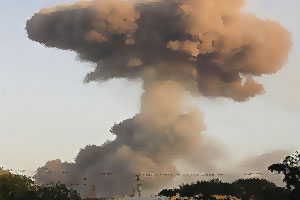
In the U.S. air attack on positions of the terror group “Islamic State” (IS) in Syria on Tuesday morning several dozen IS-combatants were killed, according to Reuters, citing a monitoring group.
During the attack, the United States were supported by several Arab countries it said.Target of the attack were IS-positions in space of the city of Al-Rakka.
According to a senior spokesman for the U.S. Administration, the government troops in Syria did not interfere in the situation.
A statement by the Syrian Foreign Ministry, according to the United States were informed of the planned strikes against the IS-positions in advance, reports AFP.
This article originally appeared in The Corbett Report Subscriber newsletter on September 13, 2014. To subscribe to the newsletter and become a member of The Corbett Report website, please sign up for a monthly or annual membership here.
This week the Scots will go to the polls to answer a deceptively simple question:
“Should Scotland be an independent country?”
The question’s simplicity belies the enormity of what is being asked. In centuries past, such a sovereignty proclamation would only have been delivered at the end of a sword after the spilling of much blood. Today the fates of nations are decided by referendum…sort of.
You see, the question is extremely simple, and, in the words of at least one Canadian commentator who finds its precision refreshing after the convoluted tangle of Quebec’s sovereignty referendum questions, “crystal clear.” But is it really? After all, what does it mean to be an “independent country?” Does that mean passport sharing with the UK? Military association? An independent currency? EU membership? NATO membership? Will Scotland keep an allegiance to the crown? Will it become a commonwealth nation? There are no answers to these questions because none of those details have been worked out yet. For now, nationalist politicians are content to leave voters to fill in the blanks.
But these are not trivial questions to be asking. In fact, they go to the very heart of what is meant by “sovereignty” and “independence.” What’s more, Scotland, insofar as it is fast becoming the envy (and the role model) for independence movements around the globe, could potentially be setting precedents for future events in Catalonia or Veneto or elsewhere. In effect, they are setting down the definition of freedom for others to strive toward, so their answer to this string of questions might make the difference between true independence and what could very easily be just another form of dependence.
To see how this is the case, let’s examine some of these questions.
This month on the Geneva Business Insider, James and David preview next week’s Scottish independence vote and the various political forces that are clashing as the Scottish people go to the polls. We discuss the push for NATO membership, EU membership and a central bank for “free” Scotland and how it undermines the entire push for independence. We also examine the latest on the ceasefire in Eastern Ukraine and the specter of a cyber-hacking bank bailout.
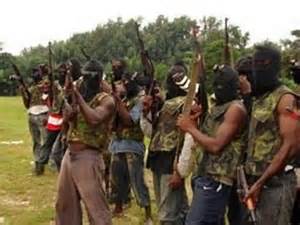
Alexander Mezyaev (SCF) : In July 2014 the activities of Boko Haram – a terrorist group operating in Nigeria – intensified activities on a broader scale. Skirmishes with the government troops turned into real battles. Terrorist acts became much more frequent and the fighting has gone beyond the state borders. The Boko Haram terrorist group appears to become an international organization.
Boko Haram (1) (usually translated as “Western education is a sin”), is a Salafi militant Islamist organization based in northern Nigeria and influenced by Wahhabi movement. (2)
Formally it was founded in 2009 to periodically stage local terrorist acts and attack Christian shrines. With every passing year their activities were becoming more frequent and well-planned encompassing the whole country. The group abruptly intensified actions including the neighboring Cameroon.
This April Chibok kidnapping took place with over 280 schoolgirls snatched by the militants. The group wanted all its members behind bars to be set free. The government refused. Then the action was followed by a string of attacks against populated areas and police stations. Officials and many civilians lost their lives. In June a blast took place in the port of Lagos, the wave of terror hit the oil-rich shores of the Niger River. The end of July was real hot: terrorist acts became a routine matter. On July 27 – Kaduna bombing with the death toll of 50, on July 30 – at least six people have been killed in a suicide bombing at a college in northern Nigeria’s biggest city, Kano. (3) On July 27 Boko Haram militants attacked the northern Cameroon town of Kolofata and seized several people including the wife of Cameroon’s Vice Prime Minister Amadou Ali. The official was taken away from the place by his guards. The mayor and his family were taken hostage. The clashes with the Cameroon army lasted for a few days…
How do the international community, Africa and Nigeria respond to the disastrous unfolding of the events?
First, the United Nations Security Council has started to react. In 2014 the Council’s chairman has made a number of condemning statements. But there has been no resolution and it makes ask questions. In July the names of Boko Haram leaders (especially Abubakar Shekau) were blacklisted under the U.N. al Qaeda sanctions list. It means the United Nations considers Boko Haram to be part of Al Qaeda.
Second, Nigeria, Cameroon, Chad, and Niger agreed to provide troops in order to stamp out Boko Haram. With each country contributing 700 troops each the force is strong enough. (4) Finally the United States State Department has listed Boko Haram as a foreign terrorist organization. This decision gives publicity to the group serving as a kind of advertisement to attract more recruits.
The fact that Boko Haram has become an internationally known organization. This fact could be considered from two angles of view.
The internal aspect is related to complicated state system of Nigeria with the population of hundreds of ethnic groups and clans living in 36 states. The structure is the legacy of British rule which had rich experience of drawing dividing (5) and coercively uniting borders to make live together the peoples who had a long history of animosity towards each other. The independent Nigeria has faced the consequences of the British colonial policy a number of times. For instance, Biafra, officially the Republic of Biafra, was a secessionist state in south-eastern Nigeria that existed from 30 May 1967 to 15 January 1970, taking its name from the Bight of Biafra (the Atlantic bay to its south). The inhabitants were mostly the Igbo people who led the secession due to economic, ethnic, cultural and religious tensions among the various peoples of Nigeria. The creation of the new state that was pushing for recognition was among the causes of the Nigerian Civil War, also known as the Nigerian-Biafran War that took, according to different estimates, the lives of 1-3 million people.
The aspiration for an independent Biafra is still alive. Before his death in late 2013 Chinua Achebe, the world-wide known Nigerian novelist, who was Igbo by nationality, devoted his last book which was called with obvious meaning There Was a Country. The book is in fact a lament for Biafra and the decline of Nigeria, which he relates directly to the Biafran war. It offers a future outlook.
Half of a Yellow Sun is a novel by the Nigerian author Chimamanda Ngozi Adiche. Published in 2006 by Knopf/Anchor, it tells the story of the Biafran War. The author also belongs to the people of Igbo. She wrote about the existence of a special Sun that shines not from the sky but from the banner of Biafra. The book has received many awards, including in Great Britain. It has just been translated into Russian – that’s good news…
The external aspect is to great extent defined by the role of the International Criminal Court which is conducting an official investigation of the Boko Haram activities. Jonathan of Nigeria, the President of Nigeria, is invited as a witness. We believe it to be a grave mistake. Other countries have also faced the situation Nigeria has to tackle today. They have involved the International Criminal Court. For instance, Cote D’Ivoire has invited the Court to make an investigation. Now the President of the country Laurent Gbagbo is in Hague put behind bars. The same thing may be in store for Nigeria. For instance, the recent report by International Criminal Court (ICC) prosecutor Fatou Bensouda says the crimes in Nigeria are committed not only by Boko Haram but also by government troops often in violation of human rights while fighting terrorists. The insinuation is clear, President Goodluck should simulate the fight but he will not be allowed to hold a real victory. The International Criminal Court is an instrument of global governance. Boko Haram and other terrorist organizations have a mission to destabilize Africa to prevent it from leaving behind the economic backwardness.
What is the reason for making the activities of terrorists in Nigeria and in West Africa more vibrant? Many say it’s due to the system of clans. There are three major ethnic groups in Nigeria (6) and a lot of smaller ones. The groups come to power in rotation. The fragile pattern was broken after former President Umaru Musa Yar’Adua, Hausa by origin, suddenly died in 2010 (being only 58). As a result then Vice President Jonathan Goodluck (Yoruba) stepped in as an interim President to win the next presidential election. In 2015 the country will hold another presidential election. Goodluck is among the hopefuls. The intensification of terrorist activities could be a way to pressure him into rejecting his office in favor of someone who belongs to the Hausa tribe. There are attempts made to make people believe that a Hausa Muslim could tackle the problem of Boko Haram. (7) The religious and ethnic aspects do play some role but not the decisive one.
We believe the main reason for the deterioration of the situation in Nigeria is abruptly stated rapid economic growth.
It’s worth to note that the terrorist activities intensified at the time of Nigeria becoming the leading economy in Africa (at the start of 2014) leaving behind the main competitor – the economically strong South Africa. It may not suit the plans of those who stand in the way of progress.
The Boko Haram escalated its activities right at the time the situation in Africa started to seriously deteriorate. The regime of global governance has reasons for concern: the Africa’s GDP growth (8) has been 5, 6 % during the recent ten years against 3, 8% in the world. (9) It was only 1, 1% in eurozone. The economic reasons give rise to the new wave of destabilization in Africa.
In 2013 such countries as Mali, the Central African Republic, Guinea-Bissau, the Democratic Republic of Congo, Uganda, Somalia, Kenia and some other stares faced great difficulties. No matter that, the growth of Africa’s GDP was 5, 7% by far exceeding the world average of 4, 1%. It means the pressure on Africa will grow including terrorist activities.
In 1984 the book Nigeria on Fire in Russian written by former President of the country Olusegun Obasanjo hit the bookstore shelves in 1984. The book describes the war in Biafra, the operations of federal troops and the aid provided by the Soviet Union. Thirty years have passed. Nigeria is hit by fire again. The fire has spread to other countries and is threatening the whole continent. Though the continent is an intermediate goal, Boko Haram fights to make the whole world a caliphate without any borders.
(1) The group’s official name in Arabic is والجهاد للدعوة السنة أهل جماعة, Jama’atu Ahlis Sunna Lidda’Awati Wal-Jihad, a.k.a. Jama’atu Ahlus-Sunnah Lidda’Awati Wal Jihad, a.k.a. Jama’atu Ahlus-Sunna Lidda’Awati Wal Jihad, meaning “People Committed to the Prophet’s Teachings for Propagation and Jihad” The official website of the organization says Christian infidels give a wrong translation like “Western education is a sin”), in reality it’s not a sin, it’s something forbidden by Islam, like pork, for instance. » (http://bokoharam.net/).
(2) Nigerian imams flatly refuse to consider this group as an Islamic one, saying Boco Haram uses Islam as a cover while pursuing quite different goals in reality.
(4) Letter dated 18 June 2014 from the Permanent Representative of Nigeria and from the Chargé d’affaires. of the Permanent Mission of the United Kingdom of Great Britain and Northern Ireland to the United Nations addressed to the President of the Security Council.// UN document : S/2014/425, June 19, 2014
(5) For instance, the largest people of Nigeria – Yoruba was divided between Nigeria, Benin and Togo.
(6) Hausa, Yoruba and Igbo
(7) The Boko Haram leaders themselves say they get funds from some governors of northern states populated by Hausa.
(8) The countries of tropical Africa to the south of Sahara desert.
Alexander Mezyaev – Alexander Mezyaev is the Head of the Chair of the Academy on International Law and Governance in Kazan, Tatarstan, Russia. Alexander Mezyaev is a frequent contributor to international print and online media. His to the point and precise articles are deconstructing social constructionism, scapegoating and positioning in international politics, governance, conflict and law.
Number of displaced surges due to Ukraine conflict: UNHCR
GENEVA: The deteriorating situation in eastern Ukraine has led to surging numbers of internally-displaced people (IDPs), the Office of the United Nations High Commissioner for Refugees (UNHCR) said Tuesday.
Addressing a press conference upon his return from Ukraine, UNHCR’s Europe Bureau director Vincent Cochetel said the number of IDPs in the country reached an estimated 117,000 and was increasing by 1,200 people per day in recent weeks.
Among the total displaced population, up to 87 percent were from eastern Ukraine, mainly from Luhansk and Donetsk regions. UNHCR data showed IDPs from the two regions had risen sharply from 2,600 in early June to 102,600 in early August.
The UN refugee agency called on the Ukrainian government to establish a central registration system of IDPs.
Cochetel emphasized the current lack of a uniform system hampered relief efforts, adding that it was important for Ukrainian authorities to prepare for winter since most of the current shelters were not suitable for the colder months.
UNHCR estimates as additional 730,000 Ukrainians have crossed the border into Russia since the beginning of the conflict.
KIEV: Almost 285,000 people have fled Ukraine’s restive areas as of early August, up 55,000 from the number of mid-July, according to a UN report obtained here on Tuesday.
Among the affected population are people who have been displaced from southern Crimean peninsula, Lugansk and Donetsk regions in the eastern part of the country, according to the document released by the Office of the UN High Commissioner for Refugees (UNHCR).
Every day, around 1,000 people are leaving the conflict areas and 117,000 refugees have found shelters in calm Ukrainian regions since the turmoil in the eastern European country began in February, it said.
Meanwhile, about 168,000 asylum seekers had crossed the border into Russia and requested to obtain refugee status there, the report said.
According to another UN report, at least 1,129 people have been killed and 3,442 others wounded in the Ukraine crisis as of July 26.
On Sunday Aug 8th 2004, the Canadian Association of Veterans obtained funding to put up and display three statues in Memorial Park in Winnipeg, Manitoba. The statues are located near the corner of Osborne St. N and Memorial Blvd, north of Memorial Park. It is located north of the Masonic Legislative building as well.
It is dedicated to Peacekeepers who have lost their lives in the service of the country of Canada since the signing of the United Nations Charter on Oct 24th 1945.
Google Maps
The statue is called Peacekeepers Cairn. Cairn is defined as a heap of stones set up as a landmark, monument, tombstone, etc.
The three pillars are said to represent the Army, Navy, Air Force (and supposedly also the RCMP).
The pillar on the left is 10 feet tall, has a 45 degree beveled top to show a symbol from the front of a Peacekeeping medal depicting three soldiers. One soldier is an unarmed United Nations Military Observer, holding a pair of binoculars. A second soldier, a woman, shoulders a radio, while the third stands guard with a rifle. Above them flies a dove, the international symbol of peace. This side of the medal also bears the inscriptions PEACEKEEPING and SERVICE DE LA PAIX (translated to service out of peace), together with two maple leafs. The word“PAST” is engraved vertically into the front.
The center pillar is 12 feet tall with a 45 degree beveled top to show the United Nations symbol engraved into the stone. The symbol of the words UN on the top of a map of the world with what I construe as, it consits of longitude and latitude lines. The logo has a border of leaves, 7 on the left and 6 on the right. The word “PRESENT” is engraved into the pillar vertically.
The pillar to the right of center statue is 8 feet tall with the same bevel as the others and showing the Peacekeeping medal, reversed side. The medal’s reverse shows the cipher of Her Majesty the Queen on a maple leaf surrounded by two sprigs of laurel and the word CANADA. The word “FUTURE” engraved vertically into the front of the pillar.
Click HERE for the source (description of symbolism of peace medal).
So in essence the cairn depicts the Canadian Army’s past, present and future is aligned with UN peacekeeping missions and that the Canadian Armed Forces is essentially an army for the British Monarchy. After all that should come as no surprise to civilians who know section 2 of the Criminal Code of Canada which defines the “Canadian Forces” as the armed forces of Her Majesty
Are UN peacekeeping missions really about peacekeeping?
Canada has been in over 30 major peacekeeping missions since 1956 but are the peacekeeping missions all about perpetuating peace? It’s hard to tell unless one gets information first hand from a Canadian soldier or a veteran that’s been on a UN peacekeeping mission. The Canadian Awareness Network had a private interview with a veteran who was deployed to Cyprus and Bosnia under a UN peacekeeping mission. Here’s a quote of what he has to say about UN peacekeeping missions,he would like to remain anonymous:
“I have done a couple peacekeeping missions,I did Cyprus in the middle east. That was more of a peacekeeping mission there for sure. But then we go to Bosnia thinking it’s the same type of deal like Cyprus but it wasn’t.” He was there to give food to civilians.
He then told me in Cyprus there was very little combat saying, “in the middle east… it was one killing in the whole 7 or 8 months that you were there where in Bosnia there were peacekeepers getting shot at everyday… United Nations said it was peacekeeping but you know in the eyes of the soldiers it was definitely far from that. From what they’re trying tell the media and what it actually was to me were two different things.” He describes it to be missions that involve combat of defense He said many soldiers killed their selves from the trauma’s they endure.
An article from OpenCanada.org goes into detail how UN peacekeeping mission can be full out war below:
Steve Saideman | June 13, 2012 OpenCanada.org
“…Peacekeeping missions have always risked violence, and we will continue to see violence in the future, even if less than before. The key factor that needs to be considered, which is frequently ignored, is this: When it comes to peacekeeping efforts, the enemy forces have a say in how things play out – and theirs is the deciding vote.
What does this mean? In any conflict that peacekeepers might enter, there are multiple sides and usually more than one set of actors hostile to the accord. (After all, if an agreement produced consensus, there would be little need for outsiders to intervene.) These “spoilers,” as they are known, may or may not resort to violence, but the threat that they may do so means that the outside interveners must be prepared to be violent themselves. This is basic deterrence logic: You need to be able to threaten to impose costs to deter a potential aggressor, AND you need to use force if deterrence breaks down.
The dramatic failure of the UN mission in Rwanda as the genocide started was partly due to the weakness of the UN peacekeeping effort. The genocidaires chose to be violent, voting for war against the rest of Rwanda. They started it off by killing a number of peacekeepers. As the UN mission was poorly equipped, it did not defend itself, nor did it protect anyone else. Indeed, the lesson drawn by potential spoilers from Mogadishu and Rwanda is this: Start by killing the peacekeepers, who may then flee.
Those nostalgic of past peacekeeping forget the violence the Canadians not only faced in such circumstances, but also deployed. In Croatia, the Canadians battled with the Croatian army, which was engaged in war crimes against the Serb populace. This was the biggest battle Canada fought between the wars in Korea and Afghanistan. History suggests, then, that peacekeeping has always been a violent enterprise, and it is probably more so these days, as spoilers learn from Somalia and Rwanda. “ ~ SOURCE
Do Canadian soldiers like being involved in UN peacekeeping missions?
An article from the Globe and Mail answers the question below:
Globe & Mail
Michael Valpy
Wednesday, February 28, 2007
Despite high-minded policy statements and public perception, Canada’s global role, Michael Valpy reports
It’s so hard to square mythology with reality. While 70 per cent of Canadians consider military peacekeeping a defining characteristic of their country, Canada has turned down so many United Nations’ requests to join peacekeeping missions during the past decade that the UN has stopped asking.
In 1991, Canada contributed more than 10 per cent of all peacekeeping troops to the UN. Sixteen years later, its contribution is less than 0.1 per cent.
On this month’s fifth anniversary of Canadian troops being sent to Afghanistan and one year after assuming responsibility for the counterinsurgency campaign — a war by any other name — in Kandahar province, one of the country’s biggest unanswered questions is: What is Canadian military policy? It’s certainly not to be the global leader in peacekeeping the country once was.
Little more than a year ago, Colonel Michael Hanrahan, the Canadian Armed Forces’ top expert on peacekeeping, was offered the job as chief of staff of the UN’s Department of Peacekeeping Operations. His Ottawa superiors nixed the idea. There is, in fact, not a single Canadian officer in the UN’s peacekeeping headquarters.
…
“In view of the multiple security challenges we now confront, we should be extremely skeptical about arguments that the days of peacekeeping are over and our armed forces are now only in the business of fighting insurgents and targeting terrorists.”[quote from Fen Hampson, director of the Norman Paterson School]
Yet several academics who study Canadian military and foreign policy see patterns of anti-UN bias among senior army officers and a preference for operating beside the United States. The anti-UN bias comes from their experience in UN peacekeeping missions of the past, and their U.S. preference is based on top-grade logistics and tactical support that the U.S. military can offer their own troops.
…
One Canadian academic, who asked to speak anonymously because he works for the military, said he had been told confidently by a senior army officer that Canadian troops would never take part in another UN-led operation. But Prof. Roland Paris, a specialist in international security at the University of Ottawa, is less convinced that Canada is deliberately turning away from the UN. He cites previous cycles of troughs in Canada’s peacekeeping involvement.
In any event, the patterns seen by Mr. Heinbecker, now director of the Centre for Global Relations, Governance and Policy at Wilfrid Laurier University in Waterloo, Ont., suggest traditional UN peacekeeping operations are a thing of the past, that they have become more akin to the mission in Afghanistan.
“They are almost all complex missions now. They involve combat. Very often the UN is expected to get involved before the fighting is over….” ~ SOURCE
As the above article mentioned, Canadian armed forces have slowly declined in participating in UN peacekeeping missions. But does that mean they are not under UN control? The article above also made mention that Canadian army prefers to work along side of the US army. Ultimately the US army is under full control of the UN. U.S Defense Secretary Leon Panetta testified and stated that the UN and NATO have supreme authority over the actions of the U.S military, reported by Infowars in 2012.
So does the UN peacekeeping cairn in Winnipeg hold a little bit of truth of Canada still participating with the UN?
In one way or another, yes.
Is the UN all about peacekeeping? No!
Islam Karimov, the Uzbek dictator who likes to boil people alive was given a “Cultural Diversity” awarded by the UN. The UN has declared Fidel Castro, the longtime Communist dictator of Cuba, the “World Hero of Solidarity”. Castro killed thousands and thousands of people during his rule, torturing some to death . Even way earlier in history 26.3 million Chinese died between 1949-1965 under the regime of Moa Zedong’s red China. In 1971 the United Nations General Assembly voted to allow Mao Zedong’sred China into the UN.
The UN was established in 1942 after the second world war by international bankers and political world leaders. The UN is the forefront to establish a “new world order” one world government under UN control, under the guise of protecting human rights and doing peacekeeping. The term “new world order” was first politically used and publicly introduced by former U.S President George H. W. Bush at the United Nations General Assembly in 1991.




 PN
PN 