
The Nobel War Prize
 By Julie Lévesque
Global Research
October 17, 2012
The Nobel Committee did it again. The essence of its highest award, the Nobel Peace Prize, has been perverted. It’s been turned into a propaganda tool, a form of institutionalized revisionism, for which war is upheld as a peaceful endeavour, creeping alongside power struggles called “humanitarian interventions” in a fantasy tale we call history.
Neither Henry Kissinger, nor Barack Obama and the European Union (EU) deserved a peace prize. How can the EU deserve a peace prize when it’s been using its military might in the Middle East and Africa for over a decade? As David Swanson notes:
“Europe […] has not during the past year — which is the requirement — or even during the past several decades done the most or the best work for fraternity between nations. Ask Libya. Ask Syria. Check with Afghanistan. See what Iraq thinks. Far from doing the best work to abolish or reduce standing armies, Europe has joined with the United States in developing an armed global force aggressively imposing its will on the world. There were good nominees and potential nominees available, even great ones […]
The West is so in love with itself that many will imagine this award a success. Surely Europe not going to war with itself is more important that Europe going to war with the rest of the world!” (David Swanson, Why Europe Did Not Deserve a Nobel Peace Prize)
In addition to waging war with murderous weapons, the EU also uses “economic weaponry” directed against civilians, such as the sanctions it imposes on Iran. Unlike the EU, Iran has not invaded or attacked any country and the reasons justifying the economic sanctions are pure fantasy. Kourosh Ziabari explains:
[T]his union has aggressively declared an all-out, bloodless war on Iran, affecting millions of innocent civilians in my country who can’t understand for what crime they are being targeted and punished in such a belligerent and unfair manner.
The European Union began to impose an inclusive oil embargo against Iran since July 1 as a result of direct pressure and lobbying by the United States and in an effort aimed at paralyzing Iran’s nuclear program which they claim is not aimed at civilian purposes, and finally breaking the back of Iran’s economy and pressuring it into making political concessions […]
Sensitive medicine and pharmaceutical products which were previously imported from the foreign countries cannot find their way to Iran’s markets anymore and thousands of patients badly in need of medicines for such diseases as thalassemia, hepatitis, diabetes, different types of cancer, heart diseases and psychiatric disorders are facing serious problems with finding their medicines.
Waging wars does not take place simply by means of bombarding cities or dropping nuclear bombs on other nations. What the European Union has been doing with Iran is the unmistakable representation of an all-out war in which the ordinary citizens are the silent victims. (Kourosh Ziabari The Nobel Peace Prize for Those Who Declared War on My Country)
And as if that was not enough, European peacemaking also includes fighting Iran’s freedom of speech as Danny Schechter reports: “European satellite company Eutelsat says it’s pulled the plug on several Iranian satellite channels following an order by the European Commission.” (Danny Schechter, Tell Me Lies: European Satellites Ordered To Drop Iranian Channels In Disregard of Free Speech)
The odd Nobel Laureate is waging a financial war on its own members as well as the cases of Greece and Spain illustrate:
How can you award of a Peace Prize – of all things! – to an entity that systematically supports the economic and social destruction of Greece; imposes extreme hardship on Spaniards and Italians whilst it supports greedy mega-bankers; has an undemocratically elected president (Herman van Rompuy) and, through its NATO war machine, continues bombing and destroying Afghanistan, Iraq, Libya, and is now poised for unilateral attack against Syria and Iran? Indeed, “Peace” should be made of sterner stuff!! (Adrian Salbuchi, The European Union Grabs the 2012 Nobel Peace Prize)
But in addition to its internal economic warfare and its plea of moral duty to promote war abroad and assert its position on the global chessboard, the EU is not an eligible candidate for this prize. According to Michel Chossudovsky:
While the EU’s contribution to peace is debatable, the key issue is whether a union of nation states, which constitutes a political, economic, monetary and fiscal entity is an “eligible candidate” for the Peace Prize, in accordance with the mandate of the Norwegian Committee.
The Olympic Games are “granted” to countries. But the Nobel Peace Prize cannot under any stretch of the imagination be granted to a nation-state, let alone a union of nation states. (Michel Chossudovsky The EU is not a “Person”: Granting the Nobel Prize to the European Union is in Violation of Alfred Nobel’s Will)
Has the Norwegian Nobel Committee become Orwell’s worst nightmare, where war is peace? To understand their nonsensical choices over the years and what to expect in the future, one has to wonder who and what does the Nobel Committee represent?
Expect anything from Nobel Committee members. They represent wealth, power, privilege, imperial lawlessness, and war, not peace. Perhaps they believe war is peace. They’ll have to explain why scoundrels regularly win their highest award. (Stephen Lendman Nobel Hypocrisy Wins Again)
If the Nobel Peace Prize is delusional, the victims of the EU’s warfare will tell you the horror of war is real.
Global Research offers its readers a list of selected articles on this topic.
____________________________________________________________________________________________________________________
Selected Articles
David Swanson, Why Europe Did Not Deserve a Nobel Peace Prize
Kourosh Ziabari, The Nobel Peace Prize for Those Who Declared War on My Country
Prof Michel Chossudovsky, The EU is not a “Person”: Granting the Nobel Prize to the European Union is in Violation of Alfred Nobel’s Will
Diana Johnstone and Jean Bricmont, Proposal: 2013 Nobel Peace Prize to NATO
Robert Bridge, EU Austerity Measures: Will the Nobel Prize Laureate use NATO to Collect Bad Debts?
Stephen Lendman, Nobel Hypocrisy Wins Again
Adrian Salbuchi, The European Union Grabs the 2012 Nobel Peace Prize
Danny Schechter, Tell Me Lies: European Satellites Ordered To Drop Iranian Channels In Disregard of Free Speech
————————
Related content:
-

Proposal: 2013 Nobel Peace Prize to NATO
On the eve of the hundredth anniversary of the outbreak of World War I, what could be more fitting than to award this prestigious Peace Prize to the organization that is truly ready and willing to END ALL WARS!
The Norwegian parliamentarians have just awarded the Nobel Peace Prize to the European Union.… -

New book: The Nobel Peace Prize (Praeger, 2010)
In his newest book, The Nobel Peace Prize (2010), Norwegian lawyer and author Fredrik S. Heffermehl, shows how far the custodians of Nobel´s prize for “the champions of peace” have moved the prize away from the testator´s actual intentions.… -

Why Europe Did Not Deserve a Nobel Peace Prize
Yes, indeed, it is a little-acknowledged feat of miraculous life-saving power that Europe has not gone to war with itself — other than that whole Yugoslavia thing — since World War II.
It’s as clear a demonstration as anything that people can choose to stop fighting. … -

The Nobel Peace Prize for Those Who Declared War on My Country
Nobel Prize is the most prestigious honor which one may be awarded in his lifetime. The legacy of Alfred Nobel is so matchless and incomparable that more than one century after the first Nobel Prize was awarded, it is still the most exalted and esteemed prize that can be conferred to people who work for the promotion and advancement of sciences and global peace.…
Disclaimer: The contents of this article are of sole responsibility of the author(s). The Centre for Research on Globalization will not be responsible for any inaccurate or incorrect statement in this article. The Center of Research on Globalization grants permission to cross-post original Global Research articles on community internet sites as long as the text & title are not modified. The source and the author’s copyright must be displayed. For publication of Global Research articles in print or other forms including commercial internet sites, contact: publications@globalresearch.ca
http://www.globalresearch.ca contains copyrighted material the use of which has not always been specifically authorized by the copyright owner. We are making such material available to our readers under the provisions of “fair use” in an effort to advance a better understanding of political, economic and social issues. The material on this site is distributed without profit to those who have expressed a prior interest in receiving it for research and educational purposes. If you wish to use copyrighted material for purposes other than “fair use” you must request permission from the copyright owner.
For media inquiries: media@globalresearch.ca
EU Censors Alternative News in Bid to Dominate Narrative
Western media quietly attempts to censor growing global opposition, begins with Iranian media.
by Tony Cartalucci
October 16, 2012 – Iran’s Press TV reported in their article, “Press TV viewers slam EU move to ban Iran channels as illegal, hypocritical,” that “Press TV viewers have condemned as illegal and hypocritical the ban imposed by the European officials on the broadcast of several Iranian satellite channels.” Nearly no mention is made in the Western media regarding the blatant act of censorship – an act that runs contra to all perceived notions of “Western values,” and an act that directly undermines the narratives of the West supporting “freedom” and “democracy” around the globe.
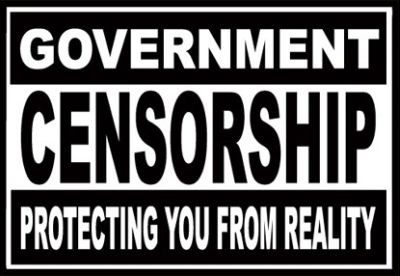
Image: The West has spent billions trying to leverage “freedom of speech” and “human rights” as a means to undermine, destabilize, overthrow, and replace governments around the world, from the US-engineered Eastern European “color-revolutions” after the fall of the Soviet Union, to the latest US-engineered “Arab Spring,” and all across Southeast Asia. Now with the West pursuing its own campaign of censorship, it is clear that these “values” were merely selectively and opportunistically manipulated.
The news has been buried under reports regarding a new round of sanctions passed by the EU which was recently awarded the Nobel Peace Prize even while pursuing multiple wars across the globe, including continuing operations in Libya, the subversion of Syria, and a decade long occupation of Afghanistan which sees weekly civilian massacres by NATO air strikes on both sides of the Afghan-Pakistani border. In fact, the most recent NATO atrocity occurred not even a week ago, killing 3 children in the Helmand province. Of course this was absent in Western headlines, but it did make headlines in Iran’s Press TV, and indicates a more realistic explanation to the EU’s decision to ban the Iranian news service.
Clearly the EU has no qualms over endangering civilian lives – its concerns over “human rights” are a selectively applied value it uses against its enemies with demonstrably no intention of holding itself to similar standards. Now, the EU has applied this same selective application of supposed “Western values” to “freedom of speech,” curtailing it when that speech endangers its own interests, and pursuing “freedom” when it advances their agenda. And it is this hypocrisy that the increasingly popular Press TV news service has been illustrating, as a counterweight to the uniformly biased and compromised Western press.
It was US Secretary of State Hillary Clinton who stated that censorship incurred “long-term economic and social costs,” with oppression leading to “civil unrest and not security.” Many Western politicians executing corporate-financier driven policy have stated that a regime’s pursuit of censorship was a sign of weakness and fear – an indicator that its opposition was gaining ground and that more overt, visible, even desperate measures needed to be implemented. Censorship, according to the West’s own narrative, is part of a self-defeating cycle where legitimacy and the mandate to lead increasingly is fading.
With that consideration in mind, the censorship of Iran’s Press TV should be a sign that Iran’s efforts to balance global public perception skewed by the vast resources of Wall Street and London are succeeding. Along with Russia Today (RT), Press TV has provided nations who aspire to live in a mulipolar world where the primacy of the nation-state prevails, a model to follow in combating the unwarranted power and influence of Western media houses.
Above all, it should be noted that a key contributing factor to Press TV and RT’s success is the growing alternative media – media by the people and for the people – whose legitimacy and reputation is measured in accuracy, consistency, and objectivity, not slick graphics, expensive suits, and million-dollar studios. The alternative media has provided content for growing national news agencies seeking to challenge the West’s hegemony over information, and while national news agencies ultimately pursue national agendas, the content they are drawing on generally come from people simply seeking the truth.
The EU’s act of censorship against Press TV is in turn a strike against the alternative media. Instead of being seen as a setback, it should be seen as a success and a signal to redouble our efforts as individuals to assert our own will and vision for the future over that of the miniscule global elite who have so far gone unchallenged in their designs and aspirations. The alternative media should be only the first in a series of people-driven alternatives systematically undermining and replacing existing corporate-financier dominated paradigms.
The EU is not a “Person”: Granting the Nobel Prize to the European Union is in Violation of Alfred Nobel’s Will
 by Prof Michel Chossudovsky
Global Research
October 13, 2012
This year’s Nobel Peace Prize was granted to the European Union (EU) for its relentless contribution to “the advancement of peace and reconciliation, democracy and human rights in Europe.”
While the EU’s contribution to peace is debatable, the key issue is whether a union of nation states, which constitutes a political, economic, monetary and fiscal entity is an “eligible candidate” for the Peace Prize, in accordance with the mandate of the Norwegian Committee.
The Olympic Games are “granted” to countries. But the Nobel Peace Prize cannot under any stretch of the imagination be granted to a nation-state, let alone a union of nation states.
The Norwegian Nobel Committee has a responsibility to ascertain “the eligibility of candidates” in accordance with the Will of Alfred Bernhard Nobel (Paris, 27 November, 1895).
“The whole of my remaining realizable estate shall be dealt with in the following way: the capital, invested in safe securities by my executors, shall constitute a fund, the interest on which shall be annually distributed in the form of prizes to those who, during the preceding year, shall have conferred the greatest benefit to mankind….
The said interest shall be divided into five equal parts, which shall be apportioned as follows: one part to the person who shall have made the most important discovery or invention within the field of physics; one part to the person who shall have made the most important chemical discovery or improvement; one part to the person who shall have made the most important discovery within the domain of physiology or medicine; one part to the person who shall have produced in the field of literature the most outstanding work in an ideal direction; and one part to the person who shall have done the most or the best work for fraternity between nations, for the abolition or reduction of standing armies and for the holding and promotion of peace congresses. …
[F]or champions of peace [the prize will be awarded] by a committee of five persons to be elected by the Norwegian Storting. It is my express wish that in awarding the prizes no consideration whatever shall be given to the nationality of the candidates, but that the most worthy shall receive the prize, whether he be a Scandinavian or not.
Will of Alfred Bernhard Nobel, November 27, 1895, emphasis added
The conditions set out in Alfred Nobel’s Will have been twisted upside down.
Nobel’s Will is crystal clear. The five prizes are to be granted to “persons”. (See complete list of laureates)
Since its inception, however, several of the prizes have been granted to both “persons” and organizations/institutions to which they are affiliated as in the case of Henry Dunand (Red Cross) or Mohamed ElBaradei, UN International Atomic Energy Organization (IAEA). In other cases, the prize was granted as to “organizations” consisting of a collective of persons (e.g. UN Intergovernmental Panel on Climate Change).
The granting of the Nobel Prize to the European Union, which is a political entity, a union of nation states, is visibly in blatant violation of Alfred Nobel’s Will.
Theater of the Absurd
The European Union cannot under any stretch of the imagination be categorized as a “person”, “a group of persons” or even an “organization”. Moreover, implied in Nobel’s Will is that the candidates must be citizens without regard to nationality:
“It is my express wish that in awarding the prizes no consideration whatever shall be given to the nationality of the candidates, but that the most worthy shall receive the prize, whether he be a Scandinavian or not.(Alfred Nobel’s Will, Paris, 1895)
The European Union is a union of nation states composed of citizens.
The EU cannot be a citizen of itself, nor does the EU have a nationality.
Citizens of the EU are “eligible candidates” but the EU cannot be “an eligible candidate”.
Moreover, it stands to reason that “eligible candidates” for the Peace prize who are “persons” cannot reasonably be evaluated, compared or ranked by the Norwegian selection committee in relation to the European Union, which is a “non-person”, namely a union of countries.
This an important consideration: How does the candidacy of the EU “compare” to “other” distinguished 2012 nominees who are actual “persons”? “Oranges versus apples?
According to the procedure, a short list of nominees “is reviewed by permanent advisers and advisers specially recruited for their knowledge of specific candidates.” And based on this review, the Peace Laureate is chosen, through a majority vote of the five persons Norwegian Committee.
The prize consists of “a medal, a personal diploma, and a cash award.” Theater of the absurd: A “personal diploma” to the European Union and “a cash award”, for what, to whom? To finance the EU’s budget deficit, its bank bailout schemes?
The decision of the Norwegian Nobel Committee is diabolical and illegal, in blatant violation of its mandate.
Full text of Alfred Nobel’s Will
I, the undersigned, Alfred Bernhard Nobel, do hereby, after mature deliberation, declare the following to be my last Will and Testament with respect to such property as may be left by me at the time of my death:
To my nephews, Hjalmar and Ludvig Nobel, the sons of my brother Robert Nobel, I bequeath the sum of Two Hundred Thousand Crowns each;
To my nephew Emanuel Nobel, the sum of Three Hundred Thousand, and to my niece Mina Nobel, One Hundred Thousand Crowns;
To my brother Robert Nobel’s daughters, Ingeborg and Tyra, the sum of One Hundred Thousand Crowns each;
Miss Olga Boettger, at present staying with Mrs Brand, 10 Rue St Florentin, Paris, will receive One Hundred Thousand Francs;
Mrs Sofie Kapy von Kapivar, whose address is known to the Anglo-Oesterreichische Bank in Vienna, is hereby entitled to an annuity of 6000 Florins Ö.W. which is paid to her by the said Bank, and to this end I have deposited in this Bank the amount of 150,000 Fl. in Hungarian State Bonds;
Mr Alarik Liedbeck, presently living at 26 Sturegatan, Stockholm, will receive One Hundred Thousand Crowns;
Miss Elise Antun, presently living at 32 Rue de Lubeck, Paris, is entitled to an annuity of Two Thousand Five Hundred Francs. In addition, Forty Eight Thousand Francs owned by her are at present in my custody, and shall be refunded;
Mr Alfred Hammond, Waterford, Texas, U.S.A. will receive Ten Thousand Dollars;
The Misses Emy and Marie Winkelmann, Potsdamerstrasse, 51, Berlin, will receive Fifty Thousand Marks each;
Mrs Gaucher, 2 bis Boulevard du Viaduc, Nimes, France will receive One Hundred Thousand Francs;
My servants, Auguste Oswald and his wife Alphonse Tournand, employed in my laboratory at San Remo, will each receive an annuity of One Thousand Francs;
My former servant, Joseph Girardot, 5, Place St. Laurent, Châlons sur Saône, is entitled to an annuity of Five Hundred Francs, and my former gardener, Jean Lecof, at present with Mrs Desoutter, receveur Curaliste, Mesnil, Aubry pour Ecouen, S.& O., France, will receive an annuity of Three Hundred Francs;
Mr Georges Fehrenbach, 2, Rue Compiègne, Paris, is entitled to an annual pension of Five Thousand Francs from January 1, 1896 to January 1, 1899, when the said pension shall discontinue;
A sum of Twenty Thousand Crowns each, which has been placed in my custody, is the property of my brother’s children, Hjalmar, Ludvig, Ingeborg and Tyra, and shall be repaid to them.

The whole of my remaining realizable estate shall be dealt with in the following way: the capital, invested in safe securities by my executors, shall constitute a fund, the interest on which shall be annually distributed in the form of prizes to those who, during the preceding year, shall have conferred the greatest benefit to mankind. The said interest shall be divided into five equal parts, which shall be apportioned as follows: one part to the person who shall have made the most important discovery or invention within the field of physics; one part to the person who shall have made the most important chemical discovery or improvement; one part to the person who shall have made the most important discovery within the domain of physiology or medicine; one part to the person who shall have produced in the field of literature the most outstanding work in an ideal direction; and one part to the person who shall have done the most or the best work for fraternity between nations, for the abolition or reduction of standing armies and for the holding and promotion of peace congresses. The prizes for physics and chemistry shall be awarded by the Swedish Academy of Sciences; that for physiological or medical work by the Caroline Institute in Stockholm; that for literature by the Academy in Stockholm, and that for champions of peace by a committee of five persons to be elected by the Norwegian Storting. It is my express wish that in awarding the prizes no consideration whatever shall be given to the nationality of the candidates, but that the most worthy shall receive the prize, whether he be a Scandinavian or not.
As Executors of my testamentary dispositions, I hereby appoint Mr Ragnar Sohlman, resident at Bofors, Värmland, and Mr Rudolf Lilljequist, 31 Malmskillnadsgatan, Stockholm, and at Bengtsfors near Uddevalla. To compensate for their pains and attention, I grant to Mr Ragnar Sohlman, who will presumably have to devote most time to this matter, One Hundred Thousand Crowns, and to Mr Rudolf Lilljequist, Fifty Thousand Crowns;
At the present time, my property consists in part of real estate in Paris and San Remo, and in part of securities deposited as follows: with The Union Bank of Scotland Ltd in Glasgow and London, Le Crédit Lyonnais, Comptoir National d’Escompte, and with Alphen Messin & Co. in Paris; with the stockbroker M.V. Peter of Banque Transatlantique, also in Paris; with Direction der Disconto Gesellschaft and Joseph Goldschmidt & Cie, Berlin; with the Russian Central Bank, and with Mr Emanuel Nobel in Petersburg; with Skandinaviska Kredit Aktiebolaget in Gothenburg and Stockholm, and in my strong-box at 59, Avenue Malakoff, Paris; further to this are accounts receivable, patents, patent fees or so-called royalties etc. in connection with which my Executors will find full information in my papers and books.
This Will and Testament is up to now the only one valid, and revokes all my previous testamentary dispositions, should any such exist after my death.
Finally, it is my express wish that following my death my veins shall be opened, and when this has been done and competent Doctors have confirmed clear signs of death, my remains shall be cremated in a so-called crematorium.
Paris, 27 November, 1895
Alfred Bernhard Nobel
That Mr Alfred Bernhard Nobel, being of sound mind, has of his own free will declared the above to be his last Will and Testament, and that he has signed the same, we have, in his presence and the presence of each other, hereunto subscribed our names as witnesses:
Sigurd Ehrenborg
former Lieutenant
Paris: 84 Boulevard Haussmann
R. W. Strehlenert
Civil Engineer
4, Passage Caroline
Thos Nordenfelt
Constructor
8, Rue Auber, Paris
Leonard Hwass
Civil Engineer
4, Passage Caroline
INTERNATIONAL DAY OF ACTION – Oct. 6, 2012 — Canadian Peace Congress: End the Aggression Against Syria! Stop the Drive to War Against Iran!
 Global Research
October 1, 2012
The Canadian Peace Congress condemns the ongoing foreign intervention in Syria and the escalating drive to war against Iran, and calls for the immediate withdrawal of all Canadian, NATO and foreign mercenary forces from the region. We further call upon the Conservative government of Stephen Harper to restore and normalize its diplomatic relations with Syria and Iran, and to re-orient Canadian foreign policy toward peace, international cooperation and solidarity.
The Harper government’s decision to adopt an international policy of belligerence, and to do so without consulting Parliament, is further evidence of its abandonment of a foreign policy of peace and diplomacy in favour of aggressive and hostile interference in the internal affairs of sovereign countries. Syria and Iran are member states of the United Nations and have expressed no hostile intent towards Canada or its people. Prime Minister Harper is actively contributing to the danger of war, through hostile policies that are out of step with the Canadian peoples’ longstanding support for peace.
The Canadian government has allied itself with a minority of Western governments who, along with pro-war forces within Israel and a few reactionary Arab regimes, are seeking new pretexts for intervention and war. These include the protection of human rights or the prevention of the alleged proliferation of weapons of mass destruction. These objectives cannot be achieved by breaking diplomatic relations, imposing economic sanctions, arming foreign mercenaries, or forging international campaigns for regime change and by installing puppet governments favourable to the strategic goals of the major western power.
Foreign intervention, sanctions and military aggression only weaken the human and democratic rights of the Syrian and Iranian people, and diminish their ability to develop and improve their societies. The aftermath of NATO intervention in Libya last year, in which Canadian armed forces bombed Libyan territory, has been disastrous for the people of Libya who are now plunged into factional warfare. This, plus the catastrophic consequences of the military occupation of Iraq, including the deaths of over one million Iraqis, clearly indicate that the main victim of any war is the civilian population.
As in the case of Libya last year, the drive to interfere in Syria and Iran is driven by the strategic and economic interests of imperialist powers. These countries – including the United States, Britain, the European Union and Canada – choose militarism and war as their preferred option for expanding their spheres of influence and control over resources and markets. The result is destruction, displacement and despair to the peoples of the developing countries who have been targeted. Far from resolving conflicts, these policies of interference only deepen current crises and escalate the danger to world peace.
Pro-war forces have seized upon the many complexities in the situations in Iran and Syria, to promote misinformation and confusion. The threat to peace in the Middle East does not arise from countries who exercise their sovereign right to develop the nuclear energy industries to build their economies. Nor does it originate with countries who oppose Western efforts to re-colonize the Middle East and control its vast energy resources, through the New Middle East Plan. Rather, the concrete threat to peace is the existing conventional and nuclear weapons that the US, its NATO allies and Israel constantly brandish in their effort to destabilize the region, to demonize governments that oppose imperialist plans, and to justify interference and war.
The Canadian Peace Congress asserts that the direction of economic, political and social development in any country is the sole right of the people of that country to determine, without foreign interference. We hold this principle to be true for the people of Canada, as we hold it to be true for the people of Syria and Iran. We are completely opposed to any foreign political or military intervention, under any pretext. This includes efforts to interfere with and divert genuine democratic domestic movements.
The role of the Canadian government in both of these crises has been shameful. Under Stephen Harper’s Conservatives, Canada has abandoned its reputation as a country with an independent stance in international relations, and assumed the posture of a vocal NATO aggressor state. In all dimensions – political-diplomatic, economic and military – Canada’s recent policies toward Syria and Iran have been geared toward three goals:
- Isolate and neutralize sources of information that conflict with imperialist aims, by cutting off communication with the governments and peoples in Syria and Iran;
- Increase the suffering of the people and generate anti-government sentiment, by imposing economic sanctions that particularly target energy industries who produce for local consumption;
- Increase the active military threat in the region, by deploying warships and other military resources to the region.
These goals all directly serve the overall objective of pro-Western regime change in Syria and Iran, and the Harper government has campaigned hard internationally, to convince other countries to assume similar policies against both countries.
In the case of Syria, the Conservatives have also campaigned aggressively to create and promote a political opposition movement to the government. In November 2011, the NATO Parliamentary Assembly received a report that “virtually no one [in Syria] is calling for international military intervention” and that Syria was “without a clearly identifiable opposition with precise political ambitions.” Yet, just prior to that report, Canada’s Foreign Affairs Minister John Baird had met with the Syrian National Council and proclaimed them to be the legitimate opposition who has “continuously outlined their appetite for change.” It is unclear how Baird identified an organized and “legitimate” opposition when NATO could not, and it suggests that the Syrian National Council is little more than a pro-Western puppet government-in-waiting that has been fashioned by imperialist forces.
Furthermore, Canada has supported the arming of an estimated 40-60,000 foreign mercenaries to fight inside Syria. These mercenaries form the backbone of the Free Syrian Army, and indicate the degree of armed foreign intervention already underway in Syria. The recent elections in Syria had a higher voter turnout than in Canada, and a number of independents and government opponents were elected and have been included in the cabinet. The Syrian people have spoken, yet Canada and other interventionist forces continue to pick sides in an internal matter.
In the case of Iran, the frenzied drive to war has obscured certain significant facts from the public eye:
-
Iran is a non-nuclear state and a signatory to the Nuclear Non-Proliferation Treaty (NPT), and is under the supervision of the United Nations’ International Atomic Energy Agency (IAEA). Iran has repeatedly stated that its nuclear program is for peaceful purposes and not for military ends. The fact of the matter is that neither the IAEA nor the U.S. administration has been able to show any substantiated evidence about the weaponization of Iran’s nuclear energy program. The U.S. Secretary of Defence, Leon Panetta, has publicly conceded, “there is no evidence that Iran has a nuclear weapon.”
-
Israel is a nuclear weapons state with an estimated 200-400 nuclear weapons, who has refused to join the NPT. There is no UN supervision over Israel’s nuclear activities. It has pre-emptively attacked other neighbouring states, and has threatened Iran with military attack many times.
-
United States is a nuclear weapons state with more than 10,000 nuclear weapons, and it has not allowed any inspection of its nuclear facilities by the IAEA. The U.S. has used nuclear weapons against other countries, when it exploded two nuclear bombs on Japan and when it used uranium-enriched weapons in Iraq. The U.S. also has repeatedly threatened Iran with military attack, and has nuclear-equipped forces currently stationed in the region.
The Canadian Peace Congress supports the October 6 Day of Protest Against War, initiated by the Canadian Peace Alliance. After more than a year of conflict and violent foreign intervention, thousands of Syrian people have died. If governments like Canada are allowed to continue their current policies of aggression, interference and colonization, thousands more will die. All peace-supporting groups in Canada – including trade unions, faith communities and student groups – need to speak out and mobilize against intervention in Syria and Iran and the threat of a far broader war in the region.
The Canadian Peace Congress demands that the Canadian government:
-
Immediately withdraw Canadian military forces from the region, and oppose military intervention in Syria and Iran, under any pretext;
-
Restore diplomatic relations with Syria and Iran, remove sanctions, and support the peace initiatives of those states and organizations advocating a cease fire and negotiated end to the war;
-
Withdraw from NATO, which has a nuclear first-strike policy and complimentary sea- and land-based ballistic missile systems, and all other military alliances;
-
Promote full nuclear disarmament, beginning with the nuclear stockpiles of the United States, Israel and NATO;
-
Adopt a new independent Canadian foreign policy of peace, non-intervention and diplomacy in international relations.
Canadian Peace Congress Executive Council
30 September, 2012
The Canadian Peace Congress was formed in 1949 as an organization of Canadian people that works for world peace and disarmament. We maintain that peace, not militarism and war, is the guarantor of democracy, human rights, and social and economic justice. The Peace Congress is affiliated to the World Peace Council and is a founding member of the Canadian Peace Alliance.
_____________________________________________________________________________________
Don’t Attack Iran
Join the International day of Action, October 6
Events Listings
Edmonton
A peace rally organized by the Edmonton Coalition Against War & Racism (ECAWAR) urging the Canadian government not to use military intervention in Iran.
The program includes:
Dr. Rose Geransar (Iranian-Canadian activist)
Siavash Saffari (Iranian-Canadian activist)
Peggy Morton (ECAWAR)
Dr. Dougal MacDonald (ECAWAR)
Paula Kirman (political singer/songwriter)
….more details to come!
Hands off Iran!
Hands off Syria!
No Sanctions – No War!
Canada Needs and Anti-War Government!
Facebook event
Halifax
Join us for a rally and march on Saturday, October 6, part of a pan-Canadian day of action to oppose a war against Iran.
1:00 p.m. Rally at Halifax Commons Triangle
1:30 p.m. March to Megan Leslie’s Community Office on Gottingen St.
Hamilton
No Attack on Syria and Iran!
Join thousands of people around North America and England in protesting the run-up to the looming wars in the Mideast! Stop the Harper government’s preparations for military intervention in both Syria and Iran!
Saturday, October 6, 2012, at the Federal Building, 55 Bay Street North, Hamilton, 1 pm.
For further info on the October 6 demonstrations, e-mail hcsw-at-cogeco.ca, phone 905-383-7693, or go to our events page at www.hamiltoncoalitiontostopthewar.ca . Colin Powell says: Don’t Get Fooled Again!
Toronto
Don’t attack Iran – Rally and March
Join the Toronto Coalition to Stop the War for a city-wide rally and march on Saturday, October 6, part of a pan-Canadian day of action to oppose a war against Iran.
2:00 p.m. Rally at Queen’s Park
3:00 p.m. March
3:30 p.m. Public meeting: ‘Why Harper cut ties with Iran’ – featuring special guest speakers (TBA)
Vancouver
Stop Harper’s Warmongering Against Iran
International Day of Action Against War
Saturday October 6
12 Noon
Meet at Peace Flame Park (also known as Seaforth Peace Park) – south end of Burrard Bridge, between Cornwall & 1st Ave Join StopWar.ca and allies in a display of banners and signs for drivers, cyclists and transit riders.
This action is in solidarity with an international day of action. Below, please find the callout for actions across Canada.
More information: stopwar-at-resist.ca
Syria Russia Egypt China Israel EU – Benjamin Fulford [video]
108morris108
September 7, 2012
Current Geo Political Developments – And reading their true goals.
The Jews could live in the Middle East – if they could just get rid of their paranoia and anti social behaviour.
Growing Opposition to the Canada-EU Trade Agreement
by Dana Gabriel
BE YOUR OWN LEADER
August 29, 2012
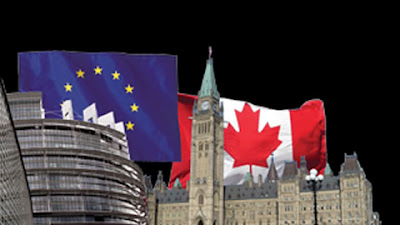
With the final rounds of negotiations sessions planned for September and October, Canada and the EU are closing in on a free trade deal that would go far beyond the reach of NAFTA. Meanwhile, there is growing opposition to the agreement as the whole process has lacked openness, transparency and any public consultations. In Canada, there are concerns over the threat it poses to local democracy. This includes fears of deregulation and privatization, as well the expansion of corporate investor rights. There are also warnings that the deal could be used as a backdoor means to implement ACTA which was rejected by the European Parliament in July.
As the Canada-European Union (EU) Comprehensive Economic and Trade Agreement (CETA) talks near their end, the Council of Canadians continue to voice their opposition to the deal. While I don’t agree with their position on some different issues, they have been championing the fight against CETA. In an effort to counter misleading statements made by the Conservative government regarding the trade pact, they have released the report, the CETA Deception. Trade campaigner, Stuart Trew explained how this is an effort to, “challenge the government’s reassurances that its EU trade deal will not affect public health or environmental regulations, will not allow foreign corporations to challenge public policy, will not undermine public services or municipal democracy, will not increase drug prices or hurt Canada’s supports for arts and culture. In each case, the government’s position is either misleading or demonstrably false.” As a result of the threat CETA poses to local sovereignty, a growing number of Canadian municipalities have passed resolutions seeking more information and a greater say in negotiations with some also requesting to be excluded from the agreement.
In her recent visit to Canada, German Chancellor Angela Merkel pledged support for the Canada-EU free-trade pact and promised to see to it that talks come to a speedy conclusion. The endorsement was seen as a much needed boost for Prime Minister Stephen Harper who is eager to get a deal signed before the end of the year. The Conservative government maintains that deeper trade with the EU will create jobs, economic growth and long-term prosperity. They have also tried to convince the public that CETA has been one of the most transparent trade negotiations in Canadian history. In an article for iPolitics, Stuart Trew stressed that, “If CETA and agreements like it are supposed to be 21st century or ‘next-generation’ free trade deals, they should be negotiated in 21st century ways ― openly, transparently, and with broad public input. Failure to do so in the ACTA negotiations led to that agreement’s demise in the European Parliament. The same fate could easily await CETA on both sides of the Atlantic.”
Last month, after mounting public pressure, the European Parliament rejected the Anti-Counterfeiting Trade Agreement (ACTA). The vote was the result of, “unprecedented direct lobbying by thousands of EU citizens who called on it to reject ACTA, in street demonstrations, e-mails to MEPs and calls to their offices. Parliament also received a petition, signed by 2.8 million citizens worldwide.” The U.S., Canada, Australia, Japan and New Zealand, as well as other countries have also signed on to ACTA, but have yet to ratify the deal. ACTA poses a serious risk to internet freedom and privacy. It would also give an unfair advantage to patented medicines and limit access to affordable generic options. Academic researcher and law professor Michael Geist warned that, “In the coming weeks and months, we can expect new efforts to revive the agreement within Europe and to find alternative means to implement its provisions.” It now appears that EU negotiators are trying to use CETA to sneak in ACTA.
Just days after ACTA was defeated, Michael Geist reported that leaked documents show the, “EU plans to use the Canada-EU Trade Agreement (CETA), which is nearing its final stages of negotiation, as a backdoor mechanism to implement the ACTA provisions.” He noted that, “The European Commission strategy appears to be to use CETA as the new ACTA, burying its provisions in a broader Canadian trade agreement with the hope that the European Parliament accepts the same provisions it just rejected with the ACTA framework.” After initially refusing to comment on the leak, the European Commission issued the statement, CETA is not ACTA in which they claimed that, “The accusations are unfounded since they rely on outdated and incomplete information.” In a recent update, Geist reaffirmed that the, “concerns that CETA may replicate ACTA appear to be very real despite the denials from the European Commission.” This whole issue has caused an uproar across Europe and in Canada and has brought much needed attention to CETA.
In their article, A trade deal that sets a bad precedent, Stuart Trew and Blair Redlin emphasized other CETA dangers besides ACTA which may threaten European policy and interests. They pointed out that CETA will be the first EU-wide investor-rights treaty covering all member states. Trew and Redlin posed the question, “What difference would a new treaty with Canada make? It is important to keep in mind the deep integration of the North American economy. The same U.S. firms that have taken Canada before investor-state panels under the North American free-trade agreement (NAFTA) 17 times will be able to challenge EU policy through their Canadian investments.” As far as NAFTA rules go, any rights granted to EU corporations as part of CETA would also apply to North American companies. CETA is being used to bridge the NAFTA and EU trade models. Ultimately, what happens with CETA will affect how the U.S. and EU move forward with their own future free trade plans.
According to legal analysis by international trade and public interest lawyer, Steven Shrybman, CETA would expand NAFTA investor rights and protections. He acknowledged that, “With CETA, Canada is proposing to accord EU investors and services providers far more expansive rights than those accorded (to) their U.S. and Mexican counterparts. Canada would therefore be required to provide this ‘most-favoured’ treatment to its NAFTA partners, even though neither is making reciprocal commitments.” Shrybman also described how the trade deal will give European corporations new rights at the expense of provincial powers. He cautioned that, “CETA represents a dramatic expansion of the application of international rules to spheres of provincial and local governance.” He went on to say, “policy and regulatory options of provincial, territorial and municipal governments will be curtailed to a much greater extent than has been the case under these earlier free trade agreements.” Modeled in the same fashion as NAFTA’s Chapter 11, the investor-state dispute process in CETA would give EU corporations the right to challenge government policies that restrict their profits.
As negotiations enter their final stretch, it is imperative to get the word out on how CETA could further jeopardize our political and economic sovereignty. A NAFTA-style free trade agreement with Europe that gives corporations further powers to influence Canadian laws would be dangerous and destructive. Considering the deepening economic crisis in Europe and the real possibility that the Eurozone could break up, this is also the wrong time for Canada to be entering into this trade deal with the EU.
Related articles by Dana Gabriel
Advancing the Transatlantic Agenda
Using the TPP to Renegotiate and Expand NAFTA
From NAFTA to CETA: Canada-EU Deep Economic Integration
Spreading NAFTA’s Love Across the Atlantic
Dana Gabriel is an activist and independent researcher. He writes about trade, globalization, sovereignty, security, as well as other issues. Contact: beyourownleader@hotmail.com Visit his blog at Be Your Own Leader
FLASHBACK: Spreading NAFTA’s Love Across the Atlantic
by Dana Gabriel
BE YOUR OWN LEADER
August 26, 2012
(Originally published in October of 2008)
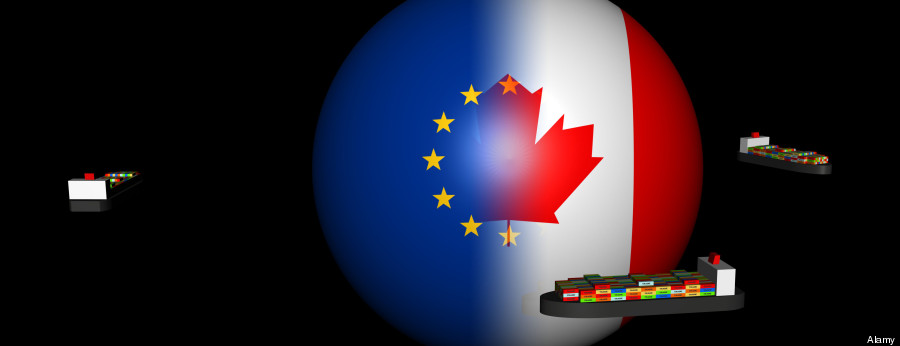
Canada and the European Union (EU) are set to begin preliminary discussions on deeper economic integration a mere three days after the election. It has been reported that the proposed trade deal will far exceed NAFTA. Some see this as an opportunity to possibly update the 15 year-old accord. Stephen Harper is busy telling Canadians that only a Conservative majority government will be able to bring confidence back and stabilize the economy. That is why I find it a little strange that this has not become a pillar of the Conservatives economic platform. Harper has decided not to release the full text of the draft proposal until after the election on October 14. The reality is that such an agreement with the EU will be no different than NAFTA in the sense that it will be used to further advance corporate interests.
For the past several months, Canadian officials have been hard at work negotiating with EU representatives. They have compiled a detailed study that will be unveiled after the election. Talks could begin as early as October 17 at a summit in Montreal , with formal negotiations set to begin in 2009. Just as the case with the Security and Prosperity Partnership (SPP) labour, citizen groups and the public at large have been excluded from any discussions. Many support this trade initiative because they wish to lessen Canada’s dependency on the American economy. This agreement has a better chance of succeeding if Harper is re-elected Prime Minister. There still remains much secrecy surrounding trade talks with the EU, and up to this point, Harper appears to be reluctant to make this an election issue.
French and current rotating EU president Nicolas Sarkozy has said that he wishes economic integration with Canada to be part of his lasting legacy. Europe sees Canada’s energy resources as a possible solution to easing their dependency on Russian oil and gas. In a commentary that appeared in the Globe and Mail, Alan Alexandroff, co-author of the C.D. Howe Institute paper titled Still Amigos, writes, “If the EU and Canada can forge an accord that covers services, government procurement and skilled labour that could well set the table for reviving the original NAFTA.” He went on to say, “If the EU and Canada join hands, the U.S. and Mexico will be eager to join the party.” Some believe that such an agreement will further advance North American integration while spreading NAFTA to Europe. A Canada-EU trade deal could be used as the model for future bilateral accords and as a way to further renew U.S.-EU relations.
There are calls to further deepen the U.S.-EU partnership with a new sense of multilateralism in areas of trade, climate change, and fighting terrorism. In April of 2007, it was announced with very little fanfare that the U.S.-EU had reached a deal on a new Trans-Atlantic Economic Partnership. They agreed to set up an economic council and further boost trade and investment by harmonizing services, business takeovers, and intellectual property. They also agreed to continue working towards eliminating non-tariff barriers to trade, which could eventually lead to a U.S.-EU single market.
Economic integration was a first step in the creation of the EU, and a similar stealth approach is being used to advance a North American Union. EU Commission President Jose Manuel Barroso recently said in a speech, “We have to make room at the top table for others, because that is the only way we can consolidate and strengthen a stable, multilateral world, governed by internationally agreed rules.” He also stated, “the time has come to start thinking of an Atlantic Agenda for Globalisation.” With the further erosion of national sovereignty and continued economic, social, cultural and environmental integration, we are on an undeniable path towards world government.
With the collapse of the WTO talks, more bilateral trade agreements will be used in advancing the New World Order’s agenda. The global elite, pushing for world government, are using the current financial turmoil to acquire more wealth and power. Economic uncertainty could also be used to usher in a North American Union with its own currency. A Canada-EU trade deal is yet another incremental step towards global governance.
Dana Gabriel is an activist and independent researcher. He writes about trade, globalization, sovereignty, security, as well as other issues. Contact: beyourownleader@hotmail.com Visit his blog at Be Your Own Leader

 PN
PN 