Gun Stocks Shoot Through the Roof
by The Blaze
Before It’s News
June 30, 2012
Given the increasingly uncertain political and economic climate, it’s no big surprise that people are continuing to buy guns in record numbers. However, at this stage it’s surpassed just an issue of being record numbers. We’d say guns are selling like hotcakes, but there might not be market data showing that hotcakes sell this fast.

24/7 Wall Street, an investment website, has news on the incredible, practically vertical rise of gun stocks over the past few years:
Records were set in annual units produced by Smith & Wesson and on annual cash generated. S&W said that these results are driven by strong sales of M&P polymer pistols and M&P modern sporting rifles.
The S&W earnings report is full of more “record-setting events” by the gun-maker that were just impossible to ignore. The fourth quarter saw a record at $129.8 million and the company posted a record earnings of $17.8 million for its fiscal year with another record of earnings from operations of $17.8 million.
More gains are expected ahead as well with first quarter sales of $125.0 million to $130.0 million. Here is the amazing stat: that is 36% growth. GAAP earnings for the first quarter are put at $0.16 to $0.19 per share versus $0.12 expected. For the year ahead, S&W sees sales from continuing operations of between $485.0 million and $505.0 million or about 17% total. GAAP earnings per share from continuing operations are being targeted between $0.60 and $0.65 for fiscal 2013 versus $0.50 expected.
How rabid is the desire for guns? Three months ago, Ruger Firearms stopped accepting orders for new weapons altogether because they couldn’t keep up with the demand. And if these stock numbers are correct, guns are practically the new gold.

22 Statistics That Prove That The American Dream Is Being Systematically Destroyed
by Michael Snyder, Contributor
Activist Post
June 26, 2012
The American Dream is being systematically destroyed right in front of our eyes and most Americans don’t even realize what is happening. In the old days, if you were a hard worker and you played by the rules you could always find a good job. That good job would enable you to buy a house, buy at least one car and support a family. It would also enable you to take a couple of vacations each year and buy some nice things for your family. After working for 30 or 40 years you would look forward to a comfortable retirement.But these days fewer and fewer Americans are able to enjoy the American Dream. Once upon a time, the United States had the largest and most prosperous middle class in the history of the world, but now that is changing at a breathtaking pace. Our economy is not producing nearly enough jobs for all of us anymore, and an increasing percentage of the jobs that are being produced pay 10 dollars an hour or less. The cost of living continues to rise steadily every single year while wages do not. Close to half of all American workers are living month to month, and many American families have gone deep into debt as they struggle to pay the bills. Millions more Americans are falling into poverty each year and dependence on the government is at an all-time high.
Something is fundamentally wrong with our economy. It is not working the way that it used to, and the middle class is being absolutely shredded. Most American families are finding it harder and harder to make it through each passing year, and unless a miracle happens things are going to continue to get even harder.
The following are 22 statistics that prove that the American Dream is being systematically destroyed….
#1 As the economy has declined, the number of Americans living month to month has soared. At this point, millions upon millions of Americans are living without any financial cushion whatsoever. If you can believe it, one recent survey found that 28 percent of all Americans do not have a single penny saved for emergencies. Another survey found that 42 percent of all American workers are currently living paycheck to paycheck.
#2 Thanks to horribly oppressive regulations, red tape and taxes, it is incredibly difficult to run a successful small business in America today. According to the Christian Science Monitor, more than half of all small business owners in America cannot even afford to put food on the table from their small business earnings….
A shocking figure from the Wave survey relates to how well the business owners were able to meet their basic needs through their business. An incredible 52% of American small business owners can’t put food on the table through the earnings from their business over the past twelve months.
Another recent survey found that 23 percentof all small business owners have gone an entire year without pay.#3 In recent years U.S. families have experienced an astounding decline in wealth. According to the Federal Reserve, the median net worth of families in the United States declined “from $126,400 in 2007 to $77,300 in 2010“.
#4 The U.S. economy is not producing nearly enough jobs for all of us at this point. For example, it was reported that 20,000 people applied for just 877 jobs at a Hyundai plant in Montgomery, Alabama earlier this year. Sadly, the official U.S. unemployment rate has been above 8 percent for 40 months in a row, and this is supposed to be “the recovery”.
#5 Eight million Americans have “left the labor force” since the recession supposedly ended. If those Americans were added back into the unemployment figures, the unemployment rate would besomewhere up around 12 percent.
#6 Corporate profits as a percentage of GDP are at an all-time high. Meanwhile, wages as a percentage of GDP are near an all-time low.
#7 The United States was once ranked #1 in the world in GDP per capita. Today we have slipped to #12.
#8 Just paying for the basics is becoming increasingly difficult for many Americans. For example, there are now 20.2 million Americans that spend more than half of their incomes on housing. That represents a 46 percent increase from 2001.
#9 The average American household spent approximately $4,155 on gasoline during 2011, and electricity bills in the U.S. have risen faster than the overall rate of inflation for five years in a row.
#10 Health insurance continues to become more expensive. Health insurance costs have risen by 23 percent since Barack Obama became president. According to the Bureau of Economic Analysis, health care costs accounted for just 9.5% of all personal consumption back in 1980. Today they account for approximately 16.3%.
#11 As the cost of living goes up, wages continue to stagnate or even fall in many areas of the country. Sadly, this is part of a long-term trend. According to one study, between 1969 and 2009 the median wages earned by American men between the ages of 30 and 50 declined by 27 percent after you account for inflation.
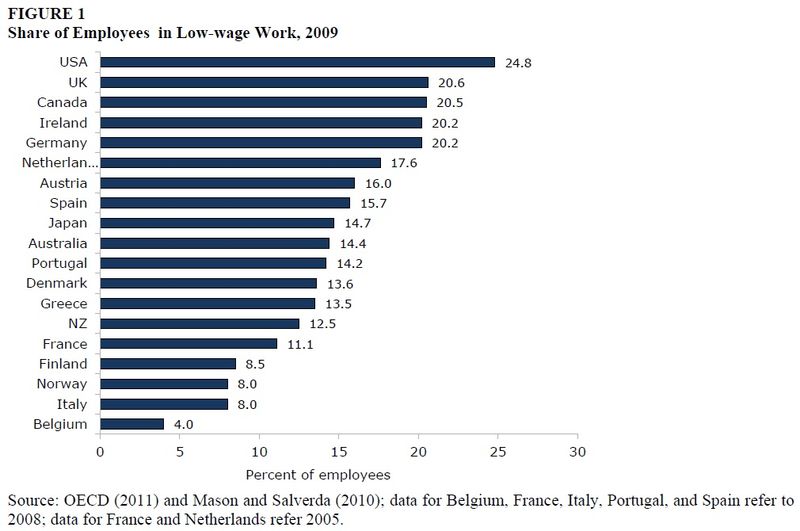
#12 The percentage of low paying jobs just continues to increase. At this point, one out of every four American workers has a job that pays $10 an hour or less. If that sounds like a high figure, that is because it is. Today, the United States actually has a higher percentage of workers doing low wage work than any other major industrialized nation does.
#13 Over the last several decades, the debt burdens being taken on by average Americans have absolutely exploded. All of this debt is making things incredibly difficult on American families. The following is from a recent CNN article….
In 1983, the bottom 95% had 62 cents of debt for every dollar they earned, according to research by two International Monetary Fund economists. But by 2007, the ratio had soared to $1.48 of debt for every $1 in earnings.
#14 During this time of the year, there are large numbers of new college graduates entering the work force. Unfortunately, there are not nearly enough jobs for all of them. In fact, approximately 53 percent of all U.S. college graduates under the age of 25 were either unemployed or underemployedlast year.
#15 Many young adults have found that they can’t make it on their own at all in this economy. Today, approximately 25 million American adults are living with their parents.
#16 Wealth in this country is becoming highly concentrated in fewer and fewer hands. Today, the wealthiest 1 percent of all Americans own more wealth than the bottom 95 percent combined.
#17 Increasingly, our country is being divided into “two Americas“. According to Forbes, the 400 wealthiest Americans now have more wealth than the bottom 150 million Americans combined.
#18 The rise in poverty is hitting children particularly hard. If you can believe it, the poverty rate for children living in the United States is now 22 percent. Large numbers of children in this country would go hungry without assistance. At this point, approximately one-fourthof all American children are enrolled in the food stamp program.#19 The more money the government spends on poverty, the more poverty seems to increase. The federal government spent about 80 billion dollars on the food stamp program last year, but they can’t even tell us how that money is being spent.
#20 While Barack Obama has been president, the number of Americans on food stamps has increased from 32 million to 46 million. But the Obama administration has decided that is not enough so they are spending taxpayer money on ads that will encourage even more Americans to go on food stamps….
The U.S. Department of Agriculture has been running radio ads for the past four months encouraging those eligible to enroll. The campaign is targeted at the elderly, working poor, the unemployed and Hispanics.
The department is spending between $2.5 million and $3 million on paid spots, and free public service announcements are also airing. The campaign can be heard in California, Texas, North Carolina, South Carolina, Ohio, and the New York metro area.
#21 As the middle class shrinks, the ranks of the poor continue to expand. Sadly, at this point 48 percent of all Americans are either considered to be “low income” or are living in poverty.
#22 More Americans are becoming dependent on the government than ever before. According to an article in the Wall Street Journal, 49.1 percent of all Americans live in a home where at least one person receives financial benefits from the government.
This article first appeared here at the American Dream. Michael Snyder is a writer, speaker and activist who writes and edits his own blogs The American Dream and Economic Collapse Blog. Follow him on Twitter here.
Using the TPP to Renegotiate and Expand NAFTA
by Dana Gabriel
Be Your Own Leader
June 25, 2012
Both Canada and Mexico have been invited to join the U.S., along with other countries already engaged in negotiations which will deepen trade and economic ties within the Asia-Pacific region. Such a deal would surpass NAFTA in size and scope. The U.S. led talks which have been criticized for their secretive nature, could be used to update aspects of existing trade pacts among member nations. This would provide the perfect opportunity for a backdoor renegotiation of NAFTA without officially having to open it back up.
After expressing interest in joining trade talks back in November 2011, NAFTA partners have been invited to join the U.S. backed Trans-Pacific Partnership (TPP) which also includes Australia, Brunei, Chile, Malaysia, New Zealand, Peru, Singapore and Vietnam. U.S. Trade Representative Ron Kirk welcomed both Mexico and Canada into the TPP fold. He noted that, “Mexico has assured the United States that it is prepared to conclude a high-standard agreement that will include issues that were not covered in the North American Free Trade Agreement (NAFTA).” He added, “Inviting Canada to join the TPP negotiations presents a unique opportunity for the United States to build upon this already dynamic trading relationship. Through TPP, we are bringing the relationship with our largest trading partner into the 21st century.” A joint statement by the U.S. and Canada acknowledged that, “The TPP presents an opportunity to conclude a high standard agreement that will build on the commitments of NAFTA.”
The Council of Canadians who continue to be vocal opponents of NAFTA and other trade deals that follow the same flawed template, are strongly against Canada’s entry into the TPP. Its national chairperson, Maude Barlow warned that this, “could force Canada to change its drug policies, its copyright policies, its environmental and public health rules – all without going through the normal parliamentary process.” The organization cautioned how, “TPP negotiations could mean up-front concessions in a number of areas, including intellectual property rights, where the U.S. is making considerable demands on TPP member countries that will undermine access to essential medicines so that its multinational drug firms can increase profits.” They also emphasized that, “Supply management, which guarantees fair wages and stable prices for farmers in non-exporting sectors, is too valuable to Canada to sacrifice on a negotiating table.” Others have pointed out that it is important as a buy-local program, as well as key to Canada’s food security and food sovereignty. The Council of Canadians maintains that, “the TPP is by and large a NAFTA renegotiation but on U.S. President Obama’s terms.”
Not surprisingly, the Canadian Council of Chief Executives, an organization that lobbies the government on behalf of the country’s largest corporations, welcomed the announcement that Canada has been invited to join the TPP talks. Its President and CEO John Manley stated that, “By signing on to the TPP, the federal government has taken an historic leap toward securing Canada’s long-term strategic interests in the Asia-Pacific region.” The U.S. Chamber of Commerce have also applauded Canada and Mexico’s entry into the TPP. Its President and CEO Thomas Donohue argued that, “negotiating the TPP together is an excellent strategic decision for North America.” Back in January, the Council of the Americas explained how, “it makes little sense for the United States to enter into potentially significant trade arrangements with countries in the Pacific region without our NAFTA partners.” They view the TPP as a “promising vehicle to support the updating of our bilateral and trilateral trading relationships within North America to the high standards of twenty-first century free-trade agreements.”
In his article, Will invitation to join TPP talks lead to NAFTA 2.0?, Peter Clark one of Canada’s leading international trade strategists concluded that, “A successful TPP would allow NAFTA to essentially be re-opened without the optics of it actually being re-opened.” He went on to say, “The business leaders in all three NAFTA countries, as strong supporters of TPP invitations to Canada and Mexico, understand that after nearly 20 years, modernization of NAFTA is needed. For rules of origin, supply chain management and manufacturing integration.” Clark stressed that, “All Canadians should be clear about this – TPP is the negotiation of NAFTA 2.0 and it could have major implications for Canada-USA trade relations.” Meanwhile, both countries are implementing the Beyond the Border Perimeter Security and Economic Competitiveness Action Plan which has been described as the most significant steps forward in U.S.-Canada cooperation since NAFTA. Christopher Sands of the Hudson Institute observed how, “The TPP negotiating agenda is at once similar to the bilateral agenda that Canada and the United States are pursuing, and also more ambitious and multilateral.”
In May, the TPP held its twelfth round of negotiations with the next set of talks scheduled to take place in San Diego, California from July 2-10. So far, there has been a real lack of transparency, but what is clear is that the TPP seeks to go beyond other trade agreements. According to a leaked text by Public Citizen, it would expand on the investor privileges found in NAFTA, granting corporations more power and further threatening the sovereign rights of member nations. In the meantime, the U.S. continues to spearhead TPP negotiations as a way of countering growing Chinese influence. The door is open for other countries to join which is why it is considered to be a stepping stone to a larger free trade area of the Asia-Pacific and an important part of the international corporate globalization agenda.
Trade deals such as NAFTA and now the TPP are being used to smuggle through a new set of transnational corporate rights, trapping nations in a web of treaties that further trump their own laws. All too often, these agreements fail to deliver on the promise of prosperity and only serve to accelerate the path towards economic enslavement. Globalization has meant sacrificing self-sufficiency and sovereignty for foreign dependency which is a sure path to world government.
Related Articles By Dana Gabriel
Canada and Mexico to Join U.S. in NAFTA of the Pacific
Building Blocks Towards an Asia-Pacific Union
NAFTA Partners Take Steps to Boost Trilateral Relationship
U.S. Economic, Political and Military Expansion in Asia-Pacific
Dana Gabriel is an activist and independent researcher. He writes about trade, globalization, sovereignty, security, as well as other issues. Contact: beyourownleader@hotmail.com Visit his blog at beyourownleader.blogspot.com
[hat tip: Activist Post]
Turkish Jet the new Lusitania? [video]
Rys2sense
June 26, 2012
All they ever do is lie lie and lie. How can ANYONE buy their propaganda any longer?
This plot was in Israeli policy papers for years with a map for attacking Iraq and the Syria and then Iran.
End the Lie Radio with Madison Ruppert – Episode 19 [audio]
End the Lie Radio with Madison Ruppert
Episode 19
June 13, 2012
End the Lie Radio with Madison Ruppert and guests, Brandon Turbeville of Activist Post (pre-recorded interview), Curt Williams of Room 101 and Bob Tuskin of the Bob Tuskin Show, discussing an interview between Adam Kokesh and Webster Tarpley at Bilderberg 2012, Rand Paul’s surprise endorsement of Romney, inherent problems with our current system and much more from 11:00 PM – 1:00 AM EST/8:00 PM – 10:00 PM PST Sundays on OrionTalkRadio.com.
http://EndtheLie.com
Support us! http://EndtheLie.com/store
http://OrionTalkRadio.com
Show page: http://bit.ly/etlradio
All material(s) used in this video that are not original or are under copyright are used under Fair Use under the Copyright Act of 1976, 17 U.S.C. § 107.
Fifteen Insolvent Zombie Banks Downgraded by Moody’s; All Loaded with Toxic Derivatives and Surviving as Too Big to Fail; Italian Prosecutor Michele Ruggiero’s Request for Indictment of Standard & Poor’s Exemplary
Webster G. Tarpley, Ph.D.
Press TV
June 21, 2012
Herman Cain: Blame Congress, Not The Federal Reserve [video]
We Are Change
June 21, 2012
Luke Rudkowski of WeAreChange asks Herman Cain about The Bilderberg meeting and The Federal Reserve System.
Follow Luke @ http://twitter.com/lukewearechange
Become a WeAreChange Sponsor! http://wearechange.org/donate/

 PN
PN