
U.S.-EU Trade Deal is the Foundation For a New Global Economic Order
by Dana Gabriel
Be Your Own Leader
February 25, 2013
 The U.S. and EU have agreed to launch negotiations on what would be the world’s largest free trade deal. Such an agreement would be the basis for the creation of an economic NATO and would include trade in goods, services and investment, as well as cover intellectual property rights. There are concerns that the U.S. could use these talks to push the EU to loosen its restrictions on genetically modified crops and foods. In addition, the deal might serve as a backdoor means to implement ACTA which was rejected by the European Parliament last year. A U.S.-EU Transatlantic trade agreement is seen as a way of countering China’s growing power and is the foundation for a new global economic order.
In his recent State of the Union address, President Barack Obama officially announced that the U.S. would launch talks on a comprehensive Transatlantic Trade and Investment Partnership with the European Union (EU). A joint statement issued by European Commission President Jose Manuel Barroso, European Council President Herman Van Rompuy and U.S. President Obama explained that, “Through this negotiation, the United States and the European Union will have the opportunity not only to expand trade and investment across the Atlantic, but also to contribute to the development of global rules that can strengthen the multilateral trading system.” In a separate speech, European Commission President Barroso also emphasized that, “A future deal between the world’s two most important economic powers will be a game-changer. Together, we will form the largest free trade zone in the world. So this negotiation will set the standard – not only for our future bilateral trade and investment, including regulatory issues, but also for the development of global trade rules.”
The decision to pursue a free trade deal was based on the recommendations put forth by the High Level Working Group on Jobs and Growth which was created to deepen U.S.-EU economic integration. In their final report, they called on leaders from both sides to, “initiate as soon as possible the formal domestic procedures necessary to launch negotiations on a comprehensive trade and investment agreement.” According to U.S. and EU officials, talks could start in June with the hopes of completing a deal by the end of 2014. The proposed trade pact would include removing import tariffs, dismantling hurdles to trade in goods, services, and investment, as well as harmonizing regulations and standards. It would also cover intellectual property protection and enforcement. This could be used as an opportunity for a backdoor implementation of the Anti-Counterfeiting Trade Agreement (ACTA). It was a result of public pressure associated with risks to internet freedom and privacy which lead to ACTA being rejected by the European Parliament in July of 2012. There have already been attempts to use Canada-EU trade negotiations to sneak in parts of ACTA.
Public Citizen’s Global Trade Watch Director, Lori Wallach cautioned how U.S.-EU talks, “are aimed at eliminating a list of what multinational corporations call ‘trade irritants’ but the rest of us know as strong food safety, environmental and health safeguards.” She went on to say, “European firms are targeting aspects of the U.S. financial reregulation regime, our stronger drug and medical device safety and testing standards and more.” Wallach further added, “U.S. firms want Europe to gut their superior chemical regulation regime, their tougher food safety rules and labeling of genetically modified foods.” In a press release, Earth Open Source warned that, “An EU-U.S. free trade deal would obliterate EU safeguards for health and the environment with regard to genetically modified (GM) crops and foods.” Research Director Claire Robinson pointed out, “If the new trade agreement goes through, it will be illegal under World Trade Organisation rules for the EU to have a stronger regulatory system for GMOs than the U.S. system.” This is disturbing considering that in many cases, GM foods in the U.S. do not require any special regulatory oversight or safety tests.
Overshadowed by the proposed U.S.-EU trade deal is ongoing Canada-EU negotiations on a Comprehensive Economic and Trade Agreement (CETA). Despite talks being in their final stages, both sides still have some important gaps to be bridged before a deal can be reached. Thomas Walkom of the Toronto Star acknowledged that, “Europe’s real interest in negotiating a trade deal with Ottawa was to demonstrate to the Americans that a trans-Atlantic free trade pact was possible.” He noted, “EU negotiators will be even more reluctant to make concessions to Canada for fear of weakening their bargaining hand with the Americans.” Walkom argued that, “Canada is under more pressure to make a deal while Europe is under less.” He concluded that. “A Canada-EU deal seems inevitable. But now, with America in the mix, the terms for Canada may be even less favorable than expected.” The Globe and Mail recently reported that the EU is demanding additional concessions from Canada before any agreement can be signed. In order to wrap things up, a desperate Canada may be willing to give up even more. This was a bad deal from the start and it would be in their best interest to just walk away from CETA.
In the coming months, you can expect the anti-corporate globalization movement on both sides of the Atlantic to mobilize against the U.S.-EU trade agreement. It is big business and financial institutions who are pushing this deregulation agenda which threatens health, environmental and food safety standards. Just like NAFTA, the proposed U.S.-EU trade deal is also likely to include an investor-state dispute process which would give corporations the right to challenge government policies that restrict their profits. A trade agreement between the U.S. and EU is the building blocks for a new global trading system. If you combine NAFTA, the Trans-Pacific Partnership and a U.S,-EU Transatlantic trade deal, you have the makings for a global free trade area.
Related articles by Dana Gabriel:
Deepening the U.S.-EU Transatlantic Trade Partnership
Growing Opposition to the Canada-EU Trade Agreement
Advancing the Transatlantic Agenda
From NAFTA to CETA: Canada-EU Deep Economic Integration
Dana Gabriel is an activist and independent researcher. He writes about trade, globalization, sovereignty, security, as well as other issues. Contact: beyourownleader@hotmail.com Visit his blog at Be Your Own Leader
Henningsen on RT: ‘Foreign Aid Trap’ – Cameron using tax cash for military projects [video]
21stCenturyWireTV
February 23, 2013
21st Century Wire’s geopolitical analyst Patrick Henningsen talks to RT about Prime Minister David Cameron’s latest campaign, saying he wants pledge more cash to the UK’s foreign aid budget for overseas ‘military aid’ – a proposal that the British government has admitted in the past as ‘wasted aid which often falls into the wrong hands’. Aid money is to be used for three areas including security, demobilization and peacekeeping. – READ MORE: http://bit.ly/YDyLsr
Justin Trudeau: Fluoride/Bilderberg/Bank Of Canada Are Conspiracy Theories (round 2)
by Terry Wilson
Canadian Awareness Network
February 8, 2013
 On February 7 2013 Justin Trudeau held a meet and greet in Cambridge Ont. He encouraged Canadians to stand up and make their voices heard, but when asked about some real issues. Security pushed Frankie away from him twice and he tried to labeled the questions as conspiracy theories. (static during the speech is from the amp used for him to speak)
First confrontation with Justin
http://www.youtube.com/watch?v=F60eZh…
Info about the “conspiracy theories”
Lawsuit in federal court in regards to the Bank of Canada
http://www.youtube.com/watch?v=ar_WRq…
Fluoride safe and effective
http://www.youtube.com/watch?v=fRXStx…
Bilderberg group: The Turning Point
http://www.youtube.com/watch?v=DcHszo…
[hat tip: CanadianLibery.com]
10 Ways to Prepare Your Community for Economic Collapse

Wikimedia image
Activist Post
December 2, 2012
As economic collapse approaches, the only question is whether it will remain in slow motion or take a dramatic turn for the worse. If we’re lucky it will remain in slow motion to give people and communities enough time to prepare as much as possible.
We only need to look at the chaos that occurred during the aftermath of Hurricane Sandy where hardly anyone was prepared for weeks without power, and they even had some forewarning. Unfortunately most people are still blind to the coming economic storm. They’re frogs in slowly simmering water getting ready to boil.
It’s one thing to prep for yourself, but if the economic collapse is sustained for a long period of time, it will take a tribe to survive as comfortably as possible. The bigger your extended survival group the easier it will be, and if you can encourage your greater community to move more toward self-reliance the better off you all will be.
If you’re a prepper who understands the severity of the coming events, now is the time to get your community involved. You don’t have to convince everyone the sky is falling, only the importance of more self-sufficiency just in case there is an unforeseen emergency.
Here are ten ways to help your community prepare:
Meet Your Tribe: This starts with forming your core group of local prepper friends. These people will share your understanding, have great ideas, and can share the burden of prepping. Then, at the very least, meet all of your immediate neighbors and size them up as to their mindset and ability. Organize fun and educational block parties to demonstrate and encourage the solutions outlined on this list. Finally, take some of your ideas to town hall meetings to seek broader cooperation and more volunteers.
Alternative Water Sources: Water is the most important element for survival. If the grid goes down, public water will be sure to follow. Locate private wells that can be switched to hand pumps or generators, or streams, rivers and ponds that can be piped and stored near your community. Create a map of these resources for everyone in your group of volunteers to keep safe if crisis strikes. Educate your neighbors with flyers or demonstrations at block parties about having back-up water supplies, rainwater and greywater use, and water purification methods. Encourage your neighbors to keep at least 3 days of drinking water stored in their homes.
Garden Projects: Encourage and help neighbors with their individual gardens and they’ll help you with yours. Hold neighborhood workshops with experts on composting, permaculture, aquaponics, small livestock, seed preservation, and canning. Stress the importance to the greater community of gardens in public spaces that are being wasted on grass that must be mowed at the taxpayer’s expense. With more of the local landscape turned into an edible landscape, the easier the community will be able to absorb the impact of economic collapse, particularly rapid inflation of food prices.
Local Food Co-Ops: Another very important element to local food self-sufficiency is becoming involved with your local food cooperatives. These typically include many of your local artisan farmers and organic gardeners. You may be surprised by how big the local food movement already is in your area, but it needs to be much bigger when severe economic crisis hits. Support them with your business and whatever skills you can bring to the table. Encourage your neighbors to join and participate as well. Not only will this help expand local commerce and food production, it also helps build a healthier community. A great resource to find local farmers in your area is LocalHarvest.org.
Barter Systems: If the dollar collapses (which most people predict will be the trigger of economic collapse), having a local system of trade will soften the impact tremendously. Even if you just begin with trading services with your neighbors, get the idea barter to spread. You may already have a local grassroots currency or barter exchange in your area. Many food co-ops already have them as well. If they don’t, there are plenty of resources that teach you how to start one yourself. The importance of laying the groundwork for such an exchange cannot be understated, and if the collapse miraculously evaporates, the barter system will still encourage local trade so the community flourishes. This is also a great way to identify team players with vital skills needed during collapse situations.
Alternative Energy: This is perhaps the most challenging issue facing any individual prepper as well as a small community as a whole. Virtually all areas are beholden to large interconnected electric grids and multinational oil companies for their energy. But as we saw recently with Hurricane Sandy, people without fuel or power go crazy after just a few short days. Imagine weeks and months without power or fuel. For personal preparation, it’s wise to at least have a generator, and perhaps some solar panels for refrigeration and electronics. Encouraging your neighbors to do the same may be the best you can hope for community involvement, but present ideas like generators for all essential services to prevent a breakdown of law and order. Work on implementing a community or co-op biodiesel refinery for used cooking oil, or a windmill or solar station for the back-up water supply, etc
Neighborhood Watch: All communities are unique and will require different levels of security in times of crisis. As we saw with Katrina and Sandy, the National Guard and the local police were no match for keeping the looters at bay. And, again, these were just temporary setbacks. A sustained economic crisis could bring many desperate people or worse – organized gangs – to your neighborhood. The cops will likely be preoccupied with much bigger concerns than your community assuming the locality can still afford their salaries. Start with a simple neighborhood watch to create a basic plan for deterring invaders. Make note of neighbors who are former military or hunters to recruit should things get dicey enough to require some firepower.
Food Bank: Everyone should have their own personal supply of survival foods. But you may also consider grouping with your tribe of preppers or a few neighbors to create a food bank where you can combine funds for bulk food storage. This food bank should consist of the most basic of foods like wheat, rice, and beans. This can serve as an “open only in case of an emergency” cache. Beyond that, helping out with your community food bank or other food programs for the less fortunate is also a way to help keep your community stable during the crisis.
Communications: Don’t underestimate the importance of maintaining open communication with your community. If the power goes off, it may not be long before phones and Internet are gone too. Emergency radios are great to monitor the “official” activity outside the community, but being able to speak to each other is vital to survival. Back up systems can be as small as your core group using walkie talkies, or as large as creating an alternative Internet connection. You can have one person get satellite Internet and they can beam it with a simple line-of-sight microwave panels to other hubs, perhaps a school. This sounds complex, but it’s not that difficult or expensive. Additionally, you could set up a community intranet that can at least communicate with each other if not the outside world. When meeting neighbors, don’t discount their skills if they’re a tech geek or working for the phone company, as they will be needed in a collapse situation. Again, having individual solar chargers for laptops and this system would have to be considered as well.
Medical: Big hospitals will likely be overtaxed during a crisis and they’ll certainly be a target of drug addicts who have nowhere else to get their fix. It may be unrealistic to form a small clinic in your community prior to a collapse situation, however, identifying the doctors, nurses, EMTs, veterinarians, and holistic healers in your neighborhood will go a long way in preparing. Additionally, encouraging all households in your neighborhood to keep a month or more of essential medications stored in their homes will be crucial to get through difficult times. If you’re lucky enough to find a few doctors who share your prepper mindset, creating a bank of strategic medicine (insulin and antibiotics) would be ideal as well. And don’t write off the hippie who knows how to grow quality cannabis….
These are all realistic preparations that you can do in your communities. They shouldn’t be motivated by fear of some potential apocalypse. Rather, it should be fun and joyful to get to know your neighbors and encourage the strengthening of your community.
Please tell us your ideas for surviving the economic collapse in the comment section below.
Read other articles by Activist Post Here
Why The NWO Hates Syria [video]
Syrian Girl
December 17, 2012
8 reasons why the NWO hates Syria
No Rothschild central bank, NO IMF debt, No Genetically modified food, Oil and pipelines, Anti-secret societies, Anti-Zionism, Secularism, Nationalism.
U.S.-Canada Harmonizing Border Security and Immigration Measures
by Dana Gabriel
Be Your Own Leader
February 4, 2013
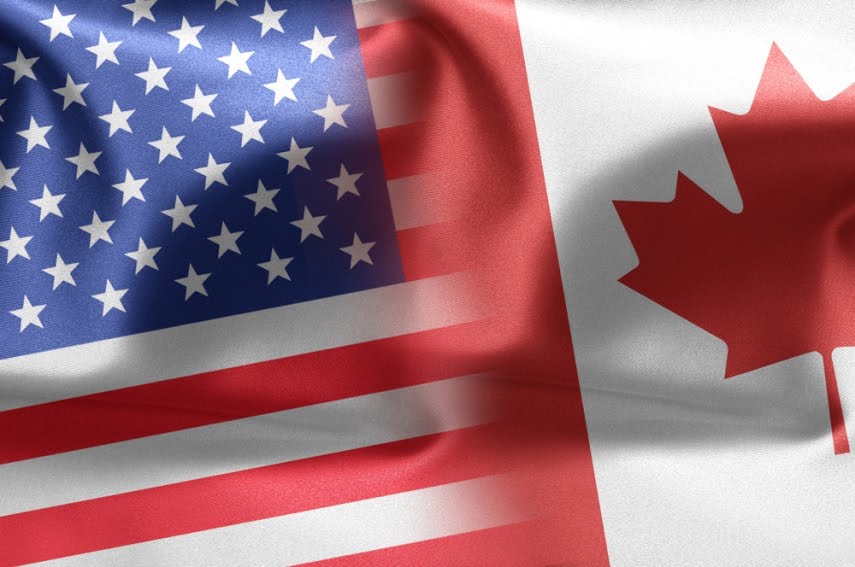
The U.S. and Canada have made significant progress in advancing the Beyond the Border deal and continue to implement various perimeter security initiatives. Without much fanfare, they have signed an immigration agreement that would allow them to share biographic and at a later date, biometric information. As part of a North American security perimeter, both countries are further harmonizing border security and immigration measures. Canada is further taking on U.S. security priorities and this could include a bigger role in the war on terrorism.
It’s been over a year since Prime Minister Stephen Harper and President Barack Obama announced the Beyond the Border and the Regulatory Cooperation Council action plans. On December 14, 2012, the U.S. and Canada issued the Beyond the Border implementation report that highlights the objectives that were achieved over the past year and the work that has yet to be done. It explained that moving forward, “Key future initiatives include harmonizing our trusted trader programs, making significant infrastructure investments at our key land border crossings, fully implementing an entry/exit program at the land border, expanding preclearance operations to the land, rail, and marine domains.” The report also acknowledged challenges facing the Next-Generation pilot project which would permit teams of cross-designated officers to operate on both sides of the border. It was originally scheduled to begin last summer. While steady progress has been made, a lot more work is needed to meet the goals of the Beyond the Border action plan. Over the next several years, other aspects of the deal will be phased-in incrementally with specific deliverables due this year, in 2014 and also in 2015.
Another important facet of the economic and security perimeter agreement is the U.S.-Canada Regulatory Cooperation Council (RCC). A progress report to the leaders outlines accomplishments made in aligning regulations in the areas of agriculture and food, transportation, the environment, health and personal care products, workplace chemicals, as well as nanotechnology. This includes cooperation on pilot projects, scientific and technical collaborations and harmonized testing procedures. RCC working groups have developed detailed work plans for the various initiatives with objectives that will be implemented over the next couple of years. In Canada, some fear that deepening regulatory integration with the U.S. could weaken and erode any independent regulatory capacity. This could lead to a race to the bottom with respect to regulatory standards.
In December of last year, the U.S. and Canada signed the Immigration Information Sharing Treaty which is tied to the Beyond the Border deal. Citizenship, Immigration and Multiculturalism Minister Jason Kenney stated that the, “agreement builds on our countries’ mutual efforts to protect our common borders and the surrounding perimeter, through improved screening of immigrants and visitors.” He went on to say, “Enhanced information sharing of foreign nationals will protect the safety and security of Canadians by helping us prevent terrorists, violent criminals, and others, who pose a risk, from entering Canada or the United States.” Under the treaty, Canada and the U.S. will share biographic information from third country nationals who apply for a visa, a travel permit or claim asylum. In 2014, it will also include the sharing of biometric information. There are privacy concerns on how far-reaching the data collected will be shared. This threatens the sovereignty of Canada with regards to retaining control over information at its own borders.
On December 28, 2012, President Obama signed into law, the Countering Iran in the Western Hemisphere Act which is designed to curb Iran’s presence and activity in the region. The bill calls on the Department of Homeland Security to work with Canada and Mexico, “to address resources, technology, and infrastructure to create a secure United States border and strengthen the ability of the United States and its allies to prevent operatives from Iran, the IRGC, its Qods Force, Hezbollah, or any other terrorist organization from entering the United States.” Julie Carmichael, spokeswoman for Public Safety Minister Vic Toews discussed Canada’s efforts to counter any perceived hostility from Iran in the Americas. She is quoted in the Globe and Mail as saying, “We continually assess threats while co-operating with international partners, including the U.S., to address threats to our common security.” Carmichael added, “The Beyond the Border Action Plan as announced by Prime Minister Harper and President Obama provides a framework to identify threats before they reach North America.” Under the perimeter security deal, Canada is further aligning itself with U.S. foreign policy interests and could be expected to play a greater role in the global war on terror.
Through the Beyond the Border agreement, the U.S. and Canada are deepening economic and security integration which is laying the foundation for a North American security perimeter. Both countries are also engaged in the Trans-Pacific Partnership negotiations with Mexico and other member nations. This is part of efforts to create a free trade area of the Asia-Pacific and could be used to update and expand NAFTA. Another key priority for U.S.-Canada relations is North America’s energy future. President Obama is expected to make a final decision on the Keystone XL pipeline sometime this year. Meanwhile, there is growing environmental opposition to the proposed project which would carry oil from western Canada to the Texas gulf coast.
Related articles by Dana Gabriel:
Merging U.S.-Canada Arctic Foreign Policy
U.S.-Canada Integrated Cybersecurity Agenda
Shaping the Future of North American Integration
Taking the U.S.-Canada Partnership to the Next Level
Dana Gabriel is an activist and independent researcher. He writes about trade, globalization, sovereignty, security, as well as other issues. Contact: beyourownleader@hotmail.com Visit his blog at Be Your Own Leader
12,000 Peaceful People Arrested in Italy for Not Paying Taxes and Police Discover Thriving Black Market
 By JG Vibes
theintelhub.com
January 26, 2012
Thanks to a lifetime of propaganda, people will argue relentlessly that taxation is not an act of violence, they will deny that it perpetuates a complicated form of slavery, and many times get deeply offended when you point out the fact that it is theft.
Yet, peaceful people are taken against their will and thrown in cages every day for not paying taxes. If this action was not carried by the state, everyone would recognize it as a violent kidnapping.
This year in Italy alone around 12,000 people had armed government workers trespass on their property, take them against their will and lock them up in a cage. If any of these people made any attempts to defend themselves on their own property as they would against any other intruder, they would have been killed and treated as if they were the aggressor.
“Italy’s financial police said Thursday they had busted close to 12,000 people last year for evading over 56 billion euros ($74 billion) worth of taxes. Investigators rooted out 8,617 people who had never paid taxes and owed the Italian tax man a total of 22.7 billion euros, the financial police said in a statement.
Police also honed in on those using fake companies in tax havens to evade paying their dues, calculating 17.1 billion euros in Italian taxes were owed. Some 16.3 billion euros in “other forms of evasion” brought the total to 56.1 billion euros and police reported 11,769 people last year on suspicion of dodging tax.
The crack down on tax evaders in Italy intensified when Prime Minister Mario Monti came to power at the end of 2011, as the government attempted to reduce the country’s deficit and debt. The financial police also uncovered over 16,000 people working on the black market, the statement said.”
The fact that there are so many people working in the so-called black and gray markets is the silver lining in this story, and it is something that is going to be impossible for the establishment to stop. The black market is an undying expression of human freedom, and while you may be able to threaten people and lock them up, you can never stop them from trading the resources that they want or need.
The police chief made one of the most twisted, Orwellian comments i have ever heard when asked about the arrests and the booming black market:
“We are continuing to act to recover resources stolen from the state,” said police chief Saverio Capolupo.
Seriously?! I cant believe that these people can make these kinds of comments with a straight face, and its even worse that the mainstream media can report this without anyone noticing the shear hypocrisy of the statement. This is the equivalent of a mugger calling its victim a thief because there was money hidden in his sock.
Thousands of peaceful people who did not commit any real crimes were thrown in cages for keeping their own property, this truly is an insane world that we live in.
Taxation is theft. Taxation is Force. Just ask these 12,000 people in Italy.
*****
Read more articles by this author HERE.
J.G. Vibes is the author of an 87 chapter counter-culture textbook called Alchemy of the Modern Renaissance, a staff writer and reporter for The Intel Hub and host of a show called Voluntary Hippie Radio.
You can keep up with his work, which includes free podcasts, free e-books & free audiobooks at his website www.aotmr.com

 PN
PN 