
Florida Supreme Court Gives Initiative Approval, State to Vote on Medical Cannabis Legalization This November
The Joint Blog
Jan 27, 2014
Today the Florida Supreme Court issued a ruling on the medical cannabis legalization initiative that is vying for this November’s ballot. In a close 4-3 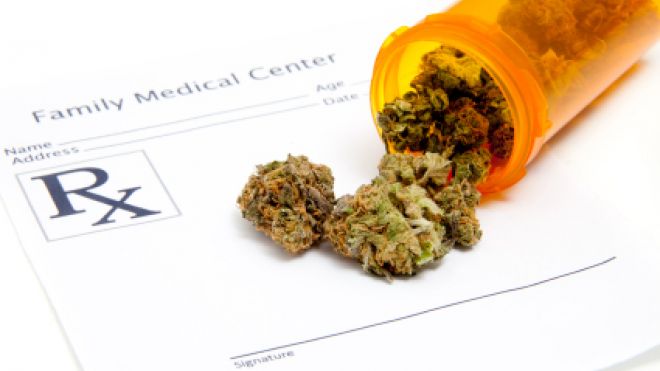 decision, justices determined the initiative is valid, and will be put to a vote.
This ruling comes just days after campaigners received confirmation that they had collected enough voter’s signatures on the initiative to secure its place in the election (roughly 1.2 million signatures total).
The Supreme Court was incited to issue a ruling by Florida Attorney General Pam Bondi and Republican legislative leaders, including House Speaker Will Weatherford. Detractors claimed the initiative’s summary was misleading by interchanging the terms “medical conditions” and “diseases”. Weatherford says the initiative is not about compassion, but about the “Coloradofication of Florida”.
The Florida Supreme Court responded in favor of the initiative: “We conclude that the use of ‘diseases’ instead of ‘conditions’ in the ballot summary will not reasonably mislead the voters”.
Recent polling shows 65% of Florida voters already in favor of the initiative; written as a constitutional amendment, the measure will need a 60% majority to pass.
John Morgan, an Orlando-based trial lawyer and previous fundraiser for President Obama, is the primary backer of the effort, and says that campaigners won’t be slowing down any time soon. “I think the amendment kind of passes itself. It’s like ‘Are you in favor of fresh air?’”, says Morgan “But with that said, at Morgan and Morgan we don’t take anything for granted. Something that seems obvious might not be so we will play it as if we’re behind. That’s how we will treat this campaign.” Morgan has put $2.8 million into signature gatherers and advertising for this campaign so far, and has made it clear that he will continue to fund the effort, spending “whatever it takes” to get the initiative passed.
– TheJointBlog
New Hampshire House Passes Recreational Pot, Legalization Unlikely
 by Elizabeth Renter
Natural Society
Jan 25, 2014
Last week, the New Hampshire House gave preliminary approval to legalize recreational pot. And though the measure isn’t likely to become law, with a state Senate opposed to ending marijuana prohibition, the passage by the House marks a significant step and a sign that things are changing.
The bill is reportedly modeled by those in Washington and Colorado and would allow people to possess up to one ounce of marijuana. It would tax and regulate pot and also allow citizens to grow a total of six plants.
The first attempt to pass the measure failed, with two lawmakers tipping the scales to the opposing side. Only an hour later, they tried again and the bill passed 170-162, according to AlterNet. The House voted 170-162 after a 2 ½-hour heated debate to send the bill to its tax committee to review before taking a final vote.
Illinois proposes ‘legalizing’ medical marijuana as long as patients surrender Second Amendment rights
 by L.J. Devon, Staff Writer
Natural News
Jan 25, 2014
(NaturalNews) Lawmakers from the state of Illinois have proposed new medical marijuana rules that coerce patients to surrender their Second Amendment right in the application process.
The new medical marijuana “legalization” bill requires Illinois citizens to undergo a background check, be fingerprinted and pay an additional $150 fine for using marijuana for medical purposes.
On top of that and most disturbing of all, Illinois citizens will also be required to sign away their right to own a firearm in the application process.
Personal liberty and responsibility has become a dead idea in the state of Illinois, as the right to bear arms becomes a perishable right dictated through laws regulating strict control of a plant.
Illinois forcing citizens to give up their guns if they want medical pot
Under the new rules, people who want to treat themselves with something other than dangerous pharmaceutical drugs will be required to give up their guns in the process.
Both caregivers and patients will be required to surrender their firearms, and any state-approved FOID cards or concealed carry permits. According to the proposal, state police will be in charge of enforcing the gun control sanctions.
Moreover, the Department of Agriculture will be enlisted to develop rules for cultivation centers, and the Illinois Department of Financial and Professional Regulation will be employed to draw up rules for dispensaries. More power to the state!
The plan also dictates the reasons for which caregivers can prescribe cannabis, outlining 41 specific medical conditions that pre-qualify patients to seek a patient registry medical marijuana ID card. The ID card will permit approved patients access to 2.5 ounces of medical marijuana every two weeks, to be administered by a certified caregiver.
Isn’t it strange how the state limits the potential of a plant but turns a blind eye toward the mass distribution, destruction, and death coming from many pharmaceutical drugs?
Regulations like these encourage continual, exaggerated health complaints
Additional rules require that patients be at least 18 years old and have a “bona fide” relationship with their caregiver. The caregiver will be required to certify a patient’s medical condition. This may inevitably encourage many people to exaggerate their medical condition while caregivers overprescribe just so users can get a recreational high. This will weaken entire defenseless generations who have given up their Second Amendment right just to get high. Regulations like these will make users more likely to mentally fabricate and overstate their “medical condition” just to “legally” obtain pot.
Senate committee OKs industrial hemp bill
Sun-Commercial: News
Jan 26, 2014
Associated Press
INDIANAPOLIS — Allowing farmers to grow hemp in Indiana could help boost the economy and dispel myths about a crop that can be used to make everything from paper to car parts, supporters told lawmakers Friday.
The testimony helped convince the Senate’s agriculture committee to unanimously approve a bill that would enable farmers to legally grow industrial hemp, but only if they or the state gets federal approval. Hemp is marijuana’s non-intoxicating cousin but it cannot be grown under federal law, though many products made from hemp, such as oils and clothing, are legal.
The bill’s sponsor, Sen. Richard Young, D-Milltown, said hemp fields flourished in Indiana before and during World War II, but petrochemical industries and other industries later lobbied against hemp — which can also be used to make fuel — to cut competition.
“This is a plant that has been used for centuries throughout the world and has tremendous potential,” Young said.
But lingering stereotypes have haunted efforts to legalize the crop ever since, said Neal Smith, chairman of Indiana National Organization for the Reform of Marijuana Laws. He wore a pin with showing the five-branched hemp leaf, which looks almost identical to a marijuana leaf but has two fewer branches.
Kentucky passed similar legislation last year, and eight other states have done the same, according to the National Conference of State Legislatures.
The 1970 Controlled Substances Act requires hemp growers to get a permit from the Drug Enforcement Administration. The last permit was issued in 1999 — and expired in 2003 — for an experimental plot in Hawaii. U.S. Sens. Rand Paul and Mitch McConnell of Kentucky are co-sponsoring legislation that would federally legalize industrial hemp farming.
The economic benefits remain unclear, however, and whether Indiana would receive a permit is uncertain.
[…CONTINUE READING THIS ARTICLE]
[h/t: ActivistPost]
Colorado Marijuana Dispensary taps Bitcoin to Evade Federal Laws
 CoinDesk
Jan 12, 2014
At least one marijuana dispensary in Colorado has reportedly begun accepting bitcoin.
Colorado’s decision to legalize cannabis has been filling headlines for weeks, and the hype is still going strong.
Investors have been piling up in the marijuana market, ranging from reputable medicinal marijuana companies to highly speculative penny stocks.
The general public seems to be very interested indeed – outside some dispensaries the queues of pot lovers are incredibly large, resembling the lines frequently formed in front of Apple Stores following an iPhone launch.
However, there are a number of problems. Demand has been so strong that many dispensaries are having trouble getting enough marijuana to sell, although this is likely a temporary issue.
[h//t: ActivistPost]
Cannabis Decriminalization Bill Introduced In Alabama
The Joint Blog
Jan 11, 2014
A proposal to decriminalize the possession of up to an ounce of cannabis has been formally introduced in the Alabama House of Representatives.
The proposal, House Bill 76, was introduced by Representative Patricia Todd, and has been assigned to the House Judiciary Committee.
Under the proposed law, anyone 21 and older caught in possession of up to announce of cannabis will no longer be committing an arrestable offense, but instead can be given a ticket of roughly $100.
Under current Alabama law, the possession of any amount of cannabis can result in up to a year in prison, and a fine of $6,000.
– TheJointBlog
Book by B.C. researcher says media, police not talking straight on pot
By James Keller, The Canadian Press
OttawaCitizen.com
Dec 25, 2013

A demonstrator smokes a marijuana joint on Parliament Hill in Ottawa on April 20, 2010. Police would have the option of ticketing people for a range of minor offences, instead of laying criminal charges, under a plan that could yield significant savings for the cash-strapped justice system. THE CANADIAN PRESS/Pawel Dwulit
VANCOUVER – As it turns out, Nov. 6, 2012, was a big day for marijuana laws.
Voters in Colorado and Washington state approved initiatives to legalize pot, setting the stage for the regulated production and sale of the drug. Several other jurisdictions in the U.S. have since followed suit.
In Canada, the same day two American states were effectively abandoning part of the war on drugs, provisions of a new federal law came into effect that imposed strict mandatory minimums for drug-related crimes, including marijuana production.
The contrast, says University of Victoria professor Susan Boyd, could not have been greater.
“This new law and our revived war on drugs in Canada is so contrary to what’s going on around the world,” says Boyd, who specializes in drug law and drug policy.
“It seemed like Canada was veering towards a very punitive model while the rest of the world was taking a closer look at mandatory minimums and abandoning them.”
But the revisions to Canada’s drug laws — contained in the Safe Streets and Communities Act, or Bill C-10, as it was previously known — did not happen in a vacuum, says Boyd.
Instead, Boyd argues in a forthcoming book that Canada’s recent tough-on-crime approach to drugs is, in part, the product of decades of skewed media coverage and police messaging that has routinely exaggerated the dangers of the marijuana industry and its connection to organized crime.
For the book, titled “Killer Weed: Marijuana Grow Ops, Media, and Justice,” Boyd examined 2,500 articles from four major daily newspapers in British Columbia from 1995 to 2009.
She found news coverage about cannabis enforcement in B.C. frequently contained inaccurate information or exaggerated claims about the size and scope of the underground marijuana industry, the sorts of people associated with grow-ops, and the industry’s connection to gangs.
Assertions by police – particularly the RCMP, which is responsible for policing in much of B.C. — were left unchallenged, she says, and politicians, in turn, relied on such misinformation to push for stricter drug laws.
For example, the news articles she examined repeatedly asserted marijuana grow-ops are inextricable linked to gangs and other criminal organizations. Police spokespeople were frequently quoted explaining that modern-day grow-ops are not “mom and pop” operations.
But Boyd says the federal government’s own research does not support that claim.
She cited a Justice Department study that was completed in 2011, obtained by a reporter through an access to information request, that examined a random sample of 500 marijuana grow operations. Of those, just five per cent had apparent links to gangs or organized crime.
“This study wasn’t released by our federal government, and you could see why,” says Boyd.
[h/t: Easton Ellis]

 PN
PN 