
Pope Francis: “Pray for the entire world so that there is a great fraternity…a great brotherhood” [video]
Press For Truth
March 13, 2013
Support Press For Truth http://www.pressfortruth.ca/donatebec…
Visit: http://pressfortruth.ca/
Join: http://pressfortruth.tv/
Pope Francis the Jesuit prays to Mary and the world for a fraternity…a brotherhood. Will he carry out the wishes of the Cardinals and usher in an ecumenical movement? Only time will tell…
Get updates like this everyday and support independent media by joining Press For Truth TV: http://pressfortruth.tv/register/
We rely on you the viewer to help us continue to do this work. With your help I can continue to make videos and documentary films for youtube in an effort to raise awareness all over the world. Please support independent media by joining Press For Truth TV!
As a Press For Truth TV subscriber you’ll have full access to the site’s features and content including Daily Video Blogs on current news from the PFT perspective and High Quality Downloads of all Press For Truth Films, Music and Special Reports! Subscribe to Press For Truth TV:
http://pressfortruth.tv/register/
For more information visit:
http://pressfortruth.tv/
You can also support Press For Truth and help us continue to do this work by donating or becoming a sponsor at pressfortruth.ca
http://www.pressfortruth.ca/donatebec…
http://www.facebook.com/PressForTruth
http://www.youtube.com/weavingspider
https://twitter.com/PressForTruth
http://twitter.com/#!/DanDicksPFT
‘Racist Murder’: Brooklyn in chaos after cops kill teen [video]
Russia Today
March 13, 2013
Brooklyn’s faced yet another rally as more than a hundred people continued to voice their anger over the killing of 16-year-old black boy by police officers, who claim the teenager pointed a gun at them. One of the boy’s relatives was reportedly arrested and two protesters have been led away in handcuffs. The deadly shooting has sparked concerns of systematic racism in the NYPD. READ MORE: http://rt.com/usa/police-flood-brookl…
RT LIVE http://rt.com/on-air
Subscribe to RT! http://www.youtube.com/subscription_c…
Like us on Facebook http://www.facebook.com/RTnews
Follow us on Twitter http://twitter.com/RT_com
Follow us on Google+ http://plus.google.com/+RT
RT (Russia Today) is a global news network broadcasting from Moscow and Washington studios. RT is the first news channel to break the 500 million YouTube views benchmark.
Iran-Pakistan ‘lifeline’: Pipeline aims for global power balance
by Eric Draitser
Russia Today
March 11, 2013

Iranians work on a section of a pipeline linking Iran and Pakistan after the project was launched during a ceremony in the Iranian border city of Chah Bahar on March 11, 2013 (AFP Photo / Atta Kenare)
The pipeline will bring more than simply an economic boost to both countries; it is a crucial guidepost on the path to peace. After generations of conflict, Iran and Pakistan are taking their economic destinies into their own hands – together.
The pipeline, which would bring Iranian gas to Pakistan through its western Balochistan province, will stretch almost 1,000 miles (1,600 km) from Iran’s gas-rich Asalouyeh region into the Pakistani heartland, supplying major cities like Karachi and Islamabad with much needed, reliable energy while carrying a pricetag of roughly $1.5 billion. Similarly, the project is critical for Iran as it struggles to survive and grow amid the hostility of US-European sanctions.
The Benefits for Both Countries
It is against the backdrop of brutal, draconian sanctions initiated by the US and its European partners, that Tehran has taken the countermeasure to develop itself and the region, constructing an economically independent framework of relations not beholden to Western financiers. Undoubtedly, the centerpiece of this strategy of economic independence as a means of anti-imperialist resistance is the Iran-Pakistan pipeline. The project, already nearing completion on the Iranian side of the border, would bring desperately needed Iranian gas to energy-starved Pakistan – a country battling a perpetual energy shortage. Needless to say, the project is critical for the economic survival of both nations.
For Iran, the pipeline means economic stability at a time of tremendous turmoil. While the Islamic Republic often downplays the impact of the sanctions, the reality is inescapable: an inflation rate hovering around 30% , the loss of key regional markets such as India, and the continued shortage of medicines and staple foods among other things . These problems plaguing the Iranian economy require both short-term and long-term solutions. The pipeline conveniently addresses both as it provides Tehran with much needed energy revenue today, while offering the potential for increased revenue and infrastructure expansion in the future. Essentially then, the pipeline is really more of a lifeline, anchoring the Iranian economy for decades to come.

Iran’s President Mahmoud Ahmadinejad (2ndL) and Pakistan’s President Asif Ali Zardari wave during a ceremony marking the start of work on the 780-kilometre (485-mile) pipeline from Iran to Pakistan on March 11, 2013 in the Iranian border city of Chah Bahar (AFP Photo / Atta Kenare))
Like their Iranian neighbors, Pakistan also has had to address glaring economic deficiencies, particularly with regard to the energy sector. A recent poll unsurprisingly showed that energy shortages, along with unemployment, remain the greatest economic issues facing the country. Public anger over the inability of the government to meet the country’s electricity demands has boiled over in the form of riots numerous times, most recently in the summer of 2012 . This type of public unrest over the energy issue serves to delegitimize the government, especially the ruling Pakistan People’s Party (PPP), and weaken their hold on political power.
For Islamabad then, the pipeline means energy security which, in turn, means political stability. Moreover, the project as a whole is, at least in small part, a way of resisting Washington and the Obama administration’s continued violations of Pakistani sovereignty. By pushing forward with the project, in the face of countless threats from Washington, Pakistani president Zardari is walking a fine line between maintaining a working relationship with his US partners and forging new relations from which Pakistan will benefit while the US loses.
A Sectarian Bridge?
One critical aspect of the Iran-Pakistan pipeline is the simple fact that it brings together two countries that, if western imperialists were to have their way, would always remain enemies. Pakistan (a majority Sunni Muslim country) and Iran (a majority Shiite Muslim country), have historically been at odds with one another, choosing rather to align themselves with other Sunni and Shiite countries respectively. This fundamental conflict has, for more than a century, been at the heart of the imperialist/colonialist strategy.
Whether British, French, or American, western powers have long dominated the vast energy resources of the Middle East and Central Asia by dividing the Muslim populations along these sectarian lines, exploiting the differences between them in order to prevent independent economic development. However, the Iran-Pakistan pipeline flies in the face of this “divide and conquer” strategy. Bringing together these two countries through mutually beneficial economic development, the project seems to signal a major change in the Muslim world in the 21st Century. No longer will the imperialists be able to control the destinies of nations in the region by exploiting their differences. Rather, it is the imperial powers themselves who will have to reevaluate their strategy and come to terms with a changing world in which their unchallenged hegemony becomes a relic of the past.
The Geopolitics of the Pipeline
Although the Iran-Pakistan pipeline is economically and politically significant to both nations, it takes on perhaps its greatest importance in the context of world geopolitics. The project fundamentally alters the balance of power in Asia and the world for a number of reasons.
First and foremost, the pipeline links two countries that, each in its own way, seek to undermine US hegemony in the Middle East and South Asia. While Iran has been the implacable foe of Washington since the Islamic Revolution of 1979, Pakistan has maintained relations that at one time made them close allies, but in recent years have deteriorated to the point where the United States is seen as Public Enemy No. 1 in the streets. The pipeline brings the two countries closer together and, in so doing, helps to solidify a relationship united by a common mistrust of the US.

Iranians work on a section of a gas pipeline linking Iran and Pakistan after the project was launched during a ceremony in the Iranian border city of Chah Bahar on March 11, 2013 (AFP Photo / Atta Kenare))
Secondly, the Iran-Pakistan pipeline could quite easily become the Iran-Pakistan-China pipeline if Beijing decides to finally get involved. In this very plausible scenario, China would finally get the “holy grail” it has sought for years: land-based access to energy imports from the Middle East. For China, an energy-starved economy that continues to grow, this would greatly enhance their regional position. It would also transform the balance of power in Asia, as the era of US domination of energy resources in the Middle East would be over. So, were the project to be extended to China, the pipeline would become the focus of a new power paradigm, making it one of the most important economic development projects in the world.
Additionally, the pipeline shows the growing power and influence of international alliances and organizations that represent a counterweight to the imperialist establishment of the West. Iran has taken on the role of leading the Non-Aligned Movement, thrusting itself into the forefront of the anti-imperialist bloc. At the same time, both Iran and Pakistan seek membership in the Shanghai Cooperation Organization (SCO), led by Russia and China, which is showing signs of developing into a full-fledged strategic alliance that provides a check to US-NATO dominance. In this way, the pipeline becomes the tangible link between various organizations and alliances which seek to beat a path independent of US hegemony. It is for this reason, more than anything else, that the United States has vigorously attempted to subvert the development of the pipeline, going so far as to heavily promote the much-touted Turkmenistan-Afghanistan-Pakistan-India (TAPI) pipeline, seen as the main competitor to the Iran-Pakistan project. However, despite the fierce opposition from Washington, the project will go ahead while the TAPI still remains on the drawing board, subject to security concerns in Afghanistan and elsewhere along the route.
When seen from the broadest perspective, the Iran-Pakistan pipeline fundamentally transforms power relations in the Middle East, South Asia, and throughout the world. Not only does it benefit the two nations involved, but all other nations and peoples who have been oppressed, controlled, or otherwise coerced by the Western powers. In this way, the Iran-Pakistan Pipeline represents peace and progress. In short, it is the promise of a better future.

Iranians work on a section of a pipeline (on with are sticked Iranian and Pakistanese national flags) after the project was launched during a ceremony with presidents of Iran and Pakistan on March 11, 2013 in the Iranian border city of Chah Bahar (AFP Photo / Atta Kenare)
The statements, views and opinions expressed in this column are solely those of the author and do not necessarily represent those of RT.

Eric Draitser is an independent geopolitical analyst based in New York City and the founder of StopImperialism.com.
[hat tip: Nile Bowie]
Accused Criminal Becomes First Jesuit Pope [video]
The Truther Girls
March 15, 2013
The new Pope Francis, aka Jorge Mario Bergoglio, has been accused by some of complicity in crimes against humanity. His excuse, offered by others, is that the Argentinian Dirty War was tough on everyone and he just dis what he had to do under the circumstances. Is that acceptable? Not to the ITCCS, who have issued an arrest warrant for him via their common law court in Belgium.
Radio show: Friday from 10-midnight EST on http://americanfreedomradio.com
Come talk to live in the Chat room : http://truthergirls.chatango.com
Truther Girls fan T-shirts: http://thetruthergirls.spreadshirt.com
Links for this vlog:
http://www.theblaze.com/stories/2013/…
http://www.digitaljournal.com/article…
http://www.guardian.co.uk/world/2013/…
http://itccs.org/2013/03/13/accused-c…
http://www.eldia.com.ar/edis/20110502…
http://www.theblaze.com/stories/2013/…
http://www.guardian.co.uk/world/2003/…
DARPA scientists want to create database of all conversations
End the Lie – Independent News
March 4, 2013

AFP Photo / Ahmad Al-Rubaye
Your digital footprint could be getting a whole lot bigger: Pentagon scientists are searching for a way to transcribe every real-world conversation that happens into computer-readable files.
Robert Beckhusen of Wired’s Danger Room says it wouldn’t be unlike a real-life Twitter feed or an “email archive for everyday speak.”
“Imagine living in a world where every errant utterance you make is preserved together,” Beckhusen writes in an article this week that explores a Defense Department project that’s been undertaken by its Darpa laboratories and is now in the hands of a University of Texas computer scientists named Matt Lease.
Least has received a few hundred thousand dollars from Darpa — the US military’s Defense Advanced Research Projects Agency — to help find a way to take cell phone conversations, board room meetings and every miniscule real world back-and-forth and have them digitized.
The project is being called “Blending Crowdsourcing with Automation for Fast, Cheap and Accurate Analysis of Spontaneous Speech,” and Lease will receive $300,000 in all from the government to work on it after winning a 2012 Young Faculty Award from Darpa last year.
Lease has previously worked with the Pentagon scientists on another project, Effective Affordable Reusable Speech-to-text, or EARS, which had him trying to find a better way to transcribe dialogue into text. Now after winning the respect of Darpa, he’s putting that research to work in hopes of finding a way to streamline all real world conversations into digital transcriptions. And by strategically crowd-sourcing the information, he thinks he might be able to do just that.
“Like other AI [artificial intelligence], it can only go so far, which is based on what the state-of-the-art methodology can do,” Lease tells Wired. “So what was exciting to me is thinking about going back to some of that work and now taking advantage of crowdsourcing and applying that into the mix.”
Lease says he saw both the “need and opportunity to really make conversational speech more accessible, more part of our permanent record instead of being so ephemeral, and really trying to imagine what this world would look like if we really could capture all these conversations and make use of them effectively going forward,” Lease adds.
Wired reports that the end result could mean that conversations and events could be transcribed and edited through crowdsourcing, then eventually and easily be shared with friends, family and colleagues. Once digitalizes, those dialogues could also be pursued for general search purposes. By uploading everything, though, some concerns are quickly showing up. For one, there’s the matter of possible privacy violations brought on by the seemingly constant collection of data. Then, of course, there’s the matter of what is being done with it.
According to a 2003 memo from the Congressional Research Service, the EARS project that first got Lease involved in the Pentagon was being considered for a rather particular kind of use. That report said that dialogue could be inputted into the system by way of telephone conversations so that “the military, intelligence and law enforcement communities” could “extract clues about the identity of speakers.”
For now, Lease won’t even speculate as to why the Pentagon wants him to develop his crowdsourcing project. He agrees, however, that there is an issue with “respecting the privacy rights of multiple people involved.”
Source: RT
The Bizarro Occult World of Storm Naming

by Zen Gardner
Here’s another new trend to try to keep our heads and energies working for the projected mass media and its captivating matrix.
I guess they might as well name them since they’re all basically creations of the geoengineering weather department. Besides, give ‘em a personality and you can drive up ratings as well as scare the crap out of people more easily.
Just for starters.
Label everything you can, boys. Makes you feel in charge I guess. After all, they make up names for nonexistent health conditions and deliberately induced diseases and contrived social phenomena. They also create empowered-sounding scenarios for continual war, with Operation “Kill Everything” to glamorize death and destruction. And look at the strangely named government programs and departments they create out of thin air to sexify control and bureaucracy, as well as promote the “security” and surveillance agencies to monitor, track and police anything that moves.
It’s all a power play. And an age old, occult oriented one at that.

What’s In A Name? Are there Occult or Hidden Influences?
A whole lot is in a name. Besides classifying the objectified thing or concept under a concept or image with an intended inference or manageable meaning, names have serious psychological and spiritual significance. Remember “name calling” as a kid? Why was that so effective? A kind of primordial weapon, but somehow we knew how powerful names were.
Naming something or someone gives a sense of dominion.
“A common concept in history is that knowing the name of something or someone gives one power over that thing or person. This concept occurs in many different forms, in numerous cultures—in ancient and primitive tribes, as well as in Islamic, Jewish, Egyptian, Vedic, Hindu, and Christian traditions. The strength of this belief varies, and there are certainly exceptions to it. Nonetheless, the persistence and historical continuity of the linking of naming and power are unmistakable.
… In all these cases, naming something or someone is seen as the exertion of dominion over that thing or person.” (Source)
This is also part of the reason they name aggressions and war programs. It gathers spiritual focus and momentum. You can apply this across the entire board of our matricized world. We’re led by the nose via false labeling and catchy conceptualizations.
Beware.
Nuclear War Through North Korean Eyes
Nile Bowie
March 13, 2013
There is little doubt that civilians on both sides of the Korean Demilitarized Zone (DMZ) are weighed down with anxiety as both countries carry out provocative large-scale military drills amid threats of nuclear war. North Korea has recently announced that it will no longer abide by the UN-brokered armistice that ended the Korean War with a ceasefire in 1953 and authorities have severed its communications hotline with the South, the only diplomatic channel of contact between the two countries. Pyongyang has imposed no-fly and no-sail zones off both its coasts as part of comprehensive military drills that may see the test firing of short-to-medium range missiles. The US-South Korea joint command forces have launched their Foal Eagle field training exercises that will be ongoing until end of April. 200,000 South Korean troops and 10,000 US troops will take part in the exercise, which will include land, air, sea, and special operation drills. North Korea’s state newspaper, Rodong Sinmun, has reported that the North’s army, navy, air force, and anti-aircraft units were “just waiting for the final order to attack.”
Following Pyongyang’s recent threats that it would engage preemptive nuclear strikes against any aggressor, Seoul shot back with its strongest rhetoric yet, stating, “If North Korea attacks South Korea with a nuclear weapon, then by the will of the Republic of Korea and humanity, the Kim Jong-un regime will perish from the Earth.” South Korea’s newly inaugurated President Park Geun-hye has been in office for less than one month and in the current scenario, it has become politically impossible for her to stick to her campaign pledges of taking a softer line on North Korea. Most of the time, the substance of North Korea’s threats do not materialize, much like last month’s pledge to take an immediate “physical response” to a barrage of UN sanctions. While talk of taking “second and third countermeasures” are thrown around pretty liberally in North Korean state media, the North Korean foreign ministry has not announced any specific actions – such as a nuclear weapons test or rocket launch – in response to harsh UN resolutions or the ongoing US-ROK drill offensive.
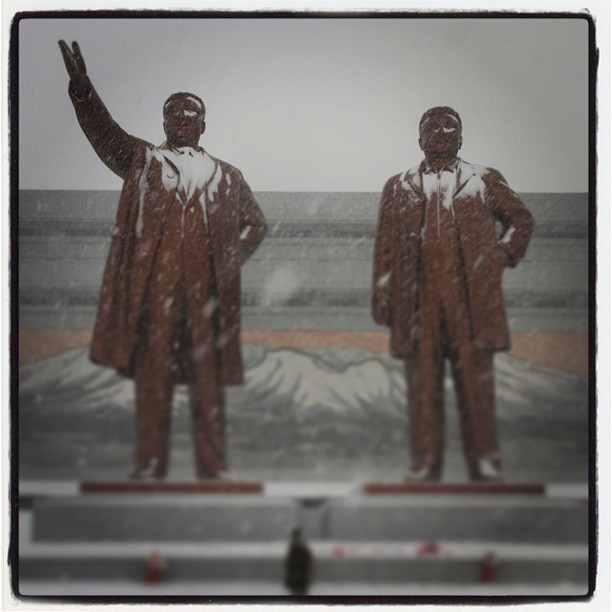
North Korea invokes a brutal historical narrative of war with the United States to legitimize its conduct in the present day – and indeed, North Korea is a victim of war crimes. Washington and its allies rained napalm over North Korea, destroying nearly all its cities and thousands of villages. A staggering four million Koreans and one million Chinese soldiers were killed – US military sources confirm that 20 percent of North Korea’s population was killed off, even that being a highly conservative figure. In the fallout of North Korea’s third nuclear test, state media has invoked several English-language editorials that reflect on the overlooked historical back-story of the US stockpiling nuclear weapons in South Korea. The statement released by the Rodong Sinmun reads:
“In the 1980s the U.S. spurred the modernization of the nuclear hardware of its forces in south Korea. Member of the U.S. House of Representatives Ronald, speaking at a parliament, confessed that the U.S. shipped more than 1,000 nuclear weapons to south Korea and deployed 54 airplanes for carrying nuclear bombs. South Korea turned into the world’s biggest nuclear outpost with the stockpile of nuclear weapons such as bombs, shells, warheads, land mines and carrier means as well as nuclear bases and arsenals. The U.S. nuclear threats were vividly manifested in its open declaration to use nuclear weapons in Korea.”
For all intents and purposes, this is an accurate account. If we fast-forward toward the present-day, the Bush administration’s Doctrine for Joint Nuclear Operations issued in 2005 established the circumstances under which the US could preemptively invoke the use of nuclear weapons. The document states:
“The lessons of military history remain clear: unpredictable, irrational conflicts occur. Military forces must prepare to counter weapons and capabilities that exist in the near term even if no immediate likely scenarios for war are at hand. To maximize deterrence of WMD use, it is essential US forces prepare to use nuclear weapons effectively and that US forces are determined to employ nuclear weapons if necessary to prevent or retaliate against WMD use.”
The North Korean Foreign Ministry’s recent statement, “Second Korean War Is Unavoidable”, argues that the DPRK reserves the right to a preemptive nuclear attack and the Foal Eagle joint military exercises are akin to Washington lighting a fuse for a nuclear war. The document also acknowledges the Obama administration’s pivot to the Asia-Pacific region, and that the US “seeks a way out of a serious economic crisis at home in unleashing the second Korean War.” Many analysts throughout the alternative media have acknowledged North Korea’s history as a victim and have defended their acquisition of a nuclear deterrent. While the historical context of abuse warrants one to be empathetic toward Pyongyang in this respect, many of these commentators fail to necessitate the primacy that inter-Korean dialogue should hold in their writings. It should also be noted that when official figures, such as Jon Yong-nam of the Kim Il-sung Socialist Youth League, utter phrases like, “We vow to plant the flag of the central military command and the North Korean flag on Halla Mountain on Jeju Island [South Korea]”, it makes the deterrent argument far less convincing.
In recent times, the North has provided slight openings for foreign media to enter the country and speak to its citizens, and undercover testimony has been smuggled out. Recent reports published by Radio Free Asia (RFA) detail the intellectual insecurity of North Korean civilians, who in consuming copious amounts of state media in the absence of any other source, deeply fear the threat of strikes or an invasion from foreign powers. RFA quotes a resident of North Korea’s Yanggang Province who has allegedly said, “The authorities said if we have nuclear weapons, we can scare off anyone we meet, but on the contrary even though we have nuclear weapons and we’re shouting that we might launch a preemptive strike, I’m worried it seems we might receive a preemptive strike.” Another resident in resident in Hamgyong Pronvince said, “If we shoot off a nuclear weapon, are the Americans going to stay motionless? In any case, if nuclear weapon is launched everyone dies, so I feel there’s no use for training or anything.”
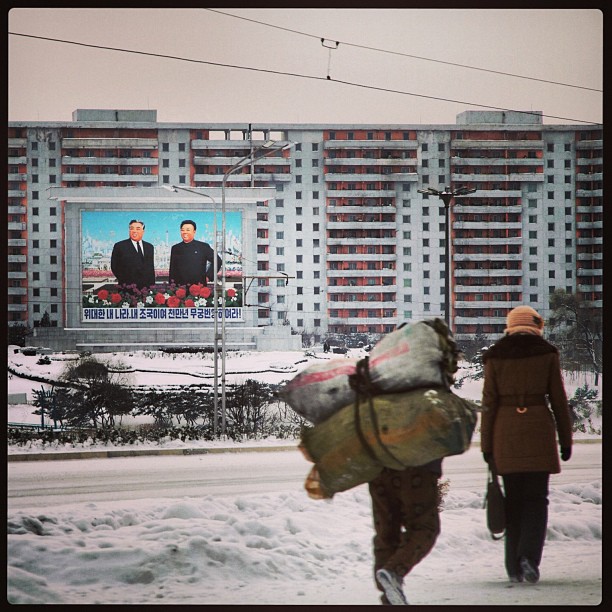
Although these anonymous testimonies, appearing on the US State Department-run RFA, likely serve as some form of propaganda, it highly plausible that a percentage of the North Korean population feels quite uneasy about the current state of affairs. One could offer their rhetorical support for North Korea’s acquisition of nuclear weapons as a deterrent, but what will become of some 10.5 million innocent civilians in Seoul if the North attempts to proliferate its nuclear arsenal? Likewise, 3.2 million souls in Pyongyang would be extinguished if the US employed its preemptive nuclear doctrine. The potential death toll should not be limited to those in capital cities, the reemergence of conflict on the Korean Peninsula immediately endangers the 70 million people living there. For all the firery rhetoric exchanged between the two Koreas, the fact that the hardline Lee Myung-bak regime, incumbent President Park’s predecessor, did not retaliate when the North shelled Yeonpyeong island in 2010 demonstrates the extent to which restraint has been exercised for the sake of stability.
The only thing keeping the situation from deteriorating is the fact that North would probably not come out victorious if it went to war with South Korea and the United States. While the North boasts larger manpower, more submarines, and more fighter jets, the South possesses highly sophisticated weaponry and modern defense technology by comparison – for this reason, Pyongyang has put more focus on the development of ICBMs and nuclear warheads. Military experts say North Korea is years away from developing a long-range missile and a nuclear warhead to attack the US mainland; however the damage it could do to South Korea and Japan has the potential to amass high civilian causalities and shouldn’t be under-estimated. One could argue that the case has never been stronger for the withdrawal of the 28,500 US troops stationed in South Korea. Such a move that would satisfy civilians in both Koreas and yield higher chances of provoking a positive response from Pyongyang during this tense period; however, that simply isn’t going to happen. As the Pentagon pivots to the Asia-Pacific, North Korea is a godsend in its ability to provide Washington with a legitimate pretext to bolster its forces in China’s backyard.
As tensions increase on the Korean Peninsula, the only power that has any influence to broker an agreement that could de-escalate hostilities is China. Following North Korea’s third nuclear test, many Chinese citizens took part in a historically unprecedented outbreak of anti-North Korea protests, and both China’s state-run media and various policy experts are becoming more vocal in their criticism of Beijing’s North Korean policy. China partnered with the United States to co-author recent UN resolutions against Pyongyang, exhibiting new heights of Beijing’s disapproval with the Kim dynasty. An editorial in China’s Global Times newspaper reads, “If North Korea engages in further nuclear tests, China will not hesitate to reduce its assistance to North Korea.” The editorial went on to say that if the US, Japan and South Korea “promote extreme U.N. sanctions on North Korea, China will resolutely stop them and force them to amend these draft resolutions.”
Kim Jong-un has demonstrated his willingness to go against the wishes of his main allies in Beijing, which has visibly frustrated those on the Chinese side, who have for years attempted to nudge Pyongyang into implementing meaningful economic reform. China should do more to denounce unnecessary and provocative military drills that have the potential to lead to fire exchange and inter-Korean turbulence. More likely than not, these threats will not materialize and tensions will deescalate in time. China hosted tri-lateral talks in Beijing with Pyongyang and Washington in attendance a decade ago in April 2003 – at the time North Korea withdrew from the nuclear Non-Proliferation Treaty, fired a short-range missile into the Sea of Japan, violated South Korean airspace with a fighter jet, and threatened to abandon the 1953 Armistice Agreement. The present day scenario is highly unpredictable and it’s clear that Beijing must take the initiative to deescalate this situation and bring all parties together to the negotiating table to work out a new agreement – one that establishes meaningful inter-Korean security assurances that lead to both sides scaling back military drills and provocative muscle flexing – such is a prerequisite for any kind of normalization of relations.
This article appeared on Counterpunch.
Nile Bowie is an independent political analyst and photographer based in Kuala Lumpur, Malaysia. He has travelled extensively to North and South Korea and can be reached at nilebowie@gmail.com.


