Support for marijuana legalization in British Columbia has reached a whopping 75%, according to a new Angus Reid poll commissioned by Stop the Violence BC, a coalition of law enforcement officials, legal experts, medical and public health officials and academic experts concerned about the links between cannabis prohibition in British Columbia and the growth of organized crime and related violence in the province.
The poll surveyed 799 respondents in British Columbia. The results have a margin of error of +/- 3.5%.
The number supporting legalization is up six points over last year’s Angus Reid poll, where 69% supported it. Meanwhile, opposition to legalization has declined from 24% last year to 21% this year.
The new poll also suggested a broad social acceptance of marijuana in Canada’s westernmost province, which has been a hotbed of marijuana cultivation and culture for several decades now. Only 14% of those polled believe possession of a joint should lead to a criminal record, down six points from last year, and 74% would be comfortable living in a society where adult cannabis consumption was taxed and legally regulated under a public health framework, an increase of four percentage points from last year.
Strikingly, support for full legalization was higher than support for the half-measure of decriminalization. While 75% supported legalization, only 62% wanted decriminalization.
“From a scientific and public safety, making cannabis illegal has clearly been an expensive and harmful failure,” said Dr. Evan Wood, founder of Stop the Violence BC and Canada Research Chair in Inner City Medicine at the University of British Columbia. “With 75% of British Columbians supporting change, and the status quo contributing to increasing harms in BC communities, it is absolutely time for politicians to catch up with the public.”
Stop the Violence BC has been pushing for the legalization and regulation of marijuana. Its members include four former BC attorneys general, four former Vancouver mayors, including Larry Campbell, and former West Vancouver police chief and Liberal member of the provincial legislature Kash Heed.
The campaign is picking up steam. In September, the Union of BC Municipalities passed a resolution called for marijuana regulation, and last month, the Public Health Association of BC (PHABC) endorsed regulation.
“From a public health perspective, we urgently need to research alternatives to our current approach to cannabis which has clearly failed to protect public health and has actually resulted in substantial individual and community harms,” PHABC president Dr. Marjorie MacDonald said in a statement.
About 150 people marched in Montreal Friday night to protest against Israel’s bombing of Gaza.
People held signs and chanted in Westmount, holding a vigil outside the Consulate General of Israel.
The protest was a local reaction to ongoing conflict in the Middle East and the deaths of 39 Palestinians. Thursday evening, Israel continued its airstrikes on Gaza and made a show of force by moving ground troops towards the border.
Israel dropped close to 200 bombs on Gaza overnight. The bombing hit several buildings, including Hamas headquarters.
Dozens of rockets were fired from Gaza into southern Israel, killing three people.
“Israel needs to end its brutal occupation of Palestine. It needs to stop the strikes on Gaza,” said Sara Shaltony, a Montreal protestor who has family in Gaza.
The Halifax International Security Forum was recently held at the Westin hotel for three days. On the second day, 100-200 protestors stood outside the hotel in solidarity with Palestine, Syria and Iran while denouncing Israel’s behaviour and boldly calling for Canada to exit NATO.
-intro video recorded Nov. 18, 2012 -raw footage of protest recorded Nov. 17, 2012
Established 4 years ago the Halifax International Security Forum, based in Washington, D.C., will take place Nov. 16-18 at the Westin hotel.
Warmongers from more than 40 countries will join Peter MacKay and some 300 others at the Forum “to learn from each other, share opinions, generate new ideas, and put them into action.”
Amongst the agenda items are:
• Confronting Iran • Syria’s Terror, the Middle East’s Tragedy
• American Global Leadership After the Election
• Securing Global Supply Chains • Learning from Israel
• Gaining Control of Loose Weapons and Loose Chemicals
• North Korea’s New Kim: Just Like the Old Kim?
• Being There: Special Responsibility of Democratic Nations
This is all looked at from the perspective that as the world’s sole superpower, the U.S. is free to dictate to the peoples of the world as it pleases.
It is unacceptable that Halifax, or any Canadian city, be used as a venue to plan further crimes against the peace and the peoples of the world. Bring your banners and placards, bring your music and statements, and most of all bring your friends to oppose this war conference.
As part of the Beyond the Border initiative, the U.S. and Canada are strengthening cybersecurity cooperation. In a move that received little attention, both countries recently announced a joint cybersecurity action plan. Cyber threats know no national borders which has made the issue an important security concern. A fully integrated North American security perimeter would be entrusted with preventing and responding to any such attacks.
One of the key priorities identified in the November 2011 Beyond the Border Action Plan is cybersecurity. The agreement lays the framework for enhancing U.S.-Canada, “bilateral cyber-security cooperation to better protect vital government and critical digital infrastructure and increase both countries’ ability to respond jointly and effectively to cyber incidents. This will be achieved through joint projects and operational efforts, including joint briefings with the private sector and other stakeholders, and the enhancement of real-time information sharing between operation centres.” The deal will also work towards strengthening, “cooperation on international cyber-security and Internet governance issues to promote prosperity, enhance security and preserve openness in our networked world.” Merging cyber threat strategies would force Canada to further bring its security practices in line with American ones and under the reach of the Department of Homeland Security (DHS).
On October 26, Public Safety Canada and the DHS released a Cybersecurity Action Plan which represents a key commitment under the Beyond the Border agreement. A press release explained that the specific goals include, “enhancing collaboration on cyber incident management between each country’s cyber security operations centres, improving information sharing and engagement with the private sector, and continuing the ongoing collaboration between Canada and the U.S. on the promotion of cyber security awareness to the public.” The new joint action plan promotes a shared approach to cybersecurity and digital critical infrastructure protection. Building on these initiatives, both countries also seek to further integrate cyber capabilities into military command structures.
Earlier this year, Defense Secretary Leon Panetta authorized the creation of the Joint Cyber Center (JCC) run by the North American Aerospace Defense Command (NORAD) and U.S. Northern Command. The JCC will bring together personnel from the intelligence, operations and command control systems divisions. The aim is, “To better integrate cyber into the headquarters missions by improving situational awareness in the cyber domain, improving the defense of the commands’ networks and providing cyber consequence response and recovery support to civil authorities.” In June, DefenseNews reported that Secretary Panetta, “approved a new organizational framework, a plan designed as a ‘first step’ towards standardized cyber operations.” This includes having a JCC at each geographic combatant command which is part of ongoing efforts to not only boost U.S., but continental cyber defense capabilities. In the near future, the U.S. and Canada could create a binational “cyber-NORAD” to protect North America from shared threats.
The North Atlantic Treaty Organization (NATO) released an updated Policy on Cyber Defence in June 2011. According to NATO’s website, “This revised policy offers a coordinated approach to cyber defence across the Alliance with a focus on preventing cyber attacks and building resilience.” It will act as the framework, “for how NATO will assist Allies, upon request, in their own cyber defence efforts, with the aim to optimise information sharing and situational awareness, collaboration and secure interoperability.” The new policy also, “sets the principles on NATO’s cyber defence cooperation with partner countries, international organisations, the private sector and academia.” In May of this year, the Chicago Summit Declaration, “committed to provide the resources and complete the necessary reforms to bring all NATO bodies under centralised cyber protection.” It also pledged to, “further integrate cyber defence measures into Alliance structures and procedures.” U.S.-Canadian military cooperation also extends through NATO and this includes in the realm of cybersecurity.
There are reports that President Barack Obama may be close to issuing a cybersecurity executive order as a means of bypassing Congress. Under the guise of cybersecurity, the U.S. and Canada have been individually pushing draconian legislation domestically which would grant government agencies sweeping new powers. The implications would be far reaching and pose a risk to privacy and civil liberties. Through the Beyond the Border initiative both countries are pursuing an integrated cybersecurity agenda. As they move forward and address common threats to North America, cyber and perimeter security will be further defined and dominated by U.S. interests.
Dana Gabriel is an activist and independent researcher. He writes about trade, globalization, sovereignty, security, as well as other issues. Contact: beyourownleader@hotmail.com Visit his blog at Be Your Own Leader
While big pharma continues to do everything it can to push unnecessary pills on the population for even the smallest of ailments, Health Canada has been supporting the efforts of big pharma by suppressing natural remedies such as vitamins, dietary supplements and eventually even fruits and vegetables. A class action lawsuit has been filed against Health Canada in an effort to ensure that Canadians maintain the right to choose their own methods and products for their personal health and well being.
We rely on you the viewer to help us continue to do this work. With your help I can continue to make videos and documentary films for youtube in an effort to raise awareness all over the world. Please support independent media by joining Press For Truth TV!
As a Press For Truth TV subscriber you’ll have full access to the site’s features and content including Daily Video Blogs on current news from the PFT perspective and High Quality Downloads of all Press For Truth Films, Music and Special Reports! Subscribe to Press For Truth TV
A phone conversation with Major Doug MacNair, spokesman for the Canadian Special Operations Forces Command about the Military drills in Downtown Hamilton.


 Potent News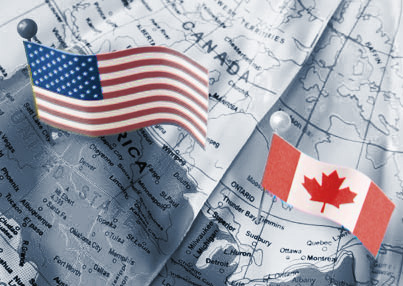


 PN
PN 