OTTAWA — Gionni Lee Garlow came into the world five pounds, nine ounces — on the floor of an Ottawa jail cell.
The baby’s mother, Julie Bilotta, a 26-year-old woman from Cornwall, was in custody at the Ottawa-Carleton Detention Centre on Sept. 29 when she tried in vain to convince staff that she was in labour and needed help.
Bryonie Baxter, executive director of the Elizabeth Fry Society, which advocates on behalf of woman who come into conflict with the law, told the Citizen that Bilotta screamed for hours but the nursing staff at the jail did not take her seriously.
“They took her vitals. They told her it was indigestion,” Baxter said, adding that Bilotta, who was eight months pregnant, was later told she was in phantom labour.
According to Baxter and Bilotta’s mother, Kim Hurtubise, who have both spoken several times with the still-incarcerated woman, the jail guards responded to Bilotta’s pleas by telling her she was making too much noise and moving her to a segregated cell.
While she was being moved, they say, a guard told Bilotta she shouldn’t have become pregnant if she couldn’t deal with pain and it would only get worse when the “real” labour began.
Baxter said that from the information she has gathered it appears that Bilotta was never given an internal examination. She said the nurse only believed the labour was real when one of the baby’s feet emerged in the breech birth, hours after her first complaints.
Jail staff called an ambulance — although Baxter has questions about how promptly that call was made — and the baby was delivered in the cell by paramedics.
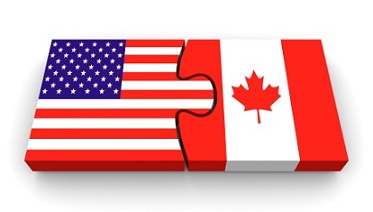
Less than a week after a “gala” event, celebrating the 25th anniversary of the free trade agreement between Canada and America. That took place in Toronto Ont. on Wednesday October 3 2012. Canada has now officially joined talks aimed at achieving a Pacific free-trade deal.
The pacific free trade deal now has 11 countries signed on, in the talks. Australia, Brunei, Canada, Chile, Malaysia, Mexico, New Zealand, Peru, Singapore, the United States and Vietnam.
The advocates of the pacific deal say it could prove a useful way of counteracting the growing clout of China in regional trade and be extremely beneficial to average Canadians. Boosting the Canadian middle class.
This is the same type of rhetoric that was said when when the FTA was signed, and ultimately NAFTA a few years later. How true was the advocates hype with the FTA and NAFTA?
In a report from the Toronto Sun, published on the university of Toronto’s website. The numbers show how free trade has severely hurt Canadians.
“Diversification in Canada’s industrial base has been disappointing, said Campbell, with the average unemployment rate in the last 15 years remaining about the same as the previous 15 years. Big business, though, has done well. A study of 40 non-financial member companies of the Canadian Council of Chief Executives found their combined revenues jumped 105 per cent between 1988 and 2002 while their overall workforce shrank by 15 per cent.
The wealth hasn’t trickled down, said Campbell, despite steady productivity growth in the Canadian economy. “If free trade was supposed to usher in a new era of rising living standards, reversing the sluggishness of the 1980s, the record reveals quite the opposite.”
Annual growth in average personal income per capita was at 1.55 per cent a year in the 1980s but slid to 0.63 per cent a year between 1989 and 2005. Meanwhile, Americans were enjoying a personal income growth rate of almost twice that during the same period. Massive cuts to Canadian social programs haven’t helped, said Campbell, and tax cuts and transfers didn’t offset the difficulties as
they did in the past.
Federal non-military spending cuts in the second half of the 1990s were the largest in Canadian history, bringing spending down to the level of the late 1940s. “Growing wealth and income inequality and a shrinking Canadian social state have been hallmarks of the free trade era,” Campbell said.
The bottom 20 per cent of families saw incomes fall by 7.6 per cent during 1989 to 2004, while incomes of the top 20 per cent rose 16.8 per cent. While the average Canadian wage increased eight per cent between 1990 and 2000, the top one per cent of wage earners made 64 per cent more. “The first free trade decade saw overall income inequality increase for the first time since the 1920s,” said Campbell. Continue Reading
“What’s concerning is that inequality is getting worse instead of better, and while Canada has the financial means to turn this around, those steps aren’t being taken”
As we can see the only Canadians benefiting from North American free trade are the rich. Or as the occupy movement dubbed them the “1%”. The rest of us got the shaft after being told it would be amazing! (big surprise)
Will this new trade deal be legit? Will it help common Canadians? I wouldn’t count on it! This trade deal along with many others including CETA (Canadian and European trade agreement), which is also being negotiated at this moment. Is only furthering the globalized consolidation of wealth into the hands of a few billionaires.
And for those who like to pin all of our woes on Stephen Harper or the Conservative party. Stop before you even try to blame them solely for this. Conservatives began the FTA and NAFTA, Liberals continued them and started the negotiations for CETA, and now the conservatives are continuing CETA and starting this new Pacific deal. You see an emerging trend? It does not matter which politician or party is in office. The same agenda continues. Harper, Martin, Chretien, Mulroney all puppets doing the bidding of their corporate masters.
Is there a hidden dimension to the war posturing against Iran by the Western Alliance?
Mehran Tavakoli Keshe, an Iranian born Nuclear Engineer, Inventor and Founder of The Keshe Foundation, based in Belgium, claims to have helped the Iranian Government develop a ‘superior’ space program based on his nuclear plasma technology. The Iranian Government openly promotes their space program and may have used a Keshe technology based ‘UFO’ style anti-gravity spaceship complete with tractor beams to capture the infamous US RQ170 Sentinel drone, an event which embarrassed the Obama administration and shook the CIA in December 2011.
Keshe, who some see as the ‘Tesla of Physics’ has been offering his technology free to any Government or scientist willing to listen for years, but claims he has been turned away first by Nasa in 1985 and subsequently by countless other organizations and Governments. Keshe asserts that only the Iranian Government were willing to co-develop the technology, but this, if true adds a potentially crazy twist to the unfolding Iran saga.
If Iran do possess these advanced technologies, Keshe claims they will have impenetrable airspace defense capabilities and will be able to destroy opposition forces globally within minutes. Staggering as these claims are, and as unlikely a scenario as an Iranian victory over the US, Israel and their allies might seem, there are tantalizing clues that there may be some substance to the story, and Iran might be able to punch well above it’s weight in a military conflict.
Keshe claims to have suffered severe harrassment including incarceration and questioning while in transit by Canadian authorities, for which he has evidence in the form of paperwork and his unexplained absence from a scientific gathering he was due to speak at. His equipment, data and papers have been confiscated or copied by various authorities including the Belgian Government, while an imposter claiming to represent the Keshe Foundation has been causing trouble with Governments and corporations, damaging the Foundations credibility as it tries to advance the scientific community’s understanding of the plasma driven sub-atomic Universe Keshe theorized to develop his range of (he claims) fully working technologies which include food, water and energy solutions.
Keshe’s most intriguing claim is that US President Obama has issued an executive order effectively banning anyone from even viewing the Keshe technologies.
An executive order issued in April this year threatens anyone considered ‘…to have sold, leased, or otherwise provided, directly or indirectly, goods, services, or technology to Iran or Syria likely to be used to facilitate computer or network disruption, monitoring, or tracking that could assist in or enable serious human rights abuses by or on behalf of the Government of Iran or the Government of Syria…’
Keshe’s technology is reported to eradicate local electronic activities while operational, and thus may have been used to electronically sever the US drone from it’s eight communications satellites before it’s capture by Iranian forces. Whether aimed at Keshe or not, this Executive Order could certainly be applied to Keshe and anyone that associates with him due to his collaboration on high technology projects in Tehran. Keshe claims Iran have not initiated aggressive action against anyone for hundreds of years, but have stated that they will not hesitate to use his technology to ‘annihilate’ any aggressor(s) against Iran, should military action take place.
It’s hard to believe the US administration and CIA are not aware of this left field dimension to the military potential of Iran, especially as their RQ 170 Sentinel was captured inexplicably unharmed representing a huge compromise of US military security, even if it was captured using standard hacking techniques – which should have left it a crashed wreck. Could this ‘Keshe factor’ be playing a hidden role in the unfolding story of Iran? If there is even a grain of truth in the plasma theory and the Keshe technologies the implications could be global and game changing for humanity’s immediate and long term future.
Keshe – The ‘Tesla of Physics’..?
Keshe has written an open letter to the Obama administration asking them to accept that his technologies could free the human race from many restrictions and solve most challenges, and to move beyond the power position their current technological advantages give them for the good of humanity. As yet he has received no reply.
Many readers might find this story outlandish, but I encourage those who do to follow your own lines of research to assess this potentially important story – which has implications and dimensions beyond the Iran issue – for themselves.
On Wednesday October 10th I attended a meet and greet with Justin Trudeau at the Sheraton Hotel to ask him about the Bilderberg group and whether or not he would attend…apparently that’s not an appropriate question to ask a potential liberal leader…
A big shout out to Anthony from Canadian Awareness Network for questioning Trudeau on water fluoridation. http://canadianawareness.org/
Support independent media by joining Press For Truth TV: http://pressfortruth.tv/register/
We rely on you the viewer to help us continue to do this work. With your help I can continue to make videos and documentary films for youtube in an effort to raise awareness all over the world. Please support independent media by joining Press For Truth TV!
As a Press For Truth TV subscriber you’ll have full access to the site’s features and content including Daily Video Blogs on current news from the PFT perspective and High Quality Downloads of all Press For Truth Films, Music and Special Reports! Subscribe to Press For Truth TV: http://pressfortruth.tv/register/
The Beyond the Border deal announced in December 2011 represents the most significant step forward in U.S.-Canada cooperation since NAFTA. Dual action plans are further transforming trade, regulatory and security relations between both countries. Over the next few years, various cross-border initiatives will be rolled out, with some beginning as pilot programs. The U.S. and Canada have laid the framework for a new border regime which is taking their partnership to the next level and pushing the continent closer to a fully integrated North America security perimeter.
The Department of Homeland Security and Canada Border Services Agency recently announced the Phase I pilot of the Entry/Exit program which is part of the Beyond the Border action plan. It will include collecting and exchanging biographic information of third-country nationals, permanent residents of Canada, and lawful permanent residents of the U.S. at four selected land border ports of entry. A fact sheet stressed how this, “is an important step as both countries move towards a coordinated entry/exit system that will strengthen border and immigration programs, support law enforcement, and accelerate the legitimate flow of people and goods into Canada and the United States and across our common border.” The Canadian government is also advancing plans to use biometrics for immigration and border security that would bring them in line with the U.S. and other countries. The perimeter security agreement called for implementing, “systematic and automated biographic information-sharing capability by 2013 and biometric information-sharing capability by 2014.” A North American biometric identification system could be used to restrict, track and trace our movements.
On October 4, Transportation Security Administration (TSA) and Transport Canada officials announced the extension of the expedited screening initiative, TSA Pre✓™ which will now include lanes for Canadian NEXUS members at 27 participating U.S. airports. Canadian Minister of State For Transport Steven Fletcher explained that, “The Government of Canada and the United States are delivering on commitments to include Canadian NEXUS members in designated TSA Pre✓™ lanes as part of the Beyond the Border Action Plan.” He went on to say, “This will mean smarter and faster air travel for Canadian NEXUS members traveling within the U.S., while maintaining a high level of aviation security.” TSA Administrator John Pistole acknowledged that, “The inclusion of Canadian NEXUS members in TSA Pre✓™ is an important step in further harmonizing the security screening process between the U.S. and Canada.” Under NEXUS, pre-screened travelers are granted expedited access across the border, by air, land or sea. As part of the perimeter security deal, both countries are expanding and integrating trusted traveler programs.
The Next-Generation pilot project which would permit U.S. agents on Canadian soil is on hold while legal issues are being resolved. The security perimeter agreement stated that both countries would, “create integrated teams in areas such as intelligence and criminal investigations, and an intelligence-led uniformed presence between ports of entry.” The plan which is a land-based version of the Shiprider program was scheduled to be deployed this summer. Allowing U.S. agents to cross the border and pursue suspects into Canada poses a threat to sovereignty and could infringe on personal privacy laws. The pilot project is part of the process of acclimating U.S. policing activities in Canada and could later be expanded.
Last month, the USDA’s Food Safety and Inspection Service and the Canadian Food Inspection Agency established a pre-clearance initiative pilot project on import re-inspection activities for fresh meat. This is tied to the Beyond the Border deal and is aimed at streamlining meat inspections at the U.S.-Canada border. Just as the joint program was being rolled out, XL Foods in Alberta, Canada announced a massive recall of meat products due to E. coli contamination. This came on the heels of a letter from the Safe Food Coalition to the USDA citing concerns that food safety could be compromised and requesting that the border inspection pilot be halted. Some of the potential tainted meat could have been shipped to at least eight U.S. states. In a press statement, the Executive Director of Food & Water Watch, Wenonah Hauter pointed out that, “the Obama Administration and the Harper Government in Canada have been plotting to eliminate the very border inspection program that tipped off authorities that there was a major problem brewing with the products originating from the XL plant.” Plans to further deregulate food safety inspections could lead to more trouble in the future.
In September, Transport Canada and the United States Coast Guard launched a pilot project that will include joint Port State Control inspections of non-Canadian and non-U.S. flagged vessels in the Great Lakes St. Lawrence Seaway. Rear Adm. Mike Parks, Commander of the U.S. Coast Guard Ninth District described how, “This initiative is in keeping with President Obama’s and Prime Minister Harper’s Beyond the Border Perimeter Security Initiative protecting the Great Lakes and St. Lawrence Seaway region, which provides common access to the heart of North America. Our goal is to make vessel inspections more efficient and facilitate American and Canadian business on both sides of our shared border.” The program is outlined in the Regulatory Cooperation Council action plan and establishes a, “safety and security framework for the Great Lakes St. Lawrence Seaway that will align the two countries’ regulatory requirements. This pilot project will look for efficiencies in order to reduce duplicate inspections and impediments to trade.” When completed, recommendations will be made on whether to form a permanent binational foreign vessel inspection program.
NAFTA partners, in conjunction with multinational corporations and influential think tanks are pushing for deeper North American integration. As far as the upcoming U.S. election goes, Barack Obama and Mitt Romney are both committed globalists and have no intentions of upholding the constitution or protecting what is left of American sovereignty. The notion of real choice is now even more of an illusion. Minus the Democrat and Republican rhetoric, it’s essentially the same policies, same agenda, and the same team. It doesn’t matter who wins the presidency, the path towards a North American Union will continue.
Dana Gabriel is an activist and independent researcher. He writes about trade, globalization, sovereignty, security, as well as other issues. Contact: beyourownleader@hotmail.com Visit his blog at Be Your Own Leader
This is just one of nearly 600 cases of Canadian kids suffering serious, sometimes fatal side effects suspected to have been caused by ADHD medications in the past 10 years.
A Toronto Star investigation has found a growing number of doctors, nurses, pharmacists and parents are reporting that they believe attention deficit drugs are causing major health problems in patients, many as young as 6 and 7 years old.
The federal government is not listening.
Health Canada, which collects these adverse reaction reports, does not alert the public to the magnitude of these side effects. This is because the regulator has not analyzed the data it collects. It has allowed the industry to largely police itself.
“It is primarily the (drug company’s) responsibility to monitor the safe use of their products,” Health Canada told the Star.
The regulator says the benefits of the drugs, when properly prescribed and used, outweigh the risks. Health Canada and the drug companies also say the side-effect reports show only a suspected connection between the drug and side effect but no medical proof that one caused the other.
Though ADHD doctors and experts worry the Star’s investigation will scare parents from medicating kids in need, they say Health Canada should consider the reports a “red flag” and move quickly to find out if doctors and patients know enough about the drugs’ risks.
All parties involved agree that because doctors and nurses are not required by law to report adverse effects the regulator only learns of a minority of cases.
“It boils down to a simple thing: we need good safety monitoring for medication,” said Dr. Kenny Handelman, an ADHD specialist in Oakville. “That will help us be safer in prescribing medicines to people.”
The Star’s data analysis revealed 7-year-olds were most likely to suffer a serious side effect.
Ten per cent, or nearly 60 cases, of the nearly 600 reviewed involved boys and girls 7 years old.
A nurse said a boy suffered amnesia, mania and psychotic disorder while on Concerta. A 7-year-old girl on the same drug developed Stevens-Johnson syndrome, a potentially life-threatening skin disorder, as well as 13 other side effects, a doctor reported. A boy the same age and on Strattera thought about killing himself.
Twenty-two youths aged 8 to 18 tried to kill themselves and two demonstrated suicidal behaviour. Seven completed the attempt. All boys. An 11-year-old, one 14-year-old, two 13-year-olds and three 15-year-olds. One of the 15-year-olds who ended his life was on an antipsychotic that the reporting nurse believed was partly to blame.
The reports of the 11- and 14-year-old Canadian boys were found in the U.S. government side-effect database. Tuesday, Health Canada contested the accuracy of those reports and was continuing to look into the issue.
The Star also found four deaths that were not suicides, including an 18-year-old girl who died after a cerebral hemorrhage in 2011.
“This is ugly. This is really ugly,” said a concerned Conservative MP Terence Young, when presented with the Star’s findings. Young has been pushing for stricter regulation of the drug industry since his 15-year-old daughter Vanessa died while taking Prepulsid, a digestion aid, in 2000. Health Canada pulled the drug from shelves a few months after her death.
“Every parent who makes a decision about one of these ADHD drugs for their child should be given this information that the Star found on the adverse drug reactions that other children have suffered,” Young said.
Each of the nearly 600 adverse reaction reports reviewed by the Star is the opinion of the doctor, pharmacist or parent that a particular drug has caused a side effect. Anyone can make a report but most of the time it is doctors who do so. Patients’ names are taken out of the reports to protect their privacy.
The drugs in the Star study are commonly prescribed to help manage attention deficit hyperactivity disorder, a term used to describe people with poor focus, impulsivity and hyperactivity.
Though the number of Canadian kids with the disorder is unclear — one estimate puts it at one in 20 children — parents are increasingly turning to these drugs to deal with the diagnosis.
In the 10 years reviewed by the Star, 76 kids on ADHD medications thought about killing themselves. One-third of these were children younger than 10, some as young as 6.
When presented with this number, Dr. Sohail Khattak, a behavioural pediatrician and ADHD expert in Whitby, shook his head and said: “This is an important number. I think (this) information should be available to everyone. If I am going to be on the front line of prescribing the medication, I need to know.”
In 52 of these suicidal ideation reports, the attention deficit drug Strattera is listed as the suspected cause of the side effect. In 12 of the reports, Concerta is listed as the suspected cause. It is also listed as the suspected cause of one completed suicide.
Canadian doctors also prescribe Adderall XR (an extended-release formula), Ritalin, Vyvanse, Biphentin and generic versions to treat ADHD. Unlike other ADHD medications, Strattera is not a stimulant.
“Additional scientific investigations are needed to establish a cause and effect relationship between a medication and an adverse reaction,” said a spokesperson for Eli Lilly Canada, maker of Strattera.
The reports are supposed to play a crucial role in regulating the drug companies.
After a controlled-setting clinical trial involving thousands of participants, if a drug is approved for sale, the reports are often the only way a government can monitor how a drug performs in the much-larger general population. (A clinical trial may not reveal serious drug reactions that occur infrequently or take a long time to materialize.)
The Star found the reports are piling up in Ottawa at an increasing clip: more than one-third of the 600 serious ADHD medication side-effect reports were filed in the past two years alone.
While the reports accumulate, the Canadian regulator says on its website it does not have the expertise to analyze the information for trends and is relying on the U.S. Food and Drug Administration (FDA) for help. When asked about this in late August, the regulator told the Star that the plan to partner with the FDA had been dropped and another strategy would be launched this month.
In the meantime, the drug companies note that they are required by law to forward adverse reaction reports they receive to Health Canada, and say they closely monitor these reports and consider patient safety a priority.

 by Terry Wilson
 by Danté Xavier Voltaire



 PN
PN 