Rick Rozoff of Stop NATO describes the NATO meeting occurring during heightened tensions with Syria. With the war machine heating up, he investigates the position of the new government in France, the composition of the UN team, and whether the UN is a problem or a solution.
Zafar Bangash investigates the foreign support for Syria’s rebels. “The Saudis have opened their chequebooks.”
Syria’s President says countries like the US, Saudi Arabia, Qatar and Turkey are hindering peace in his country by supporting those he calls ‘terrorists’.
Bashar al-Assad accused Washington of being partially responsible for the deaths of innocent civilians by partnering with the rebels. The Syrian army have started large-scale drills simulating defense against outside attacks.
Some opposition leaders previously appealed to the West for foreign intervention against the regime.
But as Maria Finoshina reports from Syria, many in the country are fearing for their lives if the rebel forces get what they want.
As public interest in African affairs briefly found a place in mainstream talking points following a controversial viral video campaign about Ugandan rebel group, the Lord’s Resistance Army (LRA), both the United States and the African Union are mobilizing military forces to Central Africa to counter further threats to civilian safety posed by the group. Following the US deployment of one hundred military personnel to Uganda in 2011, the African Union has deployed a 5,000-solider brigade to LRA affected areas, tasked with pursuing the group and its leader, Joseph Kony [1]. In the United States, a new bill co-authored by U.S. Representative Edward Royce has been introduced to the Congress calling for the further expansion of regional military forces into the nations of the Democratic Republic of the Congo, Central African Republic and the newly formed South Sudan [2].
Although the Lord’s Resistance Army has been accused of recruiting child soldiers and conducting crimes against humanity throughout its two-decade campaign for greater autonomy against the Ugandan government, the group is presently comprised of less than four hundred soldiers [3] and remains a questionable threat. Meanwhile, China’s deepening economic engagement in Africa and its crucial role in developing the mining and industrial sectors of several nations is reportedly creating “deep nervousness” in the West, according to David Shinn, former US ambassador to Burkina Faso and Ethiopia [4]. As the Obama administration claims to welcome the peaceful rise of China on the world stage, recent policy shifts toward an increased US military presence in several alleged LRA hotspots threaten deepening Chinese commercial activity in the Democratic Republic of the Congo, widely considered the world’s most resource rich nation [5].
As China maintains its record of consistently strong economic performance, Washington is crusading against China’s export restrictions on minerals that are crucial components in the production of consumer electronics such as flat-screen televisions, smart phones, laptop batteries, and a host of other products. As the United States, European Union and Japan project international pressure on the World Trade Organization and the World Bank to block financing for China’s extensive mining projects [6], US Secretary of State Hilary Clinton’s irresponsible accusations of China perpetuating a creeping “new colonialism” of the African continent remain rather telling [7]. As China is predicted to formally emerge as the world’s largest economy in 2016 [8], the successful aggregation of African resources remains a key component to its ongoing rivalry with the United States.
The villainous branding of Joseph Kony may well be deserved, however it cannot be overstated that the LRA threat is wholly misrepresented in recent pro-intervention US legislation. The vast majority of LRA attacks have reportedly taken place in the north-eastern Bangadi region of the Democratic Republic of the Congo, located on the foot of a tri-border expanse between the Central African Republic and South Sudan. However, the small number of deaths reported by official sources in recent times relies on unconfirmed reports where LRA activity is “presumed” and “suspected” [9]. Considering the Congo’s extreme instability after decades of foreign invasion, falsely crediting the LRA with the region’s longstanding cases of violence for political gain becomes relatively simple for those looking to gain enormous contracts for Congolese resources.
In a 2010 white paper entitled “Critical Raw Materials for the EU,” the European Commission cites the immediate need for reserve supplies of tantalum, cobalt, niobium, and tungsten among others [10]; the US Department of Energy 2010 white paper “Critical Mineral Strategy” also acknowledged the strategic importance of these key components [11]. In 1980, Pentagon experts acknowledged dire shortages of cobalt, titanium, chromium, tantalum, beryllium, and nickel, eluding that rebel insurgencies in the Congo inflated the cost of such materials [12]. Additionally, the US Congressional Budget Office’s 1982 report “Cobalt: Policy Options for a Strategic Mineral” notes that cobalt alloys are critical to the aerospace and weapons industries and that 64% of the world’s cobalt reserves lay in the Katanga Copper Belt, running from southeastern Congo into northern Zambia [13].
During the Congo Wars of the 1996 to 2003, the United States provided training and arms to Tutsi Rwandan and Ugandan militias who later invaded the Congo’s mineral rich eastern provinces to pursue extremist Hutu militias following the Rwandan genocide. Although over six million deaths were attributed to the conflict in the Congo [14], findings of the United Nations suggest that neighboring regimes in Ugandan, Rwanda and Burundi benefitted immensely from illegally harvested conflict minerals, later sold to various multinational corporations for use in consumer goods [15]. The US defense industry relies on high quality metallic alloys indigenous to the region, used primarily in the construction of high-performance jet engines. The sole piece of legislation authored by President Obama during his time as a Senator was S.B. 2125, the Democratic Republic of the Congo Relief, Security, and Democracy Promotion Act of 2006; Section 201(6) of the bill specifically calls for the protection of natural resources in the troubled regions of eastern Congo [16].
The Congo maintains the second lowest GDP per capita despite having an estimated $24 trillion in untapped raw minerals deposits [17]; it holds more than 30% of the world’s diamond reserves [18] and 80% of the world’s coltan [19], the majority of which is exported to China for processing into electronic-grade tantalum powder and wiring [20]. The control of strategic resources in the eastern Congo is a vital element of the ongoing US-China rivalry, as Chinese commercial activities in the DRC continue to increase in the fields of mining and telecommunications. The Congo exported $1.4 billion worth of cobalt to China between 2007 and 2008 [21], while the majority of Congolese raw materials like cobalt, copper ore and a variety of hard woods are exported to China for further processing [22]; 90% of the processing plants in resource rich southeastern Katanga province are owned by Chinese nationals [23].
In 2008, the International Monetary Fund (IMF) blocked a trade deal between a consortium of Chinese companies, who were granted the rights to mining operations in Katanga in exchange for US$6 billion in infrastructure investments, including the construction of two hospitals, four universities and a hydroelectric power project. The framework of the deal allocated an additional $3 million to develop cobalt and copper mining operations in Katanga, but the IMF argued that the agreement between China and the DRC violated the foreign debt relief program for so-called HIPC (Highly Indebted Poor Countries) nations [24]. The marginalization of China by financial regulatory bodies is a strong indication of its throttling rivalry with American and European corporate communities, many of who fear being diluted in China’s increasing economic orbit.
While subtle economic warfare rages between partnered superpowers, the increasing western military presence in the Congo is part of a larger program to expand AFRICOM, the United States Africa Command, through a proposed archipelago of American military bases in the region. In 2007, US State Department advisor Dr. J. Peter Pham offered the following on AFRICOM and its strategic objectives of “protecting access to hydrocarbons and other strategic resources which Africa has in abundance, a task which includes ensuring against the vulnerability of those natural riches and ensuring that no other interested third parties, such as China, India, Japan, or Russia, obtain monopolies or preferential treatment” [25]. The push into Africa has more to do with destabilizing the deeply troubled Democratic Republic of the Congo and capturing its strategic reserves of cobalt, tantalum, gold and diamonds. More accurately, the US is poised to employ a scorched-earth policy by creating dangerous war-like conditions in the Congo, prompting the mass exodus of Chinese investors. Similarly to the Libyan conflict, the Chinese returned after the fall of Gaddafi to find a proxy government only willing to do business with the western nations who helped it into power [26]. The European Union’s recently offered contribution of $12 million to joint military operations against the ailing Lord’s Resistance Army suggests signs of a coming resource war in Central Africa [27].
Bypassing the UN to “end violence” of its own creation, West plumbs new depths of own depravity. by Tony Cartalucci
June 29, 2012 – Ned Dobos of Australia’s University of New South Wales, has given a presentation, served up in the form of an op-ed in the Sydney Morning Herald titled, “Syria needs a vigilante to save its people,” that can only be described as a new benchmark in Western duplicity. Cued up by the forces of Western imperialism, Dobos plugs in every keyword and talking point flowing through the halls of the very corporate-funded think tanks that have engineered the blood-soaked destabilization in Syria in the first place.
Sidestepping entirely the history of the current conflict, both in Syria, and in a broader regional context, as well as inconvenient facts regarding the driving factors behind the violence Dobos seeks to end with his proposal, he maintains that there is a “moral imperative” for nations to act outside of the “paralyzed” United Nations.
Dobos conducts a rambling pedantic philosophical defense of what is essentially a unilateral act of war built on patently false pretenses, as NATO has already done in Libya, and as the US has done in Iraq and Afghanistan at the cost of millions of innocent lives.
Dobos concludes by stating:
“Champions of the UN often fail to see or acknowledge that the obligations of a state’s international commitments are equally prima facie, and that in some cases a perfectly good justification for their transgression will be available.
Syria is one of those cases. The global body entrusted with the task of preventing human rights abuses is, once again, paralysed by politics. For any state that is able and willing to act unilaterally, the imperative to defend people against murder, torture and rape trumps fidelity to international covenant. A vigilante that defends the innocent when the police can’t or won’t is not a villain, he is a hero.” – “Syria needs a vigilante to save its people” Ned Dobos, SMH.
The Truth Drowns Western & Dobos’ Flights of R2P Fancy
Unfortunately for Dobos and his ivory tower academia, the truth about the violence in Syria not only mires his proposal in the unpleasantries of reality, it drowns it. The “murder, torture, and rape” Dobos claims unilateral military intervention will stop, was in fact premeditated, planned, staged, funded, and the forces carrying it out entirely armed by the West in an effort not for “preventing human rights abuses,” but to admittedly overthrow the government of Syria and install a compliant, pro-Western client regime, as the West has done in Tunisia, Libya, Egypt, and is attempting to do elsewhere from Northern Africa to Southeast Asia and beyond.
Since the early 1990’s, US Army General Wesley Clark was aware of a plan drawn up by the forces of corporate-financier special interests to overthrow the “old client regimes” of the Soviet Union. General Clark would again be made aware of plans post-9/11 to invade and overthrow the governments of seven specific nations, Iraq, Syria, Lebanon, Libya Somalia, Sudan, and Iran. General Clark would later present this information at the Commonwealth Club of California, October 3, 2007.
It was also in 2007 that Seymour Hersh of the New Yorker would publish a lengthy report titled “The Redirection” regarding US, Israeli, and Saudi plans to destabilize Lebanon, Syria, and Iran using sectarian extremists with direct ties to Al Qaeda with the foreknowledge they would wreak terrible havoc, committing horrific atrocities as they carried out the West’s proxy war. Upon reading Hersh’s report and viewing the events unfolding today, the West’s plan has clearly been executed with a fair degree of exactitude and precision, obfuscated only by the West’s impressive dissembling enabled by their immense corporate media networks.
The Arab Spring was also being engineered in this period, years before it would actually unfold, with the US training “activists” in the US, providing them with equipment, funding, and directives in the lead up to one of the largest, if not the largest coordinated political destabilization in human history. Regarding Syria specifically, the US State Department would admit that it did indeed train and fund “activists” abroad with the explicit intent of sowing chaos once they returned to Syria.
In an April 2011 AFP report, Michael Posner, the assistant US Secretary of State for Human Rights and Labor, admitted that the “US government has budgeted $50 million in the last two years to develop new technologies to help activists protect themselves from arrest and prosecution by authoritarian governments.” The report went on to admit that the US (emphasis added) “organized training sessions for 5,000 activists in different parts of the world. A session held in the Middle East about six weeks ago gathered activists from Tunisia, Egypt, Syria and Lebanon who returned to their countries with the aim of training their colleagues there.” Posner would add, “They went back and there’s a ripple effect.”
With the CIA, Saudi Arabia, Qatar, and even elements in Lebanon now openly admitting they are funding, arming, and otherwise enabling terrorists operating in and around Syrian territory – and with these terrorists accused by even the West’s own “institutions” and “international arbiters” of carrying out systematic atrocities of their own, including kidnapping, torture, and murder, Dobos’ narrative is exposed further as absolute, baseless, politically-motivated propaganda unmoored by even what is admitted in headline news.
With Libya serving as the ultimate example of just how disingenuous the West is regarding “responsibility to protect” (R2P), a political ploy contrived by modern neo-imperialists to mask naked military conquest, promoting a similar campaign in Syria is admittedly a hard, if not impossible sell. Libya’s “freedom fighters” have turned out to be sectarian terrorists now carrying out a brutal campaign of nationwide torture, harassment, illegal imprisonments, and genocide. Entire towns have been wiped out with ethnic and religious minorities fleeing the country for their survival. Even the handpicked proxies installed by NATO have been subjected to the violence, threats, and general chaos that has predictably prevailed in Libya.
In fact the only success story that can be told coming out of Libya, is its emergence as a military logistical hub serving similar NATO destabilizations across Northern Africa and across the Middle East. With an entire nation serving as a safe haven for terrorism, a nearly endless supply of weapons and fighters can be propagated to multiple theaters of conflict. Ironically enough, eastern Libya (Benghazi, the epicenter of 2011’s destabilization) had served as a terrorist recruiting center for fueling sectarian violence in Iraq that effectively neutralized a joint Sunni-Shi’ia insurrection against Western occupation.
Selling Unilateral Military Conquest – a Crime Against World Peace
Wittingly or unwittingly, Dobos has committed a crime against world peace by promoting crass, unfounded, irresponsible propaganda aimed solely at defending not only the continuation of violence in Syria, but also by attempting to prepare the ground for a larger act of overt military aggression, which he himself admits violates international law – a Nuremberg offense.
Dobos and the corporate-funded policy makers he parrots almost certainly do not believe the rhetoric they are promoting – as even the most elementary research into the topic exposes immediate and significant flaws in the premise of “unilateral intervention” based on a “moral imperative” to alleviate violence of the West’s own premeditated creation.
Dobos has also played a role in destroying the credibility of not only his own university of New South Wales, but the reputation and credibility of Western academia in general, which has now become an easily purchased stamp of approval to lend credence and employ an “academic” defense to the otherwise indefensible. Australian academia in particular has been almost entirely infiltrated and co-opted by the forces of Western special interests, in particular by the Lowy Institute.
For the very real principles and ideals the West once stood for, we must expose and denounce entirely the hackery of “academics” like “Dr.” Dobos, protest the recognition of his credentials, and give pause for thought to those employing him and allowing him to continuously abuse the good name of their educational institutions for transparently self-serving political agendas. Failing to do this will only accelerate the fall of the West’s institutions, and once credibility has been lost, it will be difficult if not impossible to ever regain it.
Suggesting that the West should unilaterally intervene in Syria, without a UN mandate has been on corporate-financier funded policy makers’ wishlist for months. Neo-Conservative led corporate funded think tank (beginning on page 18, .pdf), the Henry Jackson Society, has openly declared NATO’s plans to do just that. Of course, to do so, it must be thoroughly justified in the court of public opinion – a court Dobos just so happens to have testify before with his pedantic, fact-devoid, intelligence-insulting diatribe.
With Libya and Iraq as two very prominent examples of how the West couches military conquest within “humanitarian” pretexts still fresh in the public’s mind, it will take much more than an obscure ethics PhD from Australia parroting corporate-funded talking points to convince the world that it is necessary, let alone justified to expand upon these grievous crimes against humanity and suffer another blight upon our collective conscience.
There have been a lot of signs and hidden messages throughout the media suggesting that something big is going to take place during the 2012 London Olympics.
Is the 2012 London Olympics the Next 9/11? …Below are 5 signs that it just may be!
1. Flawed security
Ben Fellows who went by the pseudonym “Lee Hazeldean” went undercover to blow the lid off the police state G4S security arrangements put in place for the 2012 Olympics in London.
During his infiltration of G4s he learned, among numerous other startling things:
1. Plans for mass evacuation of London are being prepared
2. Predator Drones, unable to be seen by the naked eye, will be patrolling the skies over London carrying out surveillance and search and destroy mission if necessary
3. Many security uniforms are going missing
4. Security guards are not vetted and references are not being checked
5. Trainees are taking photographs of security areas
6. American and foreign troops have been brought into London
7. Major news networks are not interested in his findings and a media blackout is being enforced against any negative news about the Olympics
G4S believe that public are ‘the scum of the earth’ and remind their staff regularly that they are above the police.
He also mentions that one of the trainers suggested that a major defining event for London will happen AFTER the Olympics although she wouldn’t say what.
2. Muse’s “Survival” Chosen as Official Song of 2012 Olympics
So it’s been announced that a song written by the English alternative rock band Muse is going to be the ‘official song’ for the 2012 Olympics.
The song has ironically been called “Survival” and was requested by the Olympic staff, and I can’t help but think that there is an underlying message within the chosen song.
3. 200,000 Fema style “Coffins” ordered for the Olympics
Apparently huge quantities of Fema style “coffins have been ordered from the States, this was one of the things “Ben Fellows” uncovered whilst infiltrating G4S.
4. Huge Military Presence
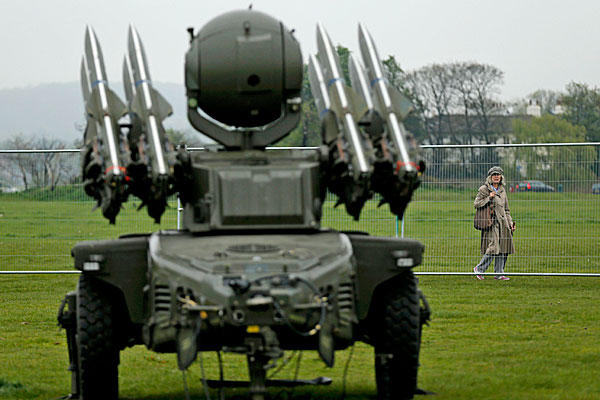
Around 13,500 military personnel will be present during the 2012 Olympic Games also surface-to-air missiles have been placed around London.
You have got to think under what circumstances would they require to fire these “surface to Air Missiles” over a highly populated area like London, the risks to the general public would be huge if these were used.
There is even a war ship, the Royals Navy’s biggest ship ‘HMS Ocean’ berthed at Greenwich in East London where it will act as a launch pad for eight Lynx helicopters and a base for Royal Marine snipers
The Olympic Games seems to be more of a military event than an Olympic event
The death toll from heavy monsoon rains which have caused massive flooding in India’s northeast has risen to more than 120, with six million forced to flee their homes, officials say.
The weather office forecast that more rains during the next 24 hours would lash the region, which is suffering from its worst flooding in recent years.
Assam state has been hardest hit by the annual rains with the mighty Brahmaputra river overflowing its banks, while flooding has also struck the nearby states of Arunachal Pradesh, Manipur and Meghalaya.
“So far a total of 121 people have died in separate incidents in which 105 were drowned while trying to escape the gushing waters and 16 more were killed in landslides caused by heavy rains,” an Assam government statement said.
An estimated six million people have been forced to leave their homes to escape the floodwaters and find higher ground, a separate Central Water Commission bulletin said.
The monsoon, which sweeps across the subcontinent from June to September, is crucial for India’s farmers but also claims many casualties from flooding every year.
Assam state officials were struggling to cope with the huge number of people displaced by the flooding, with makeshift relief camps sheltering some of those forced to leave their homes.
Twenty-six of the 27 districts in the tea-and-oil-rich state have been hit by flash floods since June 24 as a result of the torrential rains while the Brahmaputra river has breached its banks in at least nine places.
The flooding has also devastated the Kaziranga National Park, famous for its tigers, rhinos and elephants.
The Press Trust of India quoted officials as saying more than 540 of the park’s animals, including 13 rhinos, had died.
In the adjoining states of Arunachal Pradesh, Manipur and Meghalaya, monsoon rains have caused widespread flooding but there have been no reported deaths.
Indian Prime Minister Manmohan Singh toured the Assam region by helicopter earlier in the week to view the effects of the rains.
“The people of Assam are facing one of the worst floods in recent times that has inflicted considerable damage,” Singh said afterwards.
While India’s northeast has received too much rain, the monsoon has been late arriving in other parts of the country.
The monsoon is dubbed the “economic lifeline” of India, which has a population of 1.2 billion and is one of the world’s leading producers of rice, sugar, wheat and cotton.
Millions of Indian farmers still rely on monsoon rains to water around 60 per cent of the country’s farmland.
This year, the monsoon rainfall is running at 31 per cent below the normal annual average.
But the weather office has forecast heavy rains in the key planting months of July and August to make up for the shortfall.
The large landing ship The Ponce, re-equipped to carry US Navy special mission units, has arrived in the Persian Gulf, a spokesman of the Fifth Fleet of the US
Navy reported on Saturday.
Recently, four minesweepers have been sent to the Persian Gulf in addition to four others already deployed there, which testifies that the US is building up its military presence in the region.

 by Mark Charles