
US-Funded Tunisian President Prepares to Withdraw Recognition of Syrian Government
US begins reaping rewards of its 2011 campaign of Arab destabilization.
by Tony Cartalluci
Land Destroyer Report
February 5, 2012
Reuters reported, “Tunisia “to withdraw recognition” of Syria government,” and specifically that newly appointed Tunisian president Moncef Marzouki made the announcement on his Facebook page. Reuters also notes “Tunisia’s decision to sever ties with Damascus carries moral weight because the north African country’s revolution last year started off the “Arab Spring” upheavals which later spread throughout the Middle East, including to Syria.” What Reuters of course fails to mention is that the “Arab Spring” was engineered years in advance, planned, funded, and directed by the US State Department, with Moncef Marzouki a direct recipient on record of such support which ultimately paved his way from obscurity to now president of the North African nation.
The US Put Moncef Marzouki of Tunisia into Power
Last December, the BBC hailed Tunisia’s assembly and their election of a new president in their article, “Tunisian activist, Moncef Marzouki, named president.” What the BBC predictably failed to mention was that Marzouki’s organization, the Tunisian League for Human Rights, was a US National Endowment for Democracy and George Soros Open Society-funded International Federation for Human Rights (FIDH) member organization.

Photo: Tunisia’s new “president,” Moncef Marzouki, a veteran Western collaborator whose last two decades of political activity have been supported and subsidized by the US government and US corporate-financier funded foundations.
It was earlier reported in “Soros Celebrates the Fall of Tunisia,” that Marzouki was named “interim-president” of Tunisia and that the myriad of NGOs and opposition organizations that worked with him to overthrow the government of Tunisia were fully subsidized and backed by the US government and US corporate-funded foundations.
Marzouki, who spent two decades in exile in Paris, France, was also founder and head of the Arab Commission for Human Rights, a collaborating institution with the US NED World Movement for Democracy (WMD) including for a “Conference on Human Rights Activists in Exile” and a participant in the WMD “third assembly” alongside Marzouki’s Tunisian League for Human Rights, sponsored by NED, Soros’ Open Society, and USAID.
Marzouki, along with his Libyan counterpart Abdurrahim el-Keib, formally of the Petroleum Institute, sponsored by British Petroleum (BP), Shell, France’s Total, the Japan Oil Development Company, and the Abu Dhabi National Oil Company, makes for the second Western proxy installed into power either by covert sedition or overt military aggression, during the US-engineered “Arab Spring.”
Now, it is quite clear how Marzouki is reciprocating the foreign-backed plot that thrust him into power – complete servitude toward Wall Street and London’s foreign policy in backing this very same foreign-funded gambit now playing out in Syria.
Like Tunisia, Syria is a Premeditated Foreign-Funded Destabilization
Syria has been slated for regime change since as early as 1991. In 2002, then US Under Secretary of State John Bolton added Syria to the growing “Axis of Evil.” It would be later revealed that Bolton’s threats against Syria manifested themselves as covert funding and support for opposition groups inside of Syria spanning both the Bush and Obama administrations.
In an April 2011 CNN article, acting State Department spokesman Mark Toner stated, “We’re not working to undermine that [Syrian] government. What we are trying to do in Syria, through our civil society support, is to build the kind of democratic institutions, frankly, that we’re trying to do in countries around the globe. What’s different, I think, in this situation is that the Syrian government perceives this kind of assistance as a threat to its control over the Syrian people.”
Toner’s remarks came after the Washington Post released cables indicating the US has been funding Syrian opposition groups since at least 2005 and continued until today.
In an April 2011 AFP report, Michael Posner, the assistant US Secretary of State for Human Rights and Labor, stated that the “US government has budgeted $50 million in the last two years to develop new technologies to help activists protect themselves from arrest and prosecution by authoritarian governments.”
The report went on to explain that the US “organized training sessions for 5,000 activists in different parts of the world. A session held in the Middle East about six weeks ago gathered activists from Tunisia, Egypt, Syria and Lebanon who returned to their countries with the aim of training their colleagues there,” (emphasis added). Posner would add, “They went back and there’s a ripple effect.” That ripple effect of course is the “Arab Spring,” and in Syria’s case, the impetus for the current unrest threatening to unhinge the nation and invite in foreign intervention.”
US Finally Reaping Rewards from Installed Proxy-Regimes
Quite clearly the orchestrated reordering of the Arab World was done in a specific order, so that easier nations to topple would be able to eventually contribute to fueling the downfall of more difficult targets as US proxy regimes were installed. Tunisia’s diplomatic attack against Syria is just one example. The despoiling and destruction of Libya by NATO-backed LIFG terrorists has provided a base of operation for the international mercenaries who are now verifiably sending fighters into Syria, led by notorious LIFG commander Abdul Belhaj.
It may be the threat of foreign-funded destabilization hanging over the heads of despotic regimes like Saudi Arabia, Qatar, and the United Arab Emirates that have them jumping through diplomatic and tactical hoops in support for Wall Street and London’s geopolitical ambitions. Of course, ultimately, the destabilization of Syria is directed at weakening and ultimately attacking Iran as well.
This illustrates yet another justification for Russia and China, and other nations to begin fully resisting the mafioso protection racket that is the UN Security Council and yet another attempt to foist a war of aggression and conquest onto the population of the world. Ultimately, however, it is up to the people, worldwide to identify the corporate-financier power structures that provide the foundation from which this sweeping genocidal, domineering campaign is being carried out – and then boycott and replace them utterly out of existence. Because when the parasitic global elite are done picking the bones of nations afar, they will turn in on their own people – as has always happened throughout human history.
Syrian Girl: Why al-Qaeda is al-CIA-da [video]
Infowars.com
February 18, 2012
In Syria, they know the score. In America, they are largely clueless.
Similar/Related Articles:
- Al-Qaeda leader backs Syrian revolt against Assad
- Head of US Intel: Al-Qaeda infiltrating Syrian opposition
- ‘Syrian Electronic Army’ hacks al-Jazeera’s website
- Al-Qaeda Terrorists Airlifted From Libya to Aid Syrian Opposition
- Syrian Rebels led by NATO-Libya, Al-Qaeda Commander, Obedience, Speculators & More
- US meddling in Syrian affairs censured
- Syrian opposition seeks to wipe the Assad name off the map – via Google
- Opposition Leader Wants Syrian President and His Family Sodomized and Murdered
- Russia warns of Syrian no-fly zone claim
- Syrian president Assad blames ‘foreign conspiracies’ for crisis
- Obama administration secretly preparing options for aiding the Syrian opposition
- Iran calls Syrian protests a Western plot
Groundhog year: Cooking Syria ‘Libya-style’
Elena Ostroumova, Elena Medvedeva
Russia Today
February 17, 2012
Libya is marking the first anniversary of the revolution that brought the country plenty of destruction, but not as much democracy. And while NATO denies intentions to interfere with Syria, Libyans have learned the hard way “freedom” is exported.
NATO has ‘no intention’ 2.0

“NATO has no intention whatsoever to intervene in Syria. We appreciate very much all the efforts to find a solution to the conflict in Syria. I appreciate the work of the Arab League. I do believe that a regional solution has to be found,” NATO Secretary General Anders Fogh Rasmussen said in Brussels on Wednesday.
It would be easy to take these words at face value, if less than a year ago Fogh Rasmussen did not declare that NATO would not intervene in the conflict between Muammar Gaddafi and the Libyan opposition:
“I would like to stress that NATO has no plans to intervene [into Libya] and we have not received any request,” he said in February 2011.
The Libyan recipe is being followed with utmost care, down to the tiniest detail. Washington has already come up with calls for “Friends of a democratic Syria” to unite and rally against the government of President Bashar Al-Assad.
The club has every chance of growing into a new iteration of the “Friends of Libya,” which oversaw international help for opponents of late, deposed Libyan leader Muammar Gaddafi. Moreover, the group coordinated NATO military operations to protect Libyan civilians, something that is not envisioned in Syria – for now.
Excellent investment vs. Humanitarian mission
Still, humanitarian and peacekeeping rhetoric around Syria is reaching a boiling point, and many cannot get rid of an unpleasant feeling of déjà vu. During the uprising in Libya, the UN and NATO dashed to the country to end “crimes against humanity,” but with the very beginning of the military operation, many wondered at the sudden zest for human rights.
“You have to find a political and economic interest before you start believing in humanitarian reasons. In all humanitarian interventions there is another reason that is much more important,” science professor at Paris West University Nanterre La Defense Pierre Guerlain told RT.
In Libya’s case, no sooner had UN resolution 1973 on the “no-fly zone” been adopted, than the National Transitional Council (NTC) approached the French leadership with a tempting offer. France was to get 35 per cent of Libya’s oil sector in exchange for “full and constant support” of the NTC in its fight against Muammar Gaddafi, reported France’s Liberation newspaper.
British author and Guardian journalist Simon Jenkins says that access to oil and the Mediterranean were the real causes of the Libyan war.
“There are mixed motives in all these interventions. We tend to intervene in countries where we have some interests – in this case oil,” he told RT.
Another lucrative option for Western powers was pricey rebuilding contracts. First, bombs tore Libya apart, and later Western companies got paid to put the country back together. According to the UK Department of Trade and Investment, the value of contracts to rebuild Libya in areas ranging from electricity and water supplies to healthcare and education, could amount to upwards of US $300 billion over the next 10 years.
The game in Syria seems more complicated, as the country is but a modest producer of oil and gas. The Arab Gas Pipeline, which exports Egyptian natural gas to Jordan, Lebanon and Israel, might be of some regional interest. But even after the pipeline is expanded to Turkey, Iraq and Iran, its importance will hardly be global.
Targeting Damascus may be a geopolitical tool employed against Iran in the regional power reshuffle. A revival of Iran’s empire casts worries on Turkey and Qatar, and with Tehran’s growing influence over post-war Iraq and Afghanistan, an attack on Assad’s regime, a close Iranian ally, seems only too logical.
“Damascus is to be persecuted not exactly for repressing the opposition, but because it is unwilling to sever ties with Tehran,” the head of the Russian national security council, Nikolay Patrushev, told Kommersant newspaper.
Western troops out – off with democracy?
NATO, taking control of the Libyan operation on March 31, 2011, interpreted the UN resolution the way it saw fit. Under the flag of “protecting civilians,” the alliance quickly focused on getting rid of Muammar Gaddafi and his regime, and propping up a government, which is now more or less in power.
In late October, Gaddafi was assassinated in his hometown of Sirte, an event videotaped and broadcasted by media around the world. This brought the fighting to an end, and NATO was quick to declare their campaign in the country as one of the “most successful in NATO history.”
Given all that, what is to become of Syria if the West chooses to bring democracy there as well? The opposition Syrian National Council has already offered Gaddafi’s fate to President Assad and his family.
Three months into a relative peace in Libya, the circumstances surrounding Muammar Gaddafi’s death remain a mystery. Armed groups still answer to no central authority in NATO’s newly-liberated Libya, and refuse to give up their arms.
On February 16, the UN General Assembly passed the new draft resolution on Syria calling for President Assad to step down and demanding a transition to democratic rule.
——————————————
[hat tip: Infowars]
- Libya’s NTC recognizes Syria’s Rebel SNC (and the war’s not even over yet)
- Libya Redux: France and al-Qaeda Assist Free Syria Army in Turkey
- NATO says will not intervene in Syria
- Muammar Gaddafi urges followers to turn Libya ‘into a hell’
- Kucinich: Time to end Nato’s war in Libya
- NATO Murders Libya for a Lie
- Former CIA Officer: ‘NATO’s War in Syria Not in US Interest’
- Russia May Sell Syria Advanced Weapons as NATO Prepares to Attack
- Ron Paul: Obama’s Misadventures – Libya to Be Occupied, Syria Next?
- Foreign intervention in Syria?
- ‘Libya rebels to divide in victory vacuum’
- Libya: Berlusconi backs Nato strikes by Italy jets
Guns & Glory in Syria: Al Qaeda, US recipe for disaster
Russia Today
February 17, 2012
The US spy chief has told the Congress President Bashar Al-Assad is fighting against Al-Qaeda of Iraq. James Clapper is the first top US official to acknowledge US might indirectly support insurgents.
Since December there have been Bombings in Damascus and Aleppo that “had all the earmarks of an Al-Qaeda like attack,” Director of National Intelligence James Clapper told the Senate Armed Services Committee on Thursday.
He added that Syrian opposition groups, fighting against the existing regime of President al-Assad may have been infiltrated by Al-Qaida. “However likely without their knowledge”, he said.
Clapper said the lack of a unified opposition group could leave a power vacuum that extremists could fill if the Syrian government falls, a potential development he called “troubling.”
His comments confirmed earlier reports that US officials suspected Al-Qaeda’s hand in the bombings last week which left dozens dead.
The leader of Al-Qaeda has voiced his support for the Syrian uprising. In an eight-minute video posted on Sunday on a jihadist website, Ayman al-Zawahri called on Muslims in Turkey, Iraq, Lebanon and Jordan to aid the Syrian rebels.
However the US and its allies continue to hold on to a one-sided stance.
On Thursday, the UN General Assembly called on Syrian President Assad to step down.
The anti-Syrian government resolution addressed only one side of the conflict failing to condemn the opposition for their part of the violence as it does condemn the government. Washington and mainstream media insist the Syrian government is fighting against peaceful protesters.
Russia votes down Syria ‘regime change’ resolution [video]
Russia Today
February 16, 2012
The majority of the UN General Assembly has adopted a non-binding resolution, that piles more pressure on the Syrian President to step down. Russia was among those who voted against the motion. Moscow maintains the conflict should be solved through a gradual political transition, led by the Syrian people.
RT on Twitter http://twitter.com/RT_com
RT on Facebook http://www.facebook.com/RTnews
Tsunami Close Up: No Sign Of Major Quake [video]
By Zen Gardner
Before It’s News
February 11, 2012

This below was no 9.0 quake. Besides the amazing tsunami footage, you’ll see it was a very short quake, no cracked buildings, no fallen debris, crooked poles, nothing. The guy on the sidewalk wobbles a bit and that’s it.
Everyone went on business as usual.
Yet this mountain of water arrives. What’s going on?
Compare pictures of the disaster that much smaller quakes like the Kobe quake wrought. And this supposed 9.0 supposedly happened right off shore of Fukushima.
Examine everything. The matrix is built on lies, and the bigger the lie the less people notice.
“Only small secrets need to be protected. The big ones are kept secret by public incredulity.” – Marshall McLuhan
See: Fukushima: What Really Happened?
Yu Muroga was doing his job making deliveries when the 11 March 2011 earthquake hit in Japan. Unaware, like many people in the area, of how far inland the Tsunami would travel, he continued to drive and do his job. The HD camera mounted on his dashboard captured not only the earthquake, but also the moment he and several other drivers were suddenly engulfed in the Tsunami. He escaped from the vehicle seconds before it was crushed by other debris and sunk underwater. His car and the camera have only recently been recovered by the police. The camera was heavily damaged but a video expert was able to retrieve this footage.
Something to wonder about.
Zen
The Road To Tehran Goes Through Damascus
By Nile Bowie
NileBowie.blogspot.com
February 15, 2012
Between the chaos and artillery fire unfolding in Homs and Damascus, the current siege against the Ba’athist State of Bashar al-Assad parallels events of nearly a century ago. In efforts to maintain its protectorate, the French government employed the use of foreign soldiers to smother those seeking to abolish the French mandated, Fédération Syrienne. While former Prime Minister Faris al-Khoury argued the case for Syrian independence before UN in 1945, French planes bombed Damascus into submission. Today, the same government – in addition to the United States and its client regimes in Libya and Tunisia – enthusiastically recognize the Syrian National Council as the legitimate leadership of Syria. Although recent polls funded by the Qatar Foundation claim 55% of Syrians support the Assad regime, the former colonial powers have made a mockery of the very democratic principles they tout.
Irrespective to the views of the Syrian people, their fate has long been decided by forces operating beyond their borders. In a speech given to the Commonwealth Club of California in 2007 retired US Military General Wesley Clark speaks of a policy coup initiated by members of the Project for a New American Century (PNAC). Clark cites a confidential document handed down from the Office of the Secretary of Defense in 2001 stipulating the entire restructuring of the Middle East and North Africa. Portentously, the document allegedly revealed campaigns to systematically destabilize the governments of Iraq, Somalia, Sudan, Libya, Syria, Lebanon and Iran. Under the familiar scenario of an authoritarian regime systematically suppressing peaceful dissent and purging large swaths of its population, the mechanisms of geopolitical stratagem have freely taken course.
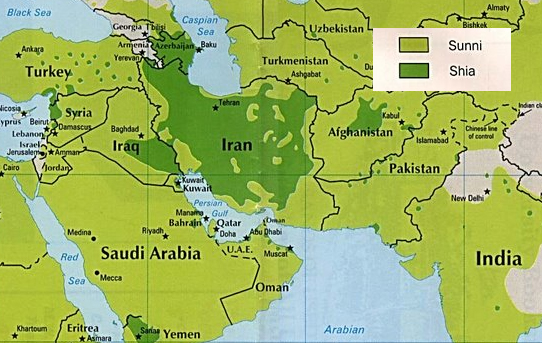
Syria is but a chess piece being used as a platform by larger powers. Regime change is the unwavering interest of the US-led NATO block in collaboration with the feudal Persian Gulf Monarchies of the Gulf Cooperation Council (GCC). This is being accomplished by using Qatar-owned media outlets such as Al-Jazeera to project their version of the narrative to the world and by arming radical factions of the regions Sunni-majority population against the minority Alawi-Shia leadership of Assad. Since 2005, the Bush administration began funding Syrian opposition groups that lean toward the Muslim Brotherhood and their aspirations to build a Sunni-Islamic State. The Muslim Brotherhood has long condemned the Alawi-Shia as heretics and historically attempted multiple uprising in the 1960’s. By arming radical Sunni factions and importing Iraqi Salafi-jihadists and Libyan mercenaries, the NATOGCC plans to topple Assad and install an illegitimate exiled opposition leader such as Burhan Ghaliun (leader of the Syrian National Council) to be the face of the new regime.
The recent example of implementing foreign policy by arming Al-Qaeda fighters in Libya has proved disastrous – as the rule of law passes from the NATO-backed Libyan Transitional Council to hundreds of warring guerilla militias. At a meeting between Turkish Foreign Minister Ahmet Davutoglu and Hillary Clinton, Davutoglu pledged to find ways outside the United Nations Security Council to pressure Assad. In addition to bolstering longstanding sectarian divides in Syria, the US is smuggling arms into Syria from Incirlik military base in Turkeyand providing financial support for Syrian rebels. Syrian opposition forces led by defected Syrian colonel Riad al-Assad have been trained on Turkish soil since May 2011. Exclusive military and intelligence sources have reported to Israel’s DEBKAfile that British and Qatari special operations units are assisting rebel forces in Homs by providing body armor, laptops, satellite phones and managing rebel communications lines that request logistical aid, arms and mercenaries from outside suppliers.
Although the UK has vehemently denied these reports, Qatar’s leader Sheikh Hamad bin Khalifa Al Thani recently suggested sending troops into Syria to battle Assad’s forces. Military bases situated near Turkey’s southeastern border with northern Syria have become a crucial hub used for the delivery of outside supplies. Unmarked NATO warplanes near Iskenderum have received fighters from Libya’s Transitional National Council wielding weapons formerly belonging to Gaddafi’s arsenal. Abdel Hakim Belhaj, (former leader of the extremist Libyan Islamic Fighting Group turned NTC military governor at the directive of NATO) is leading the infiltration of Libyans into Syria in person with the help of the Turkish government. It has also been reported that Mahdi al-Harati, resigned from his functions as deputy chief of the Military Council in Tripoli to oversee the Free Syrian Army.
Syrian press has also reported that armed terrorist groups brandishing up-to-date American and Israeli weapons have roamed the countryside of Damascus committing blind acts of terror by setting off explosive devices and kidnapping civilians. As the NATOGCC continue to insist that Assad is committing acts of genocide against unarmed civilians, one must draw correlations between events reported by the Syrian state media and recent statements released by the leadership of Al-Qaeda in Iraq, praising the arrival of Iraqi fighters in Syria and advising rebels to use roadside bombs. Paradoxically, Al-Qaeda front man Ayman al-Zawahri has called on Muslims from across the Arab World to mobilize and support the Free Syrian Armyafter the disappointing Russian and Chinese veto at the UNSC. Few things are more absurd than the notion of Al-Qaeda terrorists – unanimously portrayed as ostensible “savages” by virtually all-Western media sources – entrust the apparatus of the United Nations and their capacity to resolve the Syrian conflict. The true purpose of Al-Qaeda and its role in influencing foreign policy has never been more evident.
Surely, Assad accusing foreign-sponsored terrorist groups of fomenting violence in Syria is simply evidence of his illegitimacy – as Western and Gulf allies assert. Even as Syrian state TV broadcasts reports showing seized weapons stockpiles and confessions by terrorists describing how they obtained arms from foreign sources, the NATOGCC continues to draft legislation in an effort pressure the Assad regime into dissolution. In the face of an outright campaign of foreign-funded sabotage, Syrian hackers have targeted Al-Jazeera’s “Syria Live Blog”, which provides ongoing coverage of the unrest. The hacker-ring boldly denounced Al Jazeera for broadcasting “false and fabricated news to ignite sedition among the people of Syria to achieve the goals of Washington and Tel Aviv.”
Through the fiery rhetoric of Susan Rice and her relentless condemnation of Assad – like Gaddafi before him – the United States is again attempting to invoke the Right to Protect (R2P) doctrine to take direct action against the Assad regime. In another parallel to the Libyan conflict, the UN’s astounding official death toll in Syria is taken solely from human rights groups, backed by the National Endowment for Democracy (NED), the International Criminal Court and the Syrian National Council. The official numbers rely exclusively on an obscure organization known as the Syrian Observatory for Human Rights (SOHR) – based in London, not Damascus – whose evidence is largely reliant on hearsay, pixelated YouTube videos and activist Twitter feeds. SOHR’s disputed reports present evidence that would not hold up in any court of law, much less should it be the basis of United Nations resolutions. The Observatory’s director Rami Abdelrahman collaborates directly with British Foreign Minister William Hague and derives legitimacy solely from connections with corporate/foundation-funded civil society networks. Claims that Assad’s security forces indiscriminately kill scores of newborn babies are palpably a product of Britain’s foreign office.
As a further indication of the on-going media war in Syria, none is more telling than the report produced by the Arab League’s observer mission into Syria. The contents of the report were completely ignored by the corporate-media after Qatar disputed its findings, the only nation to do so in the Arab League’s Ministerial Committee. The report unalterably concluded that the Syrian government was in no way lethally repressing peaceful protestors. Furthermore, the report credits armed gangs with the bombing of civilian buses, trains carrying diesel oil, bombing of police buses and the bombing of bridges and pipelines. During an interview with Arab League observer Ahmed Manaï, he praises the Sino-Russian veto at the UNSC and encouraged the Syrian leadership to implement reforms. Manaï states, “The Arab League is entirely discredited by burying the report of its own observers’ mission and its appeal to the Security Council. It missed the opportunity to participate in the settlement of the Syrian affair. All it can offer in the future will be worthless.”
While the initial observer report is predictably absent from mainstream media coverage and cited as inept (presumably for contradicting the official line of the allied Western-Gulf powers), Arab League mission leader Mohammed al-Dabi officially resigned, stating, “I won’t work one more time in the framework of the Arab League, I performed my job with full integrity and transparency but I won’t work here again as the situation is skewed.”The United Nations and the Arab League are now considering what was originally a joint observer mission – now referred to as a peacekeeping mission. The Arab League, in tandem with Saudi Arabia is preparing a nearly identical resolution calling for an armed peacekeeping council to present to the UN. Much like the indistinguishable saber rattling seen before Libyan intervention, the new resolution condemns Assad for lethal repression and calls for a transitional shift to democracy. The resolution is expected to create similar Sino-Russian divisions over its implementation, Russia’s deputy foreign minister, Gennady Gatilov, previously scorned the document as “the same unbalanced draft resolution text.”
The conflict in Syria has brought light to longstanding Cold War divisions between world powers. The Sino-Russian veto of the UNSC resolution calling for intervention has blocked the opportunity for Western powers to exert overt aggression, as demonstrated by NATO in Libya. Instead, it appears that the Assad regime will be destabilized through covert mercenary groups bent on committing blind acts of terrorism by means of sniper assassinations and roadside bombs. Learning from the Libyan experience, Russia and China perceive the UN Human Rights Report authored by Karen Koning AbuZayd, a director of the Washington-based corporate-funded think-tank, Middle East Policy Council – to be explicitly comprised; victims among the civilian population are a result of armed paramilitaries doing battle with the Syrian military in residential areas. In an interview with former Russian Joint Chiefs of Staff, Colonel-General Leonid Ivashov pledges that Russia will protect Iran, Syria, and the world from American fascism. In a show of support for the Syrian government, Russia has sent a large naval force into the region and China has further warned against a strike on Syria.
It is truly a paradox that the countries least fit to dictate principles of human rights, do so largely unhindered on the world stage. Without hesitation Hillary Clinton proclaimed, “What happened yesterday at the United Nations was a travesty” referring to the Sino-Russian veto. She then called for the formation of an international alliance between the war-profiteering elite of the West and absolutist Wahhabi Persian Gulf monarchies – amusingly titled, the Friends of Syria. International calls to abstain from violence have done little to influence the Gulf Cooperation Council and their brutal crackdown against Shiites in Bahrain. Incredibly, Saudi Arabia has entered the dialogue on human rights and democracy promotion – perhaps the world’s most defining feudalistic theocracy, a nation that prohibits political parties and national elections and executes those who apostatize Islam.
Iran’s Press TV news network has reportedly leaked intelligence exposing the American agenda in Syria. The report calls for the recognition of the Syrian National Council as the legitimate government and their positioning in Turkey to work against the Assad regime. Washington would then task Turkey with sending troops into Syria to arm the opposition forces, followed by Wahhabi fighters and Libyan mercenaries. Ominously, the intelligence stipulates that Israel will enter the fray to carry out military operations against Syria. If the regime fails to dissolve, Syrian state television channels will be taken down and Assad will be assassinated. Considering how other enemies of the West have faired in recent times, the sequence of events reported by Press TV would be largely unsurprising. The Wahhabis of the Persian Gulf are playing junior to American aggression in an effort to dominate the Shia-Alawi religious faction presently upheld by the leadership of Syria and Iran, but also to secure their places as regional powers.
Domestic affairs in Syria are of little consequence to the powers trying to topple the nation; the real priority is to further isolate Iran by eliminating its Shia-Alawi ally in Damascus. Israel reaps enormous benefit from toppling the Assad regime, as the Syrian Nation Council pledges to cut ties with Iran and discontinue arms shipments to Hezbollah and Hamas. If Syria falls and Iran is directly threatened, the potential for a regional conflict of the utmost seriousness exists, assuming China and Russia move in to defend Iran. Such a conflict would create detrimental implications for the global economy, potentially triggering a hyper-inflationary financial crisis. William Hague and billionaire financiers behind the civil society groups bestowing legitimacy to violent opposition actors are not the legitimate representatives of the Syrian people. Although the reforms have been slow, the Assad government is in the midst of drafting a new constitution. Syria’s sovereignty has come under direct fire from powers claiming to be defending Syria’s people. An attempt on the life of Bashar al-Assad may have similar consequences to the assassination of Archduke Franz Ferdinand. As the Syrian National Council familiarly calls for the implementation of a no-fly zone, those members of the International Community with any integrity left must work diligently to diffuse conflict in the region.
—————–
[hat tip: Land Destroyer Report]


