
New Island Rises Out of the Sea During 7.8 Earthquake in Pakistan
Activist Post
September 24, 2013
There are breaking reports of a new island rising out of the sea due to a powerful 7.8 magnitude earthquake in southern Pakistan.
Reuters reports:
A major earthquake hit a remote part of western Pakistan on Tuesday, killing at least 45 people and prompting a new island to rise from the sea just off the country’s southern coast.
Tremors were felt as far away as the Indian capital of New Delhi, hundreds of miles (kilometers) to the east, where buildings shook, as well as the sprawling port city of Karachi in Pakistan.
The United States Geological Survey said the 7.8 magnitude quake struck 145 miles southeast of Dalbandin in Pakistan’s quake-prone province of Baluchistan, which borders Iran.
The earthquake was so powerful that it caused the seabed to rise and create a small, mountain-like island about 600 meters (yards) off Pakistan’s Gwadar coastline in the Arabian Sea.
No video has yet to emerge of the island’s unprecedented rapid formation. The USGS provides some background on how this could have occurred.
The USGS writes:
Geologic development of the region is a consequence of a number of first-order plate tectonic processes that include subduction, large-scale transform faulting, compressional mountain building and crustal extension…
Continental thickening of the northern and western edge of the India subcontinent has produced the highest mountains in the world, including the Himalayan, Karakoram, Pamir and Hindu Kush ranges. Earthquake activity and faulting found in this region, as well as adjacent parts of Afghanistan and India, are due to collisional plate tectonics.
Commentary below by earthquake and climate researcher Dutchsinse:
Share this and stay tuned for updates…
[Potent News editor’s note: I’m sorry I’m 6 days late posting this one.. I’m in the process of moving. Please bear with me.]
VIDEO — Drowning in Drugs: Heroin cheaper than food in Pakistan
RT
July 21, 2013
Over one billion dollars’ worth of heroin each year – that is the deadly fallout Pakistan gets from the blooming narcotics industry that provides the main cash crop in devastated Afghanistan. Locals say heroin is cheaper than food. It’s thought Pakistan has more than four million drug addicts, but less than 80 dedicated drug rehab clinics. As RT’s Lucy Kafanov reports from Karachi, those heroin addicts don’t even bother hiding their habit. For many this is a deadly path.
RT LIVE http://rt.com/on-air
Subscribe to RT! http://www.youtube.com/subscription_c…
Like us on Facebook http://www.facebook.com/RTnews
Follow us on Twitter http://twitter.com/RT_com
Follow us on Instagram http://instagram.com/rt
Follow us on Google+ http://plus.google.com/+RT
RT (Russia Today) is a global news network broadcasting from Moscow and Washington studios. RT is the first news channel to break the 1 billion YouTube views benchmark.
Why We Oppose U.S. and Israeli intervention in Syria
 Global Research
May 24, 2013
Having overthrown the Governments in Iraq in 2003 and Libya in 2011, the U.S. government has sought to topple the Syrian government during the past two years. The CIA has been the coordinating agency for massive weapons shipments from Saudi Arabia, Qatar and Turkey to armed groups fighting to topple the Syrian government.
The conflict in Syria that began more than two years ago was fueled by a wide range of grievances, some legitimate, some reactionary. But the armed rebellion inside the country is today inextricably bound to imperialism and the most reactionary regimes in the Arab world. Its aim is to destroy a secular, nationalist government that U.S. leaders view as an obstacle to their goal of dominating the entire Middle East.
The United States, Britain, France, Turkey, Saudi Arabia and Qatar have been funneling vast quantities of arms, money and supplies to the Syrian opposition, and training thousands of anti-government fighters in Turkey, Jordan and elsewhere. On May 5, Israel heavily bombed an area close to the capital, Damascus.

Harsh economic sanctions have been imposed on Syria. The United States and its allies have waged a worldwide campaign to isolate and demonize the Syrian government.
Outside support has sustained the opposition, but not brought it victory. Thus, the leaders of the U.S.-organized “National Coalition of Opposition and Revolutionary Forces” and the “Free Syrian Army” have been making repeated and urgent appeals for more direct imperialist intervention, including an air war against their own country. Those appeals have become even more urgent due to losses suffered by the splintered opposition forces in recent weeks.
“Friends of Syria”: another face of imperialism
Stepping up the imperialist-led campaign, on May 22, the so-called “Friends of Syria” met in Amman, Jordan. Led by U.S. Secretary of State John Kerry, the other “Friends” at the meeting were the foreign ministers of Britain, France, Germany, Italy, Turkey, Egypt, Jordan, the United Arab Emirates, Qatar and Saudi Arabia.
The open aim of the “Friends” is the overthrow of existing government in Syria. Its concluding statement speaks of “supporting the legitimate rights of the Syrian people” and “a new Syrian constitution with equal rights for all.”
This supposed concern for “human rights” in Syria is nothing but the crassest cynicism.
Saudi Arabia, Qatar, UAE and Jordan are all police-state, absolute monarchies, sustained in power by U.S. support. Saudi Arabia has never had an election, women are forbidden to drive cars and public beheadings are a frequent occurrence. Britain and France are the former colonizing powers in the region, striving to retain their influence today. Germany and Italy shared in the colonial division of Africa; half the population of Libya died under Italian rule during World War II. Turkey has long repressed the Kurdish population inside its borders, as well as unions, leftist parties and other progressive organizations. The Egyptian government is suppressing the opposition as it seeks to consolidate its power.
As the dominant world power over the past 70 years, the United States has carried out genocidal wars from Korea to Vietnam to Iraq, leaving tens of millions dead, wounded and displaced. In addition, U.S. military and intelligence forces have intervened hundreds of times in countries around the world, and today the United States maintains more than 900 military bases on every continent. Death by U.S. drone is today a regular and terrorizing feature of life for people in Pakistan, Afghanistan and Yemen.
The “Friends” are in reality a criminal gang who have no concern whatsoever for the interests of the people of Syria – or any people anywhere, for that matter.
Say no to U.S./NATO and Israeli intervention
An international peace conference on Syria has been jointly proposed by Russia and the United States, and is tentatively set to take place in Geneva, Switzerland, in June. It is not clear yet whether it will actually take place.
Regarding the proposed conference, the “Friends of Syria” statement ended by threatening, “[U]ntil such a time as the Geneva meeting produces a transitional government, they [the “Friends”] will further increase their support for the opposition and take all other steps as necessary.” By “transitional government,” the “Friends” mean one absent the present leadership. In other words, until there is “regime change,” they will escalate the war.
The anti-war movement in the United States has a duty to unequivocally oppose all forms of intervention by the United States, the other imperialists and their clients, and to support the right of the Syrian people to determine their own future, free from imperialist intervention.
Related content:
-

Turkey To Request NATO Military Intervention In Syria: Prime Minister
Turkish Prime Minister Recep Tayyip Erdogan says Ankara is ready to ask NATO for a military intervention in Syria, Press TV reports. “I am ready to ask NATO for a military intervention in Syria,” Erdogan was quoted as saying on…
-

US Ramps up Plans for Military Intervention in Syria
The United States and the major European powers are escalating plans for a direct military intervention in Syria. The aim of US maneuvers, including a flurry of diplomatic visits this week, is to secure the downfall of Syrian President Bashar…
-

The Syria Imperative: Military Intervention to Promote Israeli Interests?
The Assad regime in Syria is facing increased scrutiny for its handling of demonstrators. The Syrian opposition has asked for arms and NATO intervention similar to what was witnessed in Libya. Washington Hawks such as former presidential candidate and U.S.…
-

US-Israeli Military Escalation Points toward Wider Intervention
Obama, Israel and the new phase of the war on Syria The massive Israeli air strikes on May 5 near Damascus mark a new phase in the imperialist-led campaign to overthrow the Syrian government. Huge bombs lit the early morning…
Disclaimer: The contents of this article are of sole responsibility of the author(s). The Centre for Research on Globalization will not be responsible for any inaccurate or incorrect statement in this article. The Center of Research on Globalization grants permission to cross-post original Global Research articles on community internet sites as long as the text & title are not modified. The source and the author’s copyright must be displayed. For publication of Global Research articles in print or other forms including commercial internet sites, contact: publications@globalresearch.ca
www.globalresearch.ca contains copyrighted material the use of which has not always been specifically authorized by the copyright owner. We are making such material available to our readers under the provisions of “fair use” in an effort to advance a better understanding of political, economic and social issues. The material on this site is distributed without profit to those who have expressed a prior interest in receiving it for research and educational purposes. If you wish to use copyrighted material for purposes other than “fair use” you must request permission from the copyright owner.
For media inquiries: publications@globalresearch.ca
related video: Why The NWO Hates Syria
Iran-Pakistan ‘lifeline’: Pipeline aims for global power balance
by Eric Draitser
Russia Today
March 11, 2013

Iranians work on a section of a pipeline linking Iran and Pakistan after the project was launched during a ceremony in the Iranian border city of Chah Bahar on March 11, 2013 (AFP Photo / Atta Kenare)
The pipeline will bring more than simply an economic boost to both countries; it is a crucial guidepost on the path to peace. After generations of conflict, Iran and Pakistan are taking their economic destinies into their own hands – together.
The pipeline, which would bring Iranian gas to Pakistan through its western Balochistan province, will stretch almost 1,000 miles (1,600 km) from Iran’s gas-rich Asalouyeh region into the Pakistani heartland, supplying major cities like Karachi and Islamabad with much needed, reliable energy while carrying a pricetag of roughly $1.5 billion. Similarly, the project is critical for Iran as it struggles to survive and grow amid the hostility of US-European sanctions.
The Benefits for Both Countries
It is against the backdrop of brutal, draconian sanctions initiated by the US and its European partners, that Tehran has taken the countermeasure to develop itself and the region, constructing an economically independent framework of relations not beholden to Western financiers. Undoubtedly, the centerpiece of this strategy of economic independence as a means of anti-imperialist resistance is the Iran-Pakistan pipeline. The project, already nearing completion on the Iranian side of the border, would bring desperately needed Iranian gas to energy-starved Pakistan – a country battling a perpetual energy shortage. Needless to say, the project is critical for the economic survival of both nations.
For Iran, the pipeline means economic stability at a time of tremendous turmoil. While the Islamic Republic often downplays the impact of the sanctions, the reality is inescapable: an inflation rate hovering around 30% , the loss of key regional markets such as India, and the continued shortage of medicines and staple foods among other things . These problems plaguing the Iranian economy require both short-term and long-term solutions. The pipeline conveniently addresses both as it provides Tehran with much needed energy revenue today, while offering the potential for increased revenue and infrastructure expansion in the future. Essentially then, the pipeline is really more of a lifeline, anchoring the Iranian economy for decades to come.

Iran’s President Mahmoud Ahmadinejad (2ndL) and Pakistan’s President Asif Ali Zardari wave during a ceremony marking the start of work on the 780-kilometre (485-mile) pipeline from Iran to Pakistan on March 11, 2013 in the Iranian border city of Chah Bahar (AFP Photo / Atta Kenare))
Like their Iranian neighbors, Pakistan also has had to address glaring economic deficiencies, particularly with regard to the energy sector. A recent poll unsurprisingly showed that energy shortages, along with unemployment, remain the greatest economic issues facing the country. Public anger over the inability of the government to meet the country’s electricity demands has boiled over in the form of riots numerous times, most recently in the summer of 2012 . This type of public unrest over the energy issue serves to delegitimize the government, especially the ruling Pakistan People’s Party (PPP), and weaken their hold on political power.
For Islamabad then, the pipeline means energy security which, in turn, means political stability. Moreover, the project as a whole is, at least in small part, a way of resisting Washington and the Obama administration’s continued violations of Pakistani sovereignty. By pushing forward with the project, in the face of countless threats from Washington, Pakistani president Zardari is walking a fine line between maintaining a working relationship with his US partners and forging new relations from which Pakistan will benefit while the US loses.
A Sectarian Bridge?
One critical aspect of the Iran-Pakistan pipeline is the simple fact that it brings together two countries that, if western imperialists were to have their way, would always remain enemies. Pakistan (a majority Sunni Muslim country) and Iran (a majority Shiite Muslim country), have historically been at odds with one another, choosing rather to align themselves with other Sunni and Shiite countries respectively. This fundamental conflict has, for more than a century, been at the heart of the imperialist/colonialist strategy.
Whether British, French, or American, western powers have long dominated the vast energy resources of the Middle East and Central Asia by dividing the Muslim populations along these sectarian lines, exploiting the differences between them in order to prevent independent economic development. However, the Iran-Pakistan pipeline flies in the face of this “divide and conquer” strategy. Bringing together these two countries through mutually beneficial economic development, the project seems to signal a major change in the Muslim world in the 21st Century. No longer will the imperialists be able to control the destinies of nations in the region by exploiting their differences. Rather, it is the imperial powers themselves who will have to reevaluate their strategy and come to terms with a changing world in which their unchallenged hegemony becomes a relic of the past.
The Geopolitics of the Pipeline
Although the Iran-Pakistan pipeline is economically and politically significant to both nations, it takes on perhaps its greatest importance in the context of world geopolitics. The project fundamentally alters the balance of power in Asia and the world for a number of reasons.
First and foremost, the pipeline links two countries that, each in its own way, seek to undermine US hegemony in the Middle East and South Asia. While Iran has been the implacable foe of Washington since the Islamic Revolution of 1979, Pakistan has maintained relations that at one time made them close allies, but in recent years have deteriorated to the point where the United States is seen as Public Enemy No. 1 in the streets. The pipeline brings the two countries closer together and, in so doing, helps to solidify a relationship united by a common mistrust of the US.

Iranians work on a section of a gas pipeline linking Iran and Pakistan after the project was launched during a ceremony in the Iranian border city of Chah Bahar on March 11, 2013 (AFP Photo / Atta Kenare))
Secondly, the Iran-Pakistan pipeline could quite easily become the Iran-Pakistan-China pipeline if Beijing decides to finally get involved. In this very plausible scenario, China would finally get the “holy grail” it has sought for years: land-based access to energy imports from the Middle East. For China, an energy-starved economy that continues to grow, this would greatly enhance their regional position. It would also transform the balance of power in Asia, as the era of US domination of energy resources in the Middle East would be over. So, were the project to be extended to China, the pipeline would become the focus of a new power paradigm, making it one of the most important economic development projects in the world.
Additionally, the pipeline shows the growing power and influence of international alliances and organizations that represent a counterweight to the imperialist establishment of the West. Iran has taken on the role of leading the Non-Aligned Movement, thrusting itself into the forefront of the anti-imperialist bloc. At the same time, both Iran and Pakistan seek membership in the Shanghai Cooperation Organization (SCO), led by Russia and China, which is showing signs of developing into a full-fledged strategic alliance that provides a check to US-NATO dominance. In this way, the pipeline becomes the tangible link between various organizations and alliances which seek to beat a path independent of US hegemony. It is for this reason, more than anything else, that the United States has vigorously attempted to subvert the development of the pipeline, going so far as to heavily promote the much-touted Turkmenistan-Afghanistan-Pakistan-India (TAPI) pipeline, seen as the main competitor to the Iran-Pakistan project. However, despite the fierce opposition from Washington, the project will go ahead while the TAPI still remains on the drawing board, subject to security concerns in Afghanistan and elsewhere along the route.
When seen from the broadest perspective, the Iran-Pakistan pipeline fundamentally transforms power relations in the Middle East, South Asia, and throughout the world. Not only does it benefit the two nations involved, but all other nations and peoples who have been oppressed, controlled, or otherwise coerced by the Western powers. In this way, the Iran-Pakistan Pipeline represents peace and progress. In short, it is the promise of a better future.

Iranians work on a section of a pipeline (on with are sticked Iranian and Pakistanese national flags) after the project was launched during a ceremony with presidents of Iran and Pakistan on March 11, 2013 in the Iranian border city of Chah Bahar (AFP Photo / Atta Kenare)
The statements, views and opinions expressed in this column are solely those of the author and do not necessarily represent those of RT.

Eric Draitser is an independent geopolitical analyst based in New York City and the founder of StopImperialism.com.
[hat tip: Nile Bowie]
Pakistan blocks YouTube once again [video]
PressTV
January 1, 2013
After almost three months, the YouTube has finally been reopened in Pakistan. But its reopening did not last for a long time. Pakistan Tele-Communication Authority, the official internet regulator, has once again ordered the internet service providers all over the country to block the YouTube.
What has now triggered the new blockage of YouTube is said to be the technical failure by Pakistan’s official filtering system to block the anti-Islam movie that was produced in the United States.
That controversial video caused widespread protests across Pakistan and led to the death of over two dozen people. But critics say this so-called official technical error may not be free of political motives.
Follow our Facebook on: https://www.facebook.com/presstvchannel
Follow our Twitter on: http://twitter.com/presstv
EU Censors Alternative News in Bid to Dominate Narrative
Western media quietly attempts to censor growing global opposition, begins with Iranian media.
by Tony Cartalucci
October 16, 2012 – Iran’s Press TV reported in their article, “Press TV viewers slam EU move to ban Iran channels as illegal, hypocritical,” that “Press TV viewers have condemned as illegal and hypocritical the ban imposed by the European officials on the broadcast of several Iranian satellite channels.” Nearly no mention is made in the Western media regarding the blatant act of censorship – an act that runs contra to all perceived notions of “Western values,” and an act that directly undermines the narratives of the West supporting “freedom” and “democracy” around the globe.
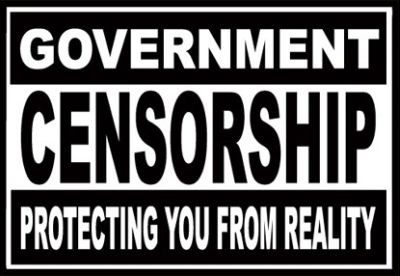
Image: The West has spent billions trying to leverage “freedom of speech” and “human rights” as a means to undermine, destabilize, overthrow, and replace governments around the world, from the US-engineered Eastern European “color-revolutions” after the fall of the Soviet Union, to the latest US-engineered “Arab Spring,” and all across Southeast Asia. Now with the West pursuing its own campaign of censorship, it is clear that these “values” were merely selectively and opportunistically manipulated.
The news has been buried under reports regarding a new round of sanctions passed by the EU which was recently awarded the Nobel Peace Prize even while pursuing multiple wars across the globe, including continuing operations in Libya, the subversion of Syria, and a decade long occupation of Afghanistan which sees weekly civilian massacres by NATO air strikes on both sides of the Afghan-Pakistani border. In fact, the most recent NATO atrocity occurred not even a week ago, killing 3 children in the Helmand province. Of course this was absent in Western headlines, but it did make headlines in Iran’s Press TV, and indicates a more realistic explanation to the EU’s decision to ban the Iranian news service.
Clearly the EU has no qualms over endangering civilian lives – its concerns over “human rights” are a selectively applied value it uses against its enemies with demonstrably no intention of holding itself to similar standards. Now, the EU has applied this same selective application of supposed “Western values” to “freedom of speech,” curtailing it when that speech endangers its own interests, and pursuing “freedom” when it advances their agenda. And it is this hypocrisy that the increasingly popular Press TV news service has been illustrating, as a counterweight to the uniformly biased and compromised Western press.
It was US Secretary of State Hillary Clinton who stated that censorship incurred “long-term economic and social costs,” with oppression leading to “civil unrest and not security.” Many Western politicians executing corporate-financier driven policy have stated that a regime’s pursuit of censorship was a sign of weakness and fear – an indicator that its opposition was gaining ground and that more overt, visible, even desperate measures needed to be implemented. Censorship, according to the West’s own narrative, is part of a self-defeating cycle where legitimacy and the mandate to lead increasingly is fading.
With that consideration in mind, the censorship of Iran’s Press TV should be a sign that Iran’s efforts to balance global public perception skewed by the vast resources of Wall Street and London are succeeding. Along with Russia Today (RT), Press TV has provided nations who aspire to live in a mulipolar world where the primacy of the nation-state prevails, a model to follow in combating the unwarranted power and influence of Western media houses.
Above all, it should be noted that a key contributing factor to Press TV and RT’s success is the growing alternative media – media by the people and for the people – whose legitimacy and reputation is measured in accuracy, consistency, and objectivity, not slick graphics, expensive suits, and million-dollar studios. The alternative media has provided content for growing national news agencies seeking to challenge the West’s hegemony over information, and while national news agencies ultimately pursue national agendas, the content they are drawing on generally come from people simply seeking the truth.
The EU’s act of censorship against Press TV is in turn a strike against the alternative media. Instead of being seen as a setback, it should be seen as a success and a signal to redouble our efforts as individuals to assert our own will and vision for the future over that of the miniscule global elite who have so far gone unchallenged in their designs and aspirations. The alternative media should be only the first in a series of people-driven alternatives systematically undermining and replacing existing corporate-financier dominated paradigms.
Stop Imperialism – Episode 43 [audio]
by Eric Draitser
Stop Imperialism – Episode 43
September 29, 2012

In today’s episode:
1. Austerity in Europe – ‘NO’! Thousands flood Madrid in second day of anti-cuts demos
2. Syria – Syria rebels struggle to advance in new Aleppo offensive
3. Iran – Netanyahu: ‘Clear red line’ needed to stop Iran’s nuclear program
4. Pakistan (Diplomacy) – Pakistan endorses drones, rejects method: Khar
5. Pakistan (Balochistan) – Quelling conspiracy in Balochistan
6. Oil, Gas & Pipelines – Russia, Venezuela set up joint venture to develop Orinoco Oil Belt
7. Under the Radar – 3-D printing: A technology on the make?
Standard Podcasts [02:03:26m]: | Play in Popup | Download | Embeddable Player | Hits (591)

 PN
PN 