
Nuclear War Through North Korean Eyes
Nile Bowie
March 13, 2013
There is little doubt that civilians on both sides of the Korean Demilitarized Zone (DMZ) are weighed down with anxiety as both countries carry out provocative large-scale military drills amid threats of nuclear war. North Korea has recently announced that it will no longer abide by the UN-brokered armistice that ended the Korean War with a ceasefire in 1953 and authorities have severed its communications hotline with the South, the only diplomatic channel of contact between the two countries. Pyongyang has imposed no-fly and no-sail zones off both its coasts as part of comprehensive military drills that may see the test firing of short-to-medium range missiles. The US-South Korea joint command forces have launched their Foal Eagle field training exercises that will be ongoing until end of April. 200,000 South Korean troops and 10,000 US troops will take part in the exercise, which will include land, air, sea, and special operation drills. North Korea’s state newspaper, Rodong Sinmun, has reported that the North’s army, navy, air force, and anti-aircraft units were “just waiting for the final order to attack.”
Following Pyongyang’s recent threats that it would engage preemptive nuclear strikes against any aggressor, Seoul shot back with its strongest rhetoric yet, stating, “If North Korea attacks South Korea with a nuclear weapon, then by the will of the Republic of Korea and humanity, the Kim Jong-un regime will perish from the Earth.” South Korea’s newly inaugurated President Park Geun-hye has been in office for less than one month and in the current scenario, it has become politically impossible for her to stick to her campaign pledges of taking a softer line on North Korea. Most of the time, the substance of North Korea’s threats do not materialize, much like last month’s pledge to take an immediate “physical response” to a barrage of UN sanctions. While talk of taking “second and third countermeasures” are thrown around pretty liberally in North Korean state media, the North Korean foreign ministry has not announced any specific actions – such as a nuclear weapons test or rocket launch – in response to harsh UN resolutions or the ongoing US-ROK drill offensive.
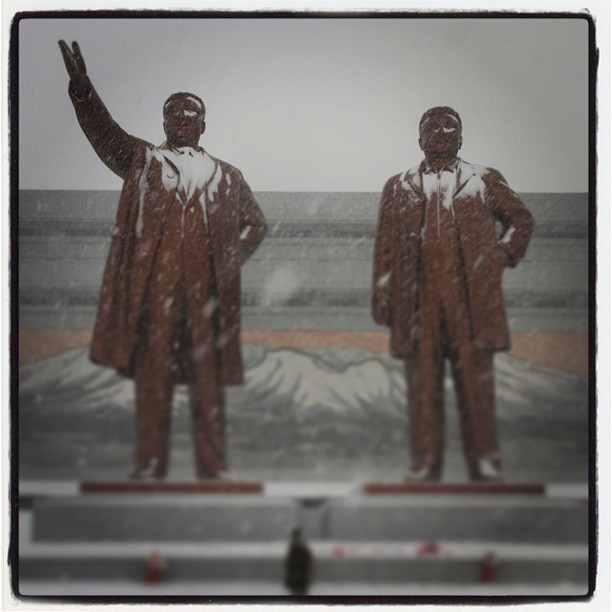
North Korea invokes a brutal historical narrative of war with the United States to legitimize its conduct in the present day – and indeed, North Korea is a victim of war crimes. Washington and its allies rained napalm over North Korea, destroying nearly all its cities and thousands of villages. A staggering four million Koreans and one million Chinese soldiers were killed – US military sources confirm that 20 percent of North Korea’s population was killed off, even that being a highly conservative figure. In the fallout of North Korea’s third nuclear test, state media has invoked several English-language editorials that reflect on the overlooked historical back-story of the US stockpiling nuclear weapons in South Korea. The statement released by the Rodong Sinmun reads:
“In the 1980s the U.S. spurred the modernization of the nuclear hardware of its forces in south Korea. Member of the U.S. House of Representatives Ronald, speaking at a parliament, confessed that the U.S. shipped more than 1,000 nuclear weapons to south Korea and deployed 54 airplanes for carrying nuclear bombs. South Korea turned into the world’s biggest nuclear outpost with the stockpile of nuclear weapons such as bombs, shells, warheads, land mines and carrier means as well as nuclear bases and arsenals. The U.S. nuclear threats were vividly manifested in its open declaration to use nuclear weapons in Korea.”
For all intents and purposes, this is an accurate account. If we fast-forward toward the present-day, the Bush administration’s Doctrine for Joint Nuclear Operations issued in 2005 established the circumstances under which the US could preemptively invoke the use of nuclear weapons. The document states:
“The lessons of military history remain clear: unpredictable, irrational conflicts occur. Military forces must prepare to counter weapons and capabilities that exist in the near term even if no immediate likely scenarios for war are at hand. To maximize deterrence of WMD use, it is essential US forces prepare to use nuclear weapons effectively and that US forces are determined to employ nuclear weapons if necessary to prevent or retaliate against WMD use.”
The North Korean Foreign Ministry’s recent statement, “Second Korean War Is Unavoidable”, argues that the DPRK reserves the right to a preemptive nuclear attack and the Foal Eagle joint military exercises are akin to Washington lighting a fuse for a nuclear war. The document also acknowledges the Obama administration’s pivot to the Asia-Pacific region, and that the US “seeks a way out of a serious economic crisis at home in unleashing the second Korean War.” Many analysts throughout the alternative media have acknowledged North Korea’s history as a victim and have defended their acquisition of a nuclear deterrent. While the historical context of abuse warrants one to be empathetic toward Pyongyang in this respect, many of these commentators fail to necessitate the primacy that inter-Korean dialogue should hold in their writings. It should also be noted that when official figures, such as Jon Yong-nam of the Kim Il-sung Socialist Youth League, utter phrases like, “We vow to plant the flag of the central military command and the North Korean flag on Halla Mountain on Jeju Island [South Korea]”, it makes the deterrent argument far less convincing.
In recent times, the North has provided slight openings for foreign media to enter the country and speak to its citizens, and undercover testimony has been smuggled out. Recent reports published by Radio Free Asia (RFA) detail the intellectual insecurity of North Korean civilians, who in consuming copious amounts of state media in the absence of any other source, deeply fear the threat of strikes or an invasion from foreign powers. RFA quotes a resident of North Korea’s Yanggang Province who has allegedly said, “The authorities said if we have nuclear weapons, we can scare off anyone we meet, but on the contrary even though we have nuclear weapons and we’re shouting that we might launch a preemptive strike, I’m worried it seems we might receive a preemptive strike.” Another resident in resident in Hamgyong Pronvince said, “If we shoot off a nuclear weapon, are the Americans going to stay motionless? In any case, if nuclear weapon is launched everyone dies, so I feel there’s no use for training or anything.”
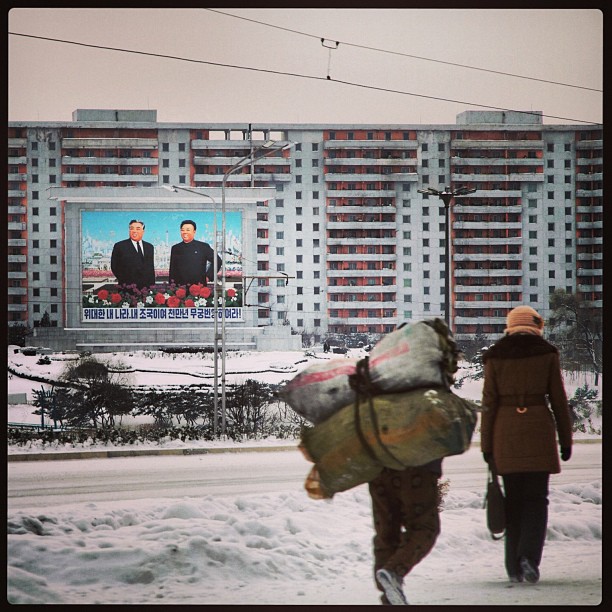
Although these anonymous testimonies, appearing on the US State Department-run RFA, likely serve as some form of propaganda, it highly plausible that a percentage of the North Korean population feels quite uneasy about the current state of affairs. One could offer their rhetorical support for North Korea’s acquisition of nuclear weapons as a deterrent, but what will become of some 10.5 million innocent civilians in Seoul if the North attempts to proliferate its nuclear arsenal? Likewise, 3.2 million souls in Pyongyang would be extinguished if the US employed its preemptive nuclear doctrine. The potential death toll should not be limited to those in capital cities, the reemergence of conflict on the Korean Peninsula immediately endangers the 70 million people living there. For all the firery rhetoric exchanged between the two Koreas, the fact that the hardline Lee Myung-bak regime, incumbent President Park’s predecessor, did not retaliate when the North shelled Yeonpyeong island in 2010 demonstrates the extent to which restraint has been exercised for the sake of stability.
The only thing keeping the situation from deteriorating is the fact that North would probably not come out victorious if it went to war with South Korea and the United States. While the North boasts larger manpower, more submarines, and more fighter jets, the South possesses highly sophisticated weaponry and modern defense technology by comparison – for this reason, Pyongyang has put more focus on the development of ICBMs and nuclear warheads. Military experts say North Korea is years away from developing a long-range missile and a nuclear warhead to attack the US mainland; however the damage it could do to South Korea and Japan has the potential to amass high civilian causalities and shouldn’t be under-estimated. One could argue that the case has never been stronger for the withdrawal of the 28,500 US troops stationed in South Korea. Such a move that would satisfy civilians in both Koreas and yield higher chances of provoking a positive response from Pyongyang during this tense period; however, that simply isn’t going to happen. As the Pentagon pivots to the Asia-Pacific, North Korea is a godsend in its ability to provide Washington with a legitimate pretext to bolster its forces in China’s backyard.
As tensions increase on the Korean Peninsula, the only power that has any influence to broker an agreement that could de-escalate hostilities is China. Following North Korea’s third nuclear test, many Chinese citizens took part in a historically unprecedented outbreak of anti-North Korea protests, and both China’s state-run media and various policy experts are becoming more vocal in their criticism of Beijing’s North Korean policy. China partnered with the United States to co-author recent UN resolutions against Pyongyang, exhibiting new heights of Beijing’s disapproval with the Kim dynasty. An editorial in China’s Global Times newspaper reads, “If North Korea engages in further nuclear tests, China will not hesitate to reduce its assistance to North Korea.” The editorial went on to say that if the US, Japan and South Korea “promote extreme U.N. sanctions on North Korea, China will resolutely stop them and force them to amend these draft resolutions.”
Kim Jong-un has demonstrated his willingness to go against the wishes of his main allies in Beijing, which has visibly frustrated those on the Chinese side, who have for years attempted to nudge Pyongyang into implementing meaningful economic reform. China should do more to denounce unnecessary and provocative military drills that have the potential to lead to fire exchange and inter-Korean turbulence. More likely than not, these threats will not materialize and tensions will deescalate in time. China hosted tri-lateral talks in Beijing with Pyongyang and Washington in attendance a decade ago in April 2003 – at the time North Korea withdrew from the nuclear Non-Proliferation Treaty, fired a short-range missile into the Sea of Japan, violated South Korean airspace with a fighter jet, and threatened to abandon the 1953 Armistice Agreement. The present day scenario is highly unpredictable and it’s clear that Beijing must take the initiative to deescalate this situation and bring all parties together to the negotiating table to work out a new agreement – one that establishes meaningful inter-Korean security assurances that lead to both sides scaling back military drills and provocative muscle flexing – such is a prerequisite for any kind of normalization of relations.
This article appeared on Counterpunch.
Nile Bowie is an independent political analyst and photographer based in Kuala Lumpur, Malaysia. He has travelled extensively to North and South Korea and can be reached at nilebowie@gmail.com.
Cyber Boogeymen, NK Nukes, Fukushima Health – Asia-Pacific Perspective [video]
Asia-Pacific Perspective
February 24, 2013
James Corbett of corbettreport.com and Broc West of apperspective.net are pleased to bring you the latest edition of their monthly video series, “The Asia-Pacific Perspective.” In this episode, we cover:
STORY #1:
The Great Cyber-Warfare Scam
http://ap-perspective.blogspot.com.au…
Anonymous Thrown Into China-US Cyberwar Scandal
http://rt.com/usa/anonymous-thrown-in…
Despite Lack Of Proof, US To Attack Chinese Hackers In Retaliation
http://news.antiwar.com/2013/02/20/de…
STORY #2:
North Korean Test Shows U.S. Policy Failings
http://ap-perspective.blogspot.com.au…
Russia Opposes New North Korea Economic Sanctions
http://www.reuters.com/article/2013/0…
U.S. & South Korea Plan Joint Military Exercises
http://timesofindia.indiatimes.com/wo…
What Will Follow Pyongyang’s Atomic Gambit?
http://www.nilebowie.blogspot.com.au/…
STORY #3:
Fukushima Health-Survey Chief To Quit Post
http://fukushimaupdate.com/fukushima-…
Two More Fukushima Youths Diagnosed With Thyroid Cancer
http://fukushimaupdate.com/two-more-f…
Fukushima Victims Required To Pay Back TEPCO Compensation
http://fukushimaupdate.com/fukushima-…
North Korea fires missile over SK and Japan [video]
Ryan Dawson
December 11, 2012
Right before Japanese and South Korean elections how timely.
Korean star Psy sings death to Americans and gets White House invite [video]
Russia Today
December 10, 2012
The South Korean artist Psy has taken YouTube by storm receiving millions of hits for his song “Gangnam Style,” but there is one controversial tune you might not have heard much about. In 2004, the Asian artist criticized the US for its role in torturing Iraqi captives and called for the death of the “Yankees” and their families. Only a few years later, though, Psy was invited to perform for President Obama. Retired Colonel Morris David joins us with the more on the questionable invitation.
RT America LIVE http://rt.com/on-air/rt-america-air/
Subscribe to RT America! http://www.youtube.com/subscription_center?add_user=RTAmerica
Like us on Facebook http://www.facebook.com/RTAmerica
Follow us on Twitter http://twitter.com/RT_America
Bowie: Winds of Change: Kim Jong-Un Wants More for North Korea [video]
Russia Today
July 23, 2012
Following the dismissal of a senior military official said to be opposed to reform, North Korean leader Kim Jong-Un has announced that the nation will begin to experiment with agricultural and economic reforms. Pyongyang has allegedly created a special bureau to take control of the economy from the military, a significant departure away from Kim Jong-Il’s “Military-First Policy”.
Reports issued by the Bank of Korea based in Seoul have confirmed that North Korea’s real annual GDP has increased by 0.8% in 2011, a significant shift away from previous years of economic deterioration. As China increases investment in North Korea in the form of Special Economic Zones and private enterprise, Beijing has led initiatives to develop the nation’s vast mineral resources, valued at $6.1 trillion.
Prior to his death, former North Korean leader Kim Jong-Il visited Russia to finalize agreements with Gazprom, a Russian state-run natural gas-exporter, to construct a pipeline connecting Russia, North Korea and South Korea, giving Pyongyang an estimated $100 million in annual transit fees.
Originally aired on RT, July 21, 2012
http://youtu.be/9rDEdAyTcg8
Tensions Mount as North Korea Cozies Up to China [video]
Russia Today
June 26, 2012
South Korea has announced plans to build a new naval base near its border with North Korea. The base will include barracks and a training ground to accommodate around 100 troops. The base will be located on one of five South Korean islands established by the UN in the 1950s, but Pyongyang refuses to accept Seoul’s ownership of the island. The border’s been the scene of several clashes between the neighbors – the most recent attack happened in 2010, when the North shelled one of the Yellow Sea islands, killing 4 South Koreans. For more on this RT talks to James Corbett, Editor of News and Information site, The Corbett Report, from Osaka, Japan.
Powdered dead baby pills used as medical cure-all in South Korea
 by Ethan A. Huff
Natural News
May 10, 2012
(NaturalNews) Customs officials in South Korea were horrified to discover recently that there is an active, underground drug trade involving powdered, dead babies. Numerous sources confirm that thousands of capsules containing dead baby remains in powdered form were confiscated in recent months in South Korea after travelers tried to smuggle these supposedly “cure-all” drugs in from China.
According to reports, corrupt medical personnel in China are selling aborted and still-born baby corpses to medical companies, which then secretly store them in people’s home refrigerators. When it comes time for processing, these companies then retrieve the bodies, dry them in microwaves, and grind them into powder, which is then injected into capsules.
In order to disguise this utterly nauseating and savage practice, these morally depraved opportunists add herbs and other materials to the capsules in order to avoid detection by investigators and customs officials. But apparently this tactic has failed, as more than 17,000 capsules falsely labeled as “stamina boosters” have already been confiscated since August 2011.
“Ethnic Koreans from northeast China who now live in South Korea are those who were mostly intending to use the capsules or share them with other Korean-Chinese,” said a customs official to the U.K.’s Daily Mail. “They are normally brought into South Korea in luggage or posted by international mail.”
Some segments of the Chinese population purportedly believe that human placental tissue is medicinal, and that consuming it will improve blood supply and circulation. But it appears as though within this segment, that belief has been perverted to also include dead baby flesh as well. And unless inspectors keep a close eye on all incoming and outgoing luggage and packages, the practice will more than likely continue.
Beyond the moral implications of the practice, officials also warn of very serious health implications as well. According to reports, the pills, which are primarily coming from four Chinese cities — Jilin, Yanji, Tianjin, and Qingdao — often contain deadly “super” bacteria that can make individuals very sick.
“As we analyzed the DNA, its DNA sequence is 99.7 percent to 99.9 percent coincided to humans’,” said a customs official involved with conducting analyses on the capsule powder. “Super-bacteria and other viruses and bacteria, which are harmful to the human body, have been detected.”
At the same time, some are now lumping the revolting dead baby pills in with all herbal medicine, calling for closer scrutinization of natural medicine. It remains to be seen if the issue is used by political opportunists to further demonize nutritional and dietary supplements.
Sources for this article include:
Articles Related to This Article:
• Power Pills for jet lag and other maladies are a bad thing
• New Jersey children nearly poisoned to death with pharmacy fluoride pills
• Science declares war on eating meat: Pharma pills may be introduced to induce nausea when people consume beef or pork
• Natural News Store acquires new supply of potassium iodide radiation pills, manufactured in USA, shipping out Monday, March 21
• Natural cranberry juice more effective than pills for fighting infections
• Sleeping pills linked to 460 percent increase in sudden death

 PN
PN 