
What Happens Next?
by David Borden
StoptheDrugWar.org
December 6, 2012
We noted this morning that marijuana is now legal in Washington State. (!) But what happens next?
As WA press noted, federal authorities had no plans to intervene at this time — the expected celebrations proceeded unmolested, at least we’ve not heard of any problems.

Seattle skyline
Of course that’s not what the feds would do. As we’ve noted here, most law enforcement is state and county and local — federal arrests for marijuana possession are a rarity, and mostly occur in places like national parks that are specifically federally controlled. Thinkers within and without our movement have been speculating what the federal response might be and what options they will legally have at their disposal once the courts weigh in.As one of our advisors, Eric Sterling, commented in our newsletter after the election, officials at the Dept. of Justice were taken by surprise, perhaps by the passage of the initiatives and certainly by the strong margins of victory. A New York Times story today by Jack Healy noted that the Obama administration has yet to announce any policy on the matter, but have simply noted that federal law remains unchanged. According to the article, officials asked about it referred to a statement released yesterday by the US Attorney in Seattle, Jenny Durkan:
“In enacting the Controlled Substances Act, Congress determined that marijuana is a Schedule I controlled substance,” [Durkan] said. “Regardless of any changes in state law, including the change that will go into effect on December 6 in Washington State, growing, selling or possessing any amount of marijuana remains illegal under federal law.”
Which tells us nothing we didn’t know. But Durkan did say that the administration is reviewing the initiatives. And according to Healy’s article, “several people familiar with the [administration’s] deliberations” say they are considering legal action. There are a few legal issues at stake:
- Can the government “preempt” the states’ regulatory systems — that is, not just raid marijuana stores if they choose to, but prevent the state from exempting any growers or distributors or sellers under state law?
- If they can, will that endanger the rest of the laws? The argument for that, Healy posits, would be that voters mightn’t have passed the laws without the regulations.
- Do the state laws run afoul of our government’s treaty obligations, particularly the 1961 Single Convention on Drugs?
Many scholars are skeptical that a preemption challenge would succeed. Gregory Katsas, a DOJ official in the George W. Bush administration, pointed out to the Times that there is nothing in the laws that prevent the federal government from bringing marijuana cases in the states. The argument there is that the laws are not in “positive conflict” with the federal Controlled Substances Act (CSA), despite their clear “tension” with it. Several legal scholars submitted a brief in a California case on this subject earlier this year taking that viewpoint.
My takeaway from the brief was that the feds might not be able to preempt even the regulatory portions of the laws, and would probably have to amend the CSA to have a chance. The very same law that would be invoked in a court case, is the same one at work in prohibition of medical marijuana. And in 16 years of state medical marijuana laws, including now 10 dispensary states, no federal prosecutor has sought to invalidate any of these laws in court. That suggests they are not confident of what their prospects would be.
Regarding the treaties, my guess would be that the same reasons federal law might not preempt state marijuana legalization applies to the treaties too — marijuana is still federally illegal. The treaties do seem to frown even legalized possession. But they explicitly allow for alternatives to criminalizing possession, such as health and education-based approaches — which we don’t have as much of as we should, but which we do have. So it’s not clear that the treaties will be a problem either.
All that said, we do not know what will happen, and Congress’s power to regulate commerce is broad — the pressure on the feds to do something is greater, and the set of arguments they can bring to court are more numerous.
I am excited but also anxious about what may happen next. Are Amendment 64 and I-502 going to federal court? What will the courts say? Will the feds try to scare Washington and Colorado officials from implementing regulations — will the states’ governors stand up to them if they do, or will they seek delays as happened in a number of medical marijuana states? Will the federal raids being made against medical marijuana facilities be expanded when legalized marijuana stories eventually open? Such a strategy would be more effective in Washington, less so in Colorado where there will be more stores and where home growing is legal. But they can probably take down anyone in Colorado as they choose. Will there be threats to withhold highway funds over the laws, or law enforcement funds?
Hopefully the Obama administration will finally choose to be on the right side of history on this issue. But we’ll ses. What happens next? For now we wait — I am nervous but also excited.
Beyond NAFTA: Shaping the Future of North American Integration
by Dana Gabriel
BE YOUR OWN LEADER
December 10, 2012
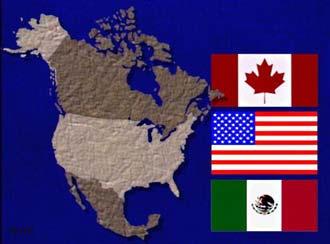
In a move that signalled the importance placed on the NAFTA partnership, Mexico’s new president visited the U.S. and Canada before his inauguration. This was seen as a step forward in further strengthening political, economic, energy and security ties between all three countries. Other recent high-level meetings and policy papers are also shaping the future of North American integration.
Before his recent trip to the U.S., Mexico’s new President Enrique Pena Nieto emphasized in a Washington Post editorial the opportunity both countries have to build on their economic partnership. He explained that, “in NAFTA we have a solid foundation to further integrate our economies through greater investments in finance, infrastructure, manufacturing and energy.” As part of his government’s strategy to reduce violence, he stated that it is, “important that our countries increase intelligence-sharing and crime-fighting techniques and promote cooperation among law enforcement agencies.” In a White House press release, Pena Nieto invited President Barack Obama to participate in the next North American Leaders Summit which will take place in Mexico sometime in 2013. With regards to U.S.-Mexico relations, Obama said that he was also looking forward to finding ways, “to strengthen our economic ties, our trade ties, our coordination along the border, improving our joint competitiveness, as well as common security issues.”
According to the new policy brief, A New Agenda with Mexico put out by the Woodrow Wilson Center, “declines in illegal immigration and organized crime violence in Mexico, open up an opportunity for U.S. policymakers to deepen the economic relationship.” The report recommended working, “together with Mexico and Canada to strengthen regional competitiveness and to grow North American exports to the world.” It further elaborated on how, “Economic issues can drive the next phase in deepening U.S.-Mexico cooperation. Investments in trusted shipper programs, pre-inspection programs, and enhanced border infrastructure will be crucial.” The study called on Washington to offer more, “support for Mexico’s criminal justice institutions, and strengthen U.S. anti-money laundering efforts in order to combat organized crime and violence.” It also recommended engaging, “Mexico more actively on hemispheric and extra-hemispheric foreign policy issues, ranging from terrorism to international trade and finance, as Mexico’s role as a global power grows.”
In a recent article, Laura Carlsen, director of the Americas Policy Program scrutinized some the new Mexican president’s policy initiatives. In the area of security, she pointed out that, “A real change in paradigm would require two measures that the Pena government has said it will not take: withdrawing the armed forces from counternarcotics efforts and renegotiating security cooperation with the U.S. government.” She noted, “Pena Nieto has reassured the U.S. that his administration will continue the drug war.” Carlsen acknowledged how, “The U.S. government has actively promoted and supported the drug war model of enforcement and interdiction through the Merida Initiative and spearheaded the massive expansion of U.S. counternarcotics activities in the country.” She further added, “U.S. defense, intelligence and security companies depend on the Mexican drug war to obtain multi-million dollar government contracts. The Pentagon and other U.S. agencies have achieved unprecedented freedom to act and even direct actions on Mexican soil.” As far as economic policy goes, Carlsen was also critical of President Pena Nieto’s commitment to deepen rather than fix NAFTA.
Just days before being sworn in as Mexico’s new president, Pena Nieto also visited Canada. In a press statement, Prime Minister Stephen Harper said he was looking forward to working with him in improving trade ties, as well as strengthening North American competitiveness and security. In an editorial that appeared in the Globe and Mail, Pena Nieto announced that, “One of the areas with the largest potential for co-operation between Mexico and Canada is energy production and development. Mexico’s energy sector is about to change. I want to enhance its potential by opening it up to national and foreign private investment.” He went on to say, “We can cultivate a closer relationship in this area in order to attain North American energy security.” Canada-U.S. energy issues are also at the forefront. Following his re-election, President Obama is under pressure to make a decision on the Keystone XL pipeline. The proposed project would carry oil from western Canada to the Texas gulf coast.
In the report, Forging a New Strategic Partnership between Canada and Mexico, Perrin Beatty and Andres Rozental recognized the opportunity both countries have to reshape bilateral relations. Among other things, the policy paper recommended removing the visa requirement for Mexican visitors to Canada. It supported increasing funding to the Anti-Crime Capacity Building Program which is aimed at enhancing the ability, “of government agencies, international organizations and non-governmental entities to prevent and respond to threats posed by transnational criminal activity throughout the Americas.” In addition, the study called for institutionalizing the North American Leaders Summit and establishing a complementary North American Business Council. It also advocated pursuing further economic cooperation with the U.S. on a pragmatic basis and suggested that, “Ongoing border and regulatory initiatives should be results-oriented and pursued in the most effective way possible, bilateral or trilateral, as the case may be. This policy recommendation can be extended to any North American issue, including continental security perimeter initiatives and anti-narcotics efforts.”
Last month’s NAFTA20 North America Summit examined NAFTA’s evolution, as well as its future prospects. Speaking at the conference, Thomas Donohue President and CEO of the U.S. Chamber of Commerce urged Canadian, Mexican and U.S. leaders to move forward with, “the integration of our markets to further rationalize our supply chains, increase efficiency, and better position North America in the global economy.” He went on to say, “We need to advance regulatory cooperation, streamline our border, and reform immigration practices to ensure the free flow of products, people, capital, and ideas.” Donohue concluded that Canada and Mexico joining the U.S. and other countries as part of the Trans-Pacific Partnership (TPP) trade agreement would help maximize the strength of the North American market. Meanwhile, there are growing concerns over the secrecy surrounding the TPP. This includes fears that it would grant corporations more power and further put the sovereignty of member nations at risk. It could also be used as a backdoor renegotiation of NAFTA without officially having to open it back up. With the 15th round of talks coming to a close in New Zealand, a final TPP deal could be reached before the end of 2013.
In October, Ottawa hosted the North American Forum. The annual get-together includes, “Canadian, Mexican and American thought leaders, whose purpose is to advance a shared vision of North America, and to contribute to improved relations among the three neighbors.” Much like other secretive gatherings, reporters were barred from entering the Forum’s events. This year’s discussions centered around energy and North American economic competitiveness. Canadian Defence Minister Peter MacKay also delivered a keynote address which focused on continental security issues. He highlighted the bilateral defence relations that the U.S. and Canada enjoy through NORAD. MacKay remarked on how, “Canada and Mexico are also becoming important strategic partners and stronger defence ties with Mexico are a priority.” He praised the first meeting of North American Defence Ministers as a, “great opportunity for our three nations to identify ways to work together to address shared defence and security challenges.” The trilateral defence meeting which took place in March is part of the process of integrating Mexico into NORAD and establishing a North American security perimeter.
While NAFTA partners pursue a trilateral approach with respect to different initiatives, the U.S. also has a separate bilateral border and regulatory agenda with Canada and Mexico. This is part of ongoing efforts to create a common economic and security perimeter. As the incremental path towards a North American Union continues, citizens from the U.S., Canada and Mexico are not being consulted, much less being given a choice in the matter even though the plan threatens the future sovereignty of each country.
Related articles by Dana Gabriel
Using the TPP to Renegotiate and Expand NAFTA
North American Integration and the Ties That Bind
NAFTA Partners Take Steps to Boost Trilateral Relationship
The North American Leaders Summit and Reviving Trilateral Integration
Dana Gabriel is an activist and independent researcher. He writes about trade, globalization, sovereignty, security, as well as other issues. Contact: beyourownleader@hotmail.com Visit his blog at Be Your Own Leader
US Defense Contractors Training Syrian Rebels to Handle Chemical Weapons
by John Glaser
Global Research
December 11, 2012
Antiwar.com 10 December 2012
 The US and some of its European allies “are using defense contractors to train Syrian rebels on how to secure chemical weapons stockpiles in Syria,” according to “a senior US official and several senior diplomats,” CNN reports.
The US-funded training is going on inside Syria, as well as in neighboring Turkey and Jordan and “involves how to monitor and secure stockpiles and handle weapons sites and materials,” according to CNN.
Last week, Washington began warning about the possibility that Syrian President Bashar al-Assad might use his chemical weapons stockpiles against the armed rebellion trying to overthrow his regime.
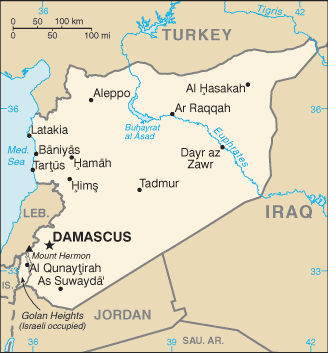
But top Syrian officials vehemently denied this would ever happen, and it appeared obvious that US officials were less concerned with Assad’s unleashing the chemical weapons, and more concerned with the possibility that Islamic jihadists fighting on behalf of the Syrian opposition might get their hands on them.
Islamic extremists make up the great bulk of Syria’s rebel fighters, and this is widely acknowledged by official Washington. Indeed, the State Department recently designated Jabhat al-Nusra, one of the most prominent Syrian rebel factions, as a Global Terrorist organization.
The US decision to hire unaccountable defense contractors to train Syrian rebels to handle stockpiles of chemical weapons seems dangerously irresponsible in the extreme, especially considering how inept Washington has so far been at making sure only trustworthy, secular rebels – to the extent they exist – receive their aid and the weapons that allies in the Gulf Arab states have been providing.
It also feeds accusations that the Syrian Foreign Ministry recently made that the US is working to frame the Syrian regime as having used or prepared for chemical warfare.
“The U.S. administration has consistently worked over the past year to launch a campaign of allegations on the possibility that Syria could use chemical weapons during the current crisis,” the Syrian Foreign Ministry wrote in letters to UN Secretary-General Ban Ki-moon.
“What raises concerns about this news circulated by the media is our serious fear that some of the countries backing terrorism and terrorists might provide the armed terrorist groups with chemical weapons and claim that it was the Syrian government that used the weapons,” the letters said.
Related content:
-

“Terrorist Expertise” and the KLA: Russia Warns Against Training Syrian Rebels in Kosovo
The Russian Foreign Ministry on Monday urged international bodies operating in Kosovo to prevent the region from turning into a training ground for Syrian rebels.
A delegation from the Syrian opposition visited Kosovo in April to allegedly make a deal… -
British Special Forces Training Syrian Rebels
Several articles in the British media confirm that British Special Forces are training Syrian rebels.
The underlying pattern is similar to that of Libya where British SAS were on the ground prior to the launching of NATO’s military intervention.
These… -
West’s Stance on Syrian Chemical Weapons: Prelude to Military Intervention?
News Analysis: Talks of Syrian chemical weapons: prelude for intervention or further pressure on Damascus?
“The real concern is that the U.S. may have other plans; to provide the terrorist groups with such weaponries.. .to justify any foreign intervention in… -

US repeats same tired, desperate accusations that the Syrian army is preparing to use “chemical weapons.”Once again, the US has issued a warning against Syria deploying “chemical weapons” citing “intelligence reports that the Damascus government is preparing such munitions for…
Disclaimer: The contents of this article are of sole responsibility of the author(s). The Centre for Research on Globalization will not be responsible for any inaccurate or incorrect statement in this article. The Center of Research on Globalization grants permission to cross-post original Global Research articles on community internet sites as long as the text & title are not modified. The source and the author’s copyright must be displayed. For publication of Global Research articles in print or other forms including commercial internet sites, contact: publications@globalresearch.ca
http://www.globalresearch.ca contains copyrighted material the use of which has not always been specifically authorized by the copyright owner. We are making such material available to our readers under the provisions of “fair use” in an effort to advance a better understanding of political, economic and social issues. The material on this site is distributed without profit to those who have expressed a prior interest in receiving it for research and educational purposes. If you wish to use copyrighted material for purposes other than “fair use” you must request permission from the copyright owner.
For media inquiries: media@globalresearch.ca
Ryan Dawson on Adam vs the Man : Syria [video]
Adam VS The Man
December 10, 2012
Talking about Syria.
DHS grants fund surveillance equipment on public buses [video]
End the Lie
December 10, 2012
http://EndtheLie.com/ — Support us: http://EndtheLie.com/store
See links below:
http://www.wired.com/threatlevel/2012/12/public-bus-audio-surveillance/
http://endthelie.com/2012/10/30/federal-court-approves-use-of-hidden-surveill…
http://endthelie.com/2012/09/27/feds-warrantless-surveillance-targeted-more-p…
http://endthelie.com/2012/10/09/supreme-court-refuses-to-review-lawsuit-chall…
http://www.thedaily.com/article/2012/12/10/121012-news-bus-audio-surveillance/
https://t5_sites_static.s3.amazonaws.com/schipul-safetyvision/media/files/pro…
https://t5_sites_static.s3.amazonaws.com/schipul-safetyvision/media/files/pro…
Listen to the radio show: http://ucy.tv/endthelie
Connect with us on Facebook: http://facebook.com/endthelie
Follow us on Twitter: http://twitter.com/endtheliedotcom
‘Chemical weapons hysteria pretext for West to frame Assad & intervene’ [video]
Russia Today
December 10, 2012
Western powers have already warned the Syrian regime against using the banned arms – but Damascus says it’s the victim of a smear campaign. Assad officials claim they would never use chemical weapons against civilians, and are only interested in keeping the stockpiles safe. This comes as US sources say Washington’s training rebels to secure and handle such weapons, in case the Syrian regime collapses. Some observers are now convinced that a foreign intervention’s in the making.
RT LIVE http://rt.com/on-air
Subscribe to RT! http://www.youtube.com/subscription_center?add_user=RussiaToday
Like us on Facebook http://www.facebook.com/RTnews
Follow us on Twitter http://twitter.com/RT_com
Follow us on Google+ http://plus.google.com/+RT
RT (Russia Today) is a global news network broadcasting from Moscow and Washington studios. RT is the first news channel to break the 500 million YouTube views benchmark.
Korean star Psy sings death to Americans and gets White House invite [video]
Russia Today
December 10, 2012
The South Korean artist Psy has taken YouTube by storm receiving millions of hits for his song “Gangnam Style,” but there is one controversial tune you might not have heard much about. In 2004, the Asian artist criticized the US for its role in torturing Iraqi captives and called for the death of the “Yankees” and their families. Only a few years later, though, Psy was invited to perform for President Obama. Retired Colonel Morris David joins us with the more on the questionable invitation.
RT America LIVE http://rt.com/on-air/rt-america-air/
Subscribe to RT America! http://www.youtube.com/subscription_center?add_user=RTAmerica
Like us on Facebook http://www.facebook.com/RTAmerica
Follow us on Twitter http://twitter.com/RT_America


