
Beautiful and Strange Weather: June 2012 Week 1 [video]
YouTube — Sheilaaliens
June 7, 2012
Various sources including youtube and http://theweathernetwork.com
Electronic Devices Mysteriously Stop Working Near Massive Baltic Sea Object [videos included]
by Jake Otero
Conscious Life News
June 25, 2012
In a video from NTD News, the team investigating the mysterious object found in the Baltic Sea explains that their electronic equipment mysteriously stopped functioning when they come within close proximity of the massive underwater object. Even stranger, the equipment started working again once the divers left the object’s immediate area. Like the other anomalies, this strange occurrence has raised even more questions concerning this fascinating mystery in the Baltic Sea.
Invasive species from Fukushima tsunami washing up on U.S. shores
 by J.D. Heyes
Natural News
June 23, 2012
(NaturalNews) Japan’s tsunami-caused nuclear disaster at the Fukushima energy complex in March 2011, in which three atomic reactors were heavily damaged, continues to wreak havoc on ecosystems – in the U.S.
The latest danger emanating from the Fukushima complex to hit our shores came not in the form of irradiated tuna, but in the form of a boxcar-sized piece of floating dock which washed ashore along a sandy Oregon beach earlier this month. The find initially excited some beachcombers, reports said, but scientists quickly began to worry that such debris was quickly becoming a whole new way to transport invasive species – crabs, seaweed and other marine organisms – to U.S. waters, further harming West Coast marine environments, The Associated Press reported.
Worse, scientists and marine biologists suspect more species could be hitching a ride to our shores as more tsunami debris arrives in the coming months.
“We know extinctions occur with invasions,” John Chapman, assistant professor of fisheries and invasive species at Oregon State University’s Hatfield Marine Science Center, told AP. “This is like arrows shot into the dark. Some of them could hit a mark.”
Mitten crabs, spartina, shellfish all cause problems here – though they came from far away
Indeed. While international trade has meant that marine invasion to the West Coast has been occurring since the late 1860s, the global economy has greatly accelerated the process. So much so that now, there are areas like San Francisco Bay which amount to a “global zoo” of invasive species, where as many as 500 plants and animals from waters afar have established in U.S. waters.
The species can attach themselves to the hulls of cargo ships and the water some vessels take on as ballast, but have also come from home aquariums that have been emptied into bays.
Not only have the species upset marine ecosystems, but there are staggering costs associated with the phenomenon as well, in tens of billions of dollars.
“Mitten crabs from China eat baby Dungeness crabs that are one of the region’s top commercial fisheries. Spartina, a ropey seaweed from Europe, chokes commercial oyster beds. Shellfish plug the cooling water intakes of power plants. Kelps and tiny shrimp-like creatures change the food web that fish, marine mammals and even humans depend on,” the AP reported.
If anything, the Fukushima disaster will only make matters worse, since the problem has been growing for years. A 2004 study published by the scientific journal Ecological Economic, for example, estimated then that some 400 threatened and endangered species in the U.S. were facing wipe-out due to invasive species.
That said, scientists admit it’s too early to tell how badly Japan’s tsunami debris will worsen the situation already here in the U.S.
“It may only introduce one thing,” Andrew Cohen, director of the Center for Research on Aquatic Bioinvasions in Richmond, Calif., said. “But if that thing turns out to be a big problem, we would rather it not happen. There could be an economic impact, an ecological impact, or even a human health impact.”
Johnny Clamseed
Reports said the dock that washed ashore in Oregon came from a fishing port located on Japan’s northern tip. It was strewn with a ton-and-a-half of mussels, seaweed, barnacles and starfish. AP reported that volunteers scraped it clean then buried it above the high water line and sterilized the rest with torches.
Some experts said, however, that despite the cleaning, there was no way to tell yet whether the scrap had released spores, larvae or anything else that could spawn and grow somewhere along the coast.
“That’s the ‘Johnny Clamseed’ approach,” James Carlton, professor of marine sciences at Williams College, said, a reference to John Chapman, better known as Johnny Appleseed, who introduced apple trees to parts of Pennsylvania, Ohio, Illinois and Indiana in the 19th century. “While that is theoretical, we don’t actually know if that kind of thing happens.”
Yet, scientists say they do know that the bigger the debris, the more likely it is bringing something along for the ride.
More debris continues to wash ashore along U.S. beaches – so much so that state officials are beginning to make appeals to Washington for help. This week, Washington state Gov. Chris Gregoire announced plans for her state to begin clean-up efforts but said federal help would be needed.
“We don’t have the resources at the state level to do what we’re going to have to do here,” she said.
Sources:
6 Unnecessary Health Tests
 by Elizabeth Renter
Natural Society
July 1, 2012
Typically, if you are interested in natural healing and preventative health, you aren’t the type to make an appointment with an M.D. for every little symptom. You probably aren’t asking your doctor for more health tests. But, other people are.
With so many medical information sites online, people are perhaps overly-informed when it comes to different diseases, conditions, and illnesses, contacting their doctor with fear in their voice, “I think I might have______. Can we run a test for that?”
Regardless of who you are or what your personal health philosophy is, it’s good to have some sense of what medical diagnostics are useful and which are totally unnecessary and overused. Here are five especially unnecessary health tests that you should know about.
- DEXA – This test is called dual energy X-ray absorptiometry and is used to detect bone strength and bone density, potentially providing people with a forewarning of their chances of developing osteoporosis. The problem with the test, however, is that measurements can say one thing one day and another the next. Also, two scans performed back to back on different machines will deliver different results. In other words, the results are unreliable. Also, it only measures bone mineral density, which isn’t the total picture when it comes to bone strength.
- Full Body CT Scans – One of many health tests full of radiation, you could pay several hundred or even a thousand bucks to have a CT scan, looking for any abnormalities. This one is a warning to those folks who just want to be on the safe side: don’t do it. Getting a full body CT scan is a little like paying a mechanic to take apart your engine to make sure nothing is wrong when your car is running smoothly. It’s unnecessary overkill. This unnecessary CT scan radiation has also been shown to triple brain tumor risk in children.
- PSA Testing – This is a blood test used to detect a protein produced by the prostate gland. High levels of this protein (prostate-specific antigen) can indicate prostate cancer. But, the association isn’t always right and the cancer isn’t always deadly. “The PSA test usually leads to overdiagnosis—biopsies and treatment in which the side effects are impotence and incontinence.”
- Home Menopause Testing – This test, which can be purchased at some drug stores, is said to tell a woman if she is going through her “life change.” But, like many other tests on this list, it’s unreliable. Particularly if you are using it to determine whether or not you still need birth control, it might be worth a visit to the doctor.
- Home Alzheimer’s Test – A scratch-and-sniff test for Alzheimer’s? Yes, really. Because a loss of smell has been associated with Alzheimer’s disease, this test says it can indicate the disease by testing your sniffer. Unfortunately, the link between smelling and Alzheimer’s is rare and is also indicative of other neurological conditions—or nothing more than “a smelling problem.”
- Breast Cancer Screenings – Among the most overused health tests, mammograms are unnecessarily pushed on women, only to cause harm. One study estimated that between 1,169 and 1,148 women of 2,500 tested were over-diagnosed and received unnecessary treatment. Even mainstream health officials are now admitting that breast cancer screening methods are not only ineffective, but are leading to improper diagnosis and unnecessary treatments at around 7,000 per year.
Additional Sources:
Explore More:
- Can Blood Tests Detect Cancer? Vitamin D Tests can Long Before Tumor Development
- Over 33 Percent of Breast Cancer Surgeries Admittedly Unnecessary
- Experts Reveal Unnecessary Cancer Treatments Accelerating Death
- Genetically Modified HIV Vaccine Approved – Human Tests to Begin Shortly
- Why Are Health Officials Still Pushing Ineffective Breast Cancer Screenings?
- Financial Incentives: Radiation Exposure ‘Soaring’ As Medical Imaging Tests Overused
Kyodo: No. 4 Spent Fuel Pool’s Cooling System Stopped After Alarm Sounds
By ENENews
June 30, 2012
The cooling system for a spent fuel pool at the crippled Fukushima Daiichi power plant’s No. 4 reactor automatically suspended operation Saturday morning after an alarm issued a warning at around 6:25 a.m., Tokyo Electric Power Co. said.
The water temperature of the pool was 31 C at the time of the suspension, and leakage of water with radioactive materials has not been confirmed, TEPCO said, adding it is unlikely the temperature will rise rapidly.
[hat tip: The Intel Hub]
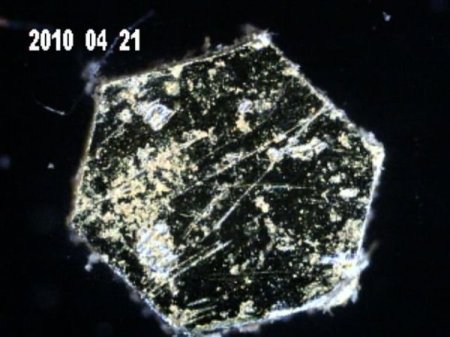
The Morgellon’s Hexagon
by Kathryn A. Augustyn
Morgellons Research Group
June 30, 2012
[Potent News editor’s note: Please refer to this “wayback machine” version of this article for the intact photographs that no longer appear here since the Morgellons Research Group website no longer seems to be active. Also consider downloading the wayback machine addon if you use the Firefox web browser.]
Compiled by~Kathryn Augustyn~
Morgellons patients often feel they have been cursed or hexed. Actually we are. Here is proof: Hexagons showing up in our skin and in the environment.The imaged hexagon was from a patient who sent this to our group. We are attempting to isolate this alone, and find out all its characteristics, how formed and what elements or processes create it. So, far, we have not found answers other than carbon and chlorine present. However, the idea that a gas may form this, including an arc is intriguing.
Jan Smith on her website www.morgellonsexposed.com has delved into the formation of this and describes this “stacking hexagon” in the “birth of a hexagon”…
The photos below are of strange geometric shapes and oddities that have emerged from Morgellons lesions. The Hexagons may be a form of SMART DUST. I have only had a couple of these myself but there are others who are also finding hexagons and other shapes. I have included those here along with mine. The Chaos Hexagons were Raman tested at SUNY at Stony Brook. The material of the hexagons and the glue-like material that held them together were not in the Raman database and are still unidentified material.
..Ruth California ..
Chaos Nano-Machine – front.
Chaos Nano-Machine Dissected


Below are images of hexagons embedded in material. Notice how the hexagons seem to be inside the filament. Could and can these be the hexagons and the pentagons, possibly made of sugar or glucose, mannose, or even resin make the pentamer and the hexagon is made of some kind of metalloprotein Jan Smith’s observations needed to be considered and discussed in the Morgellon Community. She explains the images.
All I can say is if anyone thinks that Morgellons disease is about “bugs” they are missing some very important implications and being lead in the wrong direction. As surreal as this all seems, it is grim a reality to many of us who have to live with Morgellons disease. I hope the public will wake up soon and help us. This is a highly technical and futuristic lab-created disease.
Close-up of fiber encasing tiny hexagons
At a later time these clumps of multiple hexagons were removed. These were hard clumps that were bronze in color and were glued together with some kind of biofilm.
The photo below is the shape of Nanotechnology. You will notice that the shapes are also hexagons.
Credit to Jan Smith
@Jan Smith
Page for images and other observations of Hexagons
Morgellons Plaques, Metallics and Hexagons


MRG’s collection of hexagons can be found on this website. Recently new hexagons have been sent to the group. These below are very interesting. One can see on the third image where a rolled type strand of material or filament seems to construct or self assemble the hexagon itself. Please hear the message from Valerie. This cannot be taken lightly!
Hi, I took these photos of a hexagon on my face with a microscope camera. The shape seems identical to a blue one you have. My sons have the disease too. Can you help us? My younger son had a turquoise hexagon but I didnt know what it was back then. Thanks, Val
Credit to Valerie


Hexagon found in Phoenix, AZ:


Hexagons from Hawii:

Hexagon forming? from household dust:

Hexagons from MRG group


Possibilities of core of this hexagon.
Ideal graphene hexagon:
Basic Structural Description
Graphite is composed of carbon atoms that are arranged in poly-aromatic, hexagonal ring arrays. These arrays can be looked at as an infinite series of fused benzene rings without the hydrogen atoms. Carbon atoms in these arrays are in the sp2-hybridized state. In the sp2 molecular orbital model (Figure 3), each carbon atom is typically attached to three other species, three other carbon atoms in the case of graphite. In this bonding mode, the bond angle of carbon is 120 deg. Ring arrays form sheets of carbon atoms, and individual sheets are known as graphene layers. Graphene layers are stacked one on top of another, parallel with the “c” crystallographic axis of the hexagonal 4-axis system in which graphite crystallizes.
Figure 2 / Idealized Graphite Crystal
B. Subtilis HEXAGON

RFID CHIP
 http://bestinpackaging.files.wordpress.com/2010/01/91239-rfidpowder2.jpg?w=540
Arc Evaporation
… There is a third class of structure in which the hexagons are arranged helically around the tubeaxis ... In practice, the caps are rarely hemispherical in shape, but can have a variety of morphologies; a typical example is shown inFig. 1.4. More complexcap structures are often observed, owing to the presence of heptagonal as well as pentagonal carbon rings (1.21).
(a)(b)Fig. 1.2(a) ATEM image of multiwalled carbon nanotubes produced by arc-evaporation. (b) A higher magnication image of individual tubes.Chemical Vapor Synthesis
A solid-state mechanism for CVD growth?
As outlined in the previous chapter (p. 34), several groups have proposed that the production of single-walled nanotubes by laser vaporization might involve a solid-state mechanism in which the metal particles convert solid, disordered carbon into nanotubes.The suggestion that the CVD synthesis of SWNTs might also involve a solid-state transformation has not been previously raised, so it is worth considering whether such a mechanism would be feasible.A possible scenario is given inFig. 3.19.The first stage in the process (Fig. 3.19a ) is the condensation of curved, fullerene-related, carbonaceous fragments on the surfaces of the catalyst. Literature reports suggest that significant amounts of disordered carbon could deposit on the catalyst surfaces under the conditions used for CVD. For example Baiet al. have shown that methane readily decomposes to carbon over alumina at 850°C (3.129). It cannot be said with certainty whether this carbon would have a fullerene-related structure, but there are many studies which show that C formed by condensation from the vapour consists of assemblies of small curved sheets (3.130), and this curvature may indicate the presence of fullerene-like elements.The second stage in the process is the conversion of the rather disordered carbon clustersinto single-walled tubes, promoted by the metal particles (Fig. 3.19b). The experiments(a)(b)Fig. 3.19Schematic illustration of the solid-state’mechanism for the growth of single-walled carbonnanotubes by catalytic CVD. (a) Deposition of carbon fragments on surfaces of the catalyst,(b) transformation of disordered carbon into nanotubes.Fig. 3.18A simulation of SWNT growth on an Fe catalyst, from the work of Ratyet al.(3.87). (a) Diffusion of single C atoms on the surface of the catalyst. (b) Formation of a graphenesheet on the catalyst surface with edge atoms covalently bonded to the metal. (c) Root incorporation of diffusing single C atoms (or dimers).Please note page 21 and that filamentous carbon has been known since 1890.http://www.scribd.com/doc/79246472/Carbon-Nanotube-Science

It does seem that the metal particles(hexagons) convert the carbon clusters (granules) into nanotubes. If the hexagons are Nickle coated, many people are allergic to Nickel. Or if cobalt is used? Are these used to capture radiation? Or are they actually radiative particles? It also appears that single C atoms are the core. So, would this be called the “Nano-C”?
From left to right: Diamond, graphite, and fullerene.Fullerenes @ Nano-C
The commercial viability of fullerenes was ensured when Nano-C launched its business in 2001, based on patented technology developed by Dr. Jack Howard at the Massachusetts Institute of Technology.
Uniquely scalable combustion-based process technology.
Scalability is an important question to ask as one envisions the successful launch of a new product. Nano-C has demonstrated the scalability of its II-G process. In addition, large-scale commercial combustion-based processes include carbon black and fumed silica. Nano-C’s efficient and scalable combustion process assures commercial viability and pricing that reflect the increasing benefits of economies of scale.
Solvent-free
Nano-C’s as-produced fullerenes are pure, and can be made solvent FREE.Form
As individual molecules, fullerenes are about 1 nm in diameter. This compares to 0.16 nm for a water molecule. During manufacture, these molecules come together to form small particles (10 nm to several microns). They are readily handled, or can be easily pelletized. They exhibit solubility in many solvents, but are not soluble on their own in water. For enhanced solubility requirements in water or lipids, please see our line of fullerene derivatives.http://www.nano-c.com/fullerenes.html
Typical nanoparticles that have been studied are titanium dioxide, alumina, zinc oxide, carbon black, and carbon nanotubes, and “nano-C60“.Nanoparticles have much larger surface area to unit mass ratios which in some cases may lead to greater pro-inflammatory effects (in, for example, lung tissue). In addition, some nanoparticles seem to be able to translocate from their site of deposition to distant sites such as the blood and the brain. This has resulted in a sea-change in how particle toxicology is viewed- instead of being confined to the lungs, nanoparticle toxicologists study the brain, blood, liver, skin and gut. Nanotoxicology has revolutionised particle toxicology and rejuvenated it.

Things to consider. Are there any nanotoxicologists willing to work with us? We would welcome your support and knowledge on this matter.
MRG Researchers
~~~~~~~~~~~~~~~~~~~~~~~~~~~~~~~~~~~~~~~~~~~~~~~~~~~~~~~~~~~~~~~~~~~~~~~

 PN
PN 
