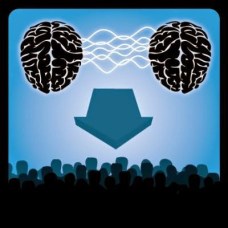
Recently, I wrote about findings showing that the brainwaves of people viewing the same movie are ‘synched.’ Some people thought this was great news, suggesting that it meant more connection and intimacy. But people who feel more disengaged or isolated by spending time with people watching media would probably doubt that suggestion very much.
Building on that discovery, researchers are testing brainwaves to forecast public response to television programming. Of course, this has questionable implications.
And, now, it only takes a few people to accurately predict the mindset – via brainwaves – of the masses. Is that how far the “culturing” of culture has come along?
Having a reliable method to forecast response from the general population harnesses incredible power to the media, marketing and public relations industries. If a new study done at the City College of New York (CCNY) in partnership with Georgia Tech is accurate, only a few individuals are needed to provide strong predictors that represent “the masses.”
The authors analyzed the brainwaves of 16 people as they watched mainstream television content. Researchers were able to accurately predict the preferences of large TV audiences, up to 90 percent in the case of Super Bowl commercials. The findings appear in a paper entitled “Audience Preferences Are Predicted by Temporal Reliability of Neural Processing,” which was just published in the latest edition of Nature Communications.
Why use various brain graphs to discover this instead of other methods like questionnaires?
Lead author, Jacek Dmochowski said:
Alternative methods such as self-reports are fraught with problems as people conform their responses to their own values and expectations.
They wanted to use electroencephalography (EEG) because, in principle, it alleviates this shortcoming by providing immediate physiological responses immune to such self-biasing.
He adds:
Our findings show that these immediate responses are in fact closely tied to the subsequent behavior of the general population.
It kind of sounds like the viewers do not realize the messages they are getting – nor their perceived responses.
Senior author Lucas Parra, Herbert Kayser Professor of Biomedical Engineering at CCNY explains the previous researcher on the synched minds of movie goers:
When two people watch a video, their brains respond similarly – but only if the video is engaging. Popular shows and commercials draw our attention and make our brainwaves very reliable; the audience is literally ‘in-sync’.
Study participants watched scenes from The Walking Dead TV show and several commercials from the 2012 and 2013 Super Bowls. EEG electrodes were placed on their heads to capture brain activity. The reliability of the recorded neural activity was then compared to audience reactions in the general population using publicly available social media data provided by the Harmony Institute and ratings from USA Today’s Super Bowl Ad Meter.
Para says:
Brain activity among our participants watching The Walking Dead predicted 40 percent of the associated Twitter traffic. When brainwaves were in agreement, the number of tweets tended to increase.
Brainwaves also predicted 60 percent of the Nielsen ratings that measure the size of a TV audience.
Enmeshed Masses
The study was even more accurate (90 percent) when comparing preferences for Super Bowl ads. For instance, researchers saw very similar brainwaves from their participants as they watched a 2012 Budweiser commercial that featured a beer-fetching dog. The general public voted the ad as their second favorite that year. The study found little agreement in the brain activity among participants when watching a GoDaddy commercial featuring a kissing couple. It was among the worst rated ads in 2012.
Lovely…
Using functional magnetic resonance imaging (fMRI), they found evidence that brainwaves for engaging ads could be driven by blood-oxygenation-level-dependent (BOLD) activity in visual, auditory and attention brain areas.
Matthew Bezdek of Georgia Tech said:
Interesting ads may draw our attention and cause deeper sensory processing of the content.
The main, openly stated applications are marketing and film, and perhaps to predict the effectiveness of online educational videos by measuring how engaging they are. However, in their summary, they explain more…
The “one” and the “many” are synthesized
From their summary:
Our findings suggest that stimuli which we judge favourably may be those to which our brains respond in a stereotypical manner shared by our peers.
Predicting the behaviour of large groups is inherent to such diverse processes as forecasting election results, anticipating the reception to upcoming films, and foreseeing the effects of changes to laws or policies.
[…]
Here we ask whether the neural activity of multiple individuals may collectively predict the behaviour of large groups.
Indeed. It’s not really about individual interest but predicting mass behavior that already appears to be highly linked up.
Humans are the most heavily studied species on earth – perhaps the most predictable – and arguably, the most easily “trained.” In that sense, this study is showcasing a mass training project – or, a “progress check.” While there is mention of some positive applications for it – like diagnosing neurodevelopmental disorders – it seems that the idea is not for “engaging” the individual but to maintain the attention and predict the actions of the blob of many.An openly-voiced study like this is another example of the importance in guarding the brain and heart above all else. Clearly, the mind has no firewall.
[Potent News editor’s note: The Trivium Method is a firewall. For more on that click here and here and here and here.]
A security researcher considered to be among the foremost experts in his field says that more than a half-billion mobile devices running Apple’s latest iOS operating system contain secret backdoors.
Jonathan Zdziarski, also known by his online alias “NerveGas,” told the audience attending his Friday morning presentation at the Hackers on Planet Earth conference in New York City that around 600 million Apple devices, including iPhones and tablets, contain hidden features that allow data to be surreptitiously slurped from those devices.
During Zdziarski’s HOPE presentation, “Identifying Backdoors, Attack Points and Surveillance Mechanisms in iOS Devices,” the researcher revealed that several undocumented forensic services are installed on every new iPhone and iPad, making it easier that ever for a third-party to pull data from those devices in order to compromise a target and take hold of their personal information, including pictures, text messages, voice recordings and more.
Among the hidden functions running on iOS devices, Zdziarski said, are programs called “pcapd,” “file_relay” and “file_relay.” If used properly, he added, those programs can allow anyone with the right means and methodology to pull staggering amounts of data from a targeted phone, even when the rightful owner suspects the device is sufficiently locked.
Zdziarski has previously exploited older versions of the iOS operating system and authored several books on mobile security. Even after raising multiple questions with Apple, however, he said he has yet to figure out why, exactly, the tech giant ships iOS devices with programs that appear to do nothing other than leak digital data.
According to the slides Zdziarski presented during Friday’s talk, there’s little reason to believe the functions are used to run diagnostics or help developers.
“Most services are not referenced by any known Apple software,” one slide says in part, and “the raw format of the data makes it impossible to put data back onto the phone, making useless for Genius Bar or carrier tech purposes.”
“The personal nature of the data makes it very unlikely as a debugging mechanism,” he added.
Reuters / David Gray
According to the researcher, evidence of the mysterious programs raises more questions than it does answers.
“Why is there a packet sniffer running on 600 million personal iOS devices instead of moved to the developer mount?” he asked in one slide. “Why are there undocumented services that bypass user backup encryption that dump mass amounts of personal data from the phone? Why is most of my user data still not encrypted with the PIN or passphrase, enabling the invasion of my personal privacy by YOU?”
“Apple really needs to step up and explain what these services are doing,” Zdziarski told Ars Technia on Monday after his HOPE presentation was hailed over the weekend by the conference’s attendees as a highlight of the three-day event. “I can’t come up with a better word than ‘backdoor’ to describe file relay, but I’m willing to listen to whatever other explanation Apple has. At the end of the day, though, there’s a lot of insecure stuff running on the phone giving up a lot of data that should never be given up. Apple really needs to fix that.”
Indeed, Apple responded on late Tuesday by saying that the tree functions in question are “diagnostic capabilities to help enterprise IT departments, developers and AppleCare troubleshoot issues.”
“Apple has, in a traditional sense, admitted to having back doors on the device specifically for their own use,” Zdziarski responded quickly on his blog. “Perhaps people misunderstand the term ‘back door’ due to the stigma Hollywood has given them, but I have never accused these ‘hidden access methods’ as being intended for anything malicious, and I’ve made repeated statements that I haven’t accused Apple of working with NSA. That doesn’t mean, however that the government can’t take advantage of back doors to access the same information. What does concern me is that Apple appears to be completely misleading about some of these (especially file relay), and not addressing the issues I raised on others.”
“I give Apple credit for acknowledging these services, and at least trying to give an answer to people who want to know why these services are there – prior to this, there was no documentation about file relay whatsoever, or its 44 data services to copy off personal data. They appear to be misleading about its capabilities, however, in downplaying them, and this concerns me,” he added.
On Apple’s part, the company said they have “never worked with any government agency from any country to create a backdoor in any of our products of services.”
At least one, but possibly two U.S. citizens with Ebola is due to fly from West Africa to Atlanta during the next few days. Barbara Reynolds spokeswoman for the CDC in Atlanta said that she is not aware of any Ebola patient ever been treated in the United States before.
Emory Hospital in Atlanta has issued a statement saying it is well prepared to receive the patients, and that it has the facilities to safely care for them without any risk to the public.
Let’s hope and pray they are right.
Two Americans are infected, Dr Kent Brantly and Nancy Writebol who are said to be in a grave condition. Apparently a serum has been made from the blood of a child who was cured of Ebola and that serum, although experimental has been offered to Dr Brantly. He is said to have refused the treatment, insisting it be given to Writebol.
On at least five occasions the CDC has made mistakes in handling deadly pathogens. According to the LA Times:
Dangerous germs, including anthrax, botulism and a strain of bird flu, were improperly sent among government laboratories in five incidents during the last decade, according to the Centers for Disease Control and Prevention, which said it had closed two labs and had imposed a moratorium on shipping deadly pathogens.
The announcement of the previously undisclosed incidents comes days after the CDC said scientists had discovered six vials of the smallpox virus in an unused storage room at the National Institutes of Health campus in Bethesda, Md.
This of course is not counting the exposure of 86 workers to anthrax in June, and as the article states comes just days after vials of the smallpox virus was found lying at the back of a shelf in a cupboard….
I have great sympathy for those suffering from this awful disease. Up to 90% of those who contract it will die a terrible death, but bringing those people to the United states, UK and Europe will not alter that fact. What it will do is increase the risk of this virus spreading.
One mistake with this, and people are going to start dying across the United States. From the point that the Ebola patient leaves the isolation ward in Africa the risks to the rest of the world start to grow.
It’s likely the patients will be transferred in pods called aeromedical biocontainment systems. These systems are specifically designed to allow medical staff access without exposing themselves to the virus. They are not particularly sturdy structures as you can see from the photograph.
Image: U.S. Center for Disease Control
There is not much room on medivac planes, and with possibly two patients to care for it is unlikely there will be enough spare equipment to deal with all possible emergency scenarios. Although bodily waste can be removed from these pods, doing so on the aircraft would be incredibly dangerous. Usually a specialized flow air system, inside a biocontainment air lock would be required to remove level four biological waste safely.
The logistics of transporting a patient with Ebola, particularly Ebola Zaire, the strain causing the current outbreak are horrendous:
From the isolation unit along corridors to ambulance or helicopter
From the ambulance or helicopter to the airport.
Then they have to get the patient actually onto the plane.
A flight of ten hours + depending on where exactly they are taking off from.
Transfer from the aircraft on arrival in Atlanta.
Travel by ambulance or helicopter to the Emory Hospital.
Transfer to the isolation unit.
All of this needs to be done, twice if both patients are returned home, without snagging or breeching the flimsy plastic tent of the unit.
Now remember, these patients have Ebola Zaire, a condition where ALL bodily secretions are infected. The condition causes diarrhea and vomiting, a high fever causing the patient to sweat, and bleeding from every orifice. These symptoms will not conveniently stop because the patient is in transit to the United states, or Germany, or anywhere else.
A few years ago, Dr. Mary Newport’s discovery of using coconut oil to reverse her husbands advanced Alzheimer’s disease made a big splash in the alternative health media. Some of this splash managed to wet a few pages of the mainstream media (MSM), and Dr. Newport wrote a book about her discovery for hubby’s turn-around called Alzheimer’s Disease: What If There Was a Cure?: The Story of Ketones.
Meanwhile, others who were showing early signs of dementia or worse picked up the news with the same attitude Mary had, “what’s there to lose? Thus a movement toward using saturated fat coconut oil for dementia prevention and reversal was spawned with mostly successes.
Actually, the use of high saturated fat diets to create ketones was created by Johns Hopkins Medical Center in the 1920s. Ketones are processed easily to provide fuel for brain cells when carbohydrate metabolism fails within the brain. But a few decades later, the medical mafia decided that saturated fats are bad and cholesterol, especially LDL, the “bad cholesterol”, just had to go in order to prevent obesity and heart disease.
Well, the dogma caught on and the processed food industry had a field day promoting low or no fat foods, margarine, and unsaturated fat processed (hydrogenated) cooking and salad oils. Yet obesity and heart disease have skyrocketed beyond well beyond what they were before this madness had started.
Looks like this was the wrong theory after all. Frustratingly, even alternative health writers tend to still report how a food or supplement lowers cholesterol, sometimes to make people feel better about their food choices.
Actual Scientific Facts
There have been three attempts since 2012 to create an effective and not too terribly toxic pharmaceutical solution to Alzheimer’s. They all failed, and even caused worsening conditions with an occasional death during testing.
Meanwhile, good ole’ coconut oil with it’s easily digested medium chain triglycerides (MCT), which convert to ketones for brain cell fuel when oxygen/carbohydrate metabolism fails, keeps on working for many.
The brain is comprised of mostly fats, the saturated kind. Cholesterol is needed to fuel neuron communication. It’s been discovered that high cholesterol blood level geriatric folks live longer without dementia than those whose cholesterol counts are higher. By the way, did you know that all cholesterol is the same?
It’s the tiny protein chylomicron (shell) carriers that are different to accommodate different structural and arterial repair purposes for your benefit, including helping manufacture vitamin D from the sun. This helps explain why statin drugs are so harmful and promote heart disease and Alzheimer’s.
Science-based types who like to refute natural health articles without investigating further can read MIT researcher Stephanie Seneff’s brilliant article about that here before commenting.
I like to exercise, especially playing basketball. Physical fitness is something that I have always tried to take seriously, although admittedly, I take it more serious at certain times compared to others. Currently, my physical fitness is not where it needs to be, but I’ll try to get that figured out sooner than later. A question I have received at TWB from time to time is ‘does marijuana help you exercise?’
I have lifted weights and played basketball after getting high, and it seems to put me in a zone that I don’t get into when sober. I feel more focused, and more in touch with my body. Marijuana doesn’t necessarily motivate me to workout, but once I’m at the gym, it helps me get a better workout, if that makes sense. Leafly recently published an article that talks more about marijuana and exercise. A few excerpts are below:
“It’s not news to the medical community that the human body stores tetrahydrocannabidiol (THC), the main psychoactive in cannabis, in fat. However, a study put out this August in Drug and Alcohol Dependence has shown that this storage process can give exercisers an extra boost, even up to 28 days after consumption.”
“Yet, contrary to popular thought, it’s not just the endorphins (the compounds which make you feel excited after activities such as exercise and sex) that make physical activity so great. A 2003 study found that exercise actually activates the endocannabinoid system in the same way that the cannabis plant does. The endocannabinoid system is a group of lipids (types of fats) and cell receptors that cannabinoids (compounds like THC and CBD) bind to inside the body. The endocannabinoid system is responsible for easing pain, controlling appetite, and influences mood and memory. ”
“A recent study published in the American Journal of Medicine has found that regular cannabis consumers have fasting insulin (insulin in your body before eating) levels 16% lower than non-consumers. The study also found that cannabis consumers had 17% lower insulin resistance levels and lower average waist circumferences.”
Next time, before you hit the gym, try getting high first. If that’s not your thing, then by all means don’t do it. But if you are looking to see how marijuana affects your workout, give it a try. Scientific studies suggest it could help you out!
via The Guardian / July 14, 2014 / In fading light and just a stone’s throw from the most terrifying scenes during Japan’s worst nuclear accident, engineers resumed their race against time to defeat the next big threat: thousands of tonnes of irradiated water.
If all goes to plan, by next March Fukushima Daiichi’s four damaged reactors will be surrounded by an underground frozen wall that will be a barrier between highly toxic water used to cool melted fuel inside reactor basements and clean groundwater flowing in from surrounding hills.
Up to 400 tonnes of groundwater that flows into the basements each day must be pumped out, stored and treated – and on-site storage is edging closer to capacity. Decommissioning the plant will be impossible until its operator, Tokyo Electric Power [TEPCO] addresses the water crisis.
Last month workers from TEPCO and the construction firm Kajima Corp began inserting 1,550 pipes 33 metres vertically into the ground to form a rectangular cordon around the reactors. Coolant set at -30C will be fed into the pipes, eventually freezing the surrounding earth to create an impermeable barrier.
“We started work a month ago and have installed more than 100 pipes, so it is all going according to plan to meet our deadline,” Tadafumi Asamura, a Kajima manager who is supervising the ice wall construction, said as workers braved rain, humidity and radiation to bore holes in the ground outside reactor No 4, scene of one of three hydrogen explosions at the plant in the early days of the crisis.
But sealing off the four reactors – three of which melted down in the March 2011 disaster – is costly and not without risks. The 32bn-yen (£185m) wall will be built with technology that has never been used on such a large scale.
“I’m not convinced the freeze wall is the best option,” Dale Klein, former head of the US Nuclear Regulatory Commission and a senior adviser to TEPCO, recently told Kyodo News. “What I’m concerned about is unintended consequences. Where does that water go and what are the consequences of that? I think they need more testing and more analysis.”
The 1,500-metre wall will stay in use until 2020, using enough electricity every year to power 13,000 households, according to officials.
Over the next eight months, 360 workers from TEPCO and Kajima will work in rotating shifts of up to four hours a day, with each shift beginning in the early evening to combat heat exhaustion. Each worker is wrapped in hazardous materials suits and full-face masks, along with tungsten-lined rubber torso bibs for added protection against radiation.
TEPCO’s record of mishaps in the three years since Fukushima Daiichi suffered a triple meltdown suggests the wall project will not be trouble free. The firm has had problems freezing irradiated water – using the same method being used to build the underground wall – that has accumulated in underground trenches, raising concerns that the ice technology is flawed.

 by Heather Callaghan


 FUKUSHIMA UPDATE
 PN
PN 