
20 Applied Uses for Coke…Proofs that it Has No Place in the Human Body
TunedBody
Dec 23, 2013

Those who consume sodas such as Coca Cola have a 48% increase in heart attack and stroke risk, compared to people who do not drink the sodas at all or did not drink them every day. A study published in the journal Respirology reveals that soft drink consumption is also associated with lung and breathing disorders including asthma and chronic obstructive pulmonary disease (COPD).
The carbonation in Coke causes calcium loss in the bones through a 3-stage process:
- The carbonation irritates the stomach.
- The stomach “cures” the irritation the only way it knows how. It adds the only antacid at its disposal: calcium. It gets this from the blood.
- The blood, now low on calcium, replenishes its supply from the bones. If it did not do this, muscular and brain function would be severely impaired.
But, the story doesn’t end there. Another problem with most Coke is it also contain phosphoric acid (not the same as the carbonation, which is carbon dioxide mixed with the water). Phosphoric acid also causes a draw-down on the body’s store of calcium.
So Coke softens your bones (actually, makes them weak and brittle) in 3 ways:
- Carbonation reduces the calcium in the bones.
- Phosphoric acid reduces the calcium in the bones.
- The beverage replaces a calcium-containing alternative, such as milk or water. Milk and water are not excellent calcium sources, but they are sources.
Esophageal cancer was very rare two generations ago — now, it’s common. The basic mechanism works as follows:
- Mechanical damage to cells is a huge risk factor for cancer. It’s why asbestos particles, for example, cause lung cancer.
- All soft drinks cause acid reflux (stomach acid rising up past the esophageal valve). This is more pronounced when the body is horizontal (as in sleeping), but the sheer volume of Coke and soft drinks consumed in the USA means the acid reflux is well past the danger point. Any time you ingest a gassy drink, you are going to get belching–and acid into the esophagus. How much is too much? The research doesn’t say where the limit is–it only shows that most of us are far, far, far past it.
- tomach acid dissolves tissue — that’s its purpose. The stomach lining does not extend into the esophagus, so the lower esophagus gets damaged by acid far more frequently in soft drink users than in non soft drink users. This results in a radical increase in cell mutations, along with a far higher level of free radicals.
20 Practical Uses For Coke
Coke acts as an acidic cleaner. The amount of acid in soda is enough to wear away at the enamel of your teeth, making them more susceptible to decay. In tests done on the acidity levels of soda, certain ones were found to have PH levels as low as 2.5. To put that into perspective, consider that battery acid has a pH of 1 and pure water has a pH of 7.
To prove Coke does not belong in the human body, here are 20 practical ways you can use Coke as a domestic cleaner:
- Removes grease stains from clothing and fabric
- Removes rust; methods include using fabric dipped in Coke, a sponge or even aluminum foil. Also loosens rusty bolts
- Removes blood stains from clothing and fabric.
- Cleans oil stains from a garage floor; let the stain soak, hose off.
- Kills slugs and snails; the acids kills them.
- Cleans burnt pans; let the pan soak in the Coke, then rinse.
- Descales a kettle (same method as with burnt pans)
- Cleans car battery terminals by pouring a small amount of Coke over each one.
- Cleans your engine; Coke distributors have been using this technique for decades.
- Makes pennies shine; soaking old pennies in Coke will remove the tarnish.
- Cleans tile grout; pour onto kitchen floor, leave for a few minutes, wipe up.
- Dissolves a tooth; Use a sealed container…takes a while but it does work.
- Removes gum from hair; dip into a small bowl of Coke, leave a few minutes. Gum will wipe off.
- Removes stains from vitreous china.
- Got a dirty pool? Adding two 2-liter bottles of Coke clears up rust.
- You can remove (or fade) dye from hair by pouring diet Coke over it.
- Remove marker stains from carpet. Applying Coke, scrubbing and then clean with soapy water will remove marker stains.
- Cleans a toilet; pour around bowl, leave for a while, flush clean.
- Coke and aluminum foil will bring Chrome to a high shine.
- Strips paint off metal furniture. Soak a towel in Coke and lay it on the paint surface.
Now can you imagine what is does to your stomach lining?
Who needs the ‘household and cleaning’ section at the hardware store when we have Coke.
Source: “20 Establish Uses For Coca Cola Proves Itt Does Not Belong In The Human Body”, from preventdisease.com by John Summerly
MUST SEE — The Truth About Nelson Mandela
Stefan Molyneux
Dec 9, 2013
Nelson Mandela is portrayed in the mainstream media as a peace-loving anti-apartheid revolutionary and philanthropist. But what is the truth about Nelson Mandela?
[UPDATE via Stefan Molyneux’s facebook post: “My apologies, I made a mistake in my recent video about Nelson Mandela, he talked about his desire to nationalize industries and banking for decades, but did not implement these goals when he got into power, most probably because the Soviet Union had collapsed and was no longer available as a source of subsidies.”]
Freedomain Radio is 100% funded by viewers like you. Please support the show by signing up for a monthly subscription or making a one time donation at: http://www.fdrurl.com/donate
Bitcoin Address: 1Fd8RuZqJNG4v56rPD1v6rgYptwnHeJRWs
Litecoin Address: LL76SbNek3dT8bv2APZNhWgNv3nHEzAgKT
Get more from Stefan Molyneux and Freedomain Radio including books, podcasts and other info at: http://www.freedomainradio.com
http://menghusblog.wordpress.com/2012…
http://www.genocidewatch.org/images/S…
http://thebackbencher.co.uk/3-things-…
60 percent of South Africans felt the country was better run under apartheid, with both blacks and whites rating the current government less trustworthy, more corrupt, less able to enforce the law and less able to deliver government services than its white predecessor.
Transparency International released its 2013 Global Corruption Barometer report. It found South Africa to be among the most corrupt countries in the world. According to its findings, an astounding 83 percent of South Africans believe that the police force is corrupt. And 36 percent of respondents admitted to paying at least one bribe to the police.
A 2010 Medical Research Foundation survey found that more than 37 percent of men admitted to raping at least one woman. Seven percent said they had participated in a gang rape.
59 murders, 145 rapes and 752 serious assaults out of its 42 million population. The new crime is the rape of babies; some AIDS-infected African men believe that having sex with a virgin is a cure. Twelve percent of South Africa’s population is HIV-positive, but President Mbeki says that HIV cannot cause AIDS.
In response to growing violence, South Africa’s minister of safety and security, Steve Tshwete, says: “We can’t police this; there’s nothing more we can do. South Africa’s currency, the rand, has fallen about 70 percent since the African National Congress (ANC) came to power in 1994. Emigration from South Africa (mainly of skilled people) is now at its highest level ever.”
The tragic fact of business is that ordinary Africans were better off under colonialism. Colonial masters never committed anything near the murder and genocide seen under black rule in Rwanda, Burundi, Uganda, Nigeria, Mozambique, and other countries, where millions of blacks have been slaughtered in unspeakable ways, which include: hacking to death, boiling in oil, setting on fire and dismemberment.
The National Bureau of Economic Research found that the average income of all races in South Africa dropped 40% between 1995 and 2000. The UN 2006 Human Development Report found that over the last 3 decades Africa has had a “virtual reversal” of human development; South Africa dropped 38 places on the Human Development Index since 1994. (UN Development Programme, 2007). The country of the world’s first heart transplant (Christian Barnard, Dec., 1967), the Union of South Africa, is now the rape and murder capital of the world. [15]
At the start of the year 1900, the number of African South Africans was found to be 3,5-million according to the British colonial government census. By 1954, our African population had soared to 8,5-million — and by 1990, there were a full 35-million of us
in the decades prior to the official policy of apartheid, (which was started in 1948), the average life expectancy of African South Africans was only 38 years.
However, during the last decade of the apartheid era from 1948 to 1994, our average life expectancy had risen to 64 years — on a par with Europe’s average life expectancy.
While China had lifted some 400,000 people out of poverty in the past 20 years, Nigeria had pushed 71 million people below the poverty line.
A United Nations report said that Africa was the only continent where poverty had increased in the past 20 years. South Africa’s HDI figure was far higher in 1995, after nearly 50 years of apartheid, than it was in 2010 after 16 years of ANC rule. Moreover, the trend continues to be downward.
Amazon US Affiliate Link: http://www.fdrurl.com/AmazonUS
Amazon Canada Affiliate Link: http://www.fdrurl.com/AmazonCanada
Amazon UK Affiliate Link: http://www.fdrurl.com/AmazonUK
Freedomain Radio Facebook: http://www.fdrurl.com/fb
Freedomain Radio Twitter: https://twitter.com/freedomainradio
Freedomain Radio Google+: http://www.fdrurl.com/google
Freedomain Radio LinkedIn: http://www.fdrurl.com/LinkedIn
[related: Nelson Mandela: Obama, Clinton, Cameron, Blair – Tributes of Shameful Hypocrisy]
Government Study Uses Off-Duty Police to Collect Blood, Saliva Samples at Checkpoints
 by Melissa Melton
Activist Post
Nov 20, 2013
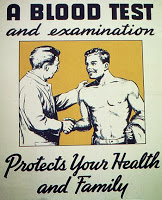
Drivers were randomly stopped yesterday at a police roadblock in Fort Worth, Texas, herded into a parking lot and asked to take DNA tests — to give blood samples, have their cheeks swabbed, and take Breathalyzer tests.
According to the local Dallas Forth Worth NBC affiliate, The National Highway Traffic Safety Administration set the whole thing up with government contractors who used off-duty Forth Worth Police Officers to help facilitate an $8 million government research study “aimed at determining the number of drunken or drug-impaired drivers”.
Although the set up was supposedly voluntary and anonymous, people who were driving on that Fort Worth road told NBC it didn’t feel voluntary at all.
“It just doesn’t seem right that you can be forced off the road when you’re not doing anything wrong,” said Kim Cope, who said she was on her lunch break when she was forced to pull over at the roadblock on Beach Street in North Fort Worth.
[…]
“I gestured to the guy in front that I just wanted to go straight, but he wouldn’t let me and forced me into a parking spot,” she said.
Once parked, she couldn’t believe what she was asked next. “They were asking for cheek swabs,” she said. “They would give $10 for that. Also, if you let them take your blood, they would pay you $50 for that.” At the very least, she said, they wanted to test her breath for alcohol.
She said she felt trapped. “I finally did the Breathalyzer test just because I thought that would be the easiest way to leave,” she said, adding she received no money.
This government “study” will take place over the next three years in 30 U.S. cities across the nation.
Study: Just 30 Minutes of Cell Phone Exposure Affects Brain Activity
Conscious Life News
Dec 2, 2013
Elizabeth Renter | Naturalsociety | Dec 2nd 2013
 A new study published in Clinical Neurophysiology suggests it doesn’t take years or even months of exposure for cell phone radiation to (negatively) alter our brains—it only takes minutes. The phones used in this double-blind, crossover, randomized study emitted LTE radiation, or the LTE technology so popular in “fourth generation” (4G) phones, the phones everyone clamors for.
The researchers exposed the right ears of 18 study participants to LTE radio frequency radiation. In just 30 minutes, they observed changes in brain activity. The radiation levels were within legal limits and the phone was always kept 1 cm from the ear.
Brain activity was measured using MRIs twice during a resting state, once after LTE exposure, and once after being exposed to “sham” exposure or a control. Both the right and left hemispheres of the brain were affected by the radiation.
Though this certainly isn’t the first study to examine how cells phones and electromagnetic frequencies alter regions of the brain, this is the first study to be carried out on LTE technology, the “fastest developing mobile system technology ever,” according to Global Mobile Suppliers Association. And the U.S. is the largest market for LTE in the world. More than half of the 91 million LTE subscribers around the world in March 2013 were in the U.S.
What do these changes in brain activity mean? We don’t know that yet, but previous studies have linked such cell phone radiation to sperm damage, weakened bones, increased “genetic stress”, cellular damage, and certainly brain cancer. Some have suggested it can lead to autism and Alzheimer’s disease in the long term.
Whether you have the latest LTE technology or an old flip-phone, you can minimize your exposure to cell phone radiation by:
- Never holding the phone up to your head
- Using the speaker instead
- Not sleeping with your phone next to you
- Shutting it off while not in use
- Investing in radiation protection
Cell phones have changed the way many of us live. We are more connected now than ever before, but these little devices have distanced us in unimaginable ways. Add to that the potential health effects of cell phone radiation and it makes you wonder if we were better off before.
With emerging technology such as LTE, we are introducing things into our lives before we fully understand how they work and all of their potential effects. By the time we really understand their long-term effects, it could be too late.
Study Finds Spirulina to Boost Academic Performance, Brain Power
by Elizabeth Renter
Natural Society
Nov 23, 2013
 Used medicinally for centuries, spirulina is said to be one of the oldest life forms on earth, eaten since at least the 9th century in the Kanem Empire of Chad, Africa. We know it’s loaded with protein and other nutritional benefits, but a recent study indicates it could even help children with academic performance.
Eyed as a potential malnutrition-ending supplement for its wealth of nutrients, there are more than 40,000 varieties of spirulina, mostly cultivated in fresh water. Because it has less than 4 calories per gram, it can offer premium nutrition without the risk of obesity.
It was this use of spirulina, as a malnutrition-staving supplement, that interested researchers in Senegal. They were evaluating a government program designed to improve the nutritional intake of school children in that country using spirulina supplements.
Coffee Cuts Liver Cancer Risk by 40%
by Elizabeth Renter
Natural Society
November 14, 2013
If you enjoy a morning cup of joe, you may be at a lesser risk of liver cancer than your non-coffee drinking counterparts. And if you like a few cups of coffee in the morning, you could be cutting your risk of liver cancer even more. Daily coffee consumption could cut liver cancer risk by 40%, according to new research.
According to new research published in Clinical Gastroenterology and Hepatology:
“Our research confirms past claims that coffee is good for your health, and particularly the liver,” said Carlo La Vecchia, MD, study author. “The favorable effect of coffee on liver cancer might be mediated by coffee’s proven prevention of diabetes, a known risk factor for the disease, or for its beneficial effects on cirrhosis and liver enzymes.”
The researchers performed a meta-analysis of studies published between 1996 and 2012. A total of 16 “high quality” studies were used involving 3,153 cases.
What they found was that daily coffee consumption cuts liver cancer risk by a whopping 40%. Drinking three cups of coffee each day has an even more dramatic effect, reducing the risk of liver cancer by more than 50%.
While the research doesn’t establish a definite cause and effect relationship between coffee consumption and liver cancer risk, the link cannot be ignored.
Further, coffee is known to reduce the risk of diabetes. And because diabetes is a known risk factor for liver cancer, the hot steaming morning beverage could be having multiple beneficial and related health effects.
Of course this is far from the first story to praise coffee health benefits. Earlier this year, a study from Japan found that drinking coffee or tea on a daily basis can reduce stroke risk by about 20%. The data came from about 83,000 individuals ages 45 to 74.
The benefits of drinking coffee are many; studies exist linking coffee with:
- Protection against hardening of the arteries
- Decreased risk of depression
- Reduced risk and slowed progression of dementia
- Reduced risk of liver cancer
- Reduced risk of diabetes
If you are a coffee drinker and hope to reap all the benefits that these little beans offer, consider organically grown and processed coffee. Also, take a look at green coffee. Because green coffee beans have not been roasted, they maintain a higher concentration of antioxidants and may be able to deliver even better benefits than their brown counterparts.

 PN
PN 