A plant offering countless health benefits, sage is an herb as old as time. And while it’s commonly used in cooking, the herb has been heavily utilized in medicine and even spirituality as well. Some of the more recent studies on sage indicate that the herb can improve memory and even possibly prevent Alzheimer’s disease.
The study, published in the June 2003Pharmacology Biochemistry and Behavior, looked at the effects of sage on memory recall tests. The researchers used 45 individuals in two groups; one group received a placebo while others received sage essential oil at dosages between 50 and 150 microls. Following the administration, memory tests were given. Even those who were given the smallest amount of sage oil saw notable memory improvements.
Concern is growing that radioactive water from a damaged nuclear plant in Japan could affect fish in B.C.
Karla Robison, Ucluelet’s manager of environmental and emergency services, wants Ucluelet council to ask senior levels of government to support a study of chemicals in fish.
“We could work with local folks who are out fishing to get tissue samples and make sure there are no problems with the fish,” said Robison […] “It’s a very, very important issue and quite frightening,” she said. […]
by Mike Adams, the Health Ranger
Natural News August 9, 2013
(NaturalNews) Dolphins have been granted “non-human personhood” status by the government of India, making India the first nation in the world to recognize the unique intelligence and self-awareness of the cetacean order (a class of aquatic mammals).
The decision was announced by India’s Minister of the Environment and Forests which also outlawed captive dolphin shows. The ministry added that dolphins “should have their own specific rights.” (SOURCE)
Dolphins are extremely intelligent mammals with a highly-developed social structure. Recent research shows that dolphins call each other by name and can remember the unique name whistles from old “friends” heard just one time 20 years ago.
Dolphins choose their own unique name — a series of complex whistles — before they reach one year of age. From that point forward, all the other dolphins in their social group call them by that unique name.
Dolphins use highly-complex grammatical communications
Previous research has shown that dolphins have human-like self awareness and engage in highly complex communications with other dolphins using grammatical sentence structure. Yes, dolphins have their own complete language, much like humans. (See the Dolphin Communication Project.) The main difference between dolphin language and human language is that dolphins aren’t vaccinated as young children and injected with brain-damaging mercury. Therefore, dolphins grow up able to speak in fully coherent sentences while many humans now are cognitively deficient and unable to compose meaningful sentences. (They are literally brain damaged by vaccines, mercury fillings and toxic chemicals in foods, medicines and personal care products. Idiocracy has arrived!)
…the relation of thematic role to word order were firmly incorporated into Ake’s concepts of the grammar of the language, strongly suggesting knowledge of argument number. Overall, this set of findings underscores the robustnesss of comprehension by Ake of her learned language… [the test] required an understanding of grammatical and semantic relations and of pragmatic issues deriving from the link between thematic role and syntactic position.
Ake, in other words, is grammatically smarter than many adult humans as is evidenced by the fact that many human beings no longer have any ability to parse meaningful concepts from language and instead are nothing more than “hypnosis subjects” who punch chads at the voting booths and live on Cheetos and Gatorade.
Freedomain Radio is 100% funded by viewers like you. Support the show by signing up for a monthly subscription or making a one time donation at: http://www.fdrurl.com/donate
An interview with Dr. Felitti, the director of the Adverse Childhood Experiences project. The ACE Study is an ongoing collaboration between the Centers for Disease Control and Prevention and Kaiser Permanente.
The scientific evidence underlying the near-universal resistance to reason and evidence. If you want to change the world, you first must understand the unconscious barriers to thinking.
Before reading this post, it is important that one understands the concept and methods used for ice-nucleation, which can be read here. As we know, Silver iodide is used to induce rain, either sprayed into the sky by aircraft or from ground. The toxic acute health effects of Silver iodide have been noted, however much research is lacking regarding chronic health effects and many others. The Material Data Safety Sheet for Silver iodide can be read here. We provide an excerpt from this article:
According to Medscape.com, prolonged exposure can cause discoloration of the hands. While the yellow white film-processing chemical would sometimes leave the skin a little yellowor orange, the lasting result was often a grey ashy color staining their hands. This discoloration is a side-effect of the disorder, agyria.
Argyria is classified as a skin condition though it also can potentially affect mucous membranes. Basically, the silver particles impregnate the skin and leaving residue in mucous membranes. Studies conclude that an unknown amount of silver can cause this condition because the rate at which it affects individuals varies so much. But this is, again, testing contact with the skin, not on the inhalation of silver iodide.
Putting aside human health, there are many controversies still surrounding the idea of cloud-seeding, as it is not based entirely on sound science, as discussed in this article:
There are many, many unscrupulous people in the field of weather modification who up until now have promoted some methods without any proper scientific evidence. Developing countries are particularly at risk here,” says Siems. The technique ”remains controversial, especially because in the early days unrealistic claims were made about its success”, says Johannes Verlinde, associate professor of meteorology at US-based Pennsylvania State University. Another reason for the controversy, he says, is that no two clouds are alike, making it difficult to compare clouds to prove it really works.
Another article for Australia makes similar claims, titled “Scientist admits proof lacking after $160k cloud-seed trial.” The Gazette for Colorado Springs states:
Colorado State University climate researcher Bill Cotton conducted one cloud-seeding study five years ago. A $100,000 grant to study weather modification in Colorado produced no definitive results. He said there is a “good chance” cloud seeding boosts snowfall, adding that to have so much spending on it without conclusive research is “kind of sad.” “It’s not a very effective way to do science,” he said.
Silver iodide is also used for hail mitigation methods. We believe the media isn’t telling us the real science behind Silver iodide “hail suppression” and weather patents. Knowing that Silver iodide cloud-seeding is used for inducing ice-nucleation into the sky, we believe instead of getting small hail pellets in a larger general area of the city, we instead get bigger hail pellets to come down instantaneously (with heavy shorter-duration rain). This would mean affecting a smaller area, but with more severity. We present snippets from an article which share these views, the Mountain View Gazette (June 28, 2011), written by Sylvia Cole, with emphasis added in square brackets:
There have already been 80 hours of work logged by pilots of Weather Modification Inc., based out of the Old-Didsbury Airport, this month alone.
[This leaves us wondering if there were individuals cloud-seeding prior to the June flood in Alberta (2013), perhaps trying a little too hard to prevent hail?]
The company, sponsored by Alberta Severe Weather Management Society (ASWMS), a group of insurance companies that privately funds cloud-seeding in the area, spent 11 of the first 21 days of June shooting silver iodide in the clouds as a way to shrink ice stones and reduce property damage, said Terry Krauss, PhD in meteorology and program director for the ASWMS.
[Let’s hear it from the eye-witnesses]
“We can see from our house when they fly over and we can see their tanks. I saw them two times (last) year and that was the two times we saw hail,” said Wendy Schroeder, who
lives west of Sundre and noticed it for the first time last season. She said the first time she saw the planes go by was July 8 and “within 35 minutes we were pounded. It was an immediate drop of the hail,” she said.
Schroeder said the hail pounded down for seven minutes with big gusts of wind that flooded into her house where the windows weren’t sealed. “In seven minutes we had two inches (of rain) and there was no grass.” She said a couple of days later the same thing happened. “The timing of this is highly suspicious and can’t be ignored.”
Schroeder said she’s only seen the seeding planes once this year and while there wasn’t any hail that followed, she noticed a yellow film left on grass and on her vehicles that she said happens every time a plane goes by and rain or hail follows. She believes the iodide is toxic and bad for livestock, plants and humans. [She is definitely not alone in this belief]
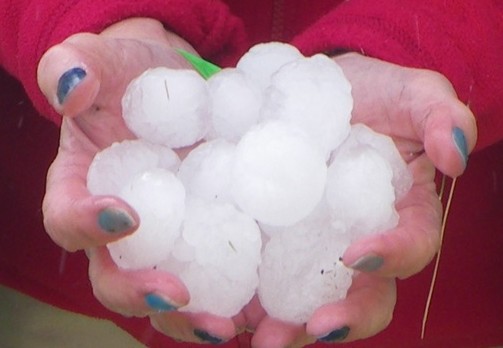
Above: Hail received in Lethbridge, AB on July 6/13
“Alberta Agriculture funded a five-year study from 1974 to 1978 called the Alberta Hail Project. The project, similar to the one funded today by ASWMA, seeded all potential hail clouds for five years. The project was continued until 1985 when it was stopped because of “inconclusive scientific data,” said Cam Hantiuk, media relations for the premier’s office.”
The lack of provincial regulation worries Louis Bauman, south of Sundre, who’s been following cloud seeding since the government’s involvement in the 1970s.
His brother Joseph, who has since passed away, fought with the government back in the late ’70s and early ’80s to stop the project. He said it wasn’t right that the government was meddling with the natural course of weather and said such activities were devastating for agriculture, livestock farming and recreation.
“Is it lawful in Alberta to change the natural course of the weather by physical and chemical intervention to produce artificially positive rain and hail storm in one part in order to prevent contingent rain and hail in another?” he wrote in an affidavit to the Red Deer Provincial Court in 1984.”
“Something isn’t quite right; something is going on,” Hofer told the Gazette last year. He’s lived in the Sundre area for the last 50 years and said he was hired to work in Penhold during the ’70s when the Alberta Hail Project was in full force.
Hofer said he was responsible for picking up hailstones to see if there had been any change in the size from the silver iodine. “We quit with it because it didn’t accomplish nothing. You can’t control nature. Cloud-seeding is just some fancy name for creating an electrical storm,” he said. He believes that the seeding only suppresses a storm until eventually it needs to be released. He used the example of a hailstorm on Aug. 2, 2009 that devastated the area. “It builds up and it builds up … until it breaks loose and gets worse.”
The cloud-seeding project with a $2 million annual budget is funded by more than 20 of Alberta’s top insurance firms that represent 90 per cent of all insured companies, said Krauss.
“Maybe the seeding will help Olds and Calgary by pre-emptying the clouds onto us, but what sort of reasoning is that, and how fair could that be?” asked Schroeder in a letter to the editor last year.
Above: July 6/13 – Alberta hailstorm leaving an unusual trail of hail, appearing as a deposited line. Are these the remnants of an aircraft cloud-seeding operation, during its linear flight of Silver iodide dispersing? Could this be what Hofer, Schroeder, and Bauman were referring to?
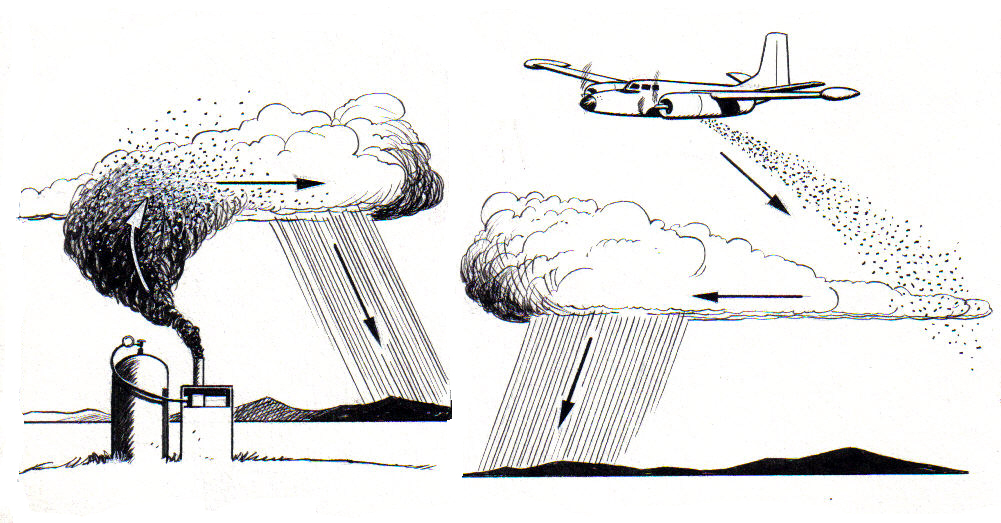
Above: There is more than than just aerial spraying. This is a ground-based flare tree used for ground cloud-seeding
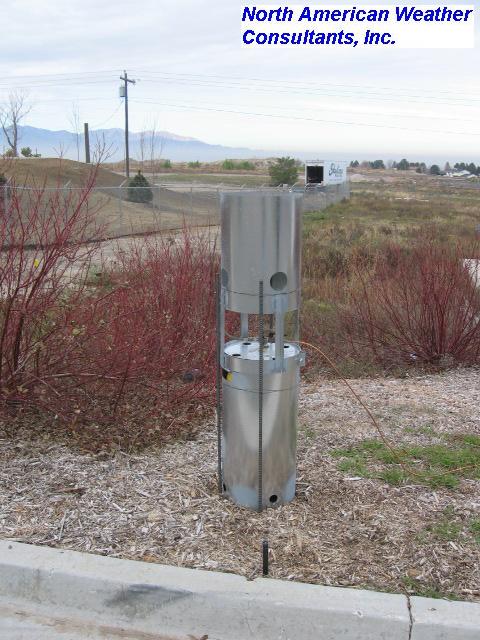
Above: Cloud Nucleating Generator (CNG) – A propane flame is used to vaporize the seeding solution, which is composed of silver iodide mixed in acetone. The vaporized silver iodide then re-crystallizes in the cold air, forming millions of tiny particles which are intended to serve as ice nuclei. Read more here.
Above: The science of cloud-seeding. We realize that it is not this simplistic, now is it?
Bisphenol-A (BPA) is a toxin used in the production of a variety of products, including certain paper products, plastic food packaging, plastic bottles, and the in the linings of canned goods. It’s on dollar bills and in the water we drink. Because of this, it is also found in our bodies, but it isn’t from exposure to these products directly. New research from the European Food Safety Authority (EFSA) affirms what many experts have already been saying—that the majority of the BPA found within us is coming from the foods we eat.
It’s the first in-depth analysis on BPA by the EFSA since 2006 and the first to look at both food and non-food sources of BPA exposure. The agency says, surprisingly, that it’s research has also shown that BPA exposure is less prevalent than previously thought. They are currently seeking feedback on their findings and will issue a second part to their research to be specifically focused on the human health risks of BPA.
The EFSA’s research applied two approaches: exposure modeling and urine analysis. Researchers assessed exposure to known sources of BPA including air, dust, food, toys, dental sealants, and thermal paper. Then, they analyzed the presence of BPA in study subjects’ urine samples.
“Exposure modelling involves the assessment of exposure to BPA through food and non-food sources (thermal paper, air, dust, toys, cosmetics, dental sealants) and routes (diet, inhalation and skin contact) in the EU population. This method allows for the estimation of exposure from all sources which could be identified and quantified individually.
Urinary biomonitoringdata (that is, levels of BPA found in the urine) were used to corroborate the Panel’s estimates of overall BPA exposure and to ensure no major source of exposure was missed.”
Some of the surprising findings from their research:
For infants up to 3 months, dietary exposure is estimated to be some 30 times lower than previously stated (135 ng/kg bw/day in 2013 compared to 4,000 ng/kg bw/day in 2006).
For adults, including women of child-bearing age, estimate for 2013 is about 11x lower than in 2006 (up to 132 ng/kg bw/day in 2013 compared to 1,500 ng/kg bw/day in 2006).
It could be that the research techniques have improved and we are getting a more accurate picture of BPA exposure now, or the research is flawed. Finally, the decrease could be explained by a growing awareness on the part of the public and manufacturers on the dangers of BPA. The second part of the research may provide greater insight into the changes.
BPA is a hormone-mimicking toxin that has been linked to increased breast cancer risk, increased incidence of obesity, accelerated maturation of girls, increased risk of diabetes, and fertility problems. A few years ago Canada became the first to ban BPA outright. Here in the U.S., the FDA recently moved to ban the substance in baby formula packaging.

 by Elizabeth Renter
 by Mike Adams, the Health Ranger
 by Joseph Cek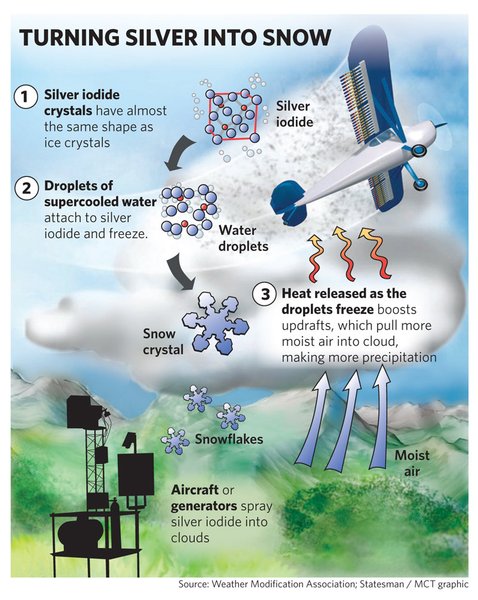




 Bisphenol-A (BPA) is a toxin used in the production of a variety of products, including certain paper products, plastic food packaging, plastic bottles, and the in the linings of canned goods. It’s on dollar bills and in the water we drink. Because of this, it is also found in our bodies, but it isn’t from exposure to these products directly. New research from the European Food Safety Authority (EFSA) affirms what many experts have already been saying—that the majority of the BPA found within us is coming from the foods we eat.
 PN
PN 