
We Should All Do Magic Mushrooms Today!
YouTube
November 5, 2011
(hat tip: Activist Post)
————-
related:
‘Magic mushrooms’ create positive mental and physical health benefits that can last a year (July 9, 2011)
Ecstasy does not wreck the mind, study claims (February 19, 2011)
Avatar: The Psychedelic Worldview and the 3D Experience (January 11, 2010)
‘Magic Mushrooms’ may ease obsessive compulsive disorder (January 3, 2007)
Hallucinogen in Mushrooms Creates Universal “Mystical” Experience (press release) (September 13, 2006)
Water Health Myths Exposed
Mike Adams
Natural News
Listen as the Health Ranger blasts recent fabricated research that tries to claim water has no health benefits and that people should drink soda instead of water.
Is your washing machine contributing to the ‘microplastic’ pollution problem in the world’s oceans?
Jonathan Benson
Natural News
October 31, 2011
(NaturalNews) Much of the clothing people wear today is made with polyester, acrylic, rayon, and various other synthetic textile materials. And a new study published in the American Chemical Society (ACS) journal Environmental Science & Technology has found that, when washed, such garments release high amounts of “microplastic” fibers that end up polluting the world’s oceans.
Scientist Mark Browne and a team of researchers from Ireland, Canada, the UK, and Australia discovered that thousands of tiny fiber bits are shed from clothes every time they are washed. In tests, a single garment released as much as 1,900 polyester or acrylic threads, which are typically smaller than a pinhead. And eventually, these fibers ended up washing out to sea.
A Flu Vaccine Timeline: The Recent History Revolving Around Vaccine Dangers
Mike Barrett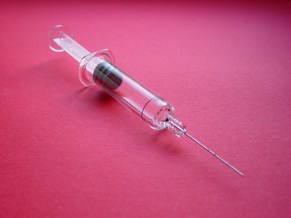
Activist Post
October 28, 2011
If you thought you were safe from the flu after receiving a flu vaccine, think again. It’s hard to keep up with all the false claims and corruption revolving around flu vaccination, but if you were to piece the massive puzzle together, everything may suddenly become crystal clear. Not only are people risking their health by subjecting themselves to the almighty prick, but it turns out that all of the effort is for nothing.
Convulsions in Children Ignite a Ban in Australia
Last year Australia noticed a lot of children being hospitalized after having convulsions triggered by the flu shot. Australian health authorities knew of these cases but continued to push the flu shot on every child. Irresponsibly, the health authorities allowed for more and more convulsions along with vomiting and dangerously high fevers. Finally, after having known of the convulsions and other health problem revolving around the flu vaccine, Commonwealth chief health officer Professor Jim Bishop took action and instituted a ban on the flu shot.
A Confirmed Link Between the Flu Vaccine and Killer Nerve Disease
In 2009 a staggering 50 percent of doctors refused the H1N1 flu vaccine due to the strong connection with adverse health concerns. Even though 50 percent of the doctors were not receiving the shot, many of them would still recommend the shot to their patients.
In 2010, government health chiefs confirmed a link between the H1N1-containing seasonal flu vaccination and the killer nerve disease known as Guillain-Barre Syndrome. But this information didn’t stop health officials from pushing the vaccine onto the population in 2010 and 2011. What’s more, the connection between Guillain-Barre Snydrome and flu vaccines has been alive since the 1970s.
‘The vaccines used to combat an expected swine influenza pandemic in 1976 were shown to be associated with GBS and were withdrawn from use,’ Prof. Elizabeth Miller, head of the HPA’s immunization department, wrote in the letter sent last month to neurologists.
Adding Narcolepsy to the List
Shortly after government health officials openly admitted the link between the H1N1 vaccine and deadly Guillain-Barre Syndrome, it was found that the H1N1 vaccine can also lead to narcolepsy. The World Health Organization (WHO) reported in Feburary of 2010 that 12 countries had been reporting on a suspected relationship between the development of narcolepsy and the H1N1 vaccine. The H1N1 vaccine is currently embedded into the traditional seasonal flu shot, which the WHO continues to recommend despite a number of organizations and health experts speaking out against its safety.
Despite these findings, though, the flu shot continues to be pushed on all Americans. As each year passes, the flu shot is being pushed harder than the year before. In 2010, 130.9 million people got the flu shot, an 8 million person increase from 2009. People are being urged by the Center for Disease Control (CDC) to get the flu shot every year. The CDC also urges parents to give their child the flu shot every year from the moment they turn 6 months of age.
Flu Vaccine Insert Admits the link to Deadly Nerve Disease, Paralysis, and Death
The link between Guillain-Barre Syndrome and the flu vaccine has been confirmed by studies, anecdotal evidence, and even the vaccine insert itself. The insert, detailing information about the Influenza A (H1N1) Monovalent Vaccine, details risks far beyond Guillain-Barre Syndrome. For all of the details you can read the insert yourself in PDF form.
Here are some of the conditions associated with the H1N1 vaccine, according to the insert:
- Facial edema.
- Immune system disorders
- Cardiovascular disorders
- Digestive disorders
- Diarrhea
- Nausea
- Vomiting
- Abdominal pain
- Blood and lymphatic disorders
- Local lymphadenopathy
- Transient thrombocytopenia
- Metabolic and nutritional disorders
- Loss of appetite
- Nervous system disorders
- Headache
- Dizziness
- Neuralgia
- Paraesthesia
- Febrile convulsions
- Guillain-Barré Syndrome
- Neuropathy (including neuritis)
- Paralysis (including Bell’s Palsy)
- Respiratory disorders
- Chest pain
- Cough
- Urticaria
- Rash (including non-specific, maculopapular, and vesiculobulbous)
Most Recent News | Flu Vaccine Shown to Be Completely Ineffective
New research brought to us by The Lancet shows some startling news regarding the true effectiveness of the flu vaccination. The study involved a control group of 13,095 adults who were not vaccinated. The group were watched to see if they caught the influenza virus, but 97 percent of them did not. Only 2.7 percent, or 357 people, of the non-vaccinated group ended up catching the virus. Another group of adults whom were vaccinated with a trivalent inactivated influenza vaccine ended up with 1.2 percent of them not catching the flu. The difference between the two outcomes is 1.5 people out of 100 which shows that the flu vaccine only prevents the flu in 1.5 out of every 100 adults injected with the flu vaccine.
While the media runs around “spreading the rumor” that flu shots are 60 percent effective, one would assume that 60 out of 100 people receive the flu based on those claims. The problem with this claim is that it’s wrong. Anyone who takes a crash course in college statistics knows how to skew data. Methods for exaggerating data range from manipulating the graph to using complex statistical algorithms to eventually reach the desired conclusion. In this case, the 60 percent effectiveness claim births from an ongoing equation which transforms the numbers properly. First, 2.73% is taken for the people who got the flu in the control group. That number is then divided into 1.18% which stands for the percentage of people who got the flu in the treatment group. The answer comes out to be 0.43. You are now able to say that 0.43 is 43% of 2.73 (control group people who got the flu) and make the claim 57% are protected by the flu vaccine.
Vaccines are often filled with harmful chemicals which lead to many of the health conditionslisted above. Many of these chemicals are inflammatory chemicals added to strengthen the vaccine. One main “ingredient” in vaccines which has been in the controversial spot light for quite some time is thimerosal. Thimerosal is a preservative used for injections coming from a multi-dose vial to prevent bacterial contamination. The problem is that thimerosal contains quite a bit of mercury which is concerning to many health professionals.
In 1999 studies began to surface showing that multi-dose vial vaccines, such as the MMR and hepatitis B vaccines, contained enough thimerosal to expose vaccinated children to 62.5 ug of mercury per visit to the pediatrician. This is one hundred times the dose considered safe by the Federal Environmental Protection Guidelines for infants!
Worse yet, some infants will receive doses even higher; because thimerosal tends to settle in the vial. If it is not shaken up before being drawn, the first dose will contain low concentrations of mercury and the last dose will contain enormously high concentrations. If yourbabyis the unlucky one that gets the last dose, serious brain injury can result… Health And Nutrition Secrets by Russell L Blaylock MD, page 166
Some of the other chemicals found in the flu vaccine as well as other vaccines are as follows:
- Aluminum: Also a neurotoxin, aluminum has been linked to Alzheimer’s disease [5] and other cognitive diseases [6].
- Formaldehyde: Among the 8 new substances to be added to the U.S. Department of Health and Human Services list of carcinogens.
- Antibiotics: Various forms include neomycin, streptomycin, and gentamicin.
- Triton X-100: A detergent that should not be injected into the human bloodstream.
Please visit Natural Society for more great health news and vaccine information.
5 Memory-Boosting Foods
Mike Barrett
Activist Post
October 29, 2011
The ability to store, retain, and recall information could possibly be one of the most important aspects of success. If you are unable to remember appointments, meetings, people’s names, or information in general, life will inevitably be a struggle to say the least.
With eating habits down in the dump and food being tampered with, it is quite difficult to attain the necessary vitamins and nutrients to improve memory. Thankfully, improving memory can be as simple as making some dietary alterations.
Skip Memory-Loss | Improving Memory by Changing what You Eat
If you’re consuming fast food, food made or brought to you by multi-national corporations, and processed food, then there is a good chance that your memory isn’t as strong as it could be.
Although memory-loss generally comes with old age, many people are suffering memory-loss while teenagers and young adults. The quest for improving memory doesn’t need so be so difficult.
As with almost all other health complications, the solution can be as simple as choosing the right foods.
Fish
human brain is made up of 60 percent fat. Fish contain healthy omega-3 fatty acids which have been shown to not only help with memory and overall brain function, but also aid in depression and brains disorders such as schizophrenia. Fish contain docosaexaenoic acid (DHA), which is important for the normal functioning of neurons. Eating fish, however, can often be a health concern due to high toxicity. To avoid this issue, you may want to try a combination of supplementation and eating fish to reduce some toxicity while still receiving the benefits.
Apples and Blueberries
Two fantastic foods to improve memory, as well as overall health, apples and blueberries contain a powerful phytochemical and antioxidant known as quercetin. Quercetin has been shown to protect against Alzheimer’s, as well as reverse aging, leading to a slowed escalation in age-related memory-loss. When consuming apples, it is important to note that much of the nutrients are found in the skin; quercetin is no exception.
Black Eyed Peas and Spinach
Folic acid has a direct relationship with memory and overall brain health. It has been shown to protect memory as well as make for faster processing of information and memory recall. One reason for folic acid’s effectiveness is due to it’s ability to lower blood levels of homocysteine, an amino acid shown to cause health complications in high amounts.
Change the Way You Live
If you are seeking to improve memory, do not ignore these foods. Although it is great to know how to improve memory through the consumption of specific foods, the ultimate goal should be to live an overall healthy lifestyle so that memory-loss doesn’t become an issue in the first place. Exercise regularly, eat plenty of raw fruits and vegetables, and avoid the disease-riddled food brought to you by mega-corporations.
Please visit Natural Society for more great health news and vaccine information.
BPA Leads to Fertility Defect in Offspring
Anthony Gucciardi
Activist Post
October 31, 2011
 Bishphenol a (BPA), the headline-topping chemical commonly found in plastics, cans, and food packaging has been tied to yet another negative condition — adversely affecting male genital development and subsequently targeting fertility rates.
If you have been following the latest BPA research, then it should be no surprise to you that BPA has been repeatedly linked to diabetes, breast cancer (with over 130 total studies), hyperactivity and depression, and countless other conditions.
BPA alters Anogenital distance, heavily tied to fertility in men
The study, which involved the World Health Organization Collaborating Center for Research in Human Reproduction, examined the effect of BPA on Anogenital distance (AGD).
AGD is the distance between the genitalia and the anus, and is biologically very important. AGD has been linked to fertility in males, making the affect of BPA on the male reproductive system quite significant.
Linked to both semen volume and sperm count, men with an abnormally short AGD (lower than the median around 52 mm (2 in) have seven times the chance of being sub-fertile as compared to those with a longer AGD.
This is particularly startling due to the fact that BPA has been found in 90% of babies’ cord blood.
Researchers examined 153 boys, 56 with parental occupational exposure during pregnancy and 97 without. After factoring in the weight and age of the boys using regular linear regression, the study found that parental occupational exposure to BPA during pregnancy was associated with shortened AGD in male offspring. What this means is that those who were exposed to high levels of BPA during pregnancy were found to birth offspring with AGD defects. But what about those who do not deal with BPA exposure through their occupation?
Outside of directly working with BPA-containing items, there are many other venues of BPA exposure that could be affecting your health:
- 95% of paper money contains BPA
- 18 out of 20 of the most popular food cans are laced with BPA
- Dental fillings and sealants
- Many canned products specifically marketed to children
- B Vitamins During Pregnancy & Nursing Protect Against Colon Cancer in Offspring
- The BPA Solution | How to Naturally Reverse the Effects
- Popular Plastic Chemical BPA Linked to Wheezing in Children
- This Common Chemical Linked to Allergies and Asthma
- Toxic Hormone-Mimicking BPA Now Linked to Diabetes
Please visit Natural Society for more great health news and vaccine information.
Cellphone Towers EMR Damaging Biological Systems of Birds, Insects, Humans
Anthony Gucciardi
Activist Post
October 25, 2011
The electromagnetic radiation (EMR) emitted from mobile towers is so powerful that it affects the biological systems of birds, insects, and even humans. The study, released by the environment ministry, called for the protection of flora and fauna by law.
‘The review of existing literature shows that the EMRs are interfering with the biological systems in more ways than one and there had already been some warning bells sounded in the case on bees and birds, which probably heralds the seriousness of this issue and indicates the vulnerability of other species as well,’ the study found.
In September of 2010, the ministry established a 10-member committee under Bombay Natural History Society (BNHS) with director Asad Rahmani to study the impact of cellphone towers on birds and bees. The group of experts reviewed 919 studies performed in India and abroad regarding the effects of cellphone towers on birds, insects, animals, wildlife, and humans.

 PN
PN 