
Banking culture breeds dishonesty, scientific study finds
By Kate Kelland, Health and Science Correspondent
LONDON Reuters
Nov 19 (Reuters) – A banking culture that implicitly puts financial gain above all else fuels greed and dishonesty and makes bankers more likely to cheat, according to the findings of a scientific study.
Researchers in Switzerland studied bank workers and other professionals in experiments in which they won more money if they cheated, and found that bankers were more dishonest when they were made particularly aware of their professional role.
When bank employees were primed to think less about their profession and more about normal life, however, they were less inclined to dishonesty.
“Many scandals..have plagued the financial industry in the last decade,” Ernst Fehr, a researcher at the University of Zurich who co-led the study, told reporters in a telephone briefing. “These scandals raise the question whether the business culture in the banking industry is favouring, or at least tolerating, fraudulent or unethical behaviours.”
Fehr’s team conducted a laboratory game with bankers, then repeated it with other types of workers as comparisons.
[…CONTINUE READING THIS ARTICLE]
[hat tip: Drudge Report]
VIDEO — Orgone Energy — A breakthrough that has already happened – GLOBAL BEM conference Nov 2012
Georg Ritschl
Mar 27, 2013
My presentation on Orgonite and orgone energy at the Global Breakthrough Energy Movement (BEM) conference in Nov 2012, Hilversum, Netherlands. See also http://orgoniseafrica.com for more information
The dark side of social media: Baroness Susan Greenfield says social media is rewiring our brains
news.com.au
Nov 17, 2014

Baroness Susan Greenfield is a brain scientist who says time spent with electronic devices is rewiring the brain. Source: News Limited
WE’RE all guilty of it. We’re at the pub, dinner table or enjoying a fun arvo with a group of friends and, instead of talking to the people we’re with, we’re preoccupied with our phones.
Facebook, Instagram, Twitter, video games and — dare I say it — news.com.au all provide endless distractions, as well as more opportunities to share, connect and spout your views than ever before.
But what effect is this having on us? More crucially, how is it affecting our brains?
Renowned British neuroscientist Baroness Susan Greenfield says modern technology is not only changing the way we interact, it is changing the wiring in our brain.
Professor Greenfield, who is also a member of the British upper house, says the hyper-connectedness of today’s youth gives them shorter attention spans and makes them more narcissistic, more susceptible to depression and anxiety, and less empathetic.
“The mid-21st century mind might almost be infantilised, characterised by short attention spans, sensationalism, inability to empathise and a shaky sense of identity,” she told parliament in 2009.
Her interest in the subject has culminated in her book Mind Change, released in August, in which she argues:
● That social media is affecting our sense of identity and ability to empathise,
● That video games are shortening attention spans, and increasing our recklessness and aggression, and
● That search engines are making us confuse information for knowledge.
Prof Greenfield says that the brain is exquisitely designed to adapt to its environment and, because technology has created a vastly changed social environment, it follows that our brains may also being changing in an unprecedented way.

What effect does our addiction to screens have on the way we relate to each other? Source: Supplied
She argues that today’s youth are developing in a world where relationships are increasingly formed online, which means we are less able to rehearse important social skills.
“Human beings love talking about themselves. Nature has developed body language so you can be sure that your interaction is reasonably secure, and you don’t make yourself vulnerable, through eye contact, gestures and pheromones,” Prof Greenfield told news.com.au.
But words — the primary means through which people interact on social media — make up only 10 per cent of the impact made when you meet someone.
“If you are not rehearsing those visual clues, you are going to be at a disadvantage,” Prof Greenfield said.
She said people were much more likely to insult others online because they didn’t have those cues.
“If someone says ‘I hate you’ to someone’s face, they may not say it again because the way it makes that person feel may be extremely hurtful, which can give the person who said it a physiological churning,” Prof Greenfield said.
“Those constraints are not available on social networking. You don’t have that handbrake … That’s what I’m concerned about.”
[…CONTINUE READING THIS ARTICLE]
[hat tip: Neil Sanders]
Don’t Replace Facebook, Disrupt It
 November 11, 2014 (Tony Cartalucci – LocalOrg) – Facebook is a problem. It is undoubtedly being used by special interests to manipulate and monitor entire populations both within the United States and well beyond. It represents a tool that in no way serves the people actually using it, and instead allows special interests to use the users. It is a dream global panopticon for the abusive dictators that run Western society and presume dominion over what they call an “international order.”
But in order to counter this threat, Facebook cannot simply be “replaced.” It specifically, and what it represents, must be disrupted entirely.
Facebook is a Skinner Box for Humans
Facebook has been at the center of several recent controversies that are increasingly leaving users disillusioned and in search of alternatives. At the center of these controversies is Facebook’s “news feed” feature. Ideally, news feed would work by showing on your timeline updates from those individuals and organizations you follow. There are two options for news feed – “most recent” and “top stories.” Facebook has decided to upend this feature by insidiously controlling what appears on your news feed regardless of which option you select.
Now, you will no longer receive regular updates from accounts you follow, and instead will see a “filtered” version determined by Facebook’s algorithms. Many Facebook users are unaware of this fact and are perplexed as to why they are no longer receiving regular updates from accounts they follow.
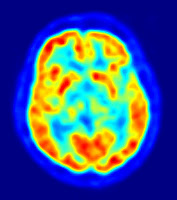
Brain decoder can eavesdrop on your inner voice
 Intellihub.com
Oct 30, 2014
As you read this, your neurons are firing – that brain activity can now be decoded to reveal the silent words in your head
New Scientist
TALKING to yourself used to be a strictly private pastime. That’s no longer the case – researchers have eavesdropped on our internal monologue for the first time. The achievement is a step towards helping people who cannot physically speak communicate with the outside world.
“If you’re reading text in a newspaper or a book, you hear a voice in your own head,” says Brian Pasley at the University of California, Berkeley. “We’re trying to decode the brain activity related to that voice to create a medical prosthesis that can allow someone who is paralysed or locked in to speak.”
When you hear someone speak, sound waves activate sensory neurons in your inner ear. These neurons pass information to areas of the brain where different aspects of the sound are extracted and interpreted as words.
Avoid These 5 Toxins for You and Your Child’s Health
by Elizabeth Renter
Natural Society
Aug 20, 2014
 When it comes to raising children, it’s difficult to know which products are best and the most safe. One look at the ingredients on a bottle of baby wash or shampoo and your head will spin from the unpronounceable long list of names. Many self-care and home products are loaded with chemicals known as endocrine disruptors, components that can interfere with the body’s natural hormones and do lasting damage. Avoiding these chemicals should be a top priority, especially for the safety of small children.
Endocrine disruptors, or EDCs, can increase or decrease the production of certain hormones, interfere with hormone signaling, bind to hormones, or imitate them. The Environmental Working Group has established a “Dirty Dozen” list of EDCs (which can be found here), but here are 5 that you’ll particularly want to be aware of in your baby’s products.
PODCAST — Red Ice Radio – Jon Rappoport – CDC Fraud: Vaccine Autism Link & Ebola
Red Ice Radio
Sept 26, 2014
Jon Rappoport is an investigative journalist, author and publisher of the website nomorefakenews.com. He has worked as an investigative reporter for 30 years, writing articles on politics, medicine, and health. Jon has delivered lectures and seminars on global politics, health, logic, and creative power to audiences around the world. He returns to give a complete run down on the recent CDC scandal. On August 25, 2014 the CDC published a press release defending its 2004 study on autism. Two days later CDC whistleblower publicly admits he and his co-authors cooked that study and committed fraud. The CDC was referring to the 2004 study whistleblower William Thompson co-authored, the study he admitted was fraudulent, the study he and his co-authors slanted to bury the connection between the MMR vaccine and autism. Jon discusses the complexities behind this huge cover-up. Actor, Rob Schneider also said he has a copy of “the original CDC report that was later suppressed and fraudulently changed.” Later, Jon talks about the striking similarity between the Thompson and Snowden stories. In this extended interview, we’ll continue discussing the vaccine as well as the length the CDC and government will go to obscure damage they’ve created. We’ll move on to talk about the Ebola epidemic. We’ll hear how the CDC is getting their numbers on cases and how it is being diagnosed. The CDC claims that there will be “1 million Ebola cases by January.” As Ebola victims fly into Western nations, Jon discusses what possible scenarios are being planned in the near future in Western nations.


 PN
PN 