
Shopping App Let’s You Boycott Monsanto and Others
 by Christina Sarich
Natural Society
May 17, 2013
A new free app called ‘Buycott’ allows you to use your Android or iPhone to analyze products and determine if you’re supporting Monsanto’s GMOs, Big Food companies who are damaging your health, or simply low quality products.
Have you ever wished you could own a parrot that sat on your shoulder and said, “squak! don’t buy that’ as you ambled through a grocery store or retail shop, purchasing something like toilet paper or a box of macaroni shells that would add to the financial coffers of companies like Monsanto, or billionaire industrialist David Koch? While your local grocery store probably wouldn’t let you get much further than the pet food aisle, you can now download an App for your Android or iPhone that tells you exactly when you are about to purchase GMO corn or Dixie Cups, a product of one of the many subsidiary companies of Koch Industries, Georgia Pacific.
Think of the new App, championed by Darcy Burner, a former Microsoft programmer and congressional candidate, like an all-knowing friend who reminds you not to get that pair of yoga pants because Dupont Chemical (also a subsidiary of Koch) makes the lycra in them, or to choose that bag of carrots over this one, because there is no GMO in it. If you thought fair trade hang-tags were a way to keep a watchful eye on corporate greed and environmental negligence, then get a load of the app that just scans a barcode and tells you if its ‘safe’ or not.
In fact, the App will trace the product all the way back to its ‘parent’ company, so you know exactly who you are supporting with your purchases. For example, did you know McNeil Nutritionals is a subsidiary of Johnson & Johnson, who has continued to put carcinogenic chemicals in their products for years?
Related: Top 10 GMOs to Avoid
Even better, you can scan your bag of chips and see if it was made by one of several dozen companies that gave millions of dollars to oppose mandatory labeling of GMO foods, and essentially, boycott them.
The app is similar to the many other initiatives currently mounting against Monsanto, as NaturalSociety Editor Anthony Gucciardi detailed a few days ago in his article ‘March Against Monsanto Is The Beginning of The End For Monsanto’.
Ivan Pardo, a 26-year old wiz kid is the freelance programmer who created the App. Thanks to inventions like Pardo’s, and the transparency his techno gadget offers, it will be harder for companies to hide behind their web of lies and convoluted oligarchy that allows just a few elite companies to rule the world with chemicals and illegal price-fixing schemes. If everything is rigged in favor of just a few billionaire industrialists, like Monsanto, then educating people about their purchases gives them the power to ‘vote’ with their dollar, and choose to purchase something else, instead. Such a simple way, to stick it to the companies who have been poisoning your food, dumping toxins in your air, water, and soil, and to support those who actually have the modicum of a moral compass when it comes to making a dollar (or several trillion) at the expense of millions of people’s health.
Let’s face it, remembering who the top 10 most unethical companies are when you are just trying to buy some dinner, or a new pair of pants shouldn’t mean you are inadvertently contributing to corporate greed and fraud. Fortunately, there’s an App for that, and it comes out in May, premiering on iTunes and the Google app store. Its free and its name is Buycott.
[Click HERE for other useful apps previously mentioned at Potent News.]
VIDEO — Blocking Blitz: ‘Assault on file sharing may radicalize internet users’
Russia Today
May 16, 2013
Downloading free music in the UK may soon be a thing of the past. British record labels have come up with a list of 25 services they’re willing to take to court to stop online bootlegging and save their shrinking profits. The leader of the UK’s Pirate Party, Loz Kaye, told RT the record industry’s using an outdated approach that could return to haunt it.
RT LIVE http://rt.com/on-air
Subscribe to RT! http://www.youtube.com/subscription_c…
Like us on Facebook http://www.facebook.com/RTnews
Follow us on Twitter http://twitter.com/RT_com
Follow us on Google+ http://plus.google.com/+RT
RT (Russia Today) is a global news network broadcasting from Moscow and Washington studios. RT is the first news channel to break the 500 million YouTube views benchmark.
VIDEO — Syria Bombed, Hill Jailed, Zero Dark CIA – New World Next Week
New World Next Week
May 9, 2013
Welcome back to http://NewWorldNextWeek.com – the video series from Corbett Report and Media Monarchy that covers some of the most important developments in open source intelligence news. This week:
Story #1: Unprovoked Attack On Syria – Israel Commits Egregious International Crime
http://ur1.ca/drsiw
19-Hour Internet Outage In Syria Ends
http://ur1.ca/drsj3
Israel Granted Oil Rights in Syria to Murdoch and Rothschild Two Months Ago
http://ur1.ca/drsj6
Stephen Hawking Joins Academic Boycott of Israel
http://ur1.ca/dqp0e
“House Of Cards” Chapter 2 Features Israeli/Palestinian Conflict
http://ur1.ca/drsjb
Story #2: Lauryn Hill Signs A Five-Song, $1 Million Deal With Sony To Avoid Prison
http://ur1.ca/drsje
Lauryn Hill Gets Three Months In Prison For Failing To Pay Taxes
http://ur1.ca/drsjh
Lauryn Hill Blames ‘Slavery’ as She’s Jailed for $500,000 Unpaid Tax Bill
http://ur1.ca/drsjm
Flashback: Lauryn Hill’s Taxing Problem – “Manipulated and controlled by a media protected military industrial complex”
http://ur1.ca/drsjq
Flashback Video: Why Dave Chapelle Quit
http://ur1.ca/drsjv
Flashback: Geithner Didn’t Pay Taxes
http://ur1.ca/drsjz
Story #3: CIA Requested ‘Zero Dark Thirty’ Rewrites, Memo Reveals
http://ur1.ca/dqup8
Flashback: Documents Show Admin Offered Access to Osama Filmmakers
http://ur1.ca/drsk7
NWNW Flashback: Obama’s Oscar
http://ur1.ca/drskb
Video: CNN Anchors Fake Satellite Interview In Same Parking Lot
http://ur1.ca/drskk
Visit http://NewWorldNextWeek.com to get previous episodes in various formats to download, burn and share. And as always, stay up-to-date by subscribing to the feeds from Corbett Report http://ur1.ca/39obd and Media Monarchy http://ur1.ca/kuec Thank you.
Previous Episode: Boston Bombings, Financial Pirates, Quake Swarms
http://ur1.ca/drskn
Trans-Pacific Partnership (TPP): Corporate Power-Tool Of The 1%
by Nile Bowie
NileBowie.blogspot.ca
April 2, 2013
One of the least discussed and least reported issues is the Obama administration’s effort to bring the Trans-Pacific Partnership agreement to the forefront, an oppressive plurilateral US-led free trade agreement currently being negotiated with several Pacific Rim countries. Six hundred US corporate advisors have negotiated and had input into the TPP, and the proposed draft text has not been made available to the public, the press or policymakers. The level of secrecy surrounding the agreements is unparalleled – paramilitary teams scatter outside the premise of each round of discussions while helicopters loom overhead – media outlets impose a near-total blackout of reportage on the subject and US Senator Ron Wyden, the Chair of the Congressional Committee with jurisdiction over TPP, was denied access to the negotiation texts. “The majority of Congress is being kept in the dark as to the substance of the TPP negotiations, while representatives of U.S. corporations — like Halliburton, Chevron, PhaRMA, Comcast and the Motion Picture Association of America — are being consulted and made privy to details of the agreement,” said Wyden, in a floor statement to Congress.
In addition to the United States, the countries participating in the negotiations include Australia, Brunei, Chile, Canada, Malaysia, Mexico, New Zealand, Peru, Singapore, and Vietnam. Japan has expressed its desire to become a negotiating partner, but not yet joined negotiation, partly due to public pressure to steer-clear. The TPP would impose punishing regulations that give multinational corporations unprecedented rights to demand taxpayer compensation for policies they think will undermine their expected future profits straight from the treasuries of participating nations – it would push the agenda of Big PhaRMA in the developing world to impose longer monopoly controls on drugs, drastically limiting access to affordable generic medications that people depend on. The TPP would undermine food safety by limiting labeling and forcing countries like the United States to import food that fails to meet its national safety standards, in addition to banning Buy America or Buy Local preferences.

In the private investor-state that the TPP is attempting to establish, foreign corporations can sue national governments, submitting signatory countries to the jurisdiction of investor arbitral tribunals, staffed by private sector attorneys. International tribunals could have authority to order governments to pay unlimited cash compensation out of national treasuries to foreign corporations and investors if new or existing government policy hinders investors’ expected future profits. The domestic taxpayer in each signatory country must shoulder any compensation paid to private investors and foreign corporations, in addition to large hourly fees for tribunals and legal costs. A good example of how this agreement neuters national sovereignty comes from Malaysia, which was able to recover from the 1997 Asian Financial Crisis more quickly than its neighbors by introducing a series of capital control measures on the Malaysian ringgit to prevent external speculation – the TPP’s proposed measures would restrict signatory nations from exercising capital controls to prevent and mitigate financial crises and promote financial stability.

Of the 26 chapters of the proposed TPP draft text, it is reported that only two chapters cover trade issues, related to slashing tariffs and lifting quotas. The TPP would obligate the federal government to force US states to conform state laws to over a thousand pages of detailed stipulations and constraints unrelated to trade – from land use to intellectual property rights – authorizing the federal authorities to use all possible means to coax states to comply with TPP rules, even by imposing sanctions if they fail to do so. According to leaked documents, US standards for property rights protection would be swept away in favor of international property rights standards, as interpreted by TPP’s unelected international tribunals, giving investors principal control over public land and resources “that are not for the exclusive or predominant use and benefit of the government.”

This article appeared on Counterpunch.
Nile Bowie is an independent political analyst and photographer based in Kuala Lumpur, Malaysia. He can be reached at nilebowie@gmail.com
The Return of ACTA: U.S. Dictating Canada’s Intellectual Property Laws
by Dana Gabriel
Be Your Own Leader
April 22, 2013
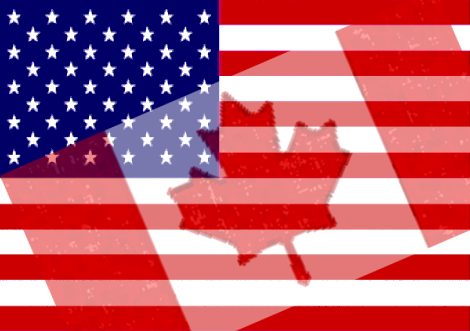
In March, the Canadian government introduced a bill that would bring about sweeping changes to its copyright and trademark laws. This includes giving more power to customs and border protection agents without any judicial oversight. The move is intended to prevent counterfeit goods from entering the country, but has been criticized for being less about protecting Canadians and more about caving to American demands. With the U.S. dictating global intellectual property standards, the new legislation represents the return of ACTA and would pave the way for Canada to ratify the controversial international treaty.
Over the years, the U.S. has been critical of Canada’s efforts in addressing trade in counterfeit goods and has been pressing for intellectual property reform. In the 2009 United States Trade Representative (USTR) Special 301 Report, Canada was placed on a priority watch list of countries that do not provide adequate intellectual property enforcement. As part of its 2013 Trade Policy Agenda, the USTR is now pushing Canada to comply with the Anti-Counterfeit Trade Agreement (ACTA). The multinational treaty is designed to standardize intellectual property laws around the world. Although it has been signed by a number of countries, including Canada, so far only Japan has ratified ACTA. It was the result of public pressure associated with risks to internet privacy and online freedom of speech which lead to ACTA being rejected by the European Parliament in July of 2012. At the time, many assumed that ACTA was dead, but it still remains a top priority for the U.S. and they are attempting to revive the discredited agreement by trying to get the six necessary ratifications for it to come into force. In an effort to satisfy U.S concerns, Canada recently announced legislation which is aimed at bringing them in line with ACTA.
Last month, the Conservative government introduced Bill C-56, also known as the Combating Counterfeit Products Act. Academic researcher and law professor Michael Geist explained how the proposed legislation would, “ensure that Canada is positioned to ratify ACTA by addressing border measures provisions. The core elements of the bill include the increased criminalization of copyright and trademark law as well as the introduction of new powers for Canadian border guards to detain shipments and work actively with rights holders to seize and destroy goods without court oversight or involvement.” He emphasized that, “Customs officials are not copyright and trademark experts, yet they may now be forced to assess infringement cases including determining whether any copyright exceptions apply.” Mike Masnick of techdirt acknowledged that, “For many years, Canada has strongly resisted U.S.-style copyright laws, despite tremendous pressure to do so. Watching them cave on ACTA is certainly a disappointment.” He went on to say, “It shows a Canadian government who doesn’t seem to care about what the public wants, but rather feels the need to kowtow to U.S. entertainment and pharmaceutical lobbying interests.”
The Council of Canadians have questioned whether the anti-counterfeiting bill, “is one of the conditions the U.S. government put on Canada joining the Trans-Pacific Partnership (TPP) trade negotiations.” The group is urging that intellectual property rights be taken out of the TPP and the Canada-European Union (EU) Comprehensive Economic and Trade Agreement (CETA) talks. There have already been attempts to use CETA negotiations to sneak in parts of ACTA. Stuart Trew, trade campaigner with the Council of Canadians wondered since, “The Harper government seems to have just collapsed in front of U.S. demands for border enforcement of Hollywood’s intellectual property rights despite the global controversy with ACTA. Can we expect Harper to bend this easily to European demands in CETA and U.S. demands in the TPP that will increase the price of drugs and undermine access to affordable medicines?” ACTA also favours Big Pharma with patent protections that would limit generic competition and would lead to higher drug costs.
On March 20, the USTR officially notified Congress of its intention to enter into negotiations with the EU on a Transatlantic Trade and Investment Partnership (TTIP) agreement. In the letter, they also outlined specific goals in different areas such as intellectual property rights. As part of the transatlantic talks, the USTR, “Seek to obtain, consistent with U.S. priorities and objectives, appropriate commitments that reflect the shared U.S.-EU objective of high-level IPR protection and enforcement, and to sustain and enhance joint leadership on IPR issues.” A Civil Society Declaration signed by European and U.S. groups is insisting that the upcoming negotiations, “exclude any provisions related to patents, copyright, trademarks, data protection, geographical indications, or other forms of so-called intellectual property. Such provisions could impede our rights to health, culture, and free expression and otherwise affect our daily lives.” Some have warned that the TTIP could be used as a way to implement ACTA through the backdoor.
ACTA is part of the international agenda of patent, trademark and copyright lobbies. The agreement favours big businesses over individual innovators and creators. It was designed to protect the interests of multinational corporations at the expense of fundamental civil rights. ACTA is being used by the U.S. to pressure other countries into adopting a new global standard for intellectual property enforcement. The supranational treaty would impose draconian laws which threaten the sovereignty of member nations.
Related articles by Dana Gabriel:
Final Push for CETA and the Coming NAFTA-EU Free Trade Zone
Growing Opposition to the Canada-EU Trade Agreement
Using the TPP to Renegotiate and Expand NAFTA
U.S.-EU Trade Deal is the Foundation For a New Global Economic Order
Dana Gabriel is an activist and independent researcher. He writes about trade, globalization, sovereignty, security, as well as other issues. Contact: beyourownleader@hotmail.com Visit his blog at Be Your Own Leader
VIDEO — 4/24/2013 — Dutchsinse Website deemed “UNSAFE” by Facebook — Censorship of Experiments [video]
 Dutchsinse
April 24, 2013
Upon uploading PROOF regarding a controversial scientific theory — literally the moment it hit facebook — my site became (quote facebook) …. “UNSAFE”.
Heres the first post of many to be blocked:
Microwaves can induce a tornado — tests done in the lab / proof: BLOCKED
HAARP rings direct hit: BLOCKED
Fracking in Oklahoma : BLOCKED
Can you believe it? A site dedicated to earth changes, weather, geoengineering, earthquakes, and space anomalies —- being called UNSAFE? Labelled a spam? REQUIRING PASSWORDS TO SHARE?????
Almost seems like some people don’t want this to get out… I wonder why?!
🙂
————-
Below are several posts with explanations on the theory of NEXRAD RADAR pulses heating the atmosphere, causing severe weather:
http://sincedutch.wordpress.com/2013/…
http://sincedutch.wordpress.com/2013/…
http://sincedutch.wordpress.com/2012/…
———–
past RADAR pulse / ‘HAARP ring’ / Scalar Square events documented here:
http://sincedutch.wordpress.com/2012/…
ACLU: CISPA Is Dead (For Now)

Sen. Jay Rockefeller says CISPA’s passage was “important,” but its “privacy protections are insufficient.”
by Jason Koebler
US News
April 25, 2013
CISPA is all but dead, again.
The controversial cybersecurity bill known as the Cyber Information Sharing and Protection Act, which passed the House of Representatives last week, will almost certainly be shelved by the Senate, according to a representative of the U.S. Senate Committee on Commerce, Science and Transportation.
The bill would have allowed the federal government to share classified “cyber threat” information with companies, but it also provided provisions that would have allowed companies to share information about specific users with the government. Privacy advocates also worried that the National Security Administration would have gotten involved.
[READ: U.S. Military Writes Rules on Cybersecurity While Chinese Hacks Skyrocket]
“We’re not taking [CISPA] up,” the committee representative says. “Staff and senators are divvying up the issues and the key provisions everyone agrees would need to be handled if we’re going to strengthen cybersecurity. They’ll be drafting separate bills.”
Sen. Jay Rockefeller, D-W.V., chairman of the committee, said the passage of CISPA was “important,” but said the bill’s “privacy protections are insufficient.”
That, coupled with the fact that President Barack Obama has threatened to veto the bill, has even CISPA’s staunchest opponents, such as the American Civil Liberties Union, ready to bury CISPA and focus on future legislation.
[hat tip: Michael Yung Jai]

 PN
PN 