
VIDEO — History Repeat: Eastern Libyan province declares itself an autonomous region
RT
November 4, 2013
A province in Eastern Libya now wants to go it alone – citing weak central government – it has declared itself an autonomous region. The area is home to 60 percent of the country’s oil production and has been blocking supplies since the summer. Tripoli has rejected the declaration but the government has so far failed to appease the rebels. For more on this let’s now cross live to Paolo Raffone – analyst and expert on the Middle East.
RT LIVE http://rt.com/on-air
Subscribe to RT! http://www.youtube.com/subscription_c…
Like us on Facebook http://www.facebook.com/RTnews
Follow us on Twitter http://twitter.com/RT_com
Follow us on Instagram http://instagram.com/rt
Follow us on Google+ http://plus.google.com/+RT
RT (Russia Today) is a global news network broadcasting from Moscow and Washington studios. RT is the first news channel to break the 1 billion YouTube views benchmark.
VIDEO — Charged Atmosphere: Sparks fly at Morsi trial between supporters & journos
RT
November 4, 2013
The trial of Egypt’s ousted president Mohammed Morsi has been adjourned until January next year – the former leader is in court on charges of inciting the killing of protesters in December last year. Hundreds of Islamist supporters have gathered outside the court in Cairo, amid a heavy police presence. RT’s Paula Slier is joined by our correspondent Bel Trew who was at the hearing. Read More: http://on.rt.com/5pxops
RT LIVE http://rt.com/on-air
Subscribe to RT! http://www.youtube.com/subscription_c…
Like us on Facebook http://www.facebook.com/RTnews
Follow us on Twitter http://twitter.com/RT_com
Follow us on Instagram http://instagram.com/rt
Follow us on Google+ http://plus.google.com/+RT
RT (Russia Today) is a global news network broadcasting from Moscow and Washington studios. RT is the first news channel to break the 1 billion YouTube views benchmark.
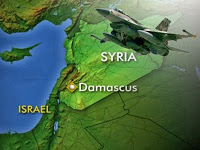
Confirmed: Israeli Attack on Syria Air Defense Facility
 by Brandon Turbeville
Activist Post
October 31, 2013
Update: RT is now reporting that an Obama administration official has confirmed to CNN that this was in fact an Israeli attack. There is still no comment from the Syrian or Israeli government. (Source)
On the heels of a reported chemical attack committed by the death squads on the Syria/Turkey border, a massive explosion has completely destroyed a Syrian air defense base in Snobar Jableh, Syria which is located near Latakia, a port city on the coast of the Mediterranean. Snobar Jableh is just south of Latakia.
The attacks allegedly were to have taken place on Wednesday night.
Although no one has publicly claimed responsibility for the explosion, both Syrian and Lebanese media are attributing the attack to Israeli forces. Even Saudi-owned Al-Arabiya is now reporting Israeli responsibility for the attacks, citing anonymous sources.
Al-Arabiya also claims that the target of the attacks were two shipments of SA-8 Surface-To-Air missiles slated for delivery to Hezbollah. The organization claims that the two targets were successfully destroyed.
Syrian news agency Dam Press is reporting that the facility was indeed heavily damaged but that there were no injuries. Business Insider claims that a Syrian security official has confirmed the attack.
However, Voice of Russia reports that Syria Special Services are denying the destruction of the base. VOA quotes a representative of Syrian intelligence services saying that “It is a lie and a provocation.”
The conflicting nature of the official responses could be attributed to the fact that, while the attack did indeed take place, the level of damage was not as severe as that claimed by death squads and Western/Israeli media outlets.
Nevertheless, the targets appear to have been relatively sophisticated missiles housed at the facility. As Yasser Okbi of Ynetnews writes,
Channel 2 News reported that the attack’s target was a S-125 surface-to-air missiles battery.
Satellite images of the area obtained by Channel 2 show the Russian-made Neva missiles, as well as a SA-3 missile battery, that also includes a command center with a radar to track the missiles’ targets and broadcasting anthenas to track the missiles as they are launched. The missiles have a range of 35km. and a 70k. warhead.
Lebanese media has reported that six planes belonging to the Israeli Air Force flew over Ayta Ash Shab, Bint Jbeil, and Marjayoun located in southern Lebanon during the night.
These reports appear to be based an official press release from the Lebanese military and assert that “the airplanes entered Lebanese airspace at around 1:40 P.M. and circled over various places before leaving over the Mediterranean Sea near Tripoli and Naqoura at 5 P.M.”
As Business Insider reports, eyewitnesses noticed an suspicious amount of aircraft activity shortly before the blast. As Michael Kelley writes,
“During the night, we noticed much aircraft activity,” an eyewitness told a Lebanese Al-Mustaqbal news outlet. “At a certain point, we were woken up by the sound of blasts and we saw a large fire and many explosions at the agricultural institute. Military and security forces arrived at the scene, put out the flames, and closed off the entire area for kilometers.”
In addition, reports are also suggesting that the missiles which hit the Syrian Air Defense facility came from the sea.
Yet, while claims over Israeli responsibility for the attack can, at this point, only be considered speculation, all evidence does seem to point in the direction of Israel. Indeed, the track record of the Israelis lends a great deal of credence to the charges.
It is important to remember that Israel has launched attacks against Syrian forces and military convoys on at least four different occasions during the course of the current crisis.
In addition, it is generally understood that Israel was responsible for an attack on a shipment of missiles that were on their way from Syria to Lebanon last week, although the exact location – whether on Syrian or Lebanese soil – is still uncertain.
Recently From Brandon Turbeville:
- The Propaganda Narrative of a Peaceful Muslim Brotherhood
- New Rebel Chemical Weapons Attack in Syria
- Local Departments Fortify Police State With Armored Personnel Carriers
Brandon Turbeville is an author out of Florence, South Carolina. He has a Bachelor’s Degree from Francis Marion University and is the author of six books, Codex Alimentarius — The End of Health Freedom, 7 Real Conspiracies, Five Sense Solutions and Dispatches From a Dissident, volume 1 and volume 2, and The Road to Damascus: The Anglo-American Assault on Syria. Turbeville has published over 275 articles dealing on a wide variety of subjects including health, economics, government corruption, and civil liberties. Brandon Turbeville’s podcast Truth on The Tracks can be found every Monday night 9 pm EST at UCYTV. He is available for radio and TV interviews. Please contact activistpost (at) gmail.com.
Obscuring the Details: A Panoramic Look at America’s Case Against Syria
 by Mahdi Darius Nazemroaya
Global Research
October 13, 2013
The US federal government and the various agencies, media organizations, individuals, foreign governments, non-governmental organizations, lobbies, forces, and other entities that are tied to it have done everything in their power to obscure the details involving the chemical attacks that took place in Syria on August 21, 2013. The aim has been to justify the US-led foreign campaign that was launched against Syria in 2011 by making the Syrian government appear culpable of grievous crimes. The chemical attack on Ghouta has now come to represent the crux of the matter.
From the very start there was double-speaking coming from Washington and its cohorts about what happened in Ghouta. The Obama Administration and America’s allies deliberately ignored that chemical weapons were used in Syria prior to August 21, 2013. They have pretended that the United Nations investigation team that had arrived in Syria when chemical weapons were used in Ghouta had just stumbled there coincidentaly or with the purpose of «inspecting» the Syrian government’s chemical weapon depots.
Ignoring the Original Mandate of the UN Investigators
In reality, the UN team that arrived in Syria in August was not a team of weapons inspectors. It was a team of «investigators.» Even more importantly, the Syrian government had invited the UN investigation team to Syria in March 2013. This was because the insurgents had launched chemical attacks on March 19, 2013. The US and its allies tried to blame Syria, but they were embarrassingly contradicted by Carla Del Ponte, one of the UN investigators responsible for Syria, that said all the evidence pointed to the insurgents and not the Syrian government. Although she backed her conclusion with facts, Del Ponte was dismissed by the US, and NATO even abnormally took the time to make a statement against here. Moreover, the insurgents were even caught trying to sneak sarin gas into Syria from Turkey by Turkish security forces in May 2013.
Because the insurgents were behind the chemical attacks in March 2013, Syria’s government originally wanted the UN investigators to have the authority and mandate to officially assign blame on which party used the chemical weapons. The US, however, put all types of obstacles in place to prevent the UN from issuing a report that the US-supported insurgents were using chemical weapons. It was the US, Britain, and France that prevented an UN investigation that could assign responsibility for any chemical weapon attacks from taking place. Instead they wanted a politicized inspection team that would try to demonize Syria and write reports against Damascus. This led to a deadlock in the United Nations over the type of team that the UN would send to work in Syria. A settlement was eventually reached. The US and its allies eventually reduced the mandate of the UN inspectors to one of only determining if chemical weapons were used.
The United Nation’s team even spells out the fact that they had originally entered Syria to investigate the March 2013 chemical attacks all in their September 2013 report’s Letter of Transmittal signed by Ake Sellstrom, the head of the UN mission, Scott Cairns, the head of the OPCW (Organization for the Prohibition of Chemical Weapons) component of the UN mission, and Maurizio Barbeschi, the head of the World Health Organization (WHO) component of the UN mission. The UN team states the following on the report’s third page: «Having arrived in the Syrian Arab Republic on 18 August 2013, we were in Damascus on the 21 August preparing to conduct on-site inspections in connection with our investigation into the allegations concerning the use of chemical weapons in Khan al-Asal and in Sheik Maqsood and Saraqueb. Based on several reports of allegations on the use of chemical weapons in the Ghouta area of Damascus on 21 August 2013, you instructed us to focus our investigation efforts on the Ghouta allegations. We, therefore, proceeded to conduct on-site inspections in Moadamiyah in West Ghouta and Ein Tarma and Zamalka in East Ghouta».
Cooked US Intelligence and Implausible White House Stories
The narrative that the US government and its allies present about Ghouta is contradictory to logic and highly implausible. Added to the fact that the US has a track record of lying to create pretexts for aggression, Washington’s claims should be heavily scrutinized. So should the same group of non-governmental organizations that have consistently backed American wars and conjured instant reports to justify US foreign policy and war.
President Obama and John Kerry claimed that the Syrian military used chemical weapons while it was advancing militarily in Ghouta. This is contrary to any procedure that would be followed by an organized military force. An advancing military would not gas an area when it was entering it with its forces. Obama and Kerry might as well have claimed that the Syrian military had decided to reduce the number of its own troops by killing them.
Furthermore, there was no tactical need to use chemical weapons in Ghouta whatsoever. Ghouta did not have a large amount of anti-government fighters. Nor was Ghouta under the full control of the insurgents. Despite being in worse situations, the Syrian military never bothered using chemical weapons earlier in the conflict when things were dire for the Syrian government.
On the contrary, using chemical weapons would be a self-defeating and suicidal move by the Syrian government. Why would the Syrian government use chemical weapons when the combined UN team of OPCW and WHO investigators arrived in Syria to investigate the use of chemical attacks? Moreover, why would the Syrian military decide to use chemical weapons unnecessarily?
No evidence has been provided that the Syrian government was responsible for the chemical attack on Ghouta. On the contrary the US has only made claims and a series of contradictory statements. Using cooked Israeli evidence, Washington has claimed that the orders to use chemical weapons were intercepted, but has failed to provide the transcripts or to give any names of Syrian officials. In its own intelligence report the US government has also said that it knew in advance that the chemical attacks were going to happen. If the US government is to be believed, this would mean that the Obama Administration did not mention it and did nothing to prevent the use of chemical weapons from happening.
It turns out that the US government was given some type of advanced warning by the Iranian government about a chemical attack in Syria. The warning, however, was that the insurgents planned on using chemical weapons. This has been matched by statements from insurgents themselves that Saudi Arabia had provided the chemical weapons to the insurgents. Russian officials have also assessed that the chemical attacks in Ghouta were part of an intelligence operation conducted by Saudi Arabia.
VIDEO — Interview With The Syrian Electronic Army
Syrian Girl
October 3, 2013
Translated into english The first in person interview with the most powerful hacking organisation in the world
Increasing Data Collection and Surveillance in the North American Homeland
Be Your Own Leader
October 15, 2013
By Dana Gabriel

Some of the corporate interests that are steering the U.S.-Canada Beyond the Border integration agenda are not quite satisfied with its progress so far and they would like the implementation process to be accelerated. The bilateral initiative which was launched almost two years ago promotes a shared vision for perimeter security. It seeks to improve information sharing between security agencies. Under the agreement, both countries are moving towards a coordinated entry/exit system and are developing a harmonized cargo security strategy. In addition, the U.S. and Canada are strengthening integrated cross-border intelligence sharing and law enforcement operations. Canada’s own electronic eavesdropping agency is also working hand and hand with the NSA. They are both increasing data collection and surveillance in the North American Homeland.
Minister of Transport Lisa Raitt gave a speech at the Association of Canadian Port Authorities annual conference in August. She stated that, “Ensuring the security of our transportation systems is key to strengthening the Canada-U.S. trade relationship. To build prosperity through trade, businesses and governments on both sides of our shared border must have confidence that our transportation systems will work together to meet our mutual security needs. That is why Canada and the United States are working closely together to implement the Beyond the Border Action Plan.” While she didn’t reference the Maritime Commerce Resilience Project by name, Raitt acknowledged that the U.S. and Canada are, “developing a joint cross-border approach to help maritime commerce recover faster after a major disruption.” This would include a significant natural disaster or terrorist attack that impacts North America. She also mentioned a pilot program underway at the Port of Prince Rupert which is part of efforts to harmonize the cargo screening process between the U.S. and Canada. Both countries continue to advance this agenda through the Integrated Cargo Security Strategy, a key component of the Beyond the Border deal.
The Canadian Council of Chief Executives (CCCE) is an influential organization that lobbies the government on behalf of Canada’s largest corporations. Throughout the years, they have tirelessly pushed for deeper continental integration. In a letter sent to Prime Minister Stephen Harper, John Manley, President and CEO of the CCCE lays out what some of the Conservative Party’s priorities should be in the next session of parliament. As far as the North American partnership goes, the CCCE called on Canada, the U.S. and Mexico to further strengthen and renew their trilateral relationship. This includes forging a North American energy advantage through projects such as the Keystone XL pipeline which it noted was, “An essential step is the development of a comprehensive strategy to expand and enhance cross-border energy infrastructure.” The CCCE’s letter to Prime Minister Harper also stressed that, “The Canada-U.S. Beyond the Border and Regulatory Cooperation initiatives that you helped launch two years ago hold much promise, although so far tangible benefits have been few and far between.” In other words, big business who have to most to gain from these agreements want to speed up the whole process of North American integration.
At the end of June, the Department of Homeland Security and the Canada Border Services Agency began Phase II of the Entry/Exit System, a commitment of the Beyond the Border action plan. The project builds on Phase I which involved collecting and exchanging biographic information at four selected land border crossings. Phase II has been expanded to include the exchange of biographic entry data collected from third-country nationals and permanent residents of Canada and the U. S. at all common ports of entry. In 2014, they will also start sharing biometric information at the border. Both countries are moving closer to fully implementing a biometric entry and exit data system. They are laying the groundwork for the creation of a North American biometric ID card. The U.S. and Canada are further merging databases and are expanding surveillance and intelligence gathering activities.
On July 12, Montana Democratic Senator Jon Tester chaired the hearing, Protecting our Northern Border: Enhancing Collaboration and Building Local Partnerships. The meeting emphasized how, “Securing such an expansive border requires a multi-faceted approach. In addition to a smart and effective deployment of technology and manpower, we must also be doing everything we can to ensure federal, local, state and Canadian partners are working very closely and collaboratively.” It also described other, “opportunities for collaboration and cost-sharing, including stronger partnerships between agencies, local officials, tribes and the private sector.” Before the hearings took place, Senator Tester talked to the CBC about the prospect of deploying a high-tech cable sensor along the U.S.-Canada border. This would include the installation of the Blue Rose in-ground perimeter defense security system. The low-level surveillance radar is based on fibre optic technology which is used, “to detect sound and vibration transmitted by intruders such as people walking or running and moving vehicles near the sensor.” The increased militarization of the northern border is forcing Canada to further comply with U.S.-style security measures.
A controversial U.S.-Canada cross-border law enforcement initiative which is essentially a land based version of the Shiprider program has been delayed due to legal ramifications. Under the Beyond the Border perimeter security plan, the Next Generation pilot project which would create integrated teams in areas such as intelligence and criminal investigations was scheduled to be launched in the summer of 2012. According to an RCMP memo, the U.S. is demanding that its agents taking part in the bilateral undertaking be exempt from Canadian law. This has raised serious concerns about transparency, accountability and responsibility. It is yet another attempt by the U.S. to chip away at Canadian sovereignty. An article by Michael Harris warned that, “Once you give the U.S a platform to carry weapons and perform investigative duties inside our country, how far will they push the next envelope?” The pilot project is part of the process of further acclimating U.S. policing activities in Canada. As part of a North American security perimeter, both countries continue to expand the nature and scope of joint law enforcement operations, along with intelligence collection and sharing.
An example on how North America is being increasingly viewed a single entity occurred several months back during a Senate Judiciary Committee meeting. California Democratic Senator Dianne Feinstein displayed a map that was designed by the National Security Agency (NSA) which showed domestic and global terror activity that it has allegedly helped disrupt. When it came to North America, the diagram identified Canada and Mexico as part of the U.S. Homeland. While the move garnered a lot of speculation, RT pointed out, “Whatever the reason for the NSA’s creation of the Homeland, the spy agency has already been condemned for failing to respect the sovereignty of other nations through its extensive data-collection efforts.” The NSA is also working in close partnership with Communications Security Establishment Canada (CSEC). An article from Global Research explained that, “the two organizations have integrated personnel—i.e. swap personnel to improve seamless collaboration. They also share Internet surveillance programs.” It went on to say that the NSA, “shares information on Canadians’ communications with Canada’s national security apparatus in exchange for information that CSEC gathers on Americans.”
The never ending war on terrorism is being used to justify the huge police state security apparatus being assembled. This includes the militarization of the northern border and the creation of a North American security perimeter. In the name of national security, there has been a steady erosion of civil liberties and privacy rights in both the U.S. and Canada. Our freedoms are under assault. The amount of information being collected and shared on all aspects of our daily lives has expanded and is being stored in massive databases. Sweeping new surveillance powers targeting terrorists and other criminals are being increasingly turned against those who are critical of government policy. There is a concerted effort to demonize political opponents, activists, protesters and other peaceful groups. We are witnessing the criminalization of dissent where those who oppose the government’s agenda are being labelled as terrorists and a threat to security.
Related articles by Dana Gabriel:
Canada Being Assimilated Into a U.S. Dominated North American Security Perimeter
U.S.-Canada Harmonizing Border Security and Immigration Measures
U.S.-Canada Integrated Cybersecurity Agenda
The Pretext for a North American Homeland Security Perimeter
Dana Gabriel is an activist and independent researcher. He writes about trade, globalization, sovereignty, security, as well as other issues. Contact: beyourownleader@hotmail.com Visit his blog at Be Your Own Leader
VIDEO — Massive blackout in Syria after rebels blast gas pipeline
RT
October 23, 2013
A gas pipeline was attacked near Damascus causing the capital and the southern part of Syria to suffer a blackout, SANA news agency reports. The electricity minister blamed the blast on rebels. READ MORE: http://on.rt.com/r3bt4d
RT LIVE http://rt.com/on-air
Subscribe to RT! http://www.youtube.com/subscription_c…
Like us on Facebook http://www.facebook.com/RTnews
Follow us on Twitter http://twitter.com/RT_com
Follow us on Instagram http://instagram.com/rt
Follow us on Google+ http://plus.google.com/+RT
RT (Russia Today) is a global news network broadcasting from Moscow and Washington studios. RT is the first news channel to break the 1 billion YouTube views benchmark.


