
Security cameras to be phased in on OC Transpo buses
by Alex Boutilier
Metro
June 19, 2013

OC Transpo’s buses are among the newest in North America. Plans to slowly phase in security cameras with the purchase of new vehicles could mean a very long delay before cameras become a reality. (photo credit: Metro / Alex Boutilier)
[Potent News editor’s note: This is a waste of money. When I was growing up, cameras weren’t all over the place and people didn’t feel the need to install them everywhere… and I’m only 27. We are experiencing a rapid increase in surveillance in a number of ways.]
The city’s transit commission voted to slowly phase in closed-circuit TV cameras on all OC Transpo vehicles Wednesday.
But some citizen commissioners worried that the incremental approach — installing cameras on new OC Transpo buses as they are purchased — is putting budgetary concerns ahead of passenger safety.
The commission voted 5-3 for OC Transpo’s recommended approach, which would put CCTV cameras on the revamped O-Train, the Confederation Line, and new buses as they’re acquired. OC Transpo’s fleet is one of the newest in North America, however, so the cameras won’t be coming any time soon.
Revealed: British intelligence agency secretly accesses the world’s phone calls, internet traffic
By Madison Ruppert
Editor of End the Lie
June 21, 2013
In yet another revelation of widespread spying, we have now learned that the British intelligence agency GCHQ has secretly gained access to the massive network of cables carrying the world’s phone calls and internet traffic.
Furthermore, we now know that the agency has begun processing the immense amount of personal information provided by the streams, which it then shares with its partner, the U.S. National Security Agency (NSA).
The NSA itself has been under fire after the PRISM program – and the related Boundless Informant software – was revealed by leaker Edward Snowden, who also leaked the document revealing the GCHQ program to the Guardian.
The revelations have been so damaging that Obama was forced to attempt to defend the program in Germany despite strong opposition. We also have seen the Director of National Intelligence lie under oath while Attorney General Eric Holder claimed the leaks were “extremely damaging” to national security. All of the government’s language used when talking about the program has been deceptive at best.
While some in Washington D.C. have been working to get more information about this program and the legal authorization behind it, the majority of the Senate skipped out on a major hearing.
Now it seems that whereas previously it looked like it was the NSA collecting most of the data and sharing it with GCHQ, the British intelligence agency is running a massive collection program of their own.
“It’s not just a US problem. The UK has a huge dog in this fight,” Snowden said to the Guardian. “They [GCHQ] are worse than the US.”
GCHQ’s two programs, called Mastering the Internet and Global Telecoms Exploitation, are focused on gathering up as much information as possible without any public debate or even acknowledgment.
As part of an operation codenamed Tempora, the agency has for around 18 months been able to “tap into and store huge volumes of data drawn from fiber-optic cables for up to 30 days so that it can be sifted and analyzed,” according to the Guardian.
This results in communications between completely innocent people being accessed and processed, along with those of targeted suspects.
The variety of information is staggering: phone call recordings, email message content, Facebook entries and the history of anyone’s access to websites.
Somehow, all of this is deemed legal, according to the Guardian, despite the fact that the warrant system was supposed to restrict interception to a specified range of targets.
An unnamed source “with knowledge of intelligence” claimed that the data was actually collected legally under a system of safeguards – much like the claims made by individuals in the U.S. government – and “had provided material that had led to significant breakthroughs in detecting and preventing serious crime.”
Yet when Americans were given guidelines for the use of the data collected through this system, they were told in a legal briefing by GCHQ lawyers, “We have a light oversight regime compared with the U.S.”
Given what we now know about the U.S. oversight system, that should be troubling. Even more so when we realize that Americans were told it was “your call” to judge the necessity and proportionality of what they were allowed to look for.
According to the Guardian, “a total of 850,000 NSA employees and US private contractors with top secret clearance had access to GCHQ databases.”
These databases must be massive considering the fact that the documents reveal that GCHQ was handling some 600 million “telephone events” every single day.
The agency had also tapped over 200 fiber-optic cables and was able to simultaneously process data from no less than 46 cables at a time.
Since a single cable carries 10 gigabits per second in data, “the tapped cables had the capacity, in theory, to deliver more than 21 petabytes a day – equivalent to sending all the information in all the books in the British Library 192 times every 24 hours,” according to the Guardian.
If that wasn’t concerning enough, GCHQ is constantly tapping more cables and the storage facilities for the data are in a state of constant expansion as well. The aim is to be able to process thousands of gigabits at a time.
The massive Tempora program “has been built up over five years by attaching intercept probes to transatlantic fiber-optic cables where they land on British shores carrying data to western Europe from telephone exchanges and internet servers in north America,” according to the Guardian.
This was accomplished via secret agreements with commercial companies described as “intercept partners” in one document.
According to the Guardian, the documents reveal that some of the corporations were actually paid for the cost of their cooperation with GCHQ, which also took major steps to keep their identities secret.
While U.S. companies were implicated in the NSA PRISM program early on – and continue to be with revelations of Skype’s Project Chess – it seems that GCHQ was able to keep their alliances hidden.
In one internal guidance paper, the companies were assigned “sensitive relationship teams” and staff members were urged to disguise the origin of what they called “special source” material in their reports.
This was based on a fear that the role of the companies as “intercept partners” would cause “high-level political fallout.”
Yet the same unnamed source said that the companies were obliged to cooperate with the GCHQ program and are “forbidden from revealing the existence of warrants compelling them to allow GCHQ access to the cables.”
If companies attempt to refuse to choose not to cooperate, “we can compel them to do so. They have no choice,” the source said.
While the source claimed, “There is no intention in this whole program to use it for looking at UK domestic traffic – British people talking to each other,” we now know that there is a lot of leeway in how the NSA’s system works.
Furthermore, the entire legal basis for the operation is questionable, as the Guardian points out, since the law legitimizing the operation was signed 13 years ago “with no inkling of the scale on which GCHQ would attempt to exploit the certificates, enabling it to gather and process data regardless of whether it belongs to identified targets.”
To make matters even worse, the categories of material subject to surveillance are secret and not subject to public debate. GCHQ’s compliance with the certificates signed by the foreign secretary are audited by GCHQ itself and the results of the audits are kept secret.
To drive home just how massive this program really is, GCHQ lawyers said it would be impossible to list the total number of people targeted by the program because “this would be an infinite list which we couldn’t manage.”
For more be sure to read the Guardian’s in-depth articles here and here.
I’d love to hear your opinion, take a look at your story tips and even your original writing if you would like to get it published. I am also available for interviews on radio, television or any other format. Please email me at Admin@EndtheLie.com
Please support alternative news and help us start paying contributors by donating, doing your shopping through our Amazon link or check out some must-have products at our store.
VIDEO — Manipulated, Drugged Up. Dumbed Down, and Spied on #n3
Wide Awake News
June 20, 2013
Important Links
http://www.wideawakenews.com/
http://www.seedsnow.com/products/mega…
http://www.rense.com/
http://www.austinrarecoins.com/
http://nextnewsnetwork.com/
“attached”
http://atlanta.cbslocal.com/2013/06/1…
VIDEO — The Transformation of Society
CorbettReport.com
June 12, 2013
The US government has been violating the constituion and trampling on the bill of rights since virtually the inception of the country. The history of the US, like the history of every other country, is littered with the corpses of nice-sounding ideals, from false flag frame-ups to lead the nation into war to the persecution and even execution of political dissidents. But the point is that 50 years ago, America wanted to believe it was a nation of ideals, and many people did believe that. So what changed?…
Canada Being Assimilated Into a U.S. Dominated North American Security Perimeter
by Dana Gabriel
BE YOUR OWN LEADER
June 17, 2013
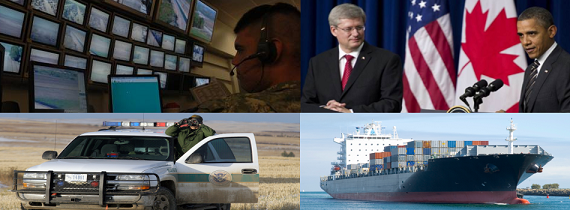
Canada’s prime minister recently addressed the CFR, a globalist think tank who have been a driving force behind the push towards deeper North American integration. The U.S. and Canada are now further advancing this agenda through the Beyond the Border agreement. Both countries are increasing bilateral border transportation and infrastructure coordination. This includes a common approach to border management, security and control. They are also integrating an information sharing system that would be used to track everyone crossing the U.S.-Canada border and entering or leaving the continent. Without much fanfare and seemingly little resistance, Canada is being assimilated into a U.S. dominated North American security perimeter.
In May, the Conservative government highlighted the benefits of the U.S.-Canada Beyond the Border action plan which was announced back in 2011. The deal, “focuses on addressing security threats at the earliest point possible and facilitating the lawful movement of people, goods, and services into Canada and the United States, and creates a long-term partnership to improve the management of our shared border.” The goal is to further increase, “security, economic competitiveness and prosperity through numerous measures, including reducing border wait times and improving infrastructure at key crossings to speed up legitimate trade and travel.” The Beyond the Border Executive Steering Committee recently met to discuss the objectives that have already been achieved and the work that still needs to be done. Another important facet of the economic and security perimeter agreement is the Regulatory Cooperation Council action plan. A stakeholder dialogue session is planned for June 20, which will review its implementation progress and will seek further input regarding the next stage of U.S.-Canada regulatory integration.
Last month, the Canada Border Services Agency (CBSA) and the Department of Homeland Security (DHS) released a joint report on the findings of Phase I of the Entry/Exit Information System. The program included collecting and exchanging biographic information at four selected land border ports of entry. In a news release, U.S. Customs and Border Protection (CBP) Acting Commissioner Thomas Winkowski stated that, “The results of Phase I demonstrate the capacity of the United States and Canada to increase information sharing capabilities.” He added, “This kind of cooperation epitomizes the Beyond the Border Action Plan.” The next phase of the entry/exit initiative is set to begin at the end of this month. It will involve exchanging the data collected from third-country nationals and permanent residents of Canada and the U. S. at all common ports of entry. Both countries are further merging databases and are expanding surveillance and intelligence gathering operations. In 2014, they will also start sharing biometric information at the border. This will further advance the creation of a North America security perimeter where all travellers will be tracked and traced in real time.
As part of the commitment made under the Beyond the Border deal, both countries have announced the Border Infrastructure Investment Plan which was, “developed to establish a mutual understanding of recent, ongoing and potential border infrastructure investments. It outlines the approach that Canada and the United States will take to coordinate plans for physical infrastructure upgrades.” In June 2012, Canada reached an agreement with the State of Michigan to build a second bridge between Detroit and Windsor, Ontario. This was followed by a presidential permit issued in April of this year that officially paved the way for construction of the project. A U.S. State Department press release explained that, “Consistent with the bilateral Beyond the Border Initiative, this permit contributes to ensuring that our border infrastructure supports increased competitiveness, job creation, and broad-based prosperity in the United States and Canada.” It went on to say that the new bridge, “will help to meet future capacity requirements in a critical travel corridor, promote cross-border trade and commerce, and advance our vital bilateral relationship with Canada.”
In March, DHS Secretary Janet Napolitano and Canada’s Minister of Public Safety Vic Toews signed a memorandum of understanding which established a truck cargo pre-inspection pilot project. The joint undertaking is another component of the Beyond the Border agreement and would shift inspections and clearances away from the actual border crossing. The first phase, “will test the concept of conducting U.S. CBP primary cargo inspection in Canada, and will be implemented at the Pacific Highway crossing between Surrey, British Columbia and Blaine, Washington.” The second phase, “will further test how pre-inspection could enhance border efficiency and reduce wait times to facilitate legitimate trade and travel, and will be implemented at the Peace Bridge crossing between Fort Erie, Ontario and Buffalo, New York.” The perimeter security deal is laying the foundation for a future U.S.-Canada binational organization that would jointly manage and control the border.
The CBSA is also testing additional technology at the Morses Line, Quebec and Piney, Manitoba ports of entry. Under the remote traveller pilot project, people entering either location after regular hours of service, “will be processed by a border services officer located at a remote processing centre through a two-way audio and one-way video kiosk. Cameras will be installed to provide the officer with the ability to see the traveller and the vehicle.” The program which could later be expanded to other areas , “is part of the Small and Remote Ports of Entry Initiative, one of the deliverables under the Beyond the Border Action Plan.” NAUNEWZ pointed out that, “Although a lot of this technology is already installed and being utilized in limited ways at most of the main Canada-U.S. border crossing points, these smaller border crossings are ideal testing grounds for their ‘no borders’/NAU agenda.”
On May 16, Canadian Prime Minister Stephen Harper participated in question and answer session before the Council on Foreign Relations (CFR). The conversation centered around economic growth, foreign investment and the role of the G20 with regards to global governance. Other issues focused on Canada-U.S. relations. Harper lobbied for approval of the controversial Keystone XL pipeline which would carry oil from western Canada to the Texas gulf coast. He dismissed environmental issues associated with the project and argued that it would be a step towards North American energy independence. The Obama administration is expected to make a final decision on the pipeline sometime this year. Harper also acknowledged the Beyond the Border and the Regulatory Cooperation Council action plans. He blamed sovereignty concerns and the continued negativity surrounding NAFTA as the main obstacles to even deeper continental integration. Prime Minister Harper used his audition in front of the CFR as an opportunity to demonstrate to the U.S. political and corporate elite that he is committed to defending the interests of big business and further pushing plans for a North American Union (NAU).
The Beyond the Border action plan is the most significant step forward in U.S.-Canada cooperation since NAFTA. It provides the framework for future North American integration. When fully implemented, the agreement can be expanded and updated. So far, the agenda has quietly slipped under the radar. By incrementally incorporating various pilot projects and excluding Mexico from the process, it has managed to avoid the controversy of past initiatives. The perimeter security deal is being sold as vital to improving the flow of trade and travel across the border. In order to appease U.S. fears, Canada has made numerous concessions with no guarantees that it will lessen border restrictions. As part of a North American security perimeter, Canada will always be at the mercy of any new U.S. security measures, regardless of the dangers they may pose to privacy and civil liberties.
Related articles by Dana Gabriel:
U.S.-Canada Harmonizing Border Security and Immigration Measures
Taking the U.S.-Canada Partnership to the Next Level
Merging U.S.-Canada Arctic Foreign Policy
The Return of ACTA: U.S. Dictating Canada’s Intellectual Property Laws
Dana Gabriel is an activist and independent researcher. He writes about trade, globalization, sovereignty, security, as well as other issues. Contact: beyourownleader@hotmail.com Visit his blog at Be Your Own Leader
7 Powerful Ways to Maintain Your Privacy and Integrity Online
 by Eliot Estep
Activist Post
June 13, 2013
The recent NSA leaks from whistleblower Ed Snowden have publicly confirmed that digital privacy does not exist. The federal government and intelligence agencies have direct server access to the world’s most popular sites and services including Facebook, Google, Microsoft, Apple, and more. This means that all of your data when using these services including Skype, YouTube, etc has been compromised and can be used against you whenever strategically necessary.
Always remember, you are being recorded and monitored regardless of whether you have done anything wrong or not. This includes your emails, Internet activity, searches, banking activity, passwords, etc. Basically everything to build a complete profile about who you are, how you think, how you live, etc. This is very powerful data gathering and the goal of the intelligence agencies is nothing less than Total Information Awareness to be used to control and manage populations.
For these reasons, I have compiled some helpful tips to help you maintain your privacy and integrity when using the Internet. These are by no means comprehensive, but they can be quite useful and give you some semblance of peace when browsing.

If you use Google, Bing, Yahoo, etc. then everything you search is logged to your IP address and is used to build a comprehensive profile about all your online activity. This means that the government literally has the ability to know everything you’ve been interested in, how you type (thus, how you think), and much more. Protect your searches!
2. Consider using an Anonymizer such as Tor to protect your identity. Tor prevents anyone from learning your location, browsing habits, and is an extremely effective tool against network surveillance and traffic analysis. Tor is essentially a network of virtual tunnels run by volunteers that allows your real IP address to remain hidden and undetectable when browsing the Internet. It is used by whistleblowers, hackers, and all those who value anonymity. You can also use it to access sites that your ISP has blocked or banned. Keep in mind, if you use Tor to access personally-identifying sites like Facebook then you pretty much lose your ability to remain anonymous. Learn more about this powerful software and please use it responsibly! To get started quickly, please download the Tor Browser Bundle. Using this software wisely and effectively will likely require changing your browsing habits, so be aware of this.
4. Use a firewall and a secure wireless connection. Protecting your inbound and outbound network traffic is essential. There are many free software options available for this. I cannot guarantee the integrity of these programs, but I personally recommend Little Snitch for Mac users. It appears that Outpost may be a good alternative for Windows. The key is to be able to see what services/sites are trying to send/receive data over your connection. The more stringent your firewall rules are, the better. Keep your computer clean by using some kind of anti-spam/spyware software and minimize your use of highly sketchy sites.
5. Delete your cookies regularly and log out of Facebook when you are not actively using it. Almost every time you visit a site, you download a cookie from that site, which is often used to track and collect data about you, the sites you visit, etc. Therefore, deleting cookies and temporary Internet files from your browser frequently is necessary. I recommend CCleaner as an effective way to do this. Most people leave a Facebook tab open and continue browsing, not realizing that every page that has a “Like” button actively logs and tracks their online activity. Facebook collects all your browsing data and then sells it to third parties, including passing it onto intelligence agencies. Therefore, when you are not actively using Facebook, be sure to log out! Why should they know everything you’re up to online?
6. Cover up or disconnect your webcam when you are not using it. Did you know that your webcam can be secretly activated without you being aware of it? Hackers and intelligence agencies have the ability to do this, so effective countermeasures must be taken here. This can be done WITHOUT the indicator light coming on, so you won’t even know that you are being watched or recorded. This is why I recommend taping over or covering up your webcam when you’re not using it. Why take the risk? Do you really want the government to have the ability to spy on you while you are in your bedroom? The same thing can be done on cellphone cameras/microphones, so be aware of that too. The only way your phone cannot be used to track/record you is if the battery is taken out, which is another reason why many new smartphones come with non-removable batteries these days.
7. Learn to use secure email services like HushMail or encrypted email. Communicating using email is vital and part of our everyday lives. If we use services like Gmail, Hotmail, or Yahoo, those services are not secure and are compromised. Therefore, switching over to a secure service such as Hushmail can be valuable. Or learn how to use Pretty Good Privacy (PGP), which is a way to send encrypted email and files that only a trusted third party can open and view. Essentially, PGP uses public-private key cryptography, where you will give out your public key to trusted recipients. Messages can only be decrypted by using your special private key file (that you keep safe) and the sender’s public key. You can even encrypt files so that only a specific person can open them. Learning to use PGP requires some technical knowledge but can be very useful for those who want to communicate securely and is well worth learning, in my opinion. Please see this tutorial or this video to get started. There are some excellent YouTube videos that can really help out with this.
***************************
Be smart about how you communicate online. If you take no precautionary measures, then you should assume that your communications are being recorded and monitored at all times. Do not discuss illegal or secret activities on Facebook or through Skype or Gmail. Ultimately, we should be greatly decreasing our use of these compromised services altogether! Be aware of what you type and consider their ramifications if ever made public. We must exercise great discretion and discernment when it comes to our online activities now. The methods listed above are by no means comprehensive and are just a small way to boost your privacy. If you have other privacy tips, please mention them here in the comments for all to see and benefit from. In the end, it is all up to the user to do their part in maintaining their online integrity. Safe browsing my friends!
Eliot Estep: We are all divine beings of love at our core! I AM a genuine truth-seeker dedicated to living a life of joy, peace, and abundance. I value integrity, freedom, and creative self-expression above all. It is a privilege to be here during this time of great change. Let us prepare. Main areas of research: conspiracies, global affairs, extraterrestrials, spiritual advancement + Sun: ♏ + Moon: ♎ + Ascendant: ♋ + This article first appeared at Collective Evolution.
EVENT — March Against Drones – MAD

via March Against Drones – MAD
Are you MAD? If so, march with us at the White House on 9/11 in Washington, DC. If you can’t make it, get MAD wherever you are! To join the event, go to: http://tinyurl.com/TheMarchAgainstDrones


 PN
PN 