
MUST SEE — EMERGENCY ALERT: Latest Syrian Chemical Attack Follows History of False Flag Provocations
The Corbett Report
August 21, 2013
In this exclusive clip from the forthcoming edition of the Jack Blood Podcast, James Corbett and Jack Blood dissect the latest reports of a chemical weapons attack in Syria, occuring just two days after a UN chemical weapons team arrived in the country. James goes over the history of false flag chemical provocations in the country and the reasons why we should doubt the quickly-forming official narrative that this attack was perpetrated by Assad’s military. Listen to the Jack Blood podcast at DeadlineLive.info.
SHOW NOTES AND SOURCES: http://www.corbettreport.com/?p=7835
U.S. Arctic Ambitions and the Militarization of the High North
Be Your Own Leader
July 22, 2013
By Dana Gabriel
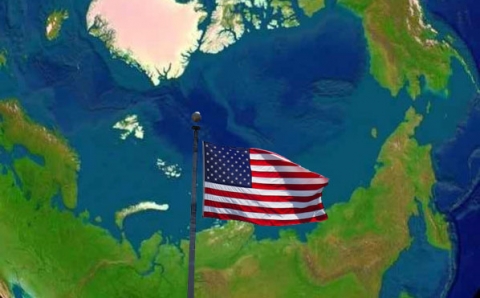
Canada recently took over the leadership of the Arctic Council and will be succeeded by the U.S. in 2015. With back-to-back chairmanships, it gives both countries an opportunity to increase cooperation on initiatives that could enhance the development of a shared North American vision for the Arctic. The U.S. has significant geopolitical and economic interests in the high north and have released a new national strategy which seeks to advance their Arctic ambitions. While the region has thus far been peaceful, stable and free of conflict, there is a danger of the militarization of the Arctic. It has the potential to become a front whereby the U.S. and other NATO members are pitted against Russia or even China. In an effort to prevent any misunderstandings, there are calls for the Arctic Council to move beyond environmental issues and become a forum to address defense and security matters.
In May, Canada assumed the chairmanship of the Arctic Council where they will push for responsible resource development, safe shipping and sustainable circumpolar communities. The Arctic Council is the leading multilateral forum in the region and also includes the U.S., Denmark, Finland, Iceland, Norway, Sweden and Russia. During the recent meetings, members signed an Agreement on Cooperation on Marine Oil Pollution Preparedness and Response in the Arctic which seeks to improve coordination and planning to better cope with any such accidents. In addition, China, India, Japan, Singapore, South Korea, along with Italy were granted permanent observer status in the Arctic Council. With the move, China has gained more influence in the region. The potential for new trade routes that could open up would significantly reduce the time needed to transport goods between Europe and Asia. The Arctic is an important part of China’s global vision, as a place for economic activity and a possible future mission for its navy. In order to better reflect the realities of politics in the high north, there are calls to expand the Arctic Council’s mandate to also include security and military issues.
Writing for the National Post, Rob Huebert of the Canadian Defence & Foreign Affairs Institute explained that, “One issue that has not received much attention is the need to discuss the growing militarization of the Arctic. While the Arctic Council is formally forbidden from discussing military security in the Arctic, the time has arrived to rethink this policy.” He went on to say, “The militaries of most Arctic states are taking on new and expanded roles in the region that go beyond their traditional responsibilities, which may create friction in the region.” Huebert also stressed that, “These new developments need to be discussed to ensure that all Arctic Council member states understand why they are occurring, and increase the confidence of members that these new developments are not about a conflict in the Arctic, but about the defence of core strategic interests.” He further added, “It is easy to see how both the Americans and Russians will become increasingly concerned about the security steps that the other is taking. But now is the time for all to openly discuss these developments so that old suspicions and distrusts do not resurface.”
As part of efforts to strengthen Arctic security cooperation, in June, the Northern Chiefs of Defence Meeting was held in Greenland. It brought together representatives from the U.S., Canada, Denmark, Russia, Sweden, Norway, Finland and Iceland. Gen. Charles Jacoby, Commander of North American Aerospace Defense Command (NORAD) and U.S. Northern Command (USNORTHCOM) also attended the event. The second annual gathering was used as an, “opportunity for direct multilateral and bilateral discussions focused on Northern issues. Topics discussed included the sharing of knowledge and expertise about regional operational challenges; responsible stewardship of the North; and the role Northern militaries can play in support of their respective civil authorities.” The Northern Chiefs of Defence meeting has become an essential forum to address common Arctic safety and security concerns.
Ahead of Secretary of State John Kerry’s trip to attend the Arctic Council Ministerial Session in May, the White House unveiled a National Strategy for the Arctic Region. It outlined strategic priorities including advancing U.S. security interests, pursuing responsible stewardship and strengthening international cooperation. The document acknowledged competing environmental and economic goals, but in the end sets an aggressive agenda for the exploitation of Arctic oil, gas and mineral reserves. In addition, the strategy recommended enhancing national defense, law enforcement, navigation systems, environmental response, as well as search-and-rescue capabilities in the Arctic. It also builds off of National Security Presidential Directive-66 issued by the Bush administration in 2009. In coordination with the new plan, the U.S. Coast Guard has released their Vision for Operating in the Arctic Region which will work towards improving awareness, modernizing governance and broadening partnerships. According to James Holmes, professor of strategy at the U.S. Naval War College, the Coast Guard and Air Force could become the military’s odd couple in defending America’s Arctic front.
Several months back, Congressman Don Young testified in front of Armed Services Committee in support of Alaska national defense priorities. He proclaimed, “We must be able to project power into the Arctic environment and extensive Arctic training is needed to do that.” Some have pointed out that the true nature surrounding U.S. plans to shift additional missile interceptors to Alaska is not to protect against a North Korean threat, but is instead aimed at control over Arctic resources. Meanwhile, there have also been renewed discussions about Canadian participation in the U.S. anti-ballistic missile shield, a move that could damage relations with Russia and China. In order to enhance its presence and security in the Arctic, the U.S. is increasing cooperation with Canada. This includes expanding joint military exercises and intelligence gathering operations in the region. Professor Michel Chossudovsky of Global Research has described Washington’s militarization of the Arctic as part of the process of North American integration.
In December 2012, the U.S. and Canada signed the Tri-Command Framework for Arctic Cooperation which is part of efforts to further merge USNORTHCOM, Canadian Joint Operations Command (CJOC) and NORAD. A press release explained that the framework is designed to, “promote enhanced military cooperation in the Arctic and identify specific areas of potential Tri-Command cooperation in the preparation for and conduct of safety, security and defense operations.” USNORTHCOM, CJOC and NORAD have also pledged to work closer together with regards to planning, domain awareness, information-sharing, training and exercises, capability development, as well as in the field of science and technology. In the coming years, the Arctic will become an even more important part of North American perimeter security.
While the Arctic remains a region of strategic interest to the alliance, Secretary General Anders Fogh Rasmussen recently rejected a direct NATO presence. For a number of years, Norway has been pushing for NATO to increase its focus in the Arctic and have called for more joint northern exercises. Even though NATO has yet to truly define its role in the area, Arctic member countries are stepping up military and naval operations in the high north. In the future, NATO’s mandate could include economic infrastructure and maritime security. It could also serve as a forum for discussing Arctic military issues. Expanding NATO activity in the region might signal the militarization of the Arctic which could raise tensions with both Russia and China.
There are fears that the Arctic could become an arena for political and military competition. With potential new shipping routes and countries further staking their claims to the vast untapped natural resources, defending strategic and economic interests may lead to rivalries in the region. There is also the possibility that conflicts which originate in other parts of the world could spillover and affect the stability of the Arctic.
Related articles by Dana Gabriel
The Tri-Command Strategy and Merging U.S.-Canada Arctic Foreign Policy
Future U.S.-Canada Joint Arctic Security and Control
NATO Arctic Security and Canadian Sovereignty in the Far North
NORAD-Russian Joint Air Drill, Bomber Incursions and Canada’s F-35 Jet Purchase
Dana Gabriel is an activist and independent researcher. He writes about trade, globalization, sovereignty, security, as well as other issues. Contact: beyourownleader@hotmail.com Visit his blog at Be Your Own Leader
Israel Lobby Controlled Size of UN General Assembly
SyriaNews
June 19, 2013

source: http://DDees.com
Documents unearthed from the voluminous archived files of the CIA provide evidence that in the 1960s, leading pro-Israeli members of the administrations of Lyndon Johnson and Richard Nixon sought to limit the size of the UN General Assembly by redefining the definition of what countries could qualify for membership in the world body. In the 1960s and 70s, successive U.S. ambassadors to the UN, the first and foremost being the arch-Zionist former Associate Justice of the U.S. Supreme Court Arthur Goldberg, who represented the United States during the Israeli-Arab Six Day War, extensively lobbied the UN Secretariat to create a second-tier of «associate membership» for countries considered «too small» to have a full vote in the UN General Assembly.
The U.S. proposal, backed by the Israeli Lobby, was in direct contravention of the principal of universal membership pushed by countries like Australia during the tenth anniversary of the UN in 1955. However, the United States and Soviet Union never addressed the issue of universal membership of the UN or the issue of small states becoming members, preferring instead to admit new members based on a de facto understanding that a balance would be maintained among pro-Western, Soviet bloc, and neutral nations.
Between 1954 to 1956, new member nations were admitted to the UN that reflected a continuation of the status quo between pro-Western, Soviet bloc, and nonaligned nations. These nations were Albania, Austria, Bulgaria, Cambodia, Ceylon, Finland, Hungary, Ireland, Italy, Japan, Jordan, Laos, Libya, Nepal, Portugal, Romania, and Spain.
It was not until the early 1960s, when France and Britain conferred independence upon a number of colonies in Africa that Israel and its Zionist supporters became worried. Many of these African nations severed diplomatic relations with Israel after the 1973 Israeli-Arab War and in 1975, Israel’s worst fears were realized when the General Assembly passed a resolution equating Zionism with racism.
Goldberg saw a more nonaligned-oriented UN General Assembly becoming a permanent adversary of Israel in mid-1960s. By trying to create a second-tier of UN membership, Goldberg’s gambit was to prevent a permanent working majority among largely African and Asian nations of the Third World that would consistently vote against the interests of Israel in the General Assembly and other specialized agencies. Those fears were realized in 1975 with the Zionism as racism resolution in the General Assembly. Israel and its supporters have always been assured of a U.S. veto in the UN Security Council against anti-Israeli resolutions but that guarantee never extended to the UN General Assembly and other bodies where the vote of the United States was equal to the vote of Malta.
The Zionists’ concern about mini-states being admitted to the UN also involved Israel’s concern that Jerusalem might be recognized as an international entity and be admitted to the UN as either a full member or state observer, the latter similar to the status of the Holy See in Rome. There was some basis for Israel’s concern since even its major supporter, the United States, had, during the Harry Truman, Dwight Eisenhower, and John F. Kennedy administrations, pushed for an international regime to govern Jerusalem. An example of such American support for an independent Jerusalem was an aide-memoire, dated July 9, 1952, that stated: «The Government of the UnitedStates has adhered and continues to adhere to the policy that there should be a special international regime for Jerusalem». The idea of an independent Jerusalem, composed of Jewish, Christian, and Muslim officials, having a seat at the UN, along with the real potential of an internationally-recognized Palestine sharing a UN seat, was too much for the Zionists. The UN, once supported by Zionists like Goldberg and Bernard Baruch, became overnight a perceived enemy of Israel and a target for the Israel Lobby.
Goldberg and his deputy representative, William Buffum, later to become the Assistant Secretary of State for International Organization Affairs and UN Undersecretary General for Political Affairs, first sought to apply a system of «associate membership» for small states. On July 14, 1969, Buffum raised the issue of associate membership with the President of the Security Council Ibrahim Boye of Senegal. Nixon’s ambassador to the UN, Charles Yost, proffered the concept of associate membership for «micro-states» in an August 27, 1969 speech. The idea received the support of UN Secretary General U Thant after he received a letter from Goldberg in December 1967.
U Thant called for a «study of the criteria for membership with a view to laying down the necessary limitations on full membership for the emerging states which are exceptionally small in area, population, and human and economic resources, while also defining other forms of association which would benefit both the ‘micro-states’ and the United Nations».
Prior to Yost’s speech, the CIA planted a story in its favored propaganda conveyor, The Washington Post, by Robert Estabrook, a former Army intelligence agent in Brazil and former editor of the Post’s editorial page titled «Ministates Raise UN Question: What Qualifies as a Country?» Details of Goldberg’s and Yost’s UN Charter changes included membership qualification changes based in «population, area, and economic resources».
In 1969, the CIA, relying on two agents of influence, Premier Eric Gairy of the British West Indies semi-independent state of Grenada and Jack Holcomb, a CIA adviser to the unilaterally-declared independent Anguillan government of President Ronald Webster, inquired about associate membership status for their respective island nations in the UN.
The associate status was seen as critical as a way to handle potential UN membership for Pitcairn, with a population of 90, along with possible independent status for the islands of the U.S. Trust Territory of the Pacific Islands, the inhabited atolls and islands of which could have resulted in as many as 20 new members from Micronesia, Marshall Islands, Marianas Islands, and Caroline Islands, alone.
When the associate membership idea was rejected, the United States offered up a system whereby members would be able to cast weighted votes based on their financial contributions to the UN and its specialized agencies. Goldberg and Yost had earlier argued that in the late 1960s, the smallest of the then-126 members of the UN could barely afford the $50,000 minimum annual membership dues. Why should they have the same vote as the United States or India, with its half-billion population?
The United States, the largest contributor to the UN, with 25 percent of the organization’s budget paid for by Washington, wanted its vote to carry an equivalent weight to its financial contributions. During the Reagan administration, the weighted vote idea was pushed by Washington and its man in the UN Secretariat, Buffum, one of the original supporters of a change in how the UN counts its votes. However, Secretary General Javier Perez de Cuellar was opposed to any changes even though his political deputy Buffum had long favored such a move. The Reagan administration responded by withdrawing from the nonaligned-oriented UN Educational, Scientific, and Cultural Organization (UNESCO, exempting the United States from compliance with political decisions of the World Court, and ordering the Soviet Union to scale down its diplomats in Washington by limiting the New York staffs of the missions of the Ukrainian and Byelorussian Soviet Socialist Republics to the UN. Congress adopted the Kassebaum Amendment, named for its chief sponsor, Republican Senator Nancy Kassebaum of Kansas, which slashed the U.S. contribution to the UN to 20 percent of the body’s total dues.
Although the General Assembly last year voted to upgrade Palestine’s status to a state observer, the 193-member General Assembly has seen a working majority able to approve American-backed resolutions on Syria and Libya. In March, an Israeli-Iranian singer named Rita sang in Hebrew and Farsi in the UN General Assembly with Secretary General Ban Ki-moon wishing everyone shalom and General Assembly President VukJeremic vowing to be the first General Assembly president to visit Israel. Ha’aretzreported that Israeli delegates were dancing in the aisles of the assembly hall and 140 delegations clapped in unison to Persian-Israeli songs.
In the early 1990s, when the UN saw its largest increase of membership since the early 1960s, there was a change of heart by the Israel Lobby about UN membership. Rather than limit the size of the UN based on size and population, there was a realization that micro-states like Andorra, Liechtenstein, Kiribati, Nauru, San Marino, Monaco, Malta, Samoa, Tuvalu, Palau, and the Solomon Islands could be controlled as far as their UN votes are concerned. The Israel Lobby and the United States was able to cobble together a working bloc of votes in the General Assembly. The last two members admitted to the UN, Montenegro and South Sudan, received support only because they were assured to be pro-Israel votes in the world body. The U.S. and its allies have pushed for Kosovo to be the 194th member, which would also be a pro-Israel vote but has met resistance from Russia, Serbia, Spain, and China.
The litmus test for support for Israel has kept out of the UN Western Sahara, Somaliland, Abkhazia, and South Ossetia. Among the pro-Israeli bloc’s first actions was repealing the UN Zionism is racism resolution in 1991. Except for last year’s Palestine state observer resolution, this bloc has largely served the interests of Israel and the United States, culminating this past March with klezmer music blaring throughout the General Assembly hall.
Author: Wayne Madsen
Source: strategic-culture.org
VIDEO — Will The Kurds Join In Freeing Turkey From NATO – Sheikh Imran Hosein Part 2
108morris108
June 19, 2013
Freeing the Bosphorus for the Russia’s navy.
We are going to see unfolding events as explained by Islam
This is Islamic eschatology validating itself
It could be that Erdogan has so far refused to invade Syria
VIDEO — Turkish Unrest Could Encourage An Attack On Syria – Sheikh Imran Hosein
108morris108
June 19, 2013
Events in Turkey from the last week or two are still just unrest and not an uprising but social media is being applied in a crafty way, the agenda is not regime change but rather to create a need for a distraction by the government, and Syria is the most likely distraction.
This would likely create a civil war in turkey which would attract Muslims from abroad wishing to Free Turkey from NATO
Both Mursi and Erdogan are uncompromising
Regarding Egypt breaking off relations with Syria, Mursi is following a script from his paymasters, he had no choice, and neither Neither Iran nor Russia have reacted
Recorded June 19 2013 Apologies for poor internet connection…
More of the interview will go up within 24 hours (and probably within 8 hours)
VIDEO — Obama’s Lies About Chemical Weapons In Syria
Syrian Girl
June 14, 2013
We heard all these lies before during the Iraq war.
Why We Oppose U.S. and Israeli intervention in Syria
 Global Research
May 24, 2013
Having overthrown the Governments in Iraq in 2003 and Libya in 2011, the U.S. government has sought to topple the Syrian government during the past two years. The CIA has been the coordinating agency for massive weapons shipments from Saudi Arabia, Qatar and Turkey to armed groups fighting to topple the Syrian government.
The conflict in Syria that began more than two years ago was fueled by a wide range of grievances, some legitimate, some reactionary. But the armed rebellion inside the country is today inextricably bound to imperialism and the most reactionary regimes in the Arab world. Its aim is to destroy a secular, nationalist government that U.S. leaders view as an obstacle to their goal of dominating the entire Middle East.
The United States, Britain, France, Turkey, Saudi Arabia and Qatar have been funneling vast quantities of arms, money and supplies to the Syrian opposition, and training thousands of anti-government fighters in Turkey, Jordan and elsewhere. On May 5, Israel heavily bombed an area close to the capital, Damascus.

Harsh economic sanctions have been imposed on Syria. The United States and its allies have waged a worldwide campaign to isolate and demonize the Syrian government.
Outside support has sustained the opposition, but not brought it victory. Thus, the leaders of the U.S.-organized “National Coalition of Opposition and Revolutionary Forces” and the “Free Syrian Army” have been making repeated and urgent appeals for more direct imperialist intervention, including an air war against their own country. Those appeals have become even more urgent due to losses suffered by the splintered opposition forces in recent weeks.
“Friends of Syria”: another face of imperialism
Stepping up the imperialist-led campaign, on May 22, the so-called “Friends of Syria” met in Amman, Jordan. Led by U.S. Secretary of State John Kerry, the other “Friends” at the meeting were the foreign ministers of Britain, France, Germany, Italy, Turkey, Egypt, Jordan, the United Arab Emirates, Qatar and Saudi Arabia.
The open aim of the “Friends” is the overthrow of existing government in Syria. Its concluding statement speaks of “supporting the legitimate rights of the Syrian people” and “a new Syrian constitution with equal rights for all.”
This supposed concern for “human rights” in Syria is nothing but the crassest cynicism.
Saudi Arabia, Qatar, UAE and Jordan are all police-state, absolute monarchies, sustained in power by U.S. support. Saudi Arabia has never had an election, women are forbidden to drive cars and public beheadings are a frequent occurrence. Britain and France are the former colonizing powers in the region, striving to retain their influence today. Germany and Italy shared in the colonial division of Africa; half the population of Libya died under Italian rule during World War II. Turkey has long repressed the Kurdish population inside its borders, as well as unions, leftist parties and other progressive organizations. The Egyptian government is suppressing the opposition as it seeks to consolidate its power.
As the dominant world power over the past 70 years, the United States has carried out genocidal wars from Korea to Vietnam to Iraq, leaving tens of millions dead, wounded and displaced. In addition, U.S. military and intelligence forces have intervened hundreds of times in countries around the world, and today the United States maintains more than 900 military bases on every continent. Death by U.S. drone is today a regular and terrorizing feature of life for people in Pakistan, Afghanistan and Yemen.
The “Friends” are in reality a criminal gang who have no concern whatsoever for the interests of the people of Syria – or any people anywhere, for that matter.
Say no to U.S./NATO and Israeli intervention
An international peace conference on Syria has been jointly proposed by Russia and the United States, and is tentatively set to take place in Geneva, Switzerland, in June. It is not clear yet whether it will actually take place.
Regarding the proposed conference, the “Friends of Syria” statement ended by threatening, “[U]ntil such a time as the Geneva meeting produces a transitional government, they [the “Friends”] will further increase their support for the opposition and take all other steps as necessary.” By “transitional government,” the “Friends” mean one absent the present leadership. In other words, until there is “regime change,” they will escalate the war.
The anti-war movement in the United States has a duty to unequivocally oppose all forms of intervention by the United States, the other imperialists and their clients, and to support the right of the Syrian people to determine their own future, free from imperialist intervention.
Related content:
-

Turkey To Request NATO Military Intervention In Syria: Prime Minister
Turkish Prime Minister Recep Tayyip Erdogan says Ankara is ready to ask NATO for a military intervention in Syria, Press TV reports. “I am ready to ask NATO for a military intervention in Syria,” Erdogan was quoted as saying on…
-

US Ramps up Plans for Military Intervention in Syria
The United States and the major European powers are escalating plans for a direct military intervention in Syria. The aim of US maneuvers, including a flurry of diplomatic visits this week, is to secure the downfall of Syrian President Bashar…
-

The Syria Imperative: Military Intervention to Promote Israeli Interests?
The Assad regime in Syria is facing increased scrutiny for its handling of demonstrators. The Syrian opposition has asked for arms and NATO intervention similar to what was witnessed in Libya. Washington Hawks such as former presidential candidate and U.S.…
-

US-Israeli Military Escalation Points toward Wider Intervention
Obama, Israel and the new phase of the war on Syria The massive Israeli air strikes on May 5 near Damascus mark a new phase in the imperialist-led campaign to overthrow the Syrian government. Huge bombs lit the early morning…
Disclaimer: The contents of this article are of sole responsibility of the author(s). The Centre for Research on Globalization will not be responsible for any inaccurate or incorrect statement in this article. The Center of Research on Globalization grants permission to cross-post original Global Research articles on community internet sites as long as the text & title are not modified. The source and the author’s copyright must be displayed. For publication of Global Research articles in print or other forms including commercial internet sites, contact: publications@globalresearch.ca
www.globalresearch.ca contains copyrighted material the use of which has not always been specifically authorized by the copyright owner. We are making such material available to our readers under the provisions of “fair use” in an effort to advance a better understanding of political, economic and social issues. The material on this site is distributed without profit to those who have expressed a prior interest in receiving it for research and educational purposes. If you wish to use copyrighted material for purposes other than “fair use” you must request permission from the copyright owner.
For media inquiries: publications@globalresearch.ca
related video: Why The NWO Hates Syria

 PN
PN 