
16 Things You Might Not Know About Uber and Its Drivers
 via Mental Floss
by Jessica Hullinger
Jan 19, 2016
Uber Technologies, the increasingly popular yet controversial ridesharing app, has so far infiltrated 58 countries around the world in its five-year lifespan and shows no signs of slowing down. The number of new drivers joining the ranks of Uber chauffeurs doubles every six months, and last week the company officially surpassed the $50 billion mark in funding. But for all its popularity, the upstart has had (and will probably continue to have) a bumpy ride, enraging established taxi companies by elbowing its way onto their turf and demonstrating the potential problems with the still nascent sharing economy. While commuters and government decide how to deal with Uber, here are a few things you might not know about the company and the drivers that make it go.
VIDEO/PODCAST — Solutions: The Peer-to-Peer Economy
via Corbett Report
by James Corbett
Mar 29, 2015
If the root of our economic problem is the tendency toward centralized, globalist bureaucracies (like the EU and the WTO and the IMF and the World Bank) why does anyone believe the solution will be centralized, globalist bureaucracies (like the BRICS Bank and the EEU and the AIIB)? Today we look at a truly paradigm-shattering civilization-wide change taking place right now that has the potential to undermine the status quo: the peer-to-peer economy.
SHOW NOTES AND MP3: https://www.corbettreport.com/?p=14032
VIDEO — Bitcoin and the Banks – Seven Stages of Grief by Andreas M. Antonopoulos
by aantonop
Feb 8, 2016
In this talk, Andreas examines the rise of “the blockchain” as an attempt by the banking status quo to dilute the disruptive potential of bitcoin by removing it’s most interesting features.
Jay Z, Beyoncé and No Doubt Front for Globalist Festival
 via Conspiracy School
by David Livingstone
Sep 28, 2014
American popular music is a manufactured product of generally very poor artistic quality, but serves the purpose of producing idols who can be used to convey subliminal messages of subversion. Edward Bernays, the father of “public relations” and nephew to Sigmund Freud, wrote: “Human beings need to have godhead symbols, and public relations counsels must help to create them.” Bernays recognized the value of his idol-making in shaping public opinion:
We have no being in the air to watch over us. We must watch over ourselves, and that is where public relations counselors can prove their effectiveness, by making the public believe that human gods are watching over us for our own benefit.[1]
No Doubt, Jay Z, Carrie Underwood and other musical acts performed in Central Park in New York City on Saturday for the 3rd annual Global Citizen Festival, a free event organized by then Global Poverty Project, which receives the buil of its funding by major Zionist foundations.
The concept of the “Global Citizen” is an agenda with the support of the UN and its affiliated agencies, presented as a positive step forward away from the ravages of nationalism, and towards a more favorable allegiance to a single one-world government. The objective is totalitarian because it aims to replace all the world’s religions and bring everyone together under a single one-world religion, based on Freemasonry and the Kabbalah.
The Global Poverty Project disguises its sinister objectives by shrouding its projects in humanitarian principles, in order to suggest that one-world government is the only answer to humanity’s most pressing problems, global poverty being the greatest among them. However, speaking at the festival was Jim Young Kim, president of the World Bank, which is responsible for creating that staggering poverty in the first place.
[…CONTINUE READING THIS ARTICLE]
[related: Gavin Rossdale praises Obama speech]
The Decline of Vancouver
 via saeidfard.com
by Saeid Fard
Mar 14, 2015
Vancouver, once a city with its own unique spin on Canadian ideals and culture, is well on its way to becoming a vacation city for the world’s rich, its economy transforming into one predicated almost entirely on catering to their luxurious proclivities, and its citizens transformed into modern serfs permitted to live in smaller dwellings on the city’s periphery, if you’ll allow me to exaggerate for effect.
Hyperbole aside, consider this: the nature of serfdom was one where serfs, unable to acquire their own plot of productive land, worked and lived on the land of wealthy nobles whom they served. In Vancouver the average person who owns a detached home made more money from capital gains on their property, roughly $100,000 per year in the last decade or so, than the average Vancouverite made in income, roughly $65,000. At those rates, it’s effectively impossible for average people without seed capital to join in on the boons of the Vancouver property boom, and so their role in the city’s largest source of wealth generation, property ownership, becomes catering to those who can take part, selling to them luxury booze, food, cars, clothes, and even their bodies. We have two classes of society forming along a divide that is growingly difficult to cross.
VIDEO — Consensus Algorithms, Blockchain Technology and Bitcoin UCL – by Andreas M. Antonopoulos
by aantonop
Jan 31, 2016
An academic lecture by Andreas M. Antonopoulos explaining the consensus algorithm, “Proof of Work”, used by bitcoin and many other blockchains. This talk was presented in collaboration with the Department of Computer Science, at University College London. Andreas is a UCL alum.
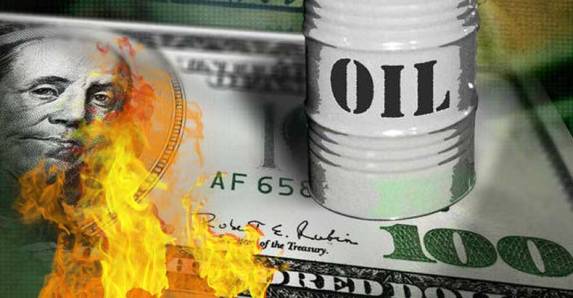
Iran No Longer Accepting Dollars for Oil; Demanding Euros Instead
 via Activist Post
by Brandon Turbeville
Feb 8, 2016
Even with a number of U.S. sanctions against Iran coming to an end, the Iranian government has recently made a very important decision in regards to its oil payment system and it could spell bad news for the United States. This is because Iran has apparently decided to no longer accept U.S. dollars for payment on both its new and outstanding oil sales. Instead it will receive its payment in euros.
Reuters has cited an official from the National Iranian Oil Company (NIOC) as stating that the new plan will apply to “newly signed deals” with France’s Total, Russia’s Lukoil, and Spain’s Cepsa.
Reuters quotes the official as saying that “In our invoices we mention a clause that buyers of our oil will have to pay in euros, considering the exchange rate versus the dollar around the time of delivery.”
In addition, Iran is also informing its trading partners, including India, that owe billions of dollars that it now prefers to be paid in euros instead of dollars.
“Iran shifted to the euro and cancelled trade in dollars because of political reasons,” the official source said, pointing out that this policy was concocted during the time of the sanctions.

 PN
PN 