
Five things you can do right now to help stop the economic plundering of our world
by Mike Adams, the Health Ranger
Natural News
December 6, 2011
(NaturalNews) The economic plundering of our world is well under way, with the Goldman Sachs “white shoe boyz” taking over entire national economies as they confiscate the wealth of the working class. They aren’t the only evildoers wreaking havoc across the world, of course: A cabal of powerful and criminally-insane corporations are destroying the future of food, plotting to keep citizens suffering from disease, and even perpetuating war so they can earn obscene profits from selling more bullets, bombs and missiles.
You can help resist this economic imperialism by taking simple actions that protect your wealth and pull it out of the hands of the globalists who are actively destroying our world. Here are five of the most powerful action steps to take that can turn the tables and restore economic sovereignty at every level — household, community, state, nation and the entire globe.
#1) Shop at local farmers’ markets, food co-ops and local grocers
Stop buying Tyson chicken. Stop buying Monsanto-engineered GMO foods at the grocery store. Stop giving your money to food industry globalists such as ADM, Cargill and PepsiCo. Every time you buy a can of brand-name soda, a carton of genetically modified soy milk, or a bag of popular snack chips, you are financially supporting a system of global agricultural poverty and food domination that destroys life and liberty.
If you shop based solely on price and not ethics, you are take part in the economic destruction of our world. Shop local, buy organic and avoid all the corporate food giants and their deceptive, dishonest packaged foods.
Remember: If the food you eat comes in a box, your family and friends will eventually find YOU in a box, too.
#2) Pull your money out of the big banks and put it in local credit unions
When you deposit $1,000 in a globalist bank, they can turn around and, through a series of fractional reserve banking transactions, turn that into $9,000 in loans that earn them interest. Inversely, by pulling $1,000 out of a globalist bank (JPMorgan Chase, Citibank, Bank of America, etc.), you deny them the ability to make $9,000 in loans, thus shrinking their profits by a significant factor.
One of the most powerful and honest strategies you can use to protect your own savings and stop financially supporting the global financial crooks who are running the largest banks is to move your money to a local credit union.
Most credit unions, by law, cannot bet on derivatives. So they don’t have the $68+ TRILLION in financial exposure that Bank of America has right now, for example. (http://seekingalpha.com/article/301…)
Of course, your local credit unions are normally not insured by the FDIC, but that’s actually a bonus because the FDIC will itself be insolvent in the first 24 hours of a true banking debt collapse (its own funds are a pittance compared to the scale of the global derivatives debt possessed by the banks it claims to insure). (http://seekingalpha.com/article/215…) You’re far smarter holding your money in a local credit union covered by an independent insurance agency that has nothing to do with the large global banks and their coming derivatives disasters.
#3) Stop working for The Man as a wage slave
If you punch a clock working for The Man, then you’re part of the problem. Every hour of your effort goes to keep propping up the very system that’s bringing you down.
It’s difficult, of course, to find work these days, and it’s absolutely true that The Man pays double or even triple the wages of anyone else. Heck, even TSA jobs come with great pay, government health benefits, and the “administrative right” to sexually molest innocent people, which is a real bonus to some of the disturbed psychopaths who take those jobs in the first place. (http://www.naturalnews.com/034323_N…)
If you want to stop working for The Man, you are going to have to downsize your material wealth and instead be content to possess spiritual wealth (and ethical currency, so to speak). Yes, you might live in a smaller house and drive a smaller car, but you won’t have to sell out your soul to an evil system of tyranny and oppression.
So if you’re currently punching a clock for some evil corporation, some tyrannical government entity, or some poison-pushing pharmaceutical company, find a new line of work and stop supporting the very system that’s destroying us all.
#4) Trade soon-to-be-useless paper currency for real goods
Are you still sitting on a bunch of paper currency and hoping it will somehow be worth the same amount in five years? Stop kidding yourself… the value of all the top global currencies is eroding by the hour. At times, it seems like it’s not happening because they’re all eroding together, so the relative valuation between currencies appears to be deceptively stable. But underneath it all, global currency devaluation has viciously accelerated — and both the European Central Bank and the Federal Reserve are committed to printing even more counterfeit currency to further speed the process.
By the time all the European banks are bailed out, and the U.S. banks are bailed out, and the Canadian and Australian banks are bailed out, if you’re still left holding hyper-inflated currencies like the U.S. dollar, you’re going to be lucky to still own ten cents on the dollar in terms of today’s purchasing power. That’s why smart people are exchanging their soon-to-be-worthless currencies for real things that hold real value: Dirt (farmland), gold, silver, quality firearms, stored food, hand tools, tractors and much more.
We recently ran an article promoting Himalayan Salt Lamps which are an easy way to store 3-4 pounds of valuable full-spectrum salt while also using it as a lamp in the short term. All 1,000 of the lamps we had sold out within 6 hours, which just goes to show you that NaturalNews readers are getting it (http://www.naturalnews.com/NNStore-…). They understand the value of having things of real worth rather than sitting on mere dollars (or the electronic equivalent thereof).
#5) Stop voting for politicians funded by Wall Street bankers
This is perhaps the most important — and yet most difficult — principle of all: Stop voting for politicians and bureaucrats who are propped up by banker money.
It’s almost impossible to do, of course, since nearly all the politicians — across the political spectrum — take big money from the big banking cartels. Obama himself is deeply in bed with Wall Street interests, but so was Bush and others.
Herman McCain, who thankfully dropped out of the Republican race just a couple of days ago, was a Federal Reserve insider. You couldn’t pick a more compromised candidate to try to fix the economy when he’s part of the very system of theft that’s destroying it!
The only real candidate who would challenge the economic plunder of our world is, of course, Ron Paul (www.RonPaul2012.com). He’s the guy who has stood firm on the principle of auditing the Fed and even ending the Fed so that the money supply of America can be put back into the hands of the Congress (i.e. the People) and not a private bankster cartel run by globalist crooks.
Do these five things now if you want to help save your nation from total economic destruction
Right now, whether you are Republican, Democrat or Libertarian, one of the most patriotic things you can do to save your nation is follow these five steps and start redirecting your financial resources away from the globalists and toward your local community.
Support small, local businesses. Support local financial institutions. Don’t buy the stock of evil corporations, even if they pay financial dividends. Vote for candidates who operate with consistent ethics, not the ones who give the slickest speeches and promise the most handouts.
Put your time, money and effort into restoring your nation or you will lose your nation. Every dollar that you spend, save or invest in a profit-driven bank or evil corporate giant is a dollar that will one day be used to wage economic warfare against you and your own children.
Think about what you’re doing. Save yourself, my friends, because all the other big players out there would far prefer to enslave youthan set you free.
The Deception of Media and Surprise Prediction at End (video)
YouTube – NewAmericaNow
December 1, 2011
As Jack Nicholson boldly states in the movie – A Few Good Men….”You can’t handle the truth!”
or Can you handle the truth?
There is a major prediction that I agree with at the video end that I think you will all be interested in hearing if you can handle the truth.
.
This is a commentary on the deception of Media using creative license but
based on an article here
http://newamerica-now.blogspot.com/2011/12/why-is-american-establishment-medi…
by Madison Ruppert
and a major prediction at video end.
Are You Ready?
GMO and Morgellons Disease
by Barbara H. Peterson
Global Research
March 27, 2008
Since the Clinton administration made biotechnology “a strategic priority for U.S. government backing” (1), giant transnational agri-business concerns have aggressively taken over the global food chain by flooding it with Genetically Modified Organisms (GMO) without regard for the consequences to the earth or its inhabitants. This takeover not only has the potential for global economic devastation, but threatens the earth’s population with far-reaching health concerns as well. One health concern that seems to coincide with the GMO revolution is Morgellons disease. What if the advent of Morgellons disease has something to do with the ingestion of GMO foods?
Morgellons Disease – What is it?
Very little can be found regarding this disease. Originally, sufferers were told that their problem was imaginary. This was of little comfort to the people who were suffering.
Morgellons Disease sufferers report strange, fiber-like material sticking out of sores or wounds that erupt on the skin. This is accompanied by painful, intense itching, that has been described as “an ever present sensation as if something is crawling under the skin.” (2)
On May 18, 2006, KGW, a local news channel reporting out of the Oregon area published this story:
Strange sickness: Mystery disease horror story (excerpt)
[Dr. Drottar] The disabled family practice doctor felt like bugs were crawling under her skin.
“If I fully tell people what has gone on with me medically, they think they’re in the twilight zone,” said Drottar.
She woke up with the feeling that fluid was flowing just below her skin. Often black or blue hair like fibers protruded from her skin, she said.
“I thought I had been exposed to asbestos. I thought I was having asbestos fibers come out of my skin. I was pulling long, thin, small hair-like fibers that were extremely sharp that could literally pierce through my finger nails,” Drottar said.
In addition to the feeling of bugs and the fibers, Drottar also suffered from severe depression, chronic fatigue and a weakened immune system. As a result, she had to give up her family practice, Drottar said. (3)
Here are some pictures of Morgellons lesions included in the KGW report:

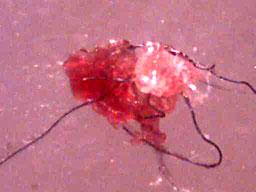
The Morgellons Research Foundation
Fibers embedded in skin removed from facial lesion of three year old boy, 60x.
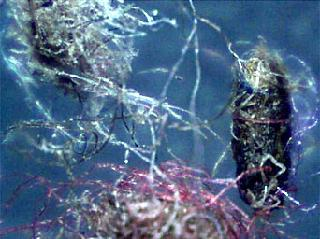 morgellonsusa.com
Photo of the fibrous structures that were in the skin of a Morgellons sufferer.
Morgellons and GMO – the Link
Little information has been revealed concerning the long-term health effects of GMO crops on humans or animals, and even less information can be had regarding research correlating Morgellons with GMO foods. This is suspicious right off the bat, because it would seem that there would be a natural curiosity regarding a link between Genetically Modified Organisms that people ingest regularly and inorganic fibers that protrude from a person’s skin. This would be right up a geneticist’s alley, and quite worthy of intensive research. So, why aren’t there a ton of published studies? Why is it so difficult finding anything related to this? Could it be that companies such as Monsanto have enough clout to effectively squash these stories? If they have enough clout to ruin countries by deceiving impoverished farmers into purchasing patented GMO seeds, and then take it a step further and force these poor people to purchase seeds year after year instead of harvesting their own, then they have enough clout to ask our more than willing corporate government to manipulate the press…again.
According to Mike Stagman, PhD,
“Genetic Engineering is a nightmare technology that has already caused MANY disease epidemics — documented but unpublicized.” (4)
Well Monsanto, you let at least one study slip through. With the help of a couple of search engines, the following article by Whitley Strieber published on October 12, 2007, titled “Skin Disease May Be Linked to GM Food” was found, which concludes that the fibers taken from a Morgellons sufferer contain the same substance that is “used commercially to produce genetically-modified plants.” Here is the article:
Skin Disease May Be Linked to GM Food
12-Oct-2007Many people—and most physicians—have written off Morgellons disease as either a hoax or hypochondria. But now there is evidence that this mysterious disease may be REAL and related to GENETICALLY MODIFIED food!
The skin of Morgellons victims oozes mysterious strands that have been identified as cellulose (which cannot be manufactured by the human body), and people have the sensation of things crawling beneath their skin. The first known case of Morgellons occurred in 2001, when Mary Leitao created a web site describing the disease, which had infected her young son. She named it Morgellons after a 17th century medical study in France that described the same symptoms.
In the Sept. 15-21 issue of New Scientist magazine, Daniel Elkan describes a patient he calls “Steve Jackson,” who “for years” has “been finding tiny blue, red and black fibers growing in intensely itchy lesions on his skin.” He quotes Jackson as saying, “The fibers are like pliable plastic and can be several millimeters long. Under the skin, some are folded in a zigzag pattern. These can be as fine as spider silk, yet strong enough to distend the skin when you pull them, as if you were pulling on a hair.”
Doctors say that this type of disease could only be caused by a parasite, but anti-parasitic medications do not help. Psychologists insist that this is a new version of the well-known syndrome known as “delusional parasitosis.” While this is a “real” disease, it is not a physically-caused one.
But now there is physical evidence that Morgellons is NOT just psychological. When pharmacologist Randy Wymore offered to study some of these fibers if people sent them to him, he discovered that “fibers from different people looked remarkably similar to each other and yet seem to match no common environmental fibers.”
When they took them to a police forensic team, they said they were not from clothing, carpets or bedding. They have no idea what they are.
Researcher Ahmed Kilani says he was able to break down two fiber samples and extract their DNA. He found that they belonged to a fungus.
An even more provocative finding is that biochemist Vitaly Citovsky discovered that the fibers contain a substance called “Agrobacterium,” which, according to New Scientist, is “used commercially to produce genetically-modified plants.” Could GM plants be “causing a new human disease?” (5)
GMO – Not on My Watch!
The giant transnational corporations behind the GMO revolution are hitting us in our most vulnerable spot – our bellies. Most people have been brought up with an innate trust that what they purchase from the stores is safe to eat. This is no longer true, since most processed foods contain genetically engineered ingredients that can have disastrous effects on both animal and human health. What you purchase from the corner store might just change your DNA and create such frightening symptoms that the general public simply does not believe it. What is worse is that when you go to the doctor to get help, he/she tells you what you are experiencing is all in your head. This is rubbish! It is up to people who care to make the correlations between what we eat and what happens to our bodies. Remember the old saying – “you are what you eat?” Well, this author believes it is true.
Notes
1) Engdahl, F.W. (2007). Seeds of Destruction.
2) Stagman, M. Phd. (2006). GMO Disease Epidemics: Bt-cotton Fiber Disease. Retrieved from http://portland.indymedia.org/en/2006/08/344305.shtml
3) Porter, L. (2006). Strange sickness: Mystery disease horror story. Retrieved from http://www.kgw.com/news-local/stories/kgw_051806_news_sweeps_strange_sickness_morgellons.53b2569a.html
4) Stagman, M. Phd. (2006). GMO Disease Epidemics: Bt-cotton Fiber Disease. Retrieved from http://portland.indymedia.org/en/2006/08/344305.shtml
5) Strieber, W. (2007). Skin Disease Might be Linked to GM Food. Retrieved from
http://www.unknowncountry.com/news/?id=6486
Barbara H. Peterson is a Writer and Activist,
http://spktruth2power.wordpress.com
Global Research Articles by Barbara H. Peterson
——————
Potent News Editor’s Note: The chemtrail phenomenon may be related to this. For more on Morgellons see MorgellonsResearchGroup.com
Agrobacterium & Morgellons Disease, A GM Connection?
by Dr. Mae-Wan Ho and Prof. Joe Cummins
Global Research
August 20, 2008
|
Preliminary findings suggest a link between Morgellons Disease and Agrobacterium, a soil bacterium extensively manipulated and used in making GM crops; has genetic engineering created a new epidemic? A fully illustrated and referenced version is posted on ISIS members’ website. Details here. An electronic version of the complete report, or any other complete ISIS report, can be sent to you via e-mail for a donation of £3.50. Please e-mail the title of the report to: report@i-sis.org.uk CDC launch investigation on Morgellons’ Disease
The Centers for Disease Control (CDC) in the United States announced the launch of an investigation on ‘Morgellons Disease’ in January 2008 [1], after receiving thousands of complaints from people with this bewildering condition, which it describes as follows [2]: “Persons who suffer from this unexplained skin condition report a range of cutaneous (skin) symptoms including crawling, biting and stinging sensations; granules, threads, fibers, or black speck-like materials on or beneath the skin, and/or skin lesions (e.g., rashes or sores). In addition to skin manifestations, some sufferers also report fatigue, mental confusion, short term memory loss, joint pain, and changes in visions.” Morgellons Disease first became known in 2001, when Mary Leitao created a web site describing the illness in her young son, which she named after a 17th century medical study in France describing similar symptoms [3]. Until then, people with Morgellons Disease have been diagnosed as cases of “delusional parasitosis”, in which the symptoms are deemed entirely imaginary, and lesions allegedly due to self-inflicted wounds. Indeed, the debate over Morgellons Disease has continued in the pages of medical and scientific journals right up to the CDC’s announcement [4-7] Dr. Michele Pearson, principal investigator for the CDC said [1] that the primary goals of the study are “to learn more about who may be affected with this condition, the symptoms they experience and to look for clues about factors that might contribute to the condition,” adding that the condition is “complex”, and “may be due to multiple factors.” In response to questions from journalists at the CDC press conference, Pearson said: “ We are aware that many patients have suffered from this condition. And, I can tell you that here at CDC, we have really been seeing an increasing number of these reports over the past year or so.” CDC’s investigation is to be carried out in conjunction with Kaiser Permanente’s Northern California Division of Research and the US Armed Forces Institute of Pathology. Dr. Joe Selby, Director of the Kaiser Permanente’s Northern California Division of Research, said the study would proceed in three stages. In the first stage, they will identify all members who may have seen a Kaiser Permanente physician with symptoms suggestive of this condition at any point during the 18 months between July 1 2006 and December 31, 2007, and determine whether they meet eligibility criteria for the study. In stage two, all eligible members will be invited to complete a comprehensive web based or telephone survey conducted by the CDC that examines the duration and severity of a variety of symptoms. And in stage three, those with active symptoms will be invited to the division of research for an extensive clinical examination including collection of skin biopsies, blood and urine samples. In a paper [6] published in 2006, researchers from the Morgellons Research Foundation [3] identified the states of California, Texas and Florida as having the highest number of cases of Morgellons disease in the United States. Primary clusters were noted in Los Angeles and San Francisco (California) and Houston, Dallas and Austin (Texas). California accounted for 26 percent of cases in the US, but all 50 US states and 15 other nations, including Canada, the UK, Australia, and the Netherlands, have reported cases of Morgellons disease. The two main occupational groups reporting symptoms are nurses and teachers, with nurses outnumbering teachers three to one. The risk factor common to both groups is suspected to be the possibility of transmitted infectious agents. Skin lesions and fibres may not be readily apparent in all individuals with the disease, as family members of patients often report similar systemic disease symptoms without skin symptoms. Families in which all members are affected often have suspected simultaneous exposure to an inciting agent. Contact with soil or waste products appears to be associated with the disease. Cases have been reported in cats and dogs, as well as horses. What finally prompted CDC to investigate the disease? The Morgellons Research Foundation [3] was set up in 2002 in honour of Mary Leitao, the Foundation’s executive director. It publicises the plight of patients with similar conditions and operates a registry of afflicted families. The Foundation also funds scientific research. It has a Medical Advisory Board of seven with M.D. degree and two with nursing degrees. In addition, it has a Board of Nursing with five other nurses, and a Scientific Advisory Board of six scientists, all with Ph.D. degree; one of which is Vitaly Citovsky. It may have been Citovsky’s discovery last year that finally persuaded the CDC to announce an investigation. The Agrobacterium connectionVitaly Citovsky is a professor of molecular and cell biology at Stony Brook University in New York (SUNY). He is a world authority on the genetic modification of cells by Agrobacterium, a soil bacterium causing crown gall disease in plants, that has been widely used in creating genetically modified (GM) plants since the 1980s because of its ability to transfer a piece of its genetic material, the T-DNA on its tumour-inducing (Ti) plasmid to the plant genome (see later for details). Citovsky’s team took scanning electron microscope pictures of the fibres in or extruding from the skin of patients suffering from Morgellons disease, confirming that they are unlike any ordinary natural or synthetic fibres (see Fig. 1, assembled from Citovsky’s website [8]). Figure 1. Scanning electron microscope images of fibres from skin biopsies of patients with Morgellons Disease – a, white fibre with calcite, scale bar 10 mm; b, green fibre with alumina ‘rock’ protruding, scale bar 20 mm; c, various ribbon-like, cylindrical and faceted fibres all coated with minerals, scale bar 10 mm; d, skin lesion with fibres stabbing through the epidermis, scale bar 300 mm They also analysed patients for Agrobacterium DNA. Skin biopsy samples from Morgellons patients were subjected to high-stringency polymerase chain reaction (PCR) tests for genes encoded by the Agrobacterium chromosome and also for Agrobacterium virulence (vir) genes and T-DNA on its Ti plasmid. They found that “all Morgellons patients screened to date have tested positive for the presence of Agrobacterium, whereas this microorganism has not been detected in any of the samples derived from the control, healthy individuals.” Their preliminary conclusion is that “Agrobacterium may be involved in the etiology and/or progression” of Morgellons Disease. The unpublished findings have been posted on a website [8] since January 2007. They were further publicized in the “first ever” Morgellons conference in Austin Texas, attended by 100 in March 2008 [9]. A growing list of people are registered with Morgellons Disease, totalling 12 106 worldwide recorded by Morgellons Research Foundation [3], as of 12 April 2008. San Francisco physician, Raphael Stricker, one of only a few doctors who believe the disease is real, said [9]. “There’s almost always some history of exposure to dirt basically either from gardening or camping or something.” He is one of the co-authors on the Agrobacterium research done in SUNY, which reported finding Agrobacterium DNA in all 5 Morgellons patients studied. Stricker suggests it is transmitted by ticks, like Lyme disease, and in a recent survey of 44 Morgellons patients in San Francisco, 43 of them also tested positive for the bacterium causing Lyme disease. Another factor consistent with Agrobacterium being a causative agent, if not the causative agent, is that when patients are treated with antibacterials for their Lyme disease, remission of Morgellons symptoms is seen in most of them [6]. Stricker also told his audience that Agrobacterium lives in the soil, and is known to cause infections in animals and human beings with compromised immune systems. It can cause skin lesions when injected into Swiss mice, a strain that is immune deficient, he said. At this point, the findings on the Agrobacterium connection are still preliminary, as only seven patients have been studied. Nevertheless, the implications are far-reaching if this connection is confirmed, as existing evidence (reviewed below) suggests a link between Agrobacterium and genetic engineering in the creation of new disease agents, and it is paramount for the CDC investigation to include this aspect, if only to rule it out. Agrobacterium and the genetic engineering connectionAgrobacterium not only infects human and other animal cells, it also transfers genes into them. It was SUNY professor Citovsky and his team that made the discovery some years ago [10]. Until then, the genetic engineering community had assumed that Agrobacterium did not infect animal cells, and certainly would not transfer genes into them. Agrobacterium was found to transfer T-DNA into the chromosomes of human cells. In stably transformed HeLa cells, the integration occurred at the right border of the T-DNA, exactly as would happen when it is being transferred into a plant cell genome, suggesting that Agrobacterium transforms human cells by a mechanism similar to that involved in transforming plants cells (see Box 1). Human cancer cells, neurons and kidney cells were all transformed with the Agrobacterium T-DNA. Commenting on this research in 2001, Joe Cummins had warned of hazards to laboratory and farm workers [11] (i-sis news11/12) The Agrobacterium vector system for gene transferSince the discovery in the 1970s that Agrobacterium can transfer genes into plants causing crown gall disease, the soil bacterium has been developed into a vector for inserting desirable genes into the plant genome to create transgenic (GM) plants [12]. Agrobacterium transfers T-DNA – a small region of approximately 5 to 10 percent of a resident tumour-inducing (Ti) or root-inducing (Ri) plasmid – into numerous species of plants; and as later turns out, also to fungi, algae, and even animal and human cells [13, 14] (see main text). Transfer requires three major elements [13]: T-DNA border direct repeat sequences of 25 base pairs that flank the T-DNA and delineate the region transferred into the host, the virulence (vir) genes located on the Ti/Ri plasmid, and various genes on the bacterial chromosome. Plant genes are also involved in the successful integration of T-DNA [15]. The T-DNA contains oncogenes (cancer genes or gene for forming tumours) and genes for synthesizing opines; none of which is essential for T-DNA transfer, so they can be deleted and replaced with genes of interest and selectable markers. Furthermore, the vir genes and T-DNA region need not be on the same replicating plasmid. This gave rise to the binary vector systems in which T-DNA and the vir genes are located on separate replicating units. The T-DNA containing unit is the binary vector and contains also the origin(s) of replication that could function both in E. coli and Agrobacterium tumefaciens, and antibiotic resistance marker genes used to select for the presence of the binary vector in bacteria. The replicating unit containing the vir genes is the ‘helper’ plasmid. Strains of Agrobacterium harbouring the two separate units are considered ‘disarmed’ if they do not contain oncogenes that could be transferred to a plant. The association of Morgellons Disease with dirt and soil where Agrobacterium lives, the widespread use of Agrobacterium in genetic engineering of plants, and the ability of Agrobacterium to infect human cells, all point towards a possible role of genetic engineering in the aetiology of Morgellans disease via Agrobacterium. Extensive genetic manipulation of Agrobacterium does have the potential to transform it into an aggressive human pathogen. Genetic engineering is nothing if not enhanced and facilitated horizontal gene transfer and recombination, which is widely acknowledged to be the main route for creating new pathogens. Mae-Wan Ho was among an international panel of scientists have raised this very issue in 1998, calling for a public enquiry into the possible contributions of genetic engineering biotechnology to the aetiology of infectious diseases which has greatly increased since genetic engineering began in the 1970s [16]. The epidemiological data of Morgellons Disease are very incomplete, and the Morgellons Research Foundation’s registry of more than 12 000 families afflicted worldwide is almost certainly only a fraction of the emerging epidemic. Still, it is significant that the majority of the cases are in the United States, the first country to release GM crops and remaining the top producer ever since. There are other findings implicating Agrobacterium in transgenic plants released into the environment, particularly during the early years of field trials, when knowledge was poor and safety measures not as stringent as they may be today. Agrobacterium persists in transgenic plants and is a vehicle for gene escapeBy the late 1990s, the Agrobacterium vector system became very widely used, and many GM crops created were commercially released. Scientists at the Kinsealy Research and Development Centre in Dublin, Ireland, and the Scottish Crop Research Institute in Dundee, Scotland, were concerned that the inserted genes in plants would spread to wild populations by cross-pollination or by horizontal gene transfer to unrelated species, which was by then well-documented in the scientific literature. They considered it “imperative” to address the risk posed in using Agrobacterium as a tool in genetic engineering [17], given its ability to transfer genes to plants. The transformation procedure involves inoculating the cells or tissue explants with Agrobacterium and co-cultivation the plant cells and bacterium for a short period, followed by the elimination of the bacterium with antibiotics. However, if all the bacteria were not eliminated, then “release of these plants may also result in release of the Agrobacterium [with the foreign genes]”, which will serve as a vehicle for further gene escape, at least to other Agrobacterium strains naturally present in the soil. Although various antibiotics have been used to eliminate Agrobacterium following transformation, the researchers stated that “very few authors actually test to ensure that the antibiotics succeed.” The difficulty is compounded because the bacterium can remain latent within the plant tissue. So putting transgenic plant material into culture medium without antibiotics and finding no Agrobacterium is no guarantee that the transgenic plant is free of the bacterium, as was often assumed. In their study, they investigated the ability of antibiotics to eliminate Agrobacterium tumefaciens after transformation in three model systems: Brassica (mustard), Solanum (potato), and Rubus (raspberry). The antibiotics carbenicillin, cefataxime and ticaracillin were used respectively to eliminate the bacterium at four times the minimum bactericidal concentration, as recommended. They found that none of the antibiotic succeeded in eliminating Agrobacterium. The contamination levels increased from 12 to 16 weeks to such an extent that transgenic Solanum cultures senesced and died. Contamination in shoot material decreased over 16 to 24 weeks possibly because only the apical node was used in further culture, but even that did not eliminate Agrobacterium from all the samples; 24 percent remained contaminated at 24 weeks. The binary vector was also present under non-selective conditions up to 6 months after transformation, where approximately 50 percent of contaminated material still harboured bacterial cells with the binary vector at high levels of about 107 colony forming units per gram. The researchers pointed out: “Here is where the possibility of gene escape arises. The presence of the disarmed Agrobacterium in the tissue would not be a problem if the binary vector had been lost, but now its survival and spread are real possibilities.” The binary vector contains the foreign genes as well as antibiotic resistance marker gene(s). There is no limit to the foreign genes that can be inserted into the binary vector. A few years earlier, a research group in Israel had inserted a viroid that causes disease in citrus fruits into the disarmed Ti plasmid of Agrobacterium and used that to infect and transform several plant species including tomato (Lycopersicon esculentum) Gynura aurantiaca, avocado (Persea americana), and grapefruit (Citrus paradisi) grafted on Troyer citrange (Pancirus trifoliate x C. sinensis) [18]. Extracts prepared from tissues of the infected plants 38-90 days after inoculation were plated on selective media and found to contain large amounts of the engineered bacteria. The researchers warned of “newly formed combinations of persistently transmitted viruses” coupled with “the opportunistic and systemically moving Agrobacterium vector infectious to a wide host range might eventually cause infection and damage to crop plants or natural vegetation” that are “not presently visited by the traditional vectors of the virus disease.” In other words, Agrobacterium persisting in transgenic plants released into the environment has the potential to spread new diseases, and to plants that normally would not be infected by the disease agents. At the time, the researchers did not know that Agrobacterium would also infect animals and humans, and could spread new diseases to them as well. Have these warnings been heeded by other researchers? There is no evidence they have been taken on board. Agrobacterium has since been shown to transform at least 80 different non-plant species including yeasts and other fungi, algae, mammalian and human cells, also the gram positive bacterium Streptomyces lividans. In a recent review, the researchers stated [14]: “Future research has to show whether Agrobacterium-mediated transformation contributed to horizontal gene transfer between microorganisms in the rhizosphere.” But there is already evidence suggesting that Agrobacterium can indeed engage in horizontal gene transfer with a wide range of bacteria in the soil. (For more on horizontal gene transfer see [19] Horizontal Gene Transfer from GMOs Does Happen, SiS 38) Agrobacterium gene transfer mechanisms similar to conjugation in bacteriaHo first alerted regulators to the potential of Agrobacterium contaminating GM plants to facilitate the escape of transgenes in 2003 (see Living with the Fluid Genome [20] and The Case for A GM-Free Sustainable World [21] ISIS publications). By then, Gayle Ferguson and Jack Heinemann at the University of Canterbury, Christchurh, New Zealand, had already pointed out in a review that the process whereby Agrobacterium injects T-DNA into plant cells strongly resembles conjugation, the normal mating process between bacteria [22]. Conjugation, mediated by certain bacterial plasmids, depends on a sequence called the origin of transfer (oriT) on the DNA transferred. All other functions – called tra for trans-acting functions – can be supplied from unlinked sources. Thus, ‘disabled’ plasmids with no trans-acting functions, can nevertheless be transferred by helper plasmids, the same as the binary vector system of Agrobacterium (Box 1). The resemblance does not stop there. The left and right borders of T-DNA are similar to oriT and can be replaced by it. Furthermore, the disarmed T-DNA binay vector, lacking oncogenes as well as virulence genes, can be helped by similar genes belonging to many other pathogenic bacteria. The trans-kingdom gene transfer apparatus of Agrobacterium and the conjugative systems of bacteria are both involved in transporting macromolecules, not just DNA but also protein. Thus, transgenic plants with contaminating Agrobacterium [20] “have a ready route for horizontal gene escape, via Agrobacterium, helped by the ordinary conjugative mechanisms of many other bacteria that cause diseases, which are present in the environment.” In the process, new and exotic disease agents could be created. Investigations on the role of Agrobacterium in Morgellons Disease urgently neededThe investigation launched by the CDC needs to clarify the role of Agrobacterium in the aetiology of Morgellons Disease as a matter of urgency. This should include:
|
|
| Global Research Articles by Mae-Wan Ho | |
| Global Research Articles by Joe Cummins |
———————–
Potent News Editor’s Note: The chemtrail phenomenon may be related to this. For more on Morgellons see MorgellonsResearchGroup.com
Fast food nutrition facts – mystery ingredients are industrial chemicals
By Tara Green
Natural News
December 3, 2011
(NaturalNews) Many people think occasional junk food indulgence can be balanced out by skipping meals later in the week or by putting in some extra time on the treadmill. The truth is that the consequences of this type of eating can turn up in unexpected ways, often years later as toxins accumulate in your body and cause serious illnesses like cancer or diabetes.
It is only in the past several decades that the abundance of toxic chemical ingredients in food, have made the consequences of dietary indulgences so lethal. In order to boost profits, food purveyors use chemicals which have a similar effect to the tobacco industry’s addition of nicotine to tobacco, making a substance at once more addictive and more deadly.
Mystery Ingredient #1
Take this quiz to help you to see how much you know about the real results of fast food snacking: What was concocted in a laboratory in 1908 and is present in nearly every non-dessert item on KFC’s menu?
What “seasoning” did the US begin manufacturing subsequent to WWII after learning that rations for soldiers on the opposing side included this substance?
When the FDA “generally regarded as safe” (GRAS) standard for food additives was established in 1958, what substance was grandfathered in without any testing to verify its safety?
What food additive, so omnipresent in fast food restaurants that even salads often contain it, has been linked to obesity as well as depression, migraines, mental confusion, dizziness, anxiety or panic attacks, stiffness, joint pain, loss of balance, slurred speech, diarrhea, blurred vision and ADHD?
What chemical substance do food manufacturers love to use so much that they have developed a long list of aliases to hide its presence from consumers?
If you answered MSG to all of the above questions, give yourself a gold star for knowledge of food chemicals.
Mystery Ingredient #2
What popular sweetener, present in most soft drinks and “sports drinks,” is manufactured via a process which makes use of glutaraldehyde, an embalming chemical?
What sweet-tasting ingredient, found in such diverse products as McDonald’s Baked Hot Apple Pies, children’s vitamins and commercially prepared salad dressings is frequently contaminated with mercury because of the method by which is it prepared in factories?
What food additive delivers calories yet chemically fails to satisfy hunger, causing people to eat more than necessary? Because this substance does not stimulate insulin secretion or reduce the hunger hormone ghrelin, people continue to eat while the body converts what they consume into fat.
If you know the answer to the above 3 questions is high fructose corn syrup (HFCS), you are well-informed. This is a challenging accomplishment considering how much disinformation the food manufacturers, the government and the mainstream health establishment put out about HFCS being harmless. Beware, however, because the food industry has been mulling a name change for this ingredient, possibly calling it “corn sugar” or some new brand name so they can continue to take advantage of subsidized US corn.
Mystery Ingredient #3
Which of the following fast foods does NOT contain dimethylpolysiloxane, an anti-foaming agent also used in caulks and sealants and Silly Putty:
a) McDonald’s Chicken McNuggets
b) McDonald’s Fish Filet Patty
c) Wendy’s Natural Cut Fries
d) KFC BBQ Baked Beans
e) KFC Biscuit
f) None of the above
The correct answer is “f” none of the above. (Chances are if your child swallowed some caulk, you would rush to the emergency room. Perhaps people should start doing the same if their children consume fast food.)
Sources:
http://www.kfc.com/nutrition/pdf/kf…
http://www.truthinlabeling.org/IVhi…
http://en.wikipedia.org/wiki/Monoso…
http://www.nytimes.com/2008/08/26/h…
http://www.naturalnews.com/033189_M…
http://www.naturalnews.com/034031_M…
http://www.msgtruth.org/adhd.htm
http://www.kfc.com/nutrition/pdf/kf…
http://www.theatlantic.com/life/arc…
http://livingprepared.blogspot.com/…
http://www.naturalnews.com/032820_C…
http://www.naturalnews.com/032948_h…
http://nutrition.mcdonalds.com/usnu…
Articles Related to This Article:
• The Honest Food Guide empowers consumers with independent information about foods and health
• Interview with “Kevala” Karen Parker, master raw foods chef
• Cigarettes, Lies, and Pet Food Advertising
• The true horrors of pet food revealed: Prepare to be shocked by what goes into dog food and cat food
• Interview: Raw food guru David Wolfe explores the healing energy of living foods
• Boku Super Food: An Astonishing New Premium Superfood Product Reviewed by the Health Ranger
5 popular but harmful drugs that can be replaced with marijuana
This article is dedicated to anyone that struggles with prescription drugs on this list because they are afraid of consuming a plant deemed illegal by the State.
Activist Post
December 3, 2011

- Cannabis is simply the best natural remedy to safely treat many ailments
The notion that any authority can determine what a sovereign human being can and cannot ingest into their own body is the very essence of control. Banning any substance from responsible adult consumption no matter how harmful should simply not be permitted in a free society.
However, certain substances are deemed so harmful by “experts” that they claim to adversely affect society as a whole and thus they’re banned from the population. Of course, force of laws with guns and jails have never been able to eliminate their use throughout history. So, as a practical matter, banning any substance from society always tends to do more harm than good.
The utter failure that is the war on drugs seems to have ulterior motives besides protecting society, as evidenced by the countless harmful chemicals that are legal to consume. Marijuana is the most obvious example of a substance that remains illegal not because of health threats, or because it’s a danger to society, but rather because its benefits threaten entire industries, especially Big Pharma.
If you need a fix to ease pain, depression, anxiety, sleep disorders and a host of other ailments, then a legal drug dealer is happy to sell you a chemical concoction with endless side effects. Recent studies show huge spikes in psychiatric drug use, as well as addiction to prescription pain pills, yet they remain legal and doctors get incentives to push them.
In nearly every case, marijuana is a safer alternative and just as effective. When eaten or vaporized, cannabis has proven entirely beneficial as a natural alternative. Here are 5 popular but dangerous drugs that could, in most cases, be replaced by cannabis.
1. Painkillers: Vicodin, Demerol, Oxycontin, or Percodan are used to treat moderate or severe pain. They’re all highly addictive and come with side effects that vary widely from stomach problems, dizziness, depression, pain and spasms, to even death. Marijuana is a proven pain reliever that takes the edge off even the most severe pain. It is not physically addictive, has very few side effects by comparison, and has never caused a single death in 5000 years of recorded use.
2. Tranquilizers: Valium, Xanax, and Ambien are examples of popular anti-anxiety drugs. All Americans will likely know someone close to them who are dependent on these drugs to cope with daily life. The side effects are similar to anti-depressants and painkillers; stomach and liver problems, depression or suicidal thoughts, dizziness and confusion, etc. Marijuana is an excellent substitute for these temporary anxiety relievers, again with far fewer negative effects.
3. Alcohol: Alcohol is the most commonly used and accepted substance for self-regulated stress relief. It’s used by countless Americans to take the edge off a long work day, and also by many soldiers seeking to relieve Post Traumatic Stress Disorder (PTSD). Alcohol is highly addictive and causes many long-term problems like high blood pressure and liver failure. Marijuana has proven to be far safer and more effective in reducing stress, especially among PTSD sufferers.
4. Anti-depressants: Prozac, Zoloft, Elavil, or Paxil are popular anti-depressants that a huge portion of the population are now dependent on. Side effects like nausea and sexual dysfunction are common, while suicidal tendencies are also increased tremendously, which seems to negate their very purpose. These selective serotonin reuptake inhibitors (SSRIs) reduce the body’s ability to produce natural serotonin and can be difficult for people to find a healthy balance once they rid the drug from their system. Marijuana, although a temporary anti-depressant, is far less dangerous and may result in instant happiness bordering on silliness.
5. Aspirin and Tylenol: These commonly-used over-the-counter drugs for minor aches and pains cause stomach problems like ulcers, liver damage, and even death. That’s right, Tylenol causes about 450 deaths a year and Aspirin causes a whopping 13,000 deaths per year from sudden bleeding. Many natural alternatives can be used for the symptoms that these drugs ease, and marijuana is just one of the safer options — with none of the damaging side effects.
As you can see, marijuana, which can be easily grown in nearly every climate, is a huge threat to these billion-dollar-a-year drugs. And this list represents a tiny fraction of the harmful pharmaceuticals that can be replaced by cannabis. To claim that cannabis is more dangerous than any of these popular legal substances is blatantly false, thus there’s no reason for its prohibition other than the threat of competition to Big Pharma.
Thankfully, you’re not a criminal in over a dozen states if you use marijuana in place of them. And surely, it’s only a matter of time before it’s obvious to everyone that marijuana users should not be labeled criminals no matter what they use it for.
Indicted Hacker at OWS: I’m Tired of Not Having Freedom (video)
(hat tip: Activist Post)
December 4, 2011


