
MUST LISTEN — The Classical Trivium, Magic Mushrooms, The CIA & Zionism: An Interview With Jan Irvin
The Real Deal
Mar 28, 2014
In this episode of The Real Deal journalist Joshua Blakeney interviewed California-based ethnomycologist Jan Irvin of http://www.gnosticmedia.com. Irvin addressed a wide array of subjects in the show including the Classical Trivium, the role of the CIA in popularizing Magic Mushrooms, Jewish ideologies and the health effects of consuming wheat.
This show will be archived here:
http://radiofetzer.blogspot.com
Other relevant links include:
Arab League Summit in Kuwait: Seeking “Solidarity” Amidst Divisive and Sectarian Agendas
by Sufyan bin Uzayr
Global Research
Mar 26, 2014
 As of now, Kuwait is hosting its first Arab League Summit. The slogan for this year’s Summit is “Solidarity For A Better Future”. Question is: will the Kuwait Summit ensure solidarity for the region?
It is a well known fact that the Arab World has seen its own share of regional alliances formed on the basis of ideological, sectarian and regional dynamics. With the recent cases of the Arab Spring, such dynamism has become all the more complicated and thus, regional solidarity is surely a challenging task to accomplish.
Historical Overview
Back in the 1950s-60s, the Arab World was divided into two factions: pro-Soviet Arab nationalists led by Egypt, and pro-West conservatives led by Saudi Arabia. The division between the two factions was so paramount that Malcolm Kerr termed it as The Arab Cold War.
Alignments changed in the year 1978 after the signing of the Camp David Accord, when Egypt decided to quit the Arab-Israeli conflict. Both Syria and Iraq tried their best to isolate Egypt after Camp David, but the situation refused to remain static. Following the Islamic Revolution of 1979 in Iran, Iraq’s attention shifted towards Iran, and the Arab World witnessed another set of factionism. This time, countries such as Syria, Libya and Algeria sided with Iran, whereas the Gulf States, Egypt and Jordan aided Iraq.
Things soon went out of control when Saddam Hussein, the then leader of Iraq, decided to invade Kuwait. Yemen and Jordan supported Iraq in rhetoric, whereas most of the Gulf States aided the US-led alliance to drive Saddam Hussein out Kuwait. This round of musical chairs continued right until the early 1990s, when the Madrid Peace Conference was held and a dual containment policy was forwarded to keep a check on both Iran and Iraq, under the observation of USA, Saudi Arabia, Syria and Egypt.
The policy of dual containment remained in effect until 2003, when USA decided to invade Iraq and eliminate Saddam Hussein. Thereafter, a new regional factionism emerged. This time, the Gulf States (with the possible exception of Qatar), Egypt and Jordan decided to be the moderate voice in the region, whereas Iran, Syria, Hamas and Hezbollah emerged as the new axis of resistance against the US. The war in Lebanon (2006) and Israel’s attack against Hamas in Gaza further widened the gap.
Then came the phase of the Arab Spring revolutions, which made the picture all the more complicated. While proponents of the Arab Spring surely talked a good deal about freedom and liberty, its ideological blindness became well evident. A movement that refused to distinguish between the more moderate Hosni Mubarak and the comparatively radical Bashar al-Assad is confused at best, directionless at worst.
The Present Day
As of now, the region has three major groups, each with its own ideological, sectarian and geo-political agenda to pursue.
First, we have the pro-Shiite camp, which is led by the Maliki government of Iraq and Bashar al-Assad’s regime in Syria.
Second, there is the counter-revolution group, led by Saudi Arabia and supported by UAE, Jordan and possibly Egypt.
Third, we have the moderate elements, such as Turkey and Qatar, that are trying to server as a balancing force in the region.
There is not much to talk about the first group, simply because has a clearly-defined gameplan of its own — siding with Shiite regimes and factions wherever possible.
The second group, however, is trying hard to keep the eerily confused and horribly chaotic Arab Spring revolutions at bay. Saudi Arabia, for instance, offered to host the deposed President(s) of both Egypt and Tunisia, Hosni Mubarak and Zine al-Abidine Ben Ali respectively. Even more so, in spite of its animosity with Gaddafi, Saudi Arabia expressed no support for the Libyan Revolution either. In fact, the only reason Saudi Arabia is supporting Syrian Revolution is because if al-Assad’s regime survives, the Shiite faction under Iran will become a regional hegemon.
The third group, on the other hand, is pushing for peace, and calls for the restoration of democracy in Egypt.
Conclusion
Quite obviously, the Middle East has a good number of challenges to tackle and achieving true solidarity is an uphill task.
The Emir of Kuwait, Sheikh Sabah al-Ahmad, has been trying for quite some time to melt the ice between Qatar, Egypt and Saudi Arabia. Yet, this three-way battle in the region is way too complicated to be tackled easily and this makes the purpose of this year’s Arab League Summit all the more difficult.
Therefore, as the host country of this year’s Summit, Kuwait needs to mend fences between rival brothers and ensure that regional hiccups do not escalate into a full-fledged crisis.
Sufyan bin Uzayr is the author of “Sufism: A Brief History”. He writes for several print and online publications, and regularly blogs about issues of contemporary relevance at Political Periscope (www.politicalperiscope.com). You can also connect with him using Facebook (http://facebook.com/sufyanism) or Google+ (https://plus.google.com/+SufyanbinUzayr?rel=author) or email him at sufyan@politicalperiscope.com
Related content:
-

Saudi Regime Working to Lure the Arab League into Attacking Syria
After its failure in coaxing the US into war on Syria, Saudi Arabia is now attempting to persuade the Arab League (AL) to issue permission for military attack against the crisis-hit country, Arab media reports said.
“The Saudi regime is…
-

Arab League As An Anti-Arab Weapon
Elementary arithmetic routinely holds keys to much more complex political algebra. At the moment, for example, it appears that fairly simple regards explain the bizarre conduct of the Arab League which, contrary to reasonable expectations, aligned itself with the West…
[related RT article: Arab summit rejects Israel as ‘Jewish state’]
Turkey Plans False Flag Against Syria; Blocks YouTube, Twitter
Brandon Turbeville
Activist Post
Mar 27, 20014
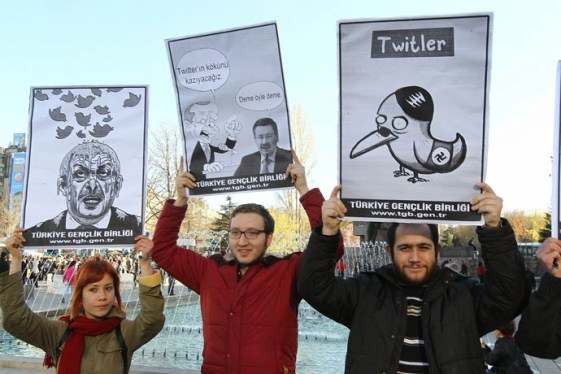
In what appears to be the revelation of yet another attempt to instigate foreign military action on Syrian soil, a video posted to YouTube from an anonymous account allegedly provides the audio of Turkish intelligence Chief Hakan Fidan, Foreign Minister Ahmet Davutoglu, and Deputy Chief of Military Staff Yasar Guler as well as other top Turkish officials discussing a possible attack on Syria.
The operation, if implemented, would have been publicly predicated on the basis of “securing the tomb of Suleyman Shah,” the grandfather of the founder of the Ottoman empire. As Reuters reports, “Ankara regards the tomb as sovereign Turkish territory under a treaty signed with France in 1921, when Syria was under French rule. About two dozen Turkish special forces soldiers permanently guard it.”
As a result, Turkish authorities have moved to block access to YouTube, describing the recording as “villainous,” and a “wretched attack” on national security. This reaction has lent even more credence to the veracity of the recordings.
Two weeks ago, Turkey publicly threatened to respond to any attack on the tomb after a confrontation between fanatical death squads ISIL and other related “rebel” groups in the area.
However, it appears that the controversy over the danger posed to Suleyman’s tomb is nothing more than a weak excuse for overt military incursion into Syria. The idea is that Turkey will be able to claim that it is taking action against “Al-Qaeda” in order to protect Turkish territory, a justification that will be readily accepted by Western audiences.
It is important to point out that the Turkish plan is actually a false flag attack, since Turkey itself has been responsible for the facilitation, direction, and organization of many of the death squads operating in Syria. Indeed, the Turkey-Syria border is so wide open to Western-backed death squads that Turkish border stations might consider installing “death squad crossing” signs to warn other travelers.
The audio recording presents Foreign Ministry Under Secretary Feridun Sinirlioglu as stating “”An operation against ISIL has international legitimacy. We will define it as al Qaeda. There are no issues on the al Qaeda framework. When it comes to the Suleyman Shah tomb, it’s about the protection of national soil.”
Reportedly, the voice of Intelligence Chief Hakan Fidan responds, “Justification can be created. The matter is to create the will.”
TIB, the Turkish telecom authority, has responded by taking an “administrative measure” against Youtube, essentially blocking the website in Turkey. This measure comes a week after Turkish authorities blocked access to Twitter.
According to Reuters, “A source in Erdogan’s office said the video sharing service was blocked as a precaution after the voice recordings created a “national security issue” and said it may lift the ban if YouTube agreed to remove the content.”
If the recordings are real, then Turkey’s attempted false flag attack is yet one more act of aggression against Syria. Turkey has, for some time, acted as a conduit for death squad terrorists into Syria.
Only four days ago, on March 24, Turkey shot down a Syrian fighter jet which Turkey claims violated its airspace. Syrian officials, however, state that it was Turkey who violated Syrian airspace in an attempt to interfere with Syrian operations against death squads near Latakia. It is notable that the Syrian jet crashed on Syrian territory, not Turkish land.
The strike against the Syrian jet was not necessarily an isolated incident as the attack took place alongside a major offensive of “rebels” who pushed across the Turkey-Syria border simultaneously.
It was also reported that Turkey fired a number of artillery and tank shells against Syria military positions.
Eyewitnesses reported seeing Turkish special forces accompanying the death squads across the borders.
As Mimi Al-Laham writes for Land Destroyer Report,
The Al Qaeda attack and takeover of the Kassab border crossing has caused up to2000 to 6000 Armenian Syrians to flee the area. Mass looting and destruction of religious sites was reported by residents (similar to criminal acts carried out in the recently liberated city of Yabroud).
Armenians are once again refugees due to the Turkish government like their ancestors who fled the Armenian Holocaust decades ago.
There has been no mention on the BBC of NATO’s open support for Al Qaeda groups. The attack comes in the backdrop of mass rallies against Turkish President Erdogan, who recently banned Twitter.
The battles in Latakia are ongoing, with the Syrian military inflicting heavy losses on Al Qaeda militants.
Recently by Brandon Turbeville:
- The History and Science of Color Revolutions, Part 2
- New Legislation Could Force Feds To Crack Down on Legal Marijuana
- More ‘Mysterious Snipers’ Responsible For Latest Ukraine Escalation?
Brandon Turbeville is an author out of Florence, South Carolina. He has a Bachelor’s Degree from Francis Marion University and is the author of six books, Codex Alimentarius — The End of Health Freedom, 7 Real Conspiracies, Five Sense Solutions and Dispatches From a Dissident, volume 1 and volume 2, and The Road to Damascus: The Anglo-American Assault on Syria. Turbeville has published over 275 articles dealing on a wide variety of subjects including health, economics, government corruption, and civil liberties. Brandon Turbeville’s podcast Truth on The Tracks can be found every Monday night 9 pm EST at UCYTV. He is available for radio and TV interviews. Please contact activistpost (at) gmail.com.
‘Techneck’ wrinkles caused by constantly using smart devices
 by L.J. Devon, Staff Writer
Natural News
Mar 1, 2014
(NaturalNews) In an age of constant mobile device usage, where tech obsessives constantly look down to their handheld screens, a new sign of aging is emerging.
Tech obsessives are beginning to look older from the face down, as “techneck” wrinkles begin showing up as creases on their necks.
Walk through a mall, go to a restaurant, look around and notice how some people are more in touch with their digital life than their waking life. Take inventory of your own personal habits. How often do you stare down at a screen?
More clinicians helping tech-obsessives remove their neck wrinkles
Caught up in today’s constant information stream and social networking buzz, people of all ages routinely go head down while staring into a screen. The emergence of text messaging, social media, iPods, smartphones, tablets — you name it — has beckoned a generation of tech obsessives who bury their heads in a digital world.
Clinicians are now noticing that this constant head-down posture is creating creases that ring around patient’s necks. This new face-furrow has become the modern sign of aging. The wrinkles, first observed during patient visits for neck treatments, are the new mark signifying tech-obsessive behavior. Non-surgical experts have begun to receive patient concerns hoping to have the wrinkles removed. A treatment nicknamed “Microlift” has even been invented, as people look to remove their self-inflicted”techneck” creases.
As “techneck” wrinkles begin showing up on more people’s necks, they will be categorized with other aging indicators like “laughter lines,” “crows’ feet” or “worry wrinkles.”
Dean Nathanson, Managing Director of CACI International, commented on the issue, “We’re a hard working nation and our hectic everyday lives mean that keeping one’s head down, be it buried in work emails or in an e-reader, is completely the norm.” He continues, “Recently we noticed a surge in enquiries for our product, specifically to combat lines around the neck area.”
Tech obsession can be dangerous to relationships, posture
Not only does tech addiction carve out networks of wrinkles on the neck, but it also deprives people of real-life interaction and affection, causing people to lose their appreciation and connection with people and nature.
This addiction can be a distraction during commutes, leading to accidents on the road. It can interrupt a person’s sex life. It’s easy to be distracted by handheld devices in the middle of performing everyday tasks. It’s easy to look down and stare into devices like smartphones or iPods while lying in bed, working at the desk or talking to other people.
This tech obsession may keep people up to date in today’s information age, but constant looking down into a screen makes one look like a zombie. In addition, clinicians point out that this habit is not good for back pain, neck pain or overall good posture.
Josh Catlett, a chartered physiotherapist, says, “Our bodies are not designed to be in the same position for long periods and many people also get into bad postures when using these devices. As a result, physiotherapists are seeing patients with neck, back and shoulder problems and also pain in the hands and wrists. It is important that people recognise the need to take regular breaks from using such devices and also to consider their posture at all times.”
Sources for this article include:
VIDEO — How To Send Your Child to School Without Having to Vaccinate Them in Ontario
by Frank Gotz
Canadian Awareness Network
Jan 8, 2014
This video is for parents who want to send their children to school without having to get them vaccinated. It is illegal and unlawful to force medications onto people,read the Health Care Consent Act to know your medical rights.
If parents choose to get their kids vaccinated that their free will choice, but they have no right to manipulate other parents to do the same. Canada is not a communist country, no one can force medications onto people. The Immunization of School Pupils Act states that if a parent wishes to send their child to school in Ontario without getting them vaccinated all they have to do is send affidavit to the school board explaining why it goes against their beliefs to get a child vaccinated. Thats how easy it is.
More info,check this if you’re from another province:
http://canadianawareness.org/2013/05/…
Vaccine Exemption form (affidavit template):
http://vran.org/wp-content/documents/…
Subscribe and Please stay tuned for future reports
Canadian Awareness Network:
Website: http://CanadianAwareness.org
Facebook: https://www.facebook.com/pages/Canadi…
Livestream: https://new.livestream.com/accounts/6…
Main C.A.N YouTube Channel:
http://youtube.com/canawareness
Donate $0.50 to Canadian Awareness Network to help keep us going:
https://fundrazr.com/campaigns/0cAgf?…
Follow Me:
http://facebook.com/FrankieGotz
http://twitter.com/FrankieGotz
http://youtube.com/FrankieGotz
Ukrainian nationalists threaten to storm parliament after leader’s killing — video included
Published time: March 27, 2014 19:23
Edited time: March 28, 2014 04:44
Download video (46.59 MB)
Over 1,500 nationalists from the Right Sector have circled Ukrainian parliament in Kiev threatening to storm it on Thursday. They demanded the resignation of the interior minister after their leader Muzychko was killed in a police operation.
Up to 2,000 members of the Right Sector, which recently was revamped into a political party, flooded the square in front of Verkhovna Rada in the Ukrainian capital on Thursday night. The radicals, who brought car tires to burn with them, were banging on the Parliament’s doors, smashing the glass parts in them.
Wearing masks and brandishing bats, they were shouting “Avakov, get out!”
The parliament building was empty except for guards, some administrative staff and reporters. All the MPs had earlier left the building through an underground tunnel, RIA Novosti reported.
The protesters were threatening to break into the parliament if their demands were not met, journalists reported from the scene. The Rada’s security in the meantime concentrated in front of the entrance to the building and prepared water cannons, urging the journalists inside not to approach the windows looking onto Constitution Square.
Several hours into the standoff activists announced the rally was over for tonight as they decided not to storm the building just yet, but reconvene tomorrow.
On Friday, Verkhovna Rada will hold an emergency session to discuss the possibility of Avakov’s resignation, one of the representatives of the Right sector told Itar-Tass. Right Sector activists have been urged to gather outside the Parliament building at 9:00 GMT.
Although the major part of the crowd has already dispersed, about a hundred people are still reportedly picketing the building .
Принесли залізяки. Гупають у них pic.twitter.com/0yJC8j8zGb
— Oksana Kovalenko (@superumka) March 27, 2014
Interior Minister Arsen Avakov is held personally responsible by the nationalists for the death of Aleksandr Muzychko, also known as Sashko Bilyi, one of the Right Sector leaders. Muzychko was declared killed in a police raid against his gang in Rovno, western Ukraine, on Tuesday. Following the death, Right Sector leaders threatened Avakov with revenge, though they did not specify exactly what they would do. Dmitry Yarosh called for the minister’s dismissal. “We’ll wait for the negotiators from the Parliament, the MPs, but we won’t settle for Avakov’s resignation – we want his tribunal,” the radicals announced through megaphones. The radicals also blame the interior minister for not putting enough effort into investigating investigate the deaths of protesters during the Maidan standoff in January and February.
Правый сектор прямо в эту минуту грозятся штурмом Верховной Раде Украины pic.twitter.com/bC5ooAgOBO
— Serge Medyanik (@serge_medyanik) March 27, 2014
The leader of the UDAR party and former boxing champ, Vitaly Klitschko, went out to the negotiate with the Right Sector in front of the Rada.
Klitschko tried to persuade the radicals to give up the idea of storming the parliament building as “it will destabilize the current situation in Ukraine. The parliament building is empty, because the deputies have already left.”

Reuters / Valentyn Ogirenko

Reuters / Vasily Fedosenko

Reuters / Maks Levin
VIDEO — Mexican Migration – Not as It Seems – Jauqin Flores
108morris108
Mar 24, 2014
There are plans to make mexico a failed state ….


