
Confirmed: Israeli Attack on Syria Air Defense Facility
 by Brandon Turbeville
Activist Post
October 31, 2013
Update: RT is now reporting that an Obama administration official has confirmed to CNN that this was in fact an Israeli attack. There is still no comment from the Syrian or Israeli government. (Source)
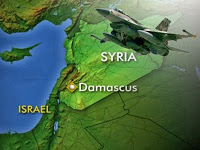
On the heels of a reported chemical attack committed by the death squads on the Syria/Turkey border, a massive explosion has completely destroyed a Syrian air defense base in Snobar Jableh, Syria which is located near Latakia, a port city on the coast of the Mediterranean. Snobar Jableh is just south of Latakia.
The attacks allegedly were to have taken place on Wednesday night.
Although no one has publicly claimed responsibility for the explosion, both Syrian and Lebanese media are attributing the attack to Israeli forces. Even Saudi-owned Al-Arabiya is now reporting Israeli responsibility for the attacks, citing anonymous sources.
Al-Arabiya also claims that the target of the attacks were two shipments of SA-8 Surface-To-Air missiles slated for delivery to Hezbollah. The organization claims that the two targets were successfully destroyed.
Syrian news agency Dam Press is reporting that the facility was indeed heavily damaged but that there were no injuries. Business Insider claims that a Syrian security official has confirmed the attack.
However, Voice of Russia reports that Syria Special Services are denying the destruction of the base. VOA quotes a representative of Syrian intelligence services saying that “It is a lie and a provocation.”
The conflicting nature of the official responses could be attributed to the fact that, while the attack did indeed take place, the level of damage was not as severe as that claimed by death squads and Western/Israeli media outlets.
Nevertheless, the targets appear to have been relatively sophisticated missiles housed at the facility. As Yasser Okbi of Ynetnews writes,
Channel 2 News reported that the attack’s target was a S-125 surface-to-air missiles battery.
Satellite images of the area obtained by Channel 2 show the Russian-made Neva missiles, as well as a SA-3 missile battery, that also includes a command center with a radar to track the missiles’ targets and broadcasting anthenas to track the missiles as they are launched. The missiles have a range of 35km. and a 70k. warhead.
Lebanese media has reported that six planes belonging to the Israeli Air Force flew over Ayta Ash Shab, Bint Jbeil, and Marjayoun located in southern Lebanon during the night.
These reports appear to be based an official press release from the Lebanese military and assert that “the airplanes entered Lebanese airspace at around 1:40 P.M. and circled over various places before leaving over the Mediterranean Sea near Tripoli and Naqoura at 5 P.M.”
As Business Insider reports, eyewitnesses noticed an suspicious amount of aircraft activity shortly before the blast. As Michael Kelley writes,
“During the night, we noticed much aircraft activity,” an eyewitness told a Lebanese Al-Mustaqbal news outlet. “At a certain point, we were woken up by the sound of blasts and we saw a large fire and many explosions at the agricultural institute. Military and security forces arrived at the scene, put out the flames, and closed off the entire area for kilometers.”
In addition, reports are also suggesting that the missiles which hit the Syrian Air Defense facility came from the sea.
Yet, while claims over Israeli responsibility for the attack can, at this point, only be considered speculation, all evidence does seem to point in the direction of Israel. Indeed, the track record of the Israelis lends a great deal of credence to the charges.
It is important to remember that Israel has launched attacks against Syrian forces and military convoys on at least four different occasions during the course of the current crisis.
In addition, it is generally understood that Israel was responsible for an attack on a shipment of missiles that were on their way from Syria to Lebanon last week, although the exact location – whether on Syrian or Lebanese soil – is still uncertain.
Recently From Brandon Turbeville:
- The Propaganda Narrative of a Peaceful Muslim Brotherhood
- New Rebel Chemical Weapons Attack in Syria
- Local Departments Fortify Police State With Armored Personnel Carriers
Brandon Turbeville is an author out of Florence, South Carolina. He has a Bachelor’s Degree from Francis Marion University and is the author of six books, Codex Alimentarius — The End of Health Freedom, 7 Real Conspiracies, Five Sense Solutions and Dispatches From a Dissident, volume 1 and volume 2, and The Road to Damascus: The Anglo-American Assault on Syria. Turbeville has published over 275 articles dealing on a wide variety of subjects including health, economics, government corruption, and civil liberties. Brandon Turbeville’s podcast Truth on The Tracks can be found every Monday night 9 pm EST at UCYTV. He is available for radio and TV interviews. Please contact activistpost (at) gmail.com.
VIDEO — How To Prepare Your Community for Disaster
We Are Change
October 28, 2013
In this video Luke Rudkowski interviews the founder of oathkeepers.org Stewart Rhodes. The two discuss Oathkeepers latest initiative in going operational and creating self sustainable communities.
follow luke on https://twitter.com/Lukewearechange
https://facebook.com/LukeWeAreChange
http://instagram.com/lukewearechange
https://plus.google.com/1023224594778…
Support us by subscribing here http://bit.ly/P05Kqb
http;//www.facebook.com/wearechange.org
Check out our merchandise: http://wearechange.org/store/
Become a member of The Sponsor Lounge and get exclusive behind the scenes content while helping us grow! Join us today! http:///www.wearechange.org/donate
Mozilla Releases Tool That Shows Who Is Tracking Your Online Activity
 by Terry Wilson
Canadian Awareness Network
October 28, 2013
Mozilla has released a free add on called Lightbeam. The add on allows users to view a real time chart of any tracking information being added to your computer in the form of cookies.
The chart gives users a clear view of all third party tracking cookies that are used for targeted advertising, among many other uses.
Mark Surman, Mozilla’s executive director, shas stated: “It’s a stake in the ground in terms of letting people know the ways they are being tracked. At Mozilla, we believe everyone should be in control of their user data and privacy and we want people to make informed decisions about their Web experience.”
Here is the about section from the Lightbeam webpage:
About this Add-on
Using interactive visualizations, Lightbeam enables you to see the first and third party sites you interact with on the Web. As you browse, Lightbeam reveals the full depth of the Web today, including parts that are not transparent to the average user. Using three distinct interactive graphic representations — Graph, Clock and List — Lightbeam enables you to examine individual third parties over time and space, identify where they connect to your online activity and provides ways for you to engage with this unique view of the Web.
How Lightbeam Works
When you activate Lightbeam and visit a website, sometimes called the first party, the add-on creates a real time visualization of all the third parties that are active on that page. The default visualization is called the Graph view. As you then browse to a second site, the add-on highlights the third parties that are also active there and shows which third parties have seen you at both sites. The visualization grows with every site you visit and every request made from your browser. In addition to the Graph view, you can also see your data in a Clock view to examine connections over a 24-hour period or in a List view to drill down into individual sites.
How You Can Use Lightbeam to Help Us Illuminate the Inner Workings of the Web
As a part of Lightbeam, we’re creating a big-picture view of how tracking works on the Internet, and how third-party sites are connected to multiple other sites. You may contribute your data to our crowdsourced directory by simply turning on the share switch within the add-on. To disable crowdsourcing, you can turn it off at any time. You can view your local data stored within Lightbeam at any time, or save your data by clicking the “Save” button under the data section on the left side of the add-on.
addons.mozilla.org
Lightbeam as it stands if only for desktop browsers and Apple has rejected from its apps store, by developers which incorporate “cookie tracking” technology.
After the Snowden revelations this looks to be a good first step towards online privacy!
VIDEO — Woolwich Slide Presentation I Made in London – Morris
108morris108
October 11, 2013
Organised by http://disseminus.com at Rumi’s cave in London: https://twitter.com/RumisCave on October 7th
From the description at disseminus based on my themes of discussion:
A discussion led by Morris 108
On the subject of conspiracy theories:
They are demeaned and the perpetrators are smeared — normally emotionally and not intellectually. There is also an important distinction between a False Flag and a Hoax. Furthermore, there are limits as to how much any organisation of ‘truthers’ cannot be thoroughly infiltrated. It is worth realising that the very people who plan a hoax or a false flag may also be the ones who plan the cover ups and investigative committees, and so it seems that the questions are endless, or are they… ?
http://disseminus.com/2013/10/11/on-t…
Please note the podcast is of an interview the day after the presentation – this video is just the first few minutes – the woolwich part …
Obscuring the Details: A Panoramic Look at America’s Case Against Syria
 by Mahdi Darius Nazemroaya
Global Research
October 13, 2013
The US federal government and the various agencies, media organizations, individuals, foreign governments, non-governmental organizations, lobbies, forces, and other entities that are tied to it have done everything in their power to obscure the details involving the chemical attacks that took place in Syria on August 21, 2013. The aim has been to justify the US-led foreign campaign that was launched against Syria in 2011 by making the Syrian government appear culpable of grievous crimes. The chemical attack on Ghouta has now come to represent the crux of the matter.
From the very start there was double-speaking coming from Washington and its cohorts about what happened in Ghouta. The Obama Administration and America’s allies deliberately ignored that chemical weapons were used in Syria prior to August 21, 2013. They have pretended that the United Nations investigation team that had arrived in Syria when chemical weapons were used in Ghouta had just stumbled there coincidentaly or with the purpose of «inspecting» the Syrian government’s chemical weapon depots.
Ignoring the Original Mandate of the UN Investigators
In reality, the UN team that arrived in Syria in August was not a team of weapons inspectors. It was a team of «investigators.» Even more importantly, the Syrian government had invited the UN investigation team to Syria in March 2013. This was because the insurgents had launched chemical attacks on March 19, 2013. The US and its allies tried to blame Syria, but they were embarrassingly contradicted by Carla Del Ponte, one of the UN investigators responsible for Syria, that said all the evidence pointed to the insurgents and not the Syrian government. Although she backed her conclusion with facts, Del Ponte was dismissed by the US, and NATO even abnormally took the time to make a statement against here. Moreover, the insurgents were even caught trying to sneak sarin gas into Syria from Turkey by Turkish security forces in May 2013.
Because the insurgents were behind the chemical attacks in March 2013, Syria’s government originally wanted the UN investigators to have the authority and mandate to officially assign blame on which party used the chemical weapons. The US, however, put all types of obstacles in place to prevent the UN from issuing a report that the US-supported insurgents were using chemical weapons. It was the US, Britain, and France that prevented an UN investigation that could assign responsibility for any chemical weapon attacks from taking place. Instead they wanted a politicized inspection team that would try to demonize Syria and write reports against Damascus. This led to a deadlock in the United Nations over the type of team that the UN would send to work in Syria. A settlement was eventually reached. The US and its allies eventually reduced the mandate of the UN inspectors to one of only determining if chemical weapons were used.
The United Nation’s team even spells out the fact that they had originally entered Syria to investigate the March 2013 chemical attacks all in their September 2013 report’s Letter of Transmittal signed by Ake Sellstrom, the head of the UN mission, Scott Cairns, the head of the OPCW (Organization for the Prohibition of Chemical Weapons) component of the UN mission, and Maurizio Barbeschi, the head of the World Health Organization (WHO) component of the UN mission. The UN team states the following on the report’s third page: «Having arrived in the Syrian Arab Republic on 18 August 2013, we were in Damascus on the 21 August preparing to conduct on-site inspections in connection with our investigation into the allegations concerning the use of chemical weapons in Khan al-Asal and in Sheik Maqsood and Saraqueb. Based on several reports of allegations on the use of chemical weapons in the Ghouta area of Damascus on 21 August 2013, you instructed us to focus our investigation efforts on the Ghouta allegations. We, therefore, proceeded to conduct on-site inspections in Moadamiyah in West Ghouta and Ein Tarma and Zamalka in East Ghouta».
Cooked US Intelligence and Implausible White House Stories
The narrative that the US government and its allies present about Ghouta is contradictory to logic and highly implausible. Added to the fact that the US has a track record of lying to create pretexts for aggression, Washington’s claims should be heavily scrutinized. So should the same group of non-governmental organizations that have consistently backed American wars and conjured instant reports to justify US foreign policy and war.
President Obama and John Kerry claimed that the Syrian military used chemical weapons while it was advancing militarily in Ghouta. This is contrary to any procedure that would be followed by an organized military force. An advancing military would not gas an area when it was entering it with its forces. Obama and Kerry might as well have claimed that the Syrian military had decided to reduce the number of its own troops by killing them.
Furthermore, there was no tactical need to use chemical weapons in Ghouta whatsoever. Ghouta did not have a large amount of anti-government fighters. Nor was Ghouta under the full control of the insurgents. Despite being in worse situations, the Syrian military never bothered using chemical weapons earlier in the conflict when things were dire for the Syrian government.
On the contrary, using chemical weapons would be a self-defeating and suicidal move by the Syrian government. Why would the Syrian government use chemical weapons when the combined UN team of OPCW and WHO investigators arrived in Syria to investigate the use of chemical attacks? Moreover, why would the Syrian military decide to use chemical weapons unnecessarily?
No evidence has been provided that the Syrian government was responsible for the chemical attack on Ghouta. On the contrary the US has only made claims and a series of contradictory statements. Using cooked Israeli evidence, Washington has claimed that the orders to use chemical weapons were intercepted, but has failed to provide the transcripts or to give any names of Syrian officials. In its own intelligence report the US government has also said that it knew in advance that the chemical attacks were going to happen. If the US government is to be believed, this would mean that the Obama Administration did not mention it and did nothing to prevent the use of chemical weapons from happening.
It turns out that the US government was given some type of advanced warning by the Iranian government about a chemical attack in Syria. The warning, however, was that the insurgents planned on using chemical weapons. This has been matched by statements from insurgents themselves that Saudi Arabia had provided the chemical weapons to the insurgents. Russian officials have also assessed that the chemical attacks in Ghouta were part of an intelligence operation conducted by Saudi Arabia.
MUST READ — Nanoparticles Are in Our Food, Clothing and Medicine — And No One Knows for Sure How Dangerous They Might Be
by Heather Millar
Alternet
February 23, 2013
Inside nanotechnology’s little universe of big unknowns.
This article first appeared at Orion Magazine under the title “Pandora’s Boxes.” You can enjoy future Orion articles by signing up to the magazine’s free trial subscription program.
A pair of scientists, sporting white clean-suits complete with helmets and face masks, approach a prefab agricultural greenhouse in a clearing at Duke University’s Research Forest. Inside are two long rows of wooden boxes the size of large horse troughs, which hold samples of the natural world that surrounds them—the pine groves and rhododendron thickets of North Carolina’s piedmont, which at this moment are alive with bird song.
Looking a lot like the government bad guys in E.T., the two men cautiously hover over a row of boxes containing native sedges, water grasses, and Zebra fish to spray a fine mist of silver nanoparticles over them. Their goal: to investigate how the world inside the boxes is altered by these essentially invisible and notoriously unpredictable particles.
The researchers are part of a multidisciplinary coalition of scientists from Duke, Stanford, Carnegie Mellon, Howard, Virginia Tech, and the University of Kentucky, headquartered at Duke’s Center for the Environmental Implications of NanoTechnology (CEINT), that represents one of the most comprehensive efforts yet to measure how nanoparticles affect ecosystems and biological systems.
So far the questions about whether nanoparticles are an environmental risk outnumber the answers, which is why the Duke scientists take the precaution of wearing clean-suits while dosing the boxes—no one’s sure what exposure to a high concentration of nanoparticles might do. Among the few things we do know about them are that they sail past the blood-brain barrier and can harm the nervous systems of some animals.
The regulation of nanoparticles has been recommended for more than a decade, but there’s no agreement on exactly how to do it. Meanwhile, the lid has already been lifted on nanotechnology. The use of man-made nanoparticles has spread into almost every area of our lives: food, clothing, medicine, shampoo, toothpaste, sunscreen, and thousands of other products.
Regulatory structures, both here and abroad, are completely unprepared for this onslaught of nanoproducts, because nanoparticles don’t fit into traditional regulatory categories. Additionally, companies often shield details about them by labeling them “proprietary”; they’re difficult to detect; we don’t have protocols for judging their effects; and we haven’t even developed the right tools for tracking them. If nanotechnology and its uses represent a frontier of sorts, it’s not simply the Wild West—it’s the Chaotic, Undiscovered, Uncontrollable West.
St. Jude Day Storms: 13 Dead as Hurricane-Force Winds Batter Britain, France, Germany
weather.com
October 28, 2013
LONDON — A savage coastal storm powered by hurricane-force gusts slashed its way through Britain and western Europe on Monday, felling trees, flooding lowlands and snarling traffic in the air, at sea and on land. At least 13 people were reported killed.
It was one of the worst storms to hit the region in years. The deadly tempest had no formal name — and wasn’t officially classified as a hurricane due to a meteorological standard — but it was dubbed the St. Jude storm (after the patron saint of lost causes) and “stormageddon” on social networks.
Gusts of 99 miles per hour were reported on the Isle of Wight in southern England, while gusts up to 80 mph hit the British mainland. Later in the day, parts of Denmark saw record gusts up of to 120 mph and an autobahn in central Germany was shut down by gusts up to 62 mph.
“This was not just a British storm,” said weather.com meteorologist Nick Wiltgen. “The core of powerful winds marched relentlessly east, raking northern France and the Low Countries before slamming into northern Germany, Denmark, and southern Sweden. That latter phase in particular was exceptionally intense, with a 105-mph gust in extreme northern Germany and many many places gusting over 85 mph in the surrounding area.”
Wiltgen warned the high winds would sweep across the southern Baltic Sea and into the countries of Estonia, Latvia, and Lithuania Monday night.
(MORE: Track the UK Storm)
All across the region, people were warned to stay indoors. Hundreds of trees were uprooted or split, blocking roads and crushing cars. The Dutch were told to leave their beloved bicycles at home for safety’s sake.
At least thirteen storm-related deaths were reported, most victims crushed by falling trees. Germany had six deaths, Britain had five and the Netherlands and Denmark had one each. One woman was also missing after being swept into the surf in France.
Two people were killed in London by a gas explosion and a British teen who played in the storm-driven surf was swept out to sea. A man in Denmark was killed when a brick flew off and hit him in the head.
Despite the strength of its gusts, the storm was not considered a hurricane because it didn’t form over warm expanses of open ocean like the hurricanes that batter the Caribbean and the United States. Britain’s national weather service, the Met Office, said Britain does not get hurricanes because those are “warm latitude” storms that draw their energy from seas far warmer than the North Atlantic. Monday’s storm also did not have an “eye” at its center like most hurricanes.


