The FEMA Camp (tent city) dubbed “Camp Freedom” is home to over 800 citizens in the Martial Law controlled region of New Jersey that was devastated by the recent super storm.
 By Shepard Ambellas
theintelhub.com
November 10, 2012
OCEANPORT — No media is allowed into “Camp Freedom” as the government is afraid the truth will reach the masses. City and government buses have been converted to transport displaced civilians and emergency workers into the camp as a major snow squall and bad weather continue to plague the region.
Martial law is still in effect.
Military, FEMA and the Red Cross are on scene inside the camp perimeter.
The third world conditions at “Camp Freedom” are despicable to say the least as residents have stated:
“Everybody is angry over here. It’s like being prison,” said Sotelo, who grew up in Wayne. “I’ve been working since I was 10. I’ve been on my own since I was 16. And for things to be so bad that it’s pissing me off, that tells you something.”, according to app.com.
More displaced residents are expected to sign-in as weather and fuel conditions worsen. Military and law enforcement are running heavy patrols in the storm battered areas.
New Jersey Governor Chris Christie was quoted as saying:
“I mean, I can’t build them apartments right now, in the next week, so we’re gonna get them as close to their homes as we can get them. But I can’t wave a magic wand and create housing.”
100′s of thousands of people remain without power as emergency crews work day and night.
CBS reported, “Sandy’s destruction has left thousands of people homeless for the foreseeable future. FEMA estimates 101,000 people in New York and New Jersey qualify for hotel subsidies and 56,000 people qualify for help renting a new home or fixing a damaged one. And the agency’s moving in several hundred mobile homes into the hurricane zone.”
And if this is not enough for you yet or if it is all unbelievable, in New York City they are now using prison facilities as temporary housing facilities for displaced citizens, solving the need for portable FEMA camps.
The New York Post reported;
The state is eyeing the recently shuttered Arthur Kill Correctional Facility on Staten Island as a temporary home for people displaced by the ravages of Sandy and this week’s nasty nor’easter, officials said yesterday.
Closed last December, the medium-security prison could feed and sleep as many as 900 people with nowhere else to go.
“Our facilities staff have to go through it to determine what it would take to get it up and running for such a purpose,” said Peter Cutler, a spokesman for the state Department of Corrections.

Displaced Sandy victims could be housed in dorms at Staten Island’s shuttered Arthur Kill Correctional Facility — razor wire and all.
“Of course, the challenge is the fact that it was closed a year ago and all of the major infrastructure components, such as boilers and wastewater system, were deactivated.”
There are as many as 40,000 New Yorkers who need shelter from the one-two punch of extreme weather events, according to city estimates.
On Staten Island alone, about 5,200 people applied for temporary FEMA housing, but only about two dozen people have been successfully placed, federal sources said.
So it may resemble a scene out of “The Walking Dead,” but officials and displaced people alike say the former prison ought to be considered as a refuge.
*****
 Read more articles by this author HERE.
Shepard Ambellas is the founder & director of theintelhub.com (a popular alternative news website), researcher, investigative journalist, radio talk show host, and filmmaker.
Follow Shepard on Twitter/NotForSale2NWO.
Watch and subscribe to Shepard on Youtube.com/user/NotForSale2NWO.
Please feel free to checkout SHADEtheMotionPicture.com (An Ambellas & Bermas Film).
November 14, 2012 | Categories: FEMA, natural / "natural" disasters, news, tyranny, US | 1 Comment
by Dana Gabriel
BE YOUR OWN LEADER
November 12, 2012
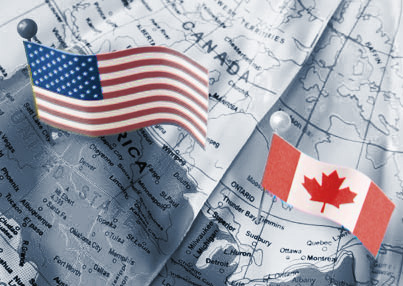
As part of the Beyond the Border initiative, the U.S. and Canada are strengthening cybersecurity cooperation. In a move that received little attention, both countries recently announced a joint cybersecurity action plan. Cyber threats know no national borders which has made the issue an important security concern. A fully integrated North American security perimeter would be entrusted with preventing and responding to any such attacks.
One of the key priorities identified in the November 2011 Beyond the Border Action Plan is cybersecurity. The agreement lays the framework for enhancing U.S.-Canada, “bilateral cyber-security cooperation to better protect vital government and critical digital infrastructure and increase both countries’ ability to respond jointly and effectively to cyber incidents. This will be achieved through joint projects and operational efforts, including joint briefings with the private sector and other stakeholders, and the enhancement of real-time information sharing between operation centres.” The deal will also work towards strengthening, “cooperation on international cyber-security and Internet governance issues to promote prosperity, enhance security and preserve openness in our networked world.” Merging cyber threat strategies would force Canada to further bring its security practices in line with American ones and under the reach of the Department of Homeland Security (DHS).
On October 26, Public Safety Canada and the DHS released a Cybersecurity Action Plan which represents a key commitment under the Beyond the Border agreement. A press release explained that the specific goals include, “enhancing collaboration on cyber incident management between each country’s cyber security operations centres, improving information sharing and engagement with the private sector, and continuing the ongoing collaboration between Canada and the U.S. on the promotion of cyber security awareness to the public.” The new joint action plan promotes a shared approach to cybersecurity and digital critical infrastructure protection. Building on these initiatives, both countries also seek to further integrate cyber capabilities into military command structures.
Earlier this year, Defense Secretary Leon Panetta authorized the creation of the Joint Cyber Center (JCC) run by the North American Aerospace Defense Command (NORAD) and U.S. Northern Command. The JCC will bring together personnel from the intelligence, operations and command control systems divisions. The aim is, “To better integrate cyber into the headquarters missions by improving situational awareness in the cyber domain, improving the defense of the commands’ networks and providing cyber consequence response and recovery support to civil authorities.” In June, DefenseNews reported that Secretary Panetta, “approved a new organizational framework, a plan designed as a ‘first step’ towards standardized cyber operations.” This includes having a JCC at each geographic combatant command which is part of ongoing efforts to not only boost U.S., but continental cyber defense capabilities. In the near future, the U.S. and Canada could create a binational “cyber-NORAD” to protect North America from shared threats.
The North Atlantic Treaty Organization (NATO) released an updated Policy on Cyber Defence in June 2011. According to NATO’s website, “This revised policy offers a coordinated approach to cyber defence across the Alliance with a focus on preventing cyber attacks and building resilience.” It will act as the framework, “for how NATO will assist Allies, upon request, in their own cyber defence efforts, with the aim to optimise information sharing and situational awareness, collaboration and secure interoperability.” The new policy also, “sets the principles on NATO’s cyber defence cooperation with partner countries, international organisations, the private sector and academia.” In May of this year, the Chicago Summit Declaration, “committed to provide the resources and complete the necessary reforms to bring all NATO bodies under centralised cyber protection.” It also pledged to, “further integrate cyber defence measures into Alliance structures and procedures.” U.S.-Canadian military cooperation also extends through NATO and this includes in the realm of cybersecurity.
There are reports that President Barack Obama may be close to issuing a cybersecurity executive order as a means of bypassing Congress. Under the guise of cybersecurity, the U.S. and Canada have been individually pushing draconian legislation domestically which would grant government agencies sweeping new powers. The implications would be far reaching and pose a risk to privacy and civil liberties. Through the Beyond the Border initiative both countries are pursuing an integrated cybersecurity agenda. As they move forward and address common threats to North America, cyber and perimeter security will be further defined and dominated by U.S. interests.
Related articles by Dana Gabriel
Taking the U.S.-Canada Partnership to the Next Level
Pretext for a North American Homeland Security Perimeter
Strengthening U.S.-Canada Security Interests in North America
Perimeter Security and an Integrated North American Command
Dana Gabriel is an activist and independent researcher. He writes about trade, globalization, sovereignty, security, as well as other issues. Contact: beyourownleader@hotmail.com Visit his blog at Be Your Own Leader
[hat tip: Activist Post]
November 14, 2012 | Categories: Canada, internet, NATO, news, sovereignty, tyranny, US | Leave a comment
by Niall Green
Global Research
November 12, 2012
World Socialist Web Site
 Following the re-election of Barack Obama in last week’s US presidential poll, Washington and its allies have stepped up their war drive against Syria. In the most serious escalation of the 20-month conflict in the Middle East country, the Israeli armed forces fired a missile into Syrian territory Sunday.
The strike, by an advanced Tammuz guided missile, is the first acknowledged attack by the Israeli Defense Forces (IDF) on Syria since the 1973 Yom Kippur War. Israeli warplanes struck the site of an alleged Syrian nuclear project in 2007, but neither regime ever officially confirmed the action.
The Israeli missile reportedly struck a Syrian army base, though the government in Damascus has not released any details of the damage caused.
The IDF strike was reportedly carried out in response to a Syrian mortar that landed in the Golan Heights, the Syrian territory illegally occupied by Israel since 1967. Nobody was reported killed or injured by what appears to have been a misdirected 120mm Syrian tank shell.
A statement issued by the IDF shortly after the Tammuz missile struck Syrian territory claimed, “IDF forces fired warning shots and relayed a message to the Syrian forces via the United Nations that warns against additional fire. Additional fire will prompt a quick response.”
The IDF acknowledged that eight Syrian shells had fallen within the Israeli-controlled section of the Golan Heights over the past two months, likely the inadvertent result of fighting between Syrian government forces and “rebel” fighters, without any military response from the IDF.
While Israel appears to have turned a blind eye to errant Syrian shells in the weeks leading up to the US election, the decision by the IDF to launch a strike now indicates that Washington and its allies are entering into a new phase of their conflict with the government of President Bashar al-Assad.
Further evidence of a shift toward open conflict between the major powers and the Syrian regime was provided by General Sir David Richards, Britain’s Chief of the Defence Staff, who on Sunday revealed to the BBC that plans were in place for a military intervention by British forces into Syria.
General Richards told BBC television’s Andrew Marr Show that he expected the humanitarian crisis in Syria to worsen over the winter, which would increase pressure to “intervene in a limited way.”
“Obviously we develop contingency plans to look at all these things. It is my job to make sure that these options are continually brushed over to make sure that we can deliver them and they are credible,” Gen. Richards revealed.
While the UK’s top soldier couched his comments in “humanitarian” language, any invasion of Syrian territory by British and allied forces would be an act of war that would throw Syria and the entire region into even deeper turmoil, threatening to spark military counter-measures by Damascus.
Such a military intervention by Britain and the US, acting with their NATO and Middle Eastern allies, could spark a wider conflict with countries such as Iran, Russia, and China, which have retained close ties to the Assad regime and feel threatened by the explosion of militarist aggression, led by Washington, in the region.
In preparation for such a major offensive against Syria, the Obama administration has initiated a tactical shift away from some of the opposition political forces it has relied upon until now.
Addressing a press conference in Zagreb, Croatia, October 31, Secretary of State Hillary Clinton announced that the US was transferring its support from the Syrian National Council (SNC) to a new opposition leadership.
After promoting the SNC for more than a year as the “legitimate” representative of the Syrian people, Clinton declared that they “could no longer be viewed as the visible leader of the opposition.”
The SNC could “be part of a larger opposition,” Clinton allowed. “But that opposition must include people from inside Syria and others who have a legitimate voice that needs to be heard.”
A Turkish-based gathering of affluent Syrian exiles with links to the CIA and the Muslim Brotherhood, the SNC is deeply unpopular and wields almost no influence inside Syria. The fact that Washington has abruptly and unilaterally jettisoned the SNC only exposes the bogus character of US claims to have been working to secure “peace” and “democracy” in Syria.
Secretary Clinton then called for the formation of a new Syrian opposition bloc, declaring that the US State Department had compiled a list of “names and organizations that we believe should be included in any leadership structure.”
Washington moved rapidly to convene a meeting of its Syrian assets at a luxury hotel in the Qatari capital, Doha. The four-day gathering, which ended Sunday, saw officials from the US, Qatar, Saudi Arabia, Turkey, and the United Arab Emirates broker a tentative deal between various opposition groups and individuals to establish a 55- to 60-member assembly.
As late as 3 a.m. on Sunday morning, the Doha talks seemed on the brink of collapse, as SNC representatives fought to maintain their influence over the new opposition bloc. One source inside the talks told the Reuters news agency that the SNC finally agreed to take a backseat role within the new assembly only after being threatened that the umbrella group would be set up and recognized by the US and its allies with or without the participation of the SNC.
The Obama administration expects that this new opposition leadership, which has been named the Syrian National Coalition for Opposition and Revolutionary Forces, will be even more directly subordinate to the orders coming from State Department, the Pentagon and the CIA.
Washington also hopes that the refurbished opposition bloc will provide a more “inclusive” face for the US-led proxy war against Syria, proving more able to wield influence inside the country than the discredited SNC.
Cobbled together from various religious figures, exiled academics, disgruntled businessmen, defectors from the Assad regime, and Islamist militia commanders, the new Syrian National Coalition for Opposition and Revolutionary Forces is unlikely to prove any more popular than the old SNC.
The new head of the Syrian opposition assembly is Moaz al-Khatib, a Sunni Muslim cleric. The former imam of the Umayyad mosque in Damascus, Khatib fled Syria in July after being repeatedly detained by Syrian authorities for voicing criticisms of the regime.
Considered to be a political and religious “moderate,” Khatib is a compromise candidate between the rival factions of the Syrian opposition, all of whom are scrambling to secure foreign backing and a share in the spoils of victory in the event that the Assad regime falls. Given these divisions, which were evident during the conference in Doha, it is doubtful that Khatib will be able to unify the opposition forces.
Khatib’s prominent position at the head of a major Damascus mosque is intended to garner support for the opposition from moderate Sunnis and the urban population of Syria’s capital city. Despite widespread popular hatred of the Assad dictatorship, many Syrians remain deeply hostile to the Sunni sectarian-based “rebel” militias that Washington and its allies are using as their shock troops to weaken and destabilize Assad’s forces.
But the main purpose of Khatib’s sudden elevation is to provide Washington with another face — without widespread support, and just as disposable as SNC — behind which it can work to suppress the social demands of the Syrian masses and enforce the interests of imperialism in the Middle East.
Related content:
-
U.S. & Israel Selecting Targets for Cruise Missile First-Strike Attack
Multiple military sources have told the Global Network that Pentagon personnel responsible for selecting targets for cruise missile first strike attacks have been sent to Israel.
This indicates that U.S. and Israeli military strategists are now likely meeting to plan a joint attack on Syria and/or Iran.…
-
-
Iran, Syria, Turkey, Israel and NATO: The Dangers of Military Escalation
by Stephen Lendman
Days of Syrian/Turkish border incidents threaten further escalation into something more serious. Free Syrian Army (FSA) militants fired mortar rounds on Turkish territory from Syrian locations they control.
Assad was wrongfully blamed for their provocation. Syria has been very circumspect.…
-
-
WAR ON SYRIA: UN agrees to deploy monitors to Syria as Washington ramps up military intervention
The United Nations Security Council agreed Saturday to deploy 30 international military observers to Syria. An advance team of six monitors met Saturday with former UN General Secretary Kofi Annan in the Syrian capital, Damascus.
Annan is in Syria as head of a mission sponsored by the UN and the Arab League to negotiate a six-point “peace plan” between the government of President Bashar al-Assad and armed opposition groups.…
Disclaimer: The contents of this article are of sole responsibility of the author(s). The Centre for Research on Globalization will not be responsible for any inaccurate or incorrect statement in this article. The Center of Research on Globalization grants permission to cross-post original Global Research articles on community internet sites as long as the text & title are not modified. The source and the author’s copyright must be displayed. For publication of Global Research articles in print or other forms including commercial internet sites, contact: publications@globalresearch.ca
http://www.globalresearch.ca contains copyrighted material the use of which has not always been specifically authorized by the copyright owner. We are making such material available to our readers under the provisions of “fair use” in an effort to advance a better understanding of political, economic and social issues. The material on this site is distributed without profit to those who have expressed a prior interest in receiving it for research and educational purposes. If you wish to use copyrighted material for purposes other than “fair use” you must request permission from the copyright owner.
For media inquiries: media@globalresearch.ca
November 14, 2012 | Categories: co-opting and/or destabilization, Israel, news, Syria, tyranny, US, war | Leave a comment

 by Chillymanjaro