
 by Patrick Henningsen
21st Century Wire
January 16, 2012
BEIRUT – On arrival to Lebanon’s capital city, all seems very functional and normal on the surface, as the city runs business as usual.
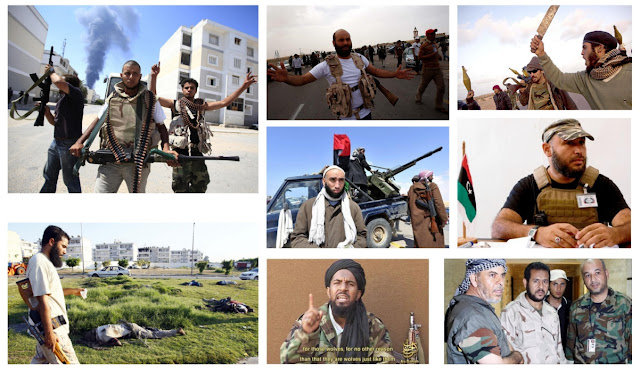
Below the surface however, there is a feeling of trepidation, an unspoken collective worry that a city and country who has gradually managed to pick up the pieces from the decades-long conflict which stretched through the 70’s and 80’s, an Israeli occupation of its south, followed by a brief, albeit destructive, ‘33 Day War’ with Israel in 2006 – might once again be dragged into another sub-regional conflict. It goes without saying that police and security services in Lebanon are on high alert.
Tourism Hit Hard
The neighboring conflict has also had a very negative impact on Lebanon’s tourism, keeping away the much-needed outside currency for which many jobs, independent hotels and other SMEs are dependent for their economic survival. But despite the recent problems, Beirut is still moving ahead, still attracting some foreign investment made visible by the hundreds of new building projects springing up all over the city. And as expected, the restaurants seem busy and the cafes are still buzzing.
Already there is a tangible presence of Syrian refugees in Lebanon and in the capital Beirut, who have fled from the fighting and breakdown of society currently unfolding next door. The impact of the Syrian conflict on its neighbor Lebanon in such a short space of time is substantial.
Latest reports put the number of Syrian refugees recently accumulated in Lebanon at 300,000. This figure is contrasted by the number of Palestinian refugees whose ancestors fled Israel’s ethnic cleanings in 1947-48, still housed in Lebanon today – which is currently estimated at 500,000.
The Issue of Sectarianism
Lebanon is, more than ever, a demonstration of sectarianism par excellence. In of country of 4 million, there is differentiation within the Christian community – Greek Orthodox, Maronite, Melkite, Greek Catholic and Roman Catholic, as well as within and the Muslim community – Sunnis, Shi’ites, and Druze. In addition to this, there is a substantial Armenian community, a large community of foreign nationals from the US and Europe, Asian and African migrant workers, and a small Jewish community. One might also note that the internal rifts between Christian and Muslim factions are almost as great as the polarity separating Christians and Muslim as a whole.
That said, it is also the only society in the region where contrasting religions and cultures are completely intermingled and where tolerance has evolved into a virtue.
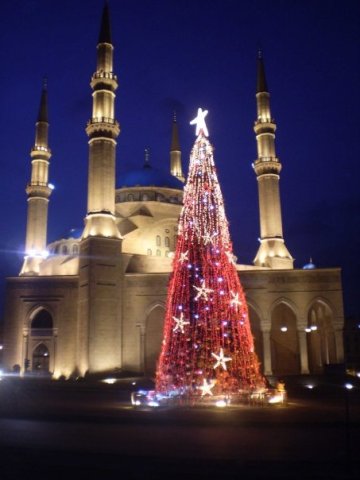
Co-existance: A scene from a recent Christmas illustrates the country’s diversity (PHOTO: Mary Henningsen)
In its totality, Lebanon consists of some of 19 religions and dozens more ethnic , groups. Many a thesis and book have sought to chronicle (and will continue to argue no doubt) this strive towards cultural détente in the Levant. One such writer is Lebanese-American Professor Walid Phares, who sums up the country’s current alignment as follows:
“Although multi-ethic and multi-religious, Lebanon was viewed by the political establishment as a unitary republic which can only have a majority and a minority. Therefore, and without a mechanism of decentralization, Federation or simply pluralism, that establishment was vying over who really represents the “majority” of all Lebanese, and who reduced to a “minority.” The debate was then about numbers, census, demographic changes, communities who have allegedly increased in numbers because of poverty versus communities who have decreased in numbers because of emigration. But that was a false problem.”
Much of the country’s political energy has been expended over the course of the last half century in determining who is the majority and who is the minority, and although the intention was to present a fair solution to representation in its central government, it has also been the source of internal power-politics, which some believe laid down a fertile soil for the sharp upheaval Lebanon experienced from 1975 onward.
Nowhere is the nation’s simmering ‘political ratio’ reflected more than in its own constitution – a document which goes to extraordinary lengths to secure some form of socio-religious balance. The Lebanese constitution mandates that the office President should be held by a Maronite Christian, the Speaker of the House held by a Shi’ite Muslim, and the post of Prime Minister held by a Sunni Muslim.

Beirut shoulders a diverse collection of ethnic groups, along with their corresponding political issues (PHOTO: Patrick Henningsen)
Many academics such as Phares, feel that the future would be brighter if Lebanon would embrace its multicultural reality and take a feather out of Belgium’s or Canada’s cap, and consider phasing out its historical obsession with ethnic and religious minorities and majorities. In other words, if Lebanon could embrace ‘multiculturalism’, it wouldn’t need the old system. This idea is easier said than done, as vested political interests and blood spilled over decades has, to a large degree, cemented traditional political and social paradigms into place.
Syria Simmering Next Door
What’s foremost on the minds of Lebanese in 2013 is what will happen with Syria, and will Lebanon we dragged to their war. Alongside this, many are left questioning whether or not Lebanon will ever achieve some form of long-term peace with its southern neighbor Israel. The former is the key to its short-term prosperity, while the latter is the key to healing wounds still festering from the wars, as well as the influx of Palestinians it has had to shoulder since 1948.
The situation in Syria is made even more complex by the fact that a number of foreign powers with vested interests in Damascus regime change are supplying fighters, arms, logistics, money and mass media support – which has always been a recipe for chaos throughout history. Among these foreign actors vying for position in Syria are Saudi Arabia, Qatar, Jordan, Turkey, US, UK and France (somehow, it’s all beginning to look more and more like pre-WWI power-politics).
Syria has long played an overshadowing role in the stability – and destiny of its smaller neighbor Lebanon. The scares still run deep from Syria’s obtuse and often disjointed alliances with different factions over the course of Lebanon’s Civil Wars in the 70’s and 1980’s. The result of Syria’s hand in those affairs has been a dysfunctional, and often times confusing relationship between Damascus and Beirut, as well as the cause for political dysfunction within Beirut itself.
In 2013, however, the alignments are markedly different from previous decades. For starters, Syria, itself, is now a major piece on the global chessboard, not least of all because of its three major allies, all of whom seem to run contrary to ‘central planning‘ in the West – namely, Hezbollah in Lebanon, Iran and now Russia. All interested parties see Syria as the key domino, and this, rightly so, is the cause for much worry right now.

Stunning countryside: Sunset over the historic Chouf mountain range in southern Lebanon (PHOTO: Patrick Henningsen)
Lebanon has a number of internal issues I’m sure it would prefer to sort out first before being dragged into another sub-regional conflagration – like it’s own central government, its economy, its potentially massive tourism trade, and of course, the Palestinian refugee issue.
Yesterday, I was able to travel south the ancient city of Tyre, some 16km from the the Israeli border. The ruins are stunning, but so are the Palestinian refugee camp which runs alongside it. It’s was a little tragic, if not amusing to discover there that some Palestinians in need of rock for building their homes had permanently borrowed some of the antiquity ruins next door. In a certain way, some five millennia of history puts the current protracted upheaval into some perspective.

Ancient city of Tyre in Lebanon (PHOTO: Patrick Henningsen)
The recent past certainly has pulled Lebanon down in a spiral of social tension and extreme economic strife, but set against the larger backdrop of successive empires and cultures who have been overlaid on to this small, but historically pivotal region, it’s merely the latest chapter in a much larger epic novel. Many people outside of Lebanon – academics, archeologists, tourists – all long to see Lebanon achieve stability and one day showcase its incredible cultural and historical wealth to the world.
In essence, making the difficult transition from a fractured state, to one of stability and eventual prosperity. I talked about this to one long-term Beirut resident, named Jamal, who put it simply, “To do all this, first we need to have peace.”
It’s that simple. On paper anyway.
….
Writer Patrick Henningsen is a roving correspondent for the UK Column, as well as host of 21st Century Wire TV programme airing Thursdays at 6pm on PSTV SKY channel 191 in the UK.
….

 PN
PN 