


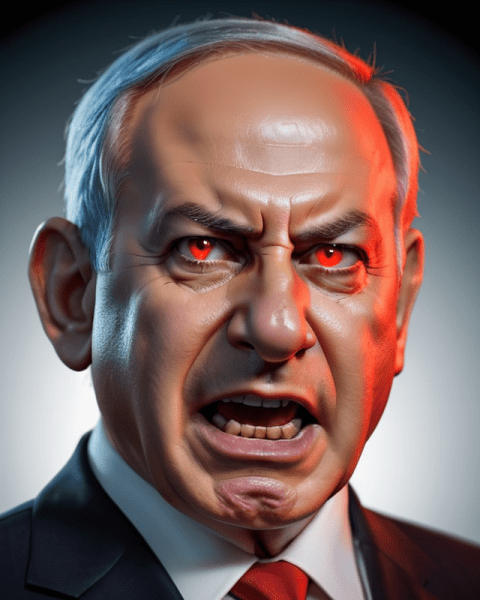
PODCAST — Sunday Wire guest Vanessa Beeley reports on events in Madaya
by 21st Century Wire
Jan 15, 2016
We’re joined by international journalist and human rights advocate and campaigner, Vanessa Beeley (thewallwillfall.wordpress.com), to discuss breaking events in Syria, Yemen and Serbia, including NGO deception and phony humanitarian propaganda designed to prolong the conflict and pave the way for western military intervention.
See also: 21stcenturywire.com/2016/01/13/spec…a-misery-by-un/
The Sunday Wire with Patrick Henningsen broadcasts LIVE on Alternate Current Radio SUNDAY 5pm-8pm GMT, 12pm-3pm EST, 9am-12pm PST at alternatecurrentradio.com and thesundaywire.com.
[related: Wahhabis and Salafis are not Sunnis]
Forces Align in Yemen After Renewed Saudi Strikes
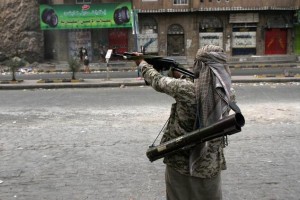 via New Eastern Outlook
by Alexander Orlov
May 31, 2015
The Saudi-led coalition resumed air strikes on Yemeni capital Sana’a after a five-day ceasefire. Dozens of families were forced out of their homes. These are the most large-scale bombings since the five-day ceasefire ended on May 17.
The issue at hand is that the Arabian coalition has so far been unable to combat the Houthis. With the help of former president Ali Abdullah Saleh, their joint forces mounted a quick military offensive to the south of the country and ensured military domination over most of Yemen. Their advantage is indisputable in Aden and in the country’s northern parts. In other provinces (Hadhramaut, Abyan, Taez), the status of local tribal militias is determined by the renewal of massive funding to the local chefs from Saudi Arabia. However, this has so far been limited to several localities. The attempt to incite a mass revolt in Aden in late April-early May with the help of former Prime Minister of the People’s Democratic Republic of Yemen (South Yemen) Haidar Abu Bakr al-Attas has also failed.
Presently, “the president-in-exile” Abd Rabbuh Mansur Hadi can only be seen as a “political corpse”. He is neither popular in the north, where he allowed the Houthis to overrun the Hashid tribal militia without coming to their aid, despite numerous appeals from the local tribal leadership; nor is he popular in the south of the country, where he failed to fulfil a promise to redistribute property and grant far-reaching political autonomy to the South. Due to this, Saudi Arabia’s agenda now includes a very important fundamental point: to find a leader capable of consolidating the anti-Houthi forces.
It is clear that Ali Abdullah Saleh will continue to hold onto his former stance: he has nowhere to run and the ultimate goal of his one-and-only strategy is guaranteeing that his tribe remains in the highest echelons of executive and military power. Riyadh does not intend to hand over these guarantees. However, the Houthis currently hold the military upper hand. Moreover, their leadership is currently ripe with stout supporters of “a war to the bitter end”, that is, the recreation of a Zaidi Muslim State. Most of the moderate Houthis leaders were lost during the suicide bombing of a Zaidi mosque in Sana’a in March. The other Houthis who are willing to find a compromise have been excluded from key decisions. Thus, it is still clearly premature to talk about the beginning of any real and effective peace talks. Neither the Houthis, nor Abdullah Saleh nor the members of the Arabian coalition, Saudi Arabia in particular, have any desire to hold such peace talks.
NATO Puppets Plan to Invade Syria … Soon
 via Activist Post
May 9, 2015
Reports are now filtering in that preparations for a direct military assault on Syria are being made by Turkey in concert with the Saudis and Qataris. These reports are suggesting that the military offensive will take place within the next few days. Some reports speculate that such action could take place further down the road in late June.
At this moment, Turkish forces are reportedly gathering at the nation’s southern border and Syria’s northern border in a fashion that can signify little except the posturing for military action.
While this article is in no way attempting to make predictions regarding possible military action, to provide dates, or even the hint that these possible attacks will definitively take place, the stage has clearly been set for some time for us to contemplate the possibility of such an attack.
Indeed, in the last few weeks, geopolitical alliances and talks have begun to coalesce so as to indicate that such an attack is not only possible but probable in the near future. After all, the US and NATO have attempted to gin up support for a direct assault on Syria since early on in the crisis when it became apparent that proxy armies of terrorists alone were not going to accomplish regime change.
The plans – at least from Turkey’s side of the fence – appear to be twofold. First, the plan to attack Syria has been part of the NATO agenda from the moment the death squads were routed by Assad’s forces and Turkey has always been a major playing in this regard.
Secondly, Prime Minister Recep Erdoğan’s own governing party has been suffering under a number of scandals, criticisms, and failures over the last several months and, as is the case in every country, a foreign war is more than helpful in diverting the attention of the local population away from domestic concerns. While certainly not the cause, plunging support from the Turkish public is certainly a stick used to prod Erdoğan into further action.
Emboldened by their illegal war in Yemen and their ability to massacre civilians abroad with little condemnation, the Saudis are apparently feeling more capable of acting against Syria directly and especially in concert with the Turks and Qataris. These attacks on Syria would undoubtedly take place – much like the Yemeni strikes – with US backing and support.
Baltimore Teenaged Protestors Try To Burn Pizza Store Owner Alive

Issam el Ghannam [still image from IJ Review]
PotentNews.com
May 3, 2015
During the recent Baltimore protests which reeked of George Soros‘ usual nefarious escapades, and which occasionally resulted in a number of businesses being looted and burned – and also cop cars being suspiciously burned – and which also sparked solidarity protests as far as Ferguson, Oakland, Denver, Minneapolis, Washington DC, New York City, and Seattle, twitter feeds were soaked with comments like “stores can be re-built but Freddie Gray’s spine can never be rebuilt”. Variations of this argument appeared to dominate the twitter-sphere.
In light of this, what can those who use this fallacious argument say when faced with this IJ Review video featuring an interview with a Baltimore pizza shop owner, Essam el Ghannam, who mentioned that a 14 year old girl tried to light him and his vehicle on fire in Baltimore amid the riots? That’s right, teenagers tried to murder an innocent man in one of the most torturous and brutal ways imaginable, by dousing him with lighter fluid and attempting to ignite the flame. The video shows his burnt and looted store, Papa Palace, which the man has owned and operated for 8 years. He said that at the time that this occured he was watching his 12-year old niece and had to rush her to safety.
What was this teenager thinking? Judging from Ghannam’s reaction, it’s likely she simply wasn’t thinking.
Leonard Peikoff defines “thinking” as identifying. He points out that when you ask yourself “where” an event is happening you are actually asking about the identity of the location – “what is the location”.
When you ask “when” an event is happening you aim to identify the time at which the event occured – “what is the time interval during which this event occured”, and so on.
Hence, thinking is the act of identifying. It’s all about the “what”, at the end of the day.
Peikoff writes,
Objectivism holds that value is objective (not intrinsic or subjective); value is based on and derives from the facts of reality (it does not derive from mystic authority or from whim, personal or social). Reality, we hold — along with the decision to remain in it, i.e., to stay alive — dictates and demands an entire code of values. Unlike the lower species, man does not pursue the proper values automatically; he must discover and choose them; but this does not imply subjectivism. Every proper value-judgment is the identification of a fact: a given object or action advances man’s life (it is good): or it threatens man’s life (it is bad or an evil). The good, therefore, is a species of the true; it is a form of recognizing reality. The evil is a species of the false; it is a form of contradicting reality. Or: values are a type of facts; they are facts considered in relation to the choice to live.
[…]
Just as there can be no dichotomy between mind and body, so there can be none between the true and the good. Even in regard to metaphysically given facts, cognition and evaluation cannot be sundered. Cognition apart from evaluation is purposeless; it becomes the arbitrary desire for “pure knowledge” as an end in itself. Evaluation apart from cognition is non-objective; it becomes the whim of pursuing an “I wish” not based on any “It is.”
Many seem to mistakenly agree that 2 wrongs make a right. Unfortunately, reality is not merely a product of what we want. It’s not that convenient. Not for you, not for me, and not for those teenagers either. The fact is that one either understands and respects property rights or one does not. We can’t move the goalposts. We can’t have something be wrong one day and then suddenly be right the next.
Saudi-GCC States Continue Bombardment of Yemen. Washington Triggers Escalation Amid Growing Humanitarian Crisis
via Global Research
By Abayomi Azikiwe
Apr 28, 2015
 There is no let-up in the United States supported Saudi Arabian and Gulf Cooperation Council (GCC) war against Yemen. As the death toll mounts, Riyadh and its allies representing the ousted government of President Abd Rabbuh Mansour Hadi have rejected efforts aimed at declaring a ceasefire and re-opening political dialogue among the various political forces in the country.
Former President Ali Abdullah Saleh urged the various groups involved in the struggle for political power to accept the United Nations proposals requesting the withdrawal from territories contested in the fighting. Saleh still maintains influence in Yemen through his General People’s Congress which was the subject of massive protests during 2011.
Saleh left office in a transitional agreement that was designed to pave the way for a more inclusive government. However, the problems of the country could not be fully resolved with U.S. and Saudi interventions aimed at maintaining western influence in this underdeveloped state.
An alliance between elements within the military who are still loyal to Saleh and the Ansurallah Movement (Houthis) has taken control of large sections of the country. Saudi-GCC airstrikes have destroyed residential areas resulting in anywhere between 1,000-2,800 deaths.
Despite an announcement on April 21 that it was suspending air strikes against Yemen, the Saudi-GCC alliance has continued to bomb indiscriminately across the central and southern regions of the country. Civilians were killed in numerous airstrikes over the last few days even though the Saudi foreign ministry says that it is ”winding down its campaign.”
Saudi foreign ministry statements indicate that they do not want any enhanced authority for the Ansurallah to come out of negotiations for a new political dispensation in Yemen. Such a position will only intensify the war that threatens to spread further throughout the region.

 PN
PN 