
10 Quick Reasons You Gotta Love Chocolate

 by Christina Sarich
Natural Society
June 7, 2013
Many people may not know it, but there are actually numerous health benefits of chocolate. The real, unadulterated form of chocolate, derived from the Theobroma cacao tree, is a heaven-sent super food that can keep us healthy even as we indulge in its delectable taste. Many overly processed chocolates are full of refined sugar and saturated fatty acids, but the real stuff is packed full of plant derived flavanols, full of antioxidants, anti-inflammatory constituents and health-boosting ingredients that do all sorts of amazing things for our bodies and minds.
Take for example, the following 10 benefits to heart:
- In a 9-year study conducted by the Swedes, it was found that people who consumed chocolate just 1 to 3 times per month had a 26% lower risk of developing heart failure. If you normally give your sweetheart chocolate, consider making it dark chocolate to provide an extra bit of love to the heart muscle.
- A meta-analysis published recently in Cochrane Database of Systematic Reviews found that those who consume chocolate experience a reduction in blood pressure.
- Chocolate increases communication between opiate receptors in the brain as well as supports the production of dopamine, two hormones that increase happiness and contribute to feelings of elation.
- Real chocolate, or cocoa, is associated with decreased low-density lipoprotein levels and increased high-density lipoprotein levels. These are important for carrying cholesterol to the liver.
- Chocolate has more than 300 identifiable chemical compounds that can provide amazing health benefits for the whole body.
- Eating chocolate releases the same hormones that our bodies make when we are in love: Phenylethylamine (PEAs).
- Raw cacao contains N-acylethanolamines that are believed to temporarily increase the levels of anandamide in the brain and enzyme inhibitors that slow its breakdown. This means we feel more relaxed when we eat chocolate.
- Eating chocolate increases our endorphins, the body’s natural pain killers.
- Raw cacao consumption can help with weight loss as it eradicates sweet cravings. The abundance of antioxidants can also help keep our metabolism running smoothly. An article in the Journal of Agricultural and Food Chemistry says you can enjoy cacao several times a week to boost weight loss.
- Cacao can be enjoyed in raw form as a powder, as cacao nibs, or as a dark chocolate bar minus the refined sugar and unhealthy fats. You can mix a little cacao with honey and cinnamon over low heat on the stove for a delicious sweet treat, with the combined health benefits of all three foods for a vitamin-packed dessert.
Study: Five Insects Evolve Resistance to Engineered Seeds


Dees Illustration
by Jack Kaskey
Bloomberg
June 10, 2013
Five of 13 major crop pests have evolved resistance to corn and cotton genetically engineered to make their own insecticide, providing lessons for extending the usefulness of such technologies, University of Arizona researchers said in a study.
The increase in resistance, from one insect species in 2005, was expected because the crops are more widely planted, pests have been exposed to the insecticides for more years and monitoring efforts have improved, according to the study published today in the journal Nature Biotechnology. Some technologies have kept resistance at bay for more than than 15 years while others succumb in as few as two years, the study said.
More than 1 billion acres (405 million hectares) worldwide have been planted with crops engineered to produce insecticidal proteins derived from Bacillus thuringiensis, or Bt, a soil bacterium, reducing use of chemical insecticides, the study said. Where data shows large numbers of resistant pests are living in fields, and where the resistant trait is not recessive, regulators need to take stronger actions, the study said.
[hat tip: Dutchsinse]
Study: Regular Marijuana Use May Prevent Diabetes and Make You Skinnier
Current marijuana users have 16 percent lower fasting insulin levels compared to non-users, according to the American Journal of Medicine

Activist Post
May 15, 2013
Regular marijuana use is associated with favorable indices related to diabetic control, say investigators. They found that current marijuana users had significantly lower fasting insulin and were less likely to be insulin resistant, even after excluding patients with a diagnosis of diabetes mellitus. Their findings are reported in the current issue of The American Journal of Medicine.
Marijuana (Cannabis sativa) has been used for centuries to relieve pain, improve mood, and increase appetite. Outlawed in the United States in 1937, its social use continues to increase and public opinion is swinging in favor of the medicinal use of marijuana. There are an estimated 17.4 million current users of marijuana in the United States. Approximately 4.6 million of these users smoke marijuana daily or almost daily. A synthetic form of its active ingredient, tetrahydrocannabinol, commonly known as THC, has already been approved to treat side-effects of chemotherapy, AIDS-induced anorexia, nausea, and other medical conditions. With the recent legalization of recreational marijuana in two states and the legalization of medical marijuana in 19 states and the District of Columbia, physicians will increasingly encounter marijuana use among their patient populations.
A multicenter research team analyzed data obtained during the National Health and Nutrition Survey (NHANES) between 2005 and 2010. They studied data from 4,657 patients who completed a drug use questionnaire. Of these, 579 were current marijuana users, 1,975 had used marijuana in the past but were not current users, and 2,103 had never inhaled or ingested marijuana. Fasting insulin and glucose were measured via blood samples following a nine hour fast, and homeostasis model assessment of insulin resistance (HOMA-IR) was calculated to evaluate insulin resistance.
Participants who reported using marijuana in the past month had lower levels of fasting insulin and HOMA-IR and higher levels of high-density lipoprotein cholesterol (HDL-C). These associations were weaker among those who reported using marijuana at least once, but not in the past thirty days, suggesting that the impact of marijuana use on insulin and insulin resistance exists during periods of recent use. Current users had 16% lower fasting insulin levels than participants who reported never having used marijuana in their lifetimes.
Large waist circumference is linked to diabetes risk. In the current study there were also significant associations between marijuana use and smaller waist circumferences.
“Previous epidemiologic studies have found lower prevalence rates of obesity and diabetes mellitus in marijuana users compared to people who have never used marijuana, suggesting a relationship between cannabinoids and peripheral metabolic processes, but ours is the first study to investigate the relationship between marijuana use and fasting insulin, glucose, and insulin resistance,” says lead investigator Murray A. Mittleman, MD, DrPH, of the Cardiovascular Epidemiology Research Unit at the Beth Israel Deaconess Medical Center, Boston.
“It is possible that the inverse association in fasting insulin levels and insulin resistance seen among current marijuana users could be in part due to changes in usage patterns among those with a diagnosis of diabetes (i.e., those with diabetes may have been told to cease smoking). However, after we excluded those subjects with a diagnosis of diabetes mellitus, the associations between marijuana use and insulin levels, HOMA-IR, waist circumference, and HDL-C were similar and remained statistically significant,” states Elizabeth Penner, MD, MPH, an author of the study.
Although people who smoke marijuana have higher average caloric intake levels than non-users, marijuana use has been associated with lower body-mass index (BMI) in two previous surveys. “The mechanisms underlying this paradox have not been determined and the impact of regular marijuana use on insulin resistance and cardiometabolic risk factors remains unknown,” says coauthor Hannah Buettner.
The investigators acknowledge that data on marijuana use were self-reported and may be subject to underestimation or denial of illicit drug use. However, they point out, underestimation of drug use would likely yield results biased toward observing no association.
Editor-in-Chief Joseph S. Alpert, MD, Professor of Medicine at the University of Arizona College of Medicine, Tucson, comments, “These are indeed remarkable observations that are supported, as the authors note, by basic science experiments that came to similar conclusions.
“We desperately need a great deal more basic and clinical research into the short- and long-term effects of marijuana in a variety of clinical settings such as cancer, diabetes, and frailty of the elderly,” continues Alpert.” I would like to call on the NIH and the DEA to collaborate in developing policies to implement solid scientific investigations that would lead to information assisting physicians in the proper use and prescription of THC in its synthetic or herbal form.”
Contact: Jane Grochowski
ajmmedia@elsevier.com
406-542-8397
Elsevier Health Sciences
Read other articles from Activist Post Here
MUST SEE: The Most Important Topic Of Our Time
YouTube — GeoengineeringWatch2
May 17, 2013
Dane Wigington discusses ongoing geoengineering programs, the damage they cause, and the threat they present to all life on earth.
8 Natural Mosquito Repellents to Get Rid of Mosquitoes
 by Elizabeth Renter
Natural Society
June 3, 2013
In the winter, we complain about the cold. In the summer, it’s the heat—and the mosquitoes. Mosquitoes can seriously add frustration to any outdoor activity, and if you’re like me, you want to spend as much time outdoors as possible when the weather heats up. While there are plenty of sprays, lotions, and gels that offer to keep the pests away, we all know these chemical baths are far from safe. Luckily, you can easily use a natural mosquito repellent to get rid of mosquitoes and bypass the harmful chemicals.
Natural mosquito repellents come in many forms. There are oils for your skin, plants to keep around, and even things you can eat. You can change your environment to make it less attractive to them and you can even use foods to change your body’s chemistry.
Let’s look at some of the more worthwhile natural insect repellents you can use to get rid of mosquitoes.
Natural Mosquito Repellent – 1. Lemon Eucalyptus Oil
Lemon eucalyptus is possibly one of the most well-known and widely recognized natural solutions for repelling mosquitoes. Whether you can find the plant to keep around your home or the essential oil to apply to pulse points, the more you can keep this scent around, the fewer pests you’ll see.
The Centers for Disease Control and Prevention (notoriously anti-natural solutions) has even admitted the plant is as effective as DEET (used in traditional bug sprays) in mosquito repelling.
You can find natural bug-repelling products with lemon eucalyptus in it or you can make your own with the essential oil and a carrier oil like jojoba.
2. Catnip
Yes, catnip isn’t only for cats. As I wrote about a few weeks ago, this easily grown herb has many useful medicinal and household applications—including being used as a natural mosquito repellent. Researchers with Iowa State University found it to be 10 times more effective than DEET.
Because it’s a prolific grower, putting some catnip in pots around your patio can help ward off the little bugs. Also, you can simply rub the oils from the leaves on your skin. This is one of 5 homemade mosquito repellents we posted earlier.
3. Lemongrass
Lemongrass is also known as citronella, and while you can find citronella candles and oils, the plant is just as or even more effective. It’s a beautiful grass and can add landscaping interest to your yard or is great in large pots. Its effects are far-reaching, not only for repelling mosquitoes, but other bothersome bugs too.
Iron-Rich Diet Found to Reduce PMS Symptoms by up to 40%
 by Elizabeth Renter
Natural Society
June 2, 2013
Pre-menstrual syndrome (PMS) is a monthly occurrence for many women. The cramping, migraines, lethargy, and moodiness can range from an inconvenience to incapacitating for some. For many women, prescription medications are their only solution – or so they think. However, scientists with the University of Massachusetts Amherst School of Public Health and Health Services and Harvard have recently found that women with a diet rich in iron are far less likely to suffer from the symptoms of PMS.
Women: Increase Iron Intake, Reduce Symptoms of Pre-Menstrual Syndrome
For the study, which was published in the American Journal of Epidemiology, researchers studied 3,000 women between the ages of 25 and 42, assessing their mineral intake through food questionnaires for 10 years. Less than half were diagnosed with PMS at the study’s completion, and 1,968 were free from the syndrome.
After accounting for calcium intake and other factors that could influence their symptoms, scientists found that those who ate a diet rich in iron were 30 to 40% less likely to develop PMS. Even more exciting is which foods that iron came from.
According to senior author of the study Elizabeth Bertone-Johnson:
“We found that women who consumed the most non-heme iron, the form found primarily in plant foods and supplements, had a 30 to 40 percent lower risk of developing PMS than women who consumed the lowest amount of non-heme iron.”
This is significant because most individuals immediately think of animal products when iron comes to mind.
Related Read: 6 Home Remedies for Menstrual Cramps
Additionally, the researchers found that those with a higher intake of zinc were also at a reduced risk of PMS. Zinc is another mineral that can easily be obtained from plant-based sources.
“Our findings need to be replicated in other studies. However, women at risk for PMS should make sure they are meeting the RDA for non-heme iron and zinc,” concluded Bertone-Johnson.
Plant based iron sources include foods like lentils, spinach, quinoa, non-GMO soybeans, swiss chard, and black beans. Zinc can be found in pumpkin seeds, rolled oats, chia seeds, and cocoa powder.
Because the research was done on women before and following the onset of menstruation, it also serves as a good reminder to parents: feed your daughters well and ensure you are including healthy sources of iron and zinc.
Additional Sources:
Carnicom Institute Quarterly Newsletter, April 2013 [videos included]
AirCrap.org
May 8, 2013

=================
April 2013 http://www.carnicominstitute.org/ Issue 5
=================
Carnicom Institute Quarterly Newsletter, April 2013

Two Windows
In this newsletter, Carnicom Institute offers you a window into our present work from two perspectives: our research and our financial needs.
Indeed, these two aspects of our work go hand in hand. In order to engage in the research that is urgently needed, a greater financial commitment from the public is paramount. So this issue of our newsletter will present both a Window on Our Research, as well as a Window on CI Financial Support: Your Opportunity to become a Carnicom Institute Subscriber.
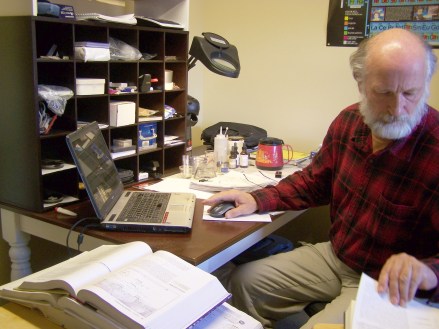
Clifford Carnicom at work
Window into Our Research:
Morgellons : A Working Hypothesis
Neural, Thyroid, Liver, Oxygen, Protein and Iron Disruption

A body of evidence, accumulated over a period of several years, reveals that the Morgellons condition is likely characterized by a host of serious physiological and metabolic imbalances. These imbalances are caused by the disruption of a variety of major body processes including, as a minimum, the regulation of metabolism by the thyroid, potential liver enlargement, a decrease of oxygen in the circulatory system, the utilization of amino acids important to the body, the oxidation of iron and a potential impact to neural pathways. The impact of this degradation to human health can be concluded to be serious, debilitating and potentially lethal in the cumulative sense; the reports of those who suffer from the condition are in alignment with these conclusions. This article will summarize the body of work and chronology which leads to this more comprehensive hypothesis.
Caption: The graph above is showing a signature of chemical and structural composition of an oral filament sample characteristic of the “Morgellons” condition.
It is now understood, to a relatively high level of confidence, the essential molecular and chemical composition of the Morgellons biological filamentous material. This knowledge is a prerequisite to understanding at least a portion of the impact to the body and human health. It now appears, from all available research, that this determined molecular composition can be summarized in the following complex phrase:
Read the rest of the research paper here:
http://www.carnicominstitute.org/articles/a_working_hypothesis.htm
Additional Research Paper Summaries:
January 2013 – Infrared Spectroscopy – Culture Confirmation
http://www.carnicominstitute.org/articles/ir1.htm
An elderly, but wonderfully functional, Perkin Elmer 1320 infrared (IR) spectrophotometer has been acquired by the Carnicom Institute. This class of instrument has been sought after for many years by this researcher and organization. The value and purpose of an infrared spectrophotometer (along with other instruments as well) is that it can be used to gain insight into the molecular structure of organic compounds.
January 2013 – Environmental Filament: Keratin Encasement
http://www.carnicominstitute.org/articles/keratin_established.htm
It can now be established with a high degree of certainty that the external casing of the environmental filament samples are composed of keratin or a keratin-like material. This supposition has been in place for a number of years by this researcher; it can now be demonstrated to be the case by direct chemical and spectroscopic means.
January 2013 – Environmental Filament Penetration
http://www.carnicominstitute.org/articles/penetration_of_filament.htm
An improved method of penetration of the environmental (airborne) filament sample has been achieved. This accomplishment provides a pathway to an increased understanding of the structure and contents of the fibers. Numerous studies have been reported on the nature of this filament material over the years on this site. This material is the same type of material that was sent to the U.S. Environmental Protection Agency (EPA) over a decade ago.
January 2013 – Environmental Filament: False Report
http://www.carnicominstitute.org/articles/false_report.htm
It is now appropriate to disclose the circumstances involving a laboratory report on an airborne filament sample that was paid for in the year of 1999. This report was issued jointly, by three separate companies, and they shall remain anonymous at this time. It is now appropriate to present this information as the conclusions of the report are undeniably false.
=================
Recent Interviews
Russ Tanner, Chemtrails Global Skywatch
On February12, 2013: Clifford Carnicom, an early Morgellon’s researcher, participated as a guest speaker in an interview with Russ Tanner through Global Skywatch Communications. Clifford is a research pioneer providing scientific evidence and confirmation of the connection between geoengineering and bioengineering. Carnicom Institute now has a body of research that establishes a link between airborne environmental filaments and biological samples from Morgellon’s sufferers.
In the interview, Clifford expressed a renewed hope for reliable and focused solutions to serious environmental and health issues. This optimism is based on the Institute’s recent acquisition of some key laboratory equipment and office space. With recent donations and the research progress, we are in the process of revealing a scientific fingerprint of the unusual filaments found both in our environment and in the bodies of human beings.
Whether you are new to the idea that geoengineering is linked to Morgellon’s condition or you are well versed on these serious issues, you will want to hear the most recent presentation by visiting:
http://globalskywatch.com/live/archive/2013-02-12,Clifford-Carnicom.html#.UXMQtrWceSo
Other Recent Interviews:
- European TV Interview – an onsite media session with a public TV crew from Europe in March; we will keep you abreast of any productions that might ensue.
- KSFR Camp Lovewave Interview – Clifford will be interviewed on a local FM radio station at the end of April.
- Clifford was interviewed by Dan Lefkowitz on WVEW, Brattleboro Community Radio, in Vermont. We plan to make this interview available on the website in the near future.
- Pathologist visit from Europe – an extended discussion with a European pathologist was held at the Institute office in Santa Fe in March.
NEW VIDEO: The Carnicoms’ Trip to the Grand Canyon, Summer 2012
The Carnicoms spend as much time as they can camping and hiking. Clifford filmed last November’s descent into the Grand Canyon so that you too could come along. Relax to the melodies which accompany this lovely nature video: “A Grand Ceremony: A Descent into the Grand Canyon.” http://www.youtube.com/watch?v=snhFUxLnZ5o
=================
Window on CI Financial Support: Your Opportunity to Become a CI Subscriber
Carnicom Institute is poised for growth. Early this year we moved into our first external designated lab/office space in Santa Fe, New Mexico. This is due to the gift of a few generous anonymous donors. Prior to this, all lab work had been done by Clifford Carnicom in the lab/office in his own home. Carnicom Institute is extending its priorities to include the urgent need for funding to accelerate the research.
Our ability to inform and influence the public and to promote our work is greatly magnified by your gift of subscription. If just two individuals on this mailing list will subscribe to Carnicom Institute at $10/month, it will support a day of research at the Institute office. Time and funding for research remains limited without additional support, and the progress of our work underway is directly affected by your contributions. You can make a difference.
Please take advantage of this opportunity now by becoming a subscriber at the most generous level that you can afford. The world is calling to us; if we don’t respond, the results are unthinkable. We invite you, as someone who cares enough about our work to be on our present mailing list, to become a subscriber to the Carnicom Institute. The world stands to be a better place by your gift of continuing support!
Subscribe to Carnicom Institute by clicking the subscribe link found on the bottom of the home page:

http://www.carnicominstitute.org
We’d like to offer you a gift in exchange, knowing, however, that our real offering to you is the research done by Mr. Carnicom, the results of which will benefit the health and well-being of all.
- A monthly pledge of $10 entitles a new subscriber to receive the CI “Cloud Cover” DVD.
- A monthly pledge of $20 entitles a new subscriber to receive the CI “Cloud Cover” DVD and a cap embroidered with the CI logo.
- A monthly pledge of $35 entitles a new subscriber to receive the CI “Cloud Cover” DVD, a cap embroidered with the CI logo, and a set of beautiful nature photography greeting cards.Your pledge is greatly appreciated and it enables the Carnicom Institute to continue its valuable research into the health and environmental issues of our times. Sufficient pledges will also permit us to begin providing webinars to the public on current research topics.
THANK YOU FOR BECOMING A SUBSCRIBER TO CI!
Morgellons Research Project Update: Participants Needed for Group 3
Many of you already know about and some of you are participating in our Morgellons Research Project. We have roughly 200 people who have submitted a request to be in the project and we are moving people through its three phases. We are still in need of people to populate Group 3, which is the group that has some Morgellons symptoms but is not showing skin lesions or filaments. If you think you might fit that description, please consider volunteering to be part of the project. To find out more about the MRP, please go to:
http://www.carnicominstitute.org/html/status_report.html
If you would like to participate in the project, please write to us at: info@carnicominstitute.org.
The results of our study will do a great deal to give the Morgellons condition the scientific legitimacy it deserves. Thank you for your consideration of our request, for we cannot do this without you.
We are in the process of meeting standards set by the National Institute of Health for research done upon human subjects. At this time, our attention is turned toward this credentialing process. Activity on the MRP will resume once this is completed, which we expect will be in May or early June.
=================
Environmental Filament Study

A unique environmental filament material has been documented on numerous occasions for more than a decade. It has been observed both airborne and at ground level. In approximately two months, Carnicom Institute will begin conducting a comprehensive scientific investigation of filament samples. We are asking the public to provide these samples and we need your help. Please follow this link to get involved.
http://www.carnicominstitute.org/html/environmentalresearchproject.html
=================
Window into CI – Staff Updates
Susan Finer, associate, a treasured volunteer who has given so much to CI, has decided to move on due to many other responsibilities in her work and life. We would like to take this opportunity to formally thank Susan for her great contribution to CI. It has been a joy to work with her and she will be missed! We wish her the very best always.
Ryan Hannigan, associate, has initiated the design for a laboratory heating unit and he is working with Gary Sundby on this project. He has also developed some special gift items for our donors. Due to Ryan’s efforts, CI can now offer a baseball cap and a tote bag embroidered with the CI logo. The hat is made of organic cotton.
Kate Willens, associate is helping to manage day to day operations of the Institute. She coordinates the Morgellons Research Project and contributes to our newsletters and other corporate communications. She is also active in recruiting and training volunteers.
Gary Sundby, member has been very busy with a multitude of projects of a highly technical nature. He has been very creative in making an inexpensive pen to be used with our newly acquired IR spectrophotometer. Normally the pens for this machine are very expensive. He has also researched how to connect a computer interface between the spectrometer and our computer so that we can generate graphs in an electronic format. He is also researching the possibility of designing and building a Reflective Particulate Detector. If this proves successful it will give us the ability to investigate the air we breathe. Although this will not initially be a quantitative sampling, it will allow comparison between clean air and contaminated air.
Pete Horner, member is our IT specialist. He is at work transferring older files from our old website to our present website. Pete has transferred upwards of 20 articles and links to the Research Papers page. Pete is working to get all of our articles, videos, and research papers into one location. To date Pete has recovered 100 pages for our research library which can be found on www.carnicominstitute.org.
Cindy Barker, member is working diligently on the CI Business Plan which will provide a blueprint for our development over the foreseeable future. We hope to extend CI’s reach so that the research done by Clifford Carnicom can be made accessible throughout the world to other researchers and scientists, to activists, and to other organizations seeking to end global aerosol operations.
David Bankert, member has been guiding our communications staff in creating a mailer that will be sent by postal mail to potential donors. We have been busy writing about the many aspects of our work and why giving to CI is actually an investment which will benefit everyone.
We are delighted to welcome new prospective member Heidi Morgan, and look forward to her contributions to CI.
CONSIDER VOLUNTEERING WITH CI

“Ask not what your country can do for you; ask what you can do for your country.”
John Fitzgerald Kennedy
In these times, those who understand the challenges facing us need to step forward to meet these challenges. Volunteering with CI is an excellent means of doing so. Volunteers enter into all aspects of CI’s important and often fascinating work, including communication and correspondence, research projects, promotion of CI, fundraising, developing and creating web projects, and ensuring the continuing development of the organization. To find out more about volunteering with CI, please visit us at:
CI Is Looking for a Volunteer Bookkeeper/Accountant: We are looking for someone skilled in Double Entry Bookkeeping to join our staff. If you have this experience, and would like to contribute to a very worthy cause, you would be making a significant difference by volunteering with us. Thank you!
CI Is Looking for Chemistry/Biochemistry Volunteer Research Assistants to help with the Environmental Filament Study. Please see the announcement for this study further down the page.
=================
Carol Carnicom’s FAMOUS GREEN HEALTH SMOOTHIE RECIPE
Clifford and Carol drink this tasty smoothie every day to ensure that their bodies are receiving many nutrients that help promote good health. This smoothie has evolved from Carol’s knowledge of nutrition and Clifford’s unique research. They would like to share it with you. Here’s to your health! Please note: the link can be found on our website.
http://www.carnicominstitute.org/documents/SMOOTHIE.pdf
Please visit Carnicom Institute’s You Tube channel. If you haven’t yet seen Clifford’s presentation at last summer’s “Consciousness Beyond Chemtrails” Conference, you don’t want to miss it.: Geoengineering and Bioengineering, the Unmistakable Link.
http://www.youtube.com/watch?v=fXfd8VUUJTg

=================
History of Carnicom Institute
On November 13, 2008, Carnicom Institute became a domestic nonprofit corporation chartered in the state of New Mexico. On March 8, 2009, Carnicom Institute received approval from the New Mexico Attorney General’s office to operate as a nonprofit organization. In August, 2011, Carnicom Institute received formal notice that its request for 501 c3 status pursuant to IRS Code had been approved. What this means is that all donations to Carnicom Institute are tax deductible as charitable contributions.
Institute Disclaimer
Carnicom Institute is an educational and research organization. We serve the public welfare. We do not advocate any particular products, protocols or therapies related to health or environmental safeguard. It is up to the audience to make an educated decision on how to use the information that is presented. The Institute does not perform any medical diagnosis or prescription of therapy. All studies conducted by the Institute are for research purposes only. Any presentation, opinion or expression by any representative of Carnicom Institute or outside affiliation in no way implies or denotes endorsement by the Institute. The Institute is not affiliated with any political or religious groups.
Thank you for your support!

Carnicom Insititute – PO Box 23721, Santa Fe, 87502, United States

 PN
PN 