
Woman Defends Property Against Smart Meter Invasion [video included]
Activist Post
July 20, 2012
A Houston area homeowner, Thelma Taormina, was forced to defend her property and her constitutional rights when a utility worker bypassed her “No Trespassing and No Smart Meters” sign, then started a scuffle to install a Smart Meter.
Thelma and her husband demonstrate in the video below that they have educated themselves about the dangers of Smart Meters to their privacy; so much so that they have formed their own local opposition group to ban Texas Smart Meters. It has been revealed that Smart Meters have the capability to wirelessly monitor a full range of personal data, and can be equipped with an automatic shut off. (Source)
The Taorminas also allude to the mounting evidence that these meters are a major health concern, as indicated by a recent warning issued by a major physicians’ group.
Between health and privacy concerns, plus the fact that Smart Meters are an economic and environmental scam, homeowners have every right to defend against Smart Meter slavery in the strongest way possible.
If it takes exercising one’s Second Amendment to protect the Fourth from an out-of-control corporate government hellbent on imposing themselves upon free citizens of a Constitutional Republic, despite repeated verbal demands, then so be it. Thankfully, this incident did not take a turn for the worse, and at least one minion has been put on notice in the most definitive way possible to be very careful where they tread.
Read other articles by Activist Post HERE
You can help increase awareness of Smart Meter dangers by voting on Reddit HERE
Mercury-Packed CFL Bulbs Now Found to Fry Your Skin
 by Mike Barrett
Activist Post
July 21, 2012
Individuals are drawn to compact fluorescent bulbs due to their environmentally-friendly label, but anyone who has really looked into these incandescent alternatives knows of the numerous health and environmental dangers of CFL bulbs.
A recent study sheds light on just one such concern associated with the ‘green’ CFL bulbs, showing how they are capable of actually frying your skin with UVA radiation.
Following a study in Europe examining the effects of CFL bulbs on the skin, researchers from Stony Brook University in New York conducted a similar study to examine the bulbs’ impact on human skin cells. For the study, the researchers purchased CFL bulb from various locations, and then measured the amount of UV radiation emissions. What they found in every single one of the bulbs studied was “significant levels of UVC and UVA” which was a result of cracks that were present in the coating on the bulbs.
After studying the effects of these emissions on human skin cells, they discovered that healthy skin cells experienced the same damage you would find with ultraviolet radiation.
Similar tests were also conducted using incandescent light bulbs of the same intensity along with the implementation of UV-absorbing Titanium Dioxide (TiO2) nanoparticles, which are found within many personal care products.
While the incandescent light bulbs had no negative effect on healthy skin cells, the researchers couldn’t say the same for CFL bulbs. Professor Rafailovich recounts:
Our study revealed that the response of healthy skin cells to UV emitted from CFL bulbs is consistent with damage from ultraviolet radiation…Skin cell damage was further enhanced when low dosages of TiO2 nanoparticles were introduced to the skin cells prior to exposure.
Despite their large energy savings, consumers should be careful when using compact fluorescent light bulbs…Our research shows that it is best to avoid using them at close distances and that they are safest when placed behind an additional glass cover.
This, of course, isn’t the only issue with compact fluorescent bulbs. In addition to having a potential negative impact on your skin, these bulbs emit toxic chemicals. In fact, only months after it was found that energy saving fluorescent bulbs release carcinogenic chemicals into the air, a new study has found that these harmful chemicals are continually released from the bulbs over a period of weeks to months.
In addition to releasing these cancer-causing chemicals, which are far beyond the “safe” level set by the EPA, these bulbs also release levels of mercury which also exceed the “safe” levels for humans.
Additional Sources:
Stony Brook University
Scientific Committees
Explore More:
Another Study Finds Mercury in Fluorescent Bulbs a Health Risk
Don’t Want Mercury-Laden Bulbs? New “Eco-Safe” Light Bulbs to Cost $50
Choose Between Carcinogenic Light Bulbs or Excessive Prices
Mercury Pandemic: Avoiding Toxic Levels of Daily Exposure
Skin Whitening Cream Often Contains Toxic Mercury
Mercury and Mega-Toxins Found in Certain Body Care Products
This article first appeared at Natural Society, an excellent resource for health news and vaccine information.
You can support this information by voting on Reddit HERE
6 Unnecessary Health Tests
 by Elizabeth Renter
Natural Society
July 1, 2012
Typically, if you are interested in natural healing and preventative health, you aren’t the type to make an appointment with an M.D. for every little symptom. You probably aren’t asking your doctor for more health tests. But, other people are.
With so many medical information sites online, people are perhaps overly-informed when it comes to different diseases, conditions, and illnesses, contacting their doctor with fear in their voice, “I think I might have______. Can we run a test for that?”
Regardless of who you are or what your personal health philosophy is, it’s good to have some sense of what medical diagnostics are useful and which are totally unnecessary and overused. Here are five especially unnecessary health tests that you should know about.
- DEXA – This test is called dual energy X-ray absorptiometry and is used to detect bone strength and bone density, potentially providing people with a forewarning of their chances of developing osteoporosis. The problem with the test, however, is that measurements can say one thing one day and another the next. Also, two scans performed back to back on different machines will deliver different results. In other words, the results are unreliable. Also, it only measures bone mineral density, which isn’t the total picture when it comes to bone strength.
- Full Body CT Scans – One of many health tests full of radiation, you could pay several hundred or even a thousand bucks to have a CT scan, looking for any abnormalities. This one is a warning to those folks who just want to be on the safe side: don’t do it. Getting a full body CT scan is a little like paying a mechanic to take apart your engine to make sure nothing is wrong when your car is running smoothly. It’s unnecessary overkill. This unnecessary CT scan radiation has also been shown to triple brain tumor risk in children.
- PSA Testing – This is a blood test used to detect a protein produced by the prostate gland. High levels of this protein (prostate-specific antigen) can indicate prostate cancer. But, the association isn’t always right and the cancer isn’t always deadly. “The PSA test usually leads to overdiagnosis—biopsies and treatment in which the side effects are impotence and incontinence.”
- Home Menopause Testing – This test, which can be purchased at some drug stores, is said to tell a woman if she is going through her “life change.” But, like many other tests on this list, it’s unreliable. Particularly if you are using it to determine whether or not you still need birth control, it might be worth a visit to the doctor.
- Home Alzheimer’s Test – A scratch-and-sniff test for Alzheimer’s? Yes, really. Because a loss of smell has been associated with Alzheimer’s disease, this test says it can indicate the disease by testing your sniffer. Unfortunately, the link between smelling and Alzheimer’s is rare and is also indicative of other neurological conditions—or nothing more than “a smelling problem.”
- Breast Cancer Screenings – Among the most overused health tests, mammograms are unnecessarily pushed on women, only to cause harm. One study estimated that between 1,169 and 1,148 women of 2,500 tested were over-diagnosed and received unnecessary treatment. Even mainstream health officials are now admitting that breast cancer screening methods are not only ineffective, but are leading to improper diagnosis and unnecessary treatments at around 7,000 per year.
Additional Sources:
Explore More:
- Can Blood Tests Detect Cancer? Vitamin D Tests can Long Before Tumor Development
- Over 33 Percent of Breast Cancer Surgeries Admittedly Unnecessary
- Experts Reveal Unnecessary Cancer Treatments Accelerating Death
- Genetically Modified HIV Vaccine Approved – Human Tests to Begin Shortly
- Why Are Health Officials Still Pushing Ineffective Breast Cancer Screenings?
- Financial Incentives: Radiation Exposure ‘Soaring’ As Medical Imaging Tests Overused
The Morgellon’s Hexagon
by Kathryn A. Augustyn
Morgellons Research Group
June 30, 2012
[Potent News editor’s note: Please refer to this “wayback machine” version of this article for the intact photographs that no longer appear here since the Morgellons Research Group website no longer seems to be active. Also consider downloading the wayback machine addon if you use the Firefox web browser.]
Compiled by~Kathryn Augustyn~
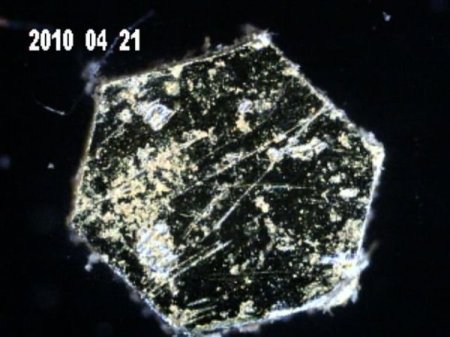
Morgellons patients often feel they have been cursed or hexed. Actually we are. Here is proof: Hexagons showing up in our skin and in the environment.The imaged hexagon was from a patient who sent this to our group. We are attempting to isolate this alone, and find out all its characteristics, how formed and what elements or processes create it. So, far, we have not found answers other than carbon and chlorine present. However, the idea that a gas may form this, including an arc is intriguing.
Jan Smith on her website www.morgellonsexposed.com has delved into the formation of this and describes this “stacking hexagon” in the “birth of a hexagon”…
The photos below are of strange geometric shapes and oddities that have emerged from Morgellons lesions. The Hexagons may be a form of SMART DUST. I have only had a couple of these myself but there are others who are also finding hexagons and other shapes. I have included those here along with mine. The Chaos Hexagons were Raman tested at SUNY at Stony Brook. The material of the hexagons and the glue-like material that held them together were not in the Raman database and are still unidentified material.
..Ruth California ..
Chaos Nano-Machine – front.
Chaos Nano-Machine Dissected


Below are images of hexagons embedded in material. Notice how the hexagons seem to be inside the filament. Could and can these be the hexagons and the pentagons, possibly made of sugar or glucose, mannose, or even resin make the pentamer and the hexagon is made of some kind of metalloprotein Jan Smith’s observations needed to be considered and discussed in the Morgellon Community. She explains the images.
All I can say is if anyone thinks that Morgellons disease is about “bugs” they are missing some very important implications and being lead in the wrong direction. As surreal as this all seems, it is grim a reality to many of us who have to live with Morgellons disease. I hope the public will wake up soon and help us. This is a highly technical and futuristic lab-created disease.
Close-up of fiber encasing tiny hexagons
At a later time these clumps of multiple hexagons were removed. These were hard clumps that were bronze in color and were glued together with some kind of biofilm.
The photo below is the shape of Nanotechnology. You will notice that the shapes are also hexagons.
Credit to Jan Smith
@Jan Smith
Page for images and other observations of Hexagons
Morgellons Plaques, Metallics and Hexagons


MRG’s collection of hexagons can be found on this website. Recently new hexagons have been sent to the group. These below are very interesting. One can see on the third image where a rolled type strand of material or filament seems to construct or self assemble the hexagon itself. Please hear the message from Valerie. This cannot be taken lightly!
Hi, I took these photos of a hexagon on my face with a microscope camera. The shape seems identical to a blue one you have. My sons have the disease too. Can you help us? My younger son had a turquoise hexagon but I didnt know what it was back then. Thanks, Val
Credit to Valerie


Hexagon found in Phoenix, AZ:


Hexagons from Hawii:

Hexagon forming? from household dust:

Hexagons from MRG group


Possibilities of core of this hexagon.
Ideal graphene hexagon:
Basic Structural Description
Graphite is composed of carbon atoms that are arranged in poly-aromatic, hexagonal ring arrays. These arrays can be looked at as an infinite series of fused benzene rings without the hydrogen atoms. Carbon atoms in these arrays are in the sp2-hybridized state. In the sp2 molecular orbital model (Figure 3), each carbon atom is typically attached to three other species, three other carbon atoms in the case of graphite. In this bonding mode, the bond angle of carbon is 120 deg. Ring arrays form sheets of carbon atoms, and individual sheets are known as graphene layers. Graphene layers are stacked one on top of another, parallel with the “c” crystallographic axis of the hexagonal 4-axis system in which graphite crystallizes.
Figure 2 / Idealized Graphite Crystal
B. Subtilis HEXAGON

RFID CHIP
 http://bestinpackaging.files.wordpress.com/2010/01/91239-rfidpowder2.jpg?w=540
Arc Evaporation
… There is a third class of structure in which the hexagons are arranged helically around the tubeaxis ... In practice, the caps are rarely hemispherical in shape, but can have a variety of morphologies; a typical example is shown inFig. 1.4. More complexcap structures are often observed, owing to the presence of heptagonal as well as pentagonal carbon rings (1.21).
(a)(b)Fig. 1.2(a) ATEM image of multiwalled carbon nanotubes produced by arc-evaporation. (b) A higher magnication image of individual tubes.Chemical Vapor Synthesis
A solid-state mechanism for CVD growth?
As outlined in the previous chapter (p. 34), several groups have proposed that the production of single-walled nanotubes by laser vaporization might involve a solid-state mechanism in which the metal particles convert solid, disordered carbon into nanotubes.The suggestion that the CVD synthesis of SWNTs might also involve a solid-state transformation has not been previously raised, so it is worth considering whether such a mechanism would be feasible.A possible scenario is given inFig. 3.19.The first stage in the process (Fig. 3.19a ) is the condensation of curved, fullerene-related, carbonaceous fragments on the surfaces of the catalyst. Literature reports suggest that significant amounts of disordered carbon could deposit on the catalyst surfaces under the conditions used for CVD. For example Baiet al. have shown that methane readily decomposes to carbon over alumina at 850°C (3.129). It cannot be said with certainty whether this carbon would have a fullerene-related structure, but there are many studies which show that C formed by condensation from the vapour consists of assemblies of small curved sheets (3.130), and this curvature may indicate the presence of fullerene-like elements.The second stage in the process is the conversion of the rather disordered carbon clustersinto single-walled tubes, promoted by the metal particles (Fig. 3.19b). The experiments(a)(b)Fig. 3.19Schematic illustration of the solid-state’mechanism for the growth of single-walled carbonnanotubes by catalytic CVD. (a) Deposition of carbon fragments on surfaces of the catalyst,(b) transformation of disordered carbon into nanotubes.Fig. 3.18A simulation of SWNT growth on an Fe catalyst, from the work of Ratyet al.(3.87). (a) Diffusion of single C atoms on the surface of the catalyst. (b) Formation of a graphenesheet on the catalyst surface with edge atoms covalently bonded to the metal. (c) Root incorporation of diffusing single C atoms (or dimers).Please note page 21 and that filamentous carbon has been known since 1890.http://www.scribd.com/doc/79246472/Carbon-Nanotube-Science

It does seem that the metal particles(hexagons) convert the carbon clusters (granules) into nanotubes. If the hexagons are Nickle coated, many people are allergic to Nickel. Or if cobalt is used? Are these used to capture radiation? Or are they actually radiative particles? It also appears that single C atoms are the core. So, would this be called the “Nano-C”?
From left to right: Diamond, graphite, and fullerene.Fullerenes @ Nano-C
The commercial viability of fullerenes was ensured when Nano-C launched its business in 2001, based on patented technology developed by Dr. Jack Howard at the Massachusetts Institute of Technology.
Uniquely scalable combustion-based process technology.
Scalability is an important question to ask as one envisions the successful launch of a new product. Nano-C has demonstrated the scalability of its II-G process. In addition, large-scale commercial combustion-based processes include carbon black and fumed silica. Nano-C’s efficient and scalable combustion process assures commercial viability and pricing that reflect the increasing benefits of economies of scale.
Solvent-free
Nano-C’s as-produced fullerenes are pure, and can be made solvent FREE.Form
As individual molecules, fullerenes are about 1 nm in diameter. This compares to 0.16 nm for a water molecule. During manufacture, these molecules come together to form small particles (10 nm to several microns). They are readily handled, or can be easily pelletized. They exhibit solubility in many solvents, but are not soluble on their own in water. For enhanced solubility requirements in water or lipids, please see our line of fullerene derivatives.http://www.nano-c.com/fullerenes.html
Typical nanoparticles that have been studied are titanium dioxide, alumina, zinc oxide, carbon black, and carbon nanotubes, and “nano-C60“.Nanoparticles have much larger surface area to unit mass ratios which in some cases may lead to greater pro-inflammatory effects (in, for example, lung tissue). In addition, some nanoparticles seem to be able to translocate from their site of deposition to distant sites such as the blood and the brain. This has resulted in a sea-change in how particle toxicology is viewed- instead of being confined to the lungs, nanoparticle toxicologists study the brain, blood, liver, skin and gut. Nanotoxicology has revolutionised particle toxicology and rejuvenated it.

Things to consider. Are there any nanotoxicologists willing to work with us? We would welcome your support and knowledge on this matter.
MRG Researchers
~~~~~~~~~~~~~~~~~~~~~~~~~~~~~~~~~~~~~~~~~~~~~~~~~~~~~~~~~~~~~~~~~~~~~~~
Bill & Melinda Gates Foundation funding research into bracelets that track mental, emotional responses
 by Ethan A. Huff
Natural News
June 12, 2012
(NaturalNews) Pushing vaccines on the entire world is apparently not the only goal of the infamous Bill & Melinda Gates Foundation, which is reportedly now funding research into human tracking bracelets capable of gauging both emotional and physical responses to various stimuli. According to The Washington Post (WP), the Gates Foundation has already quietly spent more than $1 million on research into the biometric bracelets, which could forever alter the way students learn and teachers teach.
In a controversial move that was only recently brought to light, the Gates Foundation allegedly forked over about half a million dollars to South Carolina’s Clemson University late last fall, and another more than $600,000 to the National Center on Time and Learning (NCTL), a group dedicated to improving student achievement. Both grants were intended to fund test studies on the effectiveness of the “galvanic skin response” bracelets, which assess the physiological responses of students to learning material.
The idea is that when a student, for instance, is exposed to new lesson plans from his teacher, the bracelet will detect electrical changes on his skin and inside his body which can be used to assess how well he is learning the information. The bracelet may also detect various cognitive responses in that student’s brain which indicate whether or not a particular teaching style is effectively engaging him according to his learning abilities and types.
Tracking bracelets could further dehumanize American education
On the surface, the bracelet concept may appear as though it could actually help improve the quality of education in America. After all, what bad could come of monitoring innate emotional and cognitive responses to external stimuli for the purpose of improving the methods by which teachers educate their students?
On the other hand, tracking students in this way could open the door for an even more dehumanized approach to education. Standardized testing, numbers-based teacher assessments, and various other outcome-based educational formats have already largely eroded the human element that used to play an integral role in American education.
The bracelets could also further thwart the educational environment to cater specifically to what students want rather than what they need. Using students’ emotional responses to various learning material as a metric of how well a teacher is performing is a flawed approach that could send many quality, veteran educators packing their bags.
What is the real agenda behind tracking bracelets?
When controversy about the tracking bracelets, and particularly the Gates Foundation’s research funding, first began to arise, supporters of the technology denied that their use would affect the learning environment negatively. Deborah Veney Robinson, a Senior Communications Officer at the Gates Foundation, for instance, is quoted in a recent Forbes piece as saying that the bracelets would not be used to evaluate teacher performance, a claim made by the bracelets’ opponents.
But if they are not intended to evaluate teacher performance, then what, exactly, are they for? This is a valid question that many educators and education researchers are now asking. Surely the Gates Foundation has some type of agenda with the program that it is not fully disclosing.
“Why do they want bracelets with wireless sensors for children and teachers that can gauge physiological reactions?” asked Diane Ravitch, an education expert and Research Professor of Education at New York University (NYU), who is skeptical of the Gates Foundation’s intent with the research. “What’s the purpose of this research? I don’t understand what those bracelets are for. Still don’t.”
Based on the Gates Foundation’s other agendas, it is not too far of a stretch to assume that tracking bracelets could one day be used to weed out students or teachers that do not buy into the vaccine agenda, for instance, or those that oppose phony environmental hoaxes such as global warming. By monitoring what is being taught and how students respond to it, Big Brother could theoretically read the human mind in real time, which has some fairly disturbing implications.
How long will it be before schools begin requiring that students link up to the system via tracking bracelets so that authorities can essentially monitor and control human thought? Will the bracelets one day be modified to deliver an electric zap to students that get out of line, or that diverge from the information being taught to them? There truly is a brave, new world before us, and the Gates Foundation is helping to pave the way directly to it.
Sources for this article include:
If You Have Carpal Tunnel Symptoms, Better Check Your Thyroid
by Kerri Knox, RN
Natural News
August 20, 2009
(NaturalNews) Carpal Tunnel Syndrome affects millions of people every year. With increasing use of computers, more and more people each year seek medical attention for the wrist pain, numbness and tingling that characterize Carpal Tunnel Syndrome. While surgery is often done for cases that don’t respond to physical therapy, it’s unknown how many people could avoid unnecessary surgery every year if only their THYROID problems were addressed first.
Carpal Tunnel Syndrome is usually defined as an ‘impingement’ of the median nerve that runs down the wrist. According to doctors, strain and repetitive motion causes inflammation of the connective tissue that surrounds this nerve running through your wrist into your hand; surgery is often indicated as a treatment to ‘release’ the impingement on this nerve. But Carpal Tunnel Syndrome is simply a collection of symptoms and not a disease itself. As with many ‘Syndromes’, there can be different causes for similar symptoms and ‘nerve impingement’ is not the only cause of these symptoms.
As unlikely as it may sound, the symptom of an under active thyroid gland, termed hypothyroid, can show up as symptoms of ‘Carpal Tunnel Syndrome’. This was actually discovered by accident when patients with hypothyroidism suddenly found their carpal tunnel syndrome symptoms disappearing. While it SOUNDS easy to have a doctor simply check a person’s thyroid levels before they consider surgery for carpal tunnel syndrome, it’s not always that simple.
“Especially in the treatment of entrapment neuropathy
in hypothyroidism, the chance of medical treatment must
be given to patients before considering surgical treatment.”
‘Hormone replacement therapy in hypothyroidism and nerve conduction study’
Unfortunately, hypothyroid isn’t necessarily easy to diagnose. Even though the blood tests are readily available, doctors generally only look at ONE of the many different thyroid tests that are available. If this Thyroid Stimulating Hormone (TSH) is normal, then the doctor will determine that hypothyroidism is not present and will not check the many other thyroid hormones and antibodies that can be tested. But in the case of some study participants who had carpal tunnel syndrome, the majority who benefited from hypothyroid treatment actually had completely normal TSH levels. But these lucky carpal tunnel sufferers had ALL their levels analyzed and were diagnosed with ‘Subclinical Hypothyroid’, qualified for the more conservative medical treatment that eliminated their ‘Carpal Tunnel Syndrome’ and avoided unnecessary surgery.
Not only does Underactive thyroid cause Carpal Tunnel Symptoms, but Overactive thyroid can cause these Same symptoms. And just like with hypothyroid, treatment for hyperthyroid also prevented what would have been surgical cases. In the article ‘Carpal tunnel syndrome and hyperthyroidism: A prospective study’ the authors state, “CTS can be considered another peripheral neurological manifestation associated with hyperthyroidism.” Yet instead of routinely screening patients for subtle health problems before surgery, doctors rarely check for these problems. In fact, one study that reviewed all of the literature available on metabolic causes of carpal tunnel syndrome concluded that “there is insufficient evidence for routine laboratory screening” in patients with carpal tunnel syndrome.
Certainly, for those who end up having an unnecessary and unsuccessful surgery, there is not ‘insufficient evidence’. But until routine screenings with the simple and readily available blood tests are being done, it will be impossible to know how many people receive unnecessary carpal tunnel surgery every year. Given that there are always a percentage of people who don’t improve with carpal tunnel surgery, it’s evident that some of these surgical ‘Non Responders’ might have benefited far more from having some simple and inexpensive screening procedures for thyroid problems before having surgery.
Resources
1) http://www.sciencedirect.com/science?_ob=ArticleURL&_udi=B6WJK-45SJFC…
2) http://www.ncbi.nlm.nih.gov/pubmed/8213060
3) http://www.ncbi.nlm.nih.gov/pubmed/225155?ordinalpos=1&itool=EntrezSy…
4) http://www.ejbjs.org/cgi/content/abstract/55/1/78
5) http://www.tendonitisexpert.com/Carpal-Tunnel-Syndrome.html
About the author
Kerri Knox, RN is a Registered Nurse and Functional Medicine Practitioner.
With over 14 years of experience in health care, she has the unique perspective of being solidly grounded in Conventional Medicine and being well versed in Alternative Medicine.
She can help you to to find and repair the UNDERLYING CAUSES of illness using cutting edge in home lab testing that finds nutritional deficiencies, hidden infections and chemical and metal toxicities that contribute to ill health.
She can be reached through her websites at:
Easy Immune System Health.com
Side Effects Site
Skin Whitening Cream Often Contains Toxic Mercury
by Mike Barrett
Natural Society
May 18, 2012
 In a not-so-recent report analyzing various skin creams, it was revealed that skin whitening cream you may be using could very well contain high levels of mercury – a toxic metal tied to numerous health problems. The news is concerning, as our current society pushes for flawless appearance, leading to the heavy usage of many consumer products.
The investigation was carried out by the Chicago Tribune, where 50 skin-lightening creams were sent out for certified lab testing. It was found that 6 of the 50 contained amounts of mercury banned by federal law. What’s more, 5 of the 6 contained mercury at levels greater than 6,000 parts per million – an amount capable of causing kidney damage over time.
The reason for such alarming levels of mercury? According to the Tribune, FDA spokesman Ira Allen said that the agency is unable to check all food, drug, and cosmetic products under jurisdiction while having less than 500 inspectors to review. “It is likely that things get past us,” he said.
Mercury is, or was, actually used in skin whitening cream to block melanin production, which gives hair and skin their pigmentation. While other chemicals can be used to achieve this block, mercury is inexpensive and effective, said Ellen Silbergeld, a professor of environmental health science at Johns Hopkins University. What’s interesting is that the Food and Drug Administration banned mercury in skin-bleaching or lightening products and other cosmetics back in 1990, but the agency doesn’t test the products to see if consumers are at risk – whether it be due to lack of resources, or any other reason.
In fact, mercury is such an issue in skincare products that the FDA recently issued a warning to consumers over mercury content of many ‘off-brand’ personal care products. According to the FDA report, the common culprits are marketed as skin whitening cream and anti-aging products. The agency also states that mercury-containing skin products were found in at least seven states, including Texas, California, Virginia, Maryland, New York and Minnesota. The FDA findings also reached similar conclusions to the independent analysis by the Chicago Tribune, with face cream tested by the agency containing mercury up to 131,000 times more than the allowable level.
Sadly, mercury is actually a huge problem not only in consumer products, but in food as well. Mercury is so prevalent that you could say we’re currently experiencing a hidden mercury pandemic; here’s some products to avoid in order to lower daily mercury exposure.
Additional sources:
Explore More:
- Mercury Pandemic: Avoiding Toxic Levels of Daily Exposure
- FDA Issues Warning Over Mercury in Skincare Products
- Mercury and Mega-Toxins Found in Certain Body Care Products
- Highly Toxic Mercury Present in Processed Foods, Yet FDA Does Nothing
- Dental Mercury | A Major Source of Environmental Pollution
- Another Study Finds Mercury in Fluorescent Bulbs a Health Risk

 PN
PN 
