HIGHLY POTENT NEWS THAT MIGHT CHANGE YOUR VIEWS

Latest

Ukraine parliament passes austerity bill required by IMF

RT News

Published time: March 28, 2014 02:18
Edited time: March 29, 2014 12:53

Ukrainian Prime Minister Arseny Yatseniuk (top L) and acting President Oleksander Turchinov (top R) talk to deputies as they attend a parliament session in Kiev March 27, 2014. (Reuters / Alex Kuzmin)

The Ukrainian parliament has adopted an anti-crisis bill proposed by the IMF to secure an international financial aid package. Ordinary Ukrainians will have to tighten their belts to help the coup-installed government keep the collapsing economy afloat.

It took two readings of the bill for 246 MPs out of 321 registered to approve the austerity measures outlined in the legislation dubbed “On prevention of financial catastrophe and creation of prerequisites for economic growth.”

Ahead of the vote, Ukrainian self-imposed Prime Minister Arseny Yatsenyuk told the Parliament that it had “no other choice but to accept the IMF offer,” as country fiscal gap in 2014 is projected to reach $26 billion. Ukraine’s Finance Ministry says it needs $35 billion over the next two years to avoid default.

“The country is on the edge of economic and financial bankruptcy,” Yatsenyuk said. “This package of laws is very unpopular, very difficult, very tough. Reforms that should have been done in the past 20 years.”

It is ordinary Ukrainians who will suffer the most under the new austerity measures as the floating national currency is likely to push up inflation, while spike in domestic gas prices will impact every household. Under the IMF conditions Kiev has to cut the budget deficit, increase retail energy tariffs, and shift to a flexible exchange rate.

The state-owned energy company Naftogaz already said that it will increase household gas prices by 50 percent starting May 1, while utility companies will see a 40 percent rise as of July. According to estimates, this year Ukraine’s economy will contract by 3 percent while inflation will rise to 14 percent. The government is not planning to raise minimum wages in response to inflation.

The law adopted on Thursday, in particular, introduces a permanent application of the basic rate of corporate income tax at 18 percent and VAT at 20 percent, according to RBC-Ukraine. The government will also cancel the VAT refund for grain exporters.

The bill also introduces a 15 percent tax rate on pension payments if they exceed 10 thousand hryvnas (about $900). This tax, however, won’t really hurt an ordinary Ukrainian pensioner since an average pension in Ukraine is $160 – which may be further cut by 50% for those still working.

A progressive personal income taxation scale has also been installed to charge individuals 15, 17, 20 and 25 percent depending on their earnings. Those persons who make over 1 million hryvnas will be charged 25 percent income tax.

Car enthusiasts will also suffer as taxes on new cars and motorcycles with engine capacity exceeding 0.5 liters will also be doubled. Those who shop online and use overseas retailers will now see lowering of the limit on tax-free imports from 300 to 150 euros.

Excise taxes on alcohol and tobacco will also go up. In 2014 spirits price will see a 39 percent increase, while tobacco products will see a rise of 31.5 percent. Beer lovers will suffer the most with a 42.5 percent rise.

The legislation also reduces the total number of personnel in law enforcement agencies. Almost 80,000 people will be dismissed in the Ministry of Internal Affairs, Security Service, the Office of the State Guard, and the prosecutor’s office.


Reuters / Yuri Gripas

The International Monetary Fund has agreed to throw Ukraine’s sinking economy a lifeline provided the country adopts severe austerity measures. According to a preliminary agreement announced by the IMF, it would provide Kiev between $14 and $18 billion in loans over the next two years. Pending final approval by the IMF’s board, Ukraine could get their hands on the first installment as early as April.

“The mission has reached a staff-level agreement with the authorities of Ukraine on an economic reform program that can be supported by a two-year Stand-By Arrangement (SBA) with the IMF,” the Fund said in a press release.

A successful deal with the IMF is expected to unleash further $10 billion in loans from other international partners, including the EU and the US. The World Bank is also considering the possibility of providing Ukraine with $1 to $3 billion. Canada, Japan and Poland are also contemplating financial aid.

“The financial support from the broader international community that the program will unlock amounts to US$27 billion over the next two years. Of this, assistance from the IMF will range between US$14-18 billion, with the precise amount to be determined once reforms are in place,” the IMF said.

In Washington, both the Senate and House of Representatives passed a bill on Thursday to provide a $1 billion loan guarantee aid to Ukraine. In addition the Senate bill includes $50 million for democracy building and $100 million for enhanced security cooperation.

“This significant support will help stabilise the economy and meet the needs of Ukrainian people over the long term because it provides the prospect for true growth,” US President Barack Obama said in Rome.

Despite the promised injection of cash into Ukraine, Nikolay Gueorguiev, IMF Mission Chief for Ukraine said that “Nonetheless, the economic outlook remains difficult, with the economy falling back into recession,” he said cited by Kyivpost. “With no current market access, large foreign debt repayments loom in 2014-2015.”

Americans’ brains being fried by cell towers: New scientific evidence reveals shocking extent of electropollution damage

by Mike Adams, the Health Ranger
Natural News

Mar 26, 2014

(NaturalNews) Exposure to cell phone towers alters brain function in alarming ways, causing a lack of concentration, irritability, difficulty sleeping and lack of appetite. That’s the conclusion of a new study just published by the British Medical Journal.(1)

The study, authored by Professor Enrique A Navarro, concluded that the severity of such symptoms directly correlated to cell tower exposure levels. In other words, the closer a person lives to a cell tower, the greater the severity of their symptoms. This was true regardless of race, income level and other demographics.

Cell towers, of course, broadcast and receive electromagnetic switching signals. Human biology — and the brain in particular — relies on electro-biochemical pathways for healthy function. Many scientists have long suspected that chronic exposure to low levels of EMF pollution (electropollution) may interfere with healthy functioning of the brain and body. This latest research adds yet more support to that alarming idea.

It’s not your imagination: Electromagnetic hypersensitivity is real

Electromagnetic hypersensitivity has long been dismissed as non-existent by some doctors and industry-funded scientists. After all, if EMF pollution from cell towers really does harm public health, then the implications are truly massive, both economically and in terms of human suffering.

But electromagnetic hypersensitivity is a genuine phenomenon. People are not “inventing” side effects or symptoms. As Navarro writes in the study:

The term electromagnetic hypersensitivity has been recently introduced in discussions attributing symptoms to exposure to EMFs. A review of this topic in 2010 found that 8 of the 10 studies evaluated through PubMed had reported increased prevalence of adverse neurobehavioral symptoms or cancer in populations living at distances < 500 m from [cell phone towers].

Importantly, all these symptoms were recorded in people living near cell phone towers whose broadcast signal strength meets current safety guidelines. As the study author points out, this most likely means current government guidelines on cell phone towers are inadequate to protect the public. Revising such guidelines could have drastic implications for the nationwide telecommunications infrastructure.

By the way, people who live fewer than 500 meters from cell phone towers appear to be especially at risk of electromagnetic interference with brain function. Because electropollution strength is determined by the inverse square of the distance, a person who moves twice as close to a cell tower experiences four times the radiation.

190,000 cell phone towers and growing

There are currently over 190,000 cell phone towers across the United States.(2)

Their typical “maximum range” is over 21 miles, meaning their electromagnetic pollution extends in a sphere with a radius of over 21 miles. (In reality, this pollution extends indefinitely, but the intensity of it drops off with the square of the distance.)

The following map shows AT&T coverage areas in orange. If you live inside an orange area, you are currently exposed to cell tower radiation.

People who live within range of two or more cell phone towers experience electropollution from all the towers within a range of 21 miles. This electropollution effect is cumulative.

It is not known how many Americans live within 21 miles of at least one cell tower, but given that over half the U.S. population lives in urban areas, it’s safe to assume that at least 150 million — and more likely close to 300 million — Americans are exposed to EMF electropollution from cell towers.

[…CONTINUE READING THIS ARTICLE]

UC Berkeley Professor: A Condom Per Day Keeps Climate Change Away

by John Deike
EcoWatch
Feb 28, 2014

A solution to easing the effects of global climate change may be one that is not often discussed—voluntary family planning.

University of California, Berkeley Dr. Malcolm Potts believes by heavily investing in family planning, the population could decline to 6 billion by 2099. Photo courtesy of Shutterstock

At a talk this week on “Condoms and Climate” given at the Commonwealth Club of California, leading author Alan Weisman and University of California, Berkeley Dr. Malcom Potts advocated for family planning as a means of reducing global greenhouse gas emissions, reports Population Growth.

Weisman noted every 4.5 days a million people are added to the planet, saying “there is no question humans have become more numerous than nature intended.”

In Potts’ opinion, family planning is the most cost-effective way to reduce carbon and that voluntary family planning services are in demand.

There are 222 million women around the world who want to plan their families, but have an unmet need for modern contraception, he said. Making it available to women and men is estimated to cost $8 billion a year—about a billion dollars more than what Americans spent on Halloween in 2013.

Potts said “when you respect women and give them choices, fertility goes down” and that the world has been “blind and stupid” about not offering family planning to those who want it.

He pointed to Thailand’s success in lowering its total fertility rate in the 1970s. One such effort to reduce it was the innovative Cabbages and Condoms restaurant in Bangkok, started by a man who believed birth control should be as easy as buying cabbage from the market. The restaurant also promotes safe-sex education.

Weisman, who brought the discussion back toward climate change and population growth, stated the problem is simply that we have more people demanding more stuff, resulting in more carbon dioxide.

[…CONTINUE READING THIS ARTICLE]

[h/t: ClimateDepot]

Court Rules Off The Grid Living Is Illegal

by Daniel Jennings
Pakalert Press

Living off the grid is illegal in Cape Coral, Florida, according to a court ruling Thursday.

Special Magistrate Harold S. Eskin ruled that the city’s codes allow Robin Speronis to live without utility power but she is still required to hook her home to the city’s water system. Her alternative source of power must be approved by the city, Eskin said.

As previously reported in Off The Grid News, Speronis has been fighting the city of Cape Coral since November when a code enforcement officer tried to evict her from her home for living without utilities. The city contends that Speronis violated the International Property Maintenance Code by relying on rain water instead of the city water system and solar panels instead of the electric grid.

“It was a mental fistfight,” Speronis’ attorney Todd Allen said of Eskin’s review of his clients’ case. “There’s an inherent conflict in the code.”

Part of the conflict: She must hook up to the water system, although officials acknowledge she does not have to use it.

Speronis told Off The Grid News in February she hopes to win her case and set a precedent for others in her situation. After court Thursday, Speronis told Off The Grid News that she actually won on two of three counts, although she acknowledged her legal battle is far from over.

“But what happens in the courtroom is much less important than touching people’s hearts and minds,” she said. “I think that we are continuing to be successful in doing just that and I am so pleased — there is hope! [Friday] morning, as I took my two hour walk, there was a young man, unknown to me, who drove by me, tooted his horn and said, ‘Robin, congratulations on your victory yesterday, keep up the fight and God bless you.’ That is beautiful.”

(Editor’s note: Hear our earlier interview with Robin Speronis here.)

Magistrate Admits Code is Unreasonable

Eskin spent several hours reviewing the case and admitted that the code might be obsolete, the local Press-News newspaper reported.

“Reasonableness and code requirements don’t always go hand-in-hand … given societal and technical changes (that) requires review of code ordinances,” Eskin was quoted as saying.

Eskin’s remarks indicate that he views the code as both obsolete and unreasonable and in need of change. Yet he felt he had to enforce it.

The city did overstep its authority and may have violated due process procedures, Eskin noted. He felt that the city had not given Speronis proper notice of violations and ruled that some of the charges against her were unfounded.

“I am in compliance,” Speronis told the News-Press. “I’m in compliance of living … you may have to hook-up, but you don’t have to use it. Well, what’s the point?”

Case is Unresolved

Speronis disconnected all the utilities from her modest home in Cape Coral for an experiment in off-the-grid living some time ago. City officials ignored her activities until she went public and discussed them with Liza Fernandez, a reporter for a local TV station. A code enforcement officer designated Speronis’s home as uninhabitable and gave her an eviction notice a day after the piece aired.

The widow and former real estate agent now has two choices. She can either restore her hookup to the water system by the end of March or appeal Eskin’s ruling to the courts.

It is not known what action the city will take but city officials told Fernandez that they would be willing to let Speronis stay in her home if conditions are “sanitary.” At the hearing, Eskin noted that city officials have not actually been in Speronis’s home to make that determination.

The International Property Maintenance Code is used in communities throughout the United States and Canada. The code states that properties are unsafe to live in if they do not have electricity and running water. Speronis has electricity and water. She gets running water by collecting rainwater and electricity from solar panels.

Arab League Summit in Kuwait: Seeking “Solidarity” Amidst Divisive and Sectarian Agendas

by Sufyan bin Uzayr
Global Research
Mar 26, 2014

As of now, Kuwait is hosting its first Arab League Summit. The slogan for this year’s Summit is “Solidarity For A  Better Future”. Question is: will the Kuwait Summit ensure solidarity for the region?

 It is a well known fact that the Arab World has seen its own share of regional alliances formed on the basis of ideological, sectarian and regional dynamics. With the recent cases of the Arab Spring, such dynamism has become all the more complicated and thus, regional solidarity is surely a challenging task to accomplish.

Historical Overview

Back in the 1950s-60s, the Arab World was divided into two factions: pro-Soviet Arab nationalists led by Egypt, and pro-West conservatives led by Saudi Arabia. The division between the two factions was so paramount that Malcolm Kerr termed it as The Arab Cold War.

Alignments changed in the year 1978 after the signing of the Camp David Accord, when Egypt decided to quit the Arab-Israeli conflict. Both Syria and Iraq tried their best to isolate Egypt after Camp David, but the situation refused to remain static. Following the Islamic Revolution of 1979 in Iran, Iraq’s attention shifted towards Iran, and the Arab World witnessed another set of factionism. This time, countries such as Syria, Libya and Algeria sided with Iran, whereas the Gulf States, Egypt and Jordan aided Iraq.

Things soon went out of control when Saddam Hussein, the then leader of Iraq, decided to invade Kuwait. Yemen and Jordan supported Iraq in rhetoric, whereas most of the Gulf States aided the US-led alliance to drive Saddam Hussein out Kuwait. This round of musical chairs continued right until the early 1990s, when the Madrid Peace Conference was held and a dual containment policy was forwarded to keep a check on both Iran and Iraq, under the observation of USA, Saudi Arabia, Syria and Egypt.

The policy of dual containment remained in effect until 2003, when USA decided to invade Iraq and eliminate Saddam Hussein. Thereafter, a new regional factionism emerged. This time, the Gulf States (with the possible exception of Qatar), Egypt and Jordan decided to be the moderate voice in the region, whereas Iran, Syria, Hamas and Hezbollah emerged as the new axis of resistance against the US. The war in Lebanon (2006) and Israel’s attack against Hamas in Gaza further widened the gap.

Then came the phase of the Arab Spring revolutions, which made the picture all the more complicated. While proponents of the Arab Spring surely talked a good deal about freedom and liberty, its ideological blindness became well evident. A movement that refused to distinguish between the more moderate Hosni Mubarak and the comparatively radical Bashar al-Assad is confused at best, directionless at worst.

The Present Day

As of now, the region has three major groups, each with its own ideological, sectarian and geo-political agenda to pursue.

First, we have the pro-Shiite camp, which is led by the Maliki government of Iraq and Bashar al-Assad’s regime in Syria.

Second, there is the counter-revolution group, led by Saudi Arabia and supported by UAE, Jordan and possibly Egypt.  

Third, we have the moderate elements, such as Turkey and Qatar, that are trying to server as a balancing force in the region.

There is not much to talk about the first group, simply because has a clearly-defined gameplan of its own — siding with Shiite regimes and factions wherever possible.

The second group, however, is trying hard to keep the eerily confused and horribly chaotic Arab Spring revolutions at bay. Saudi Arabia, for instance, offered to host the deposed President(s) of both Egypt and Tunisia, Hosni Mubarak and Zine al-Abidine Ben Ali respectively. Even more so, in spite of its animosity with Gaddafi, Saudi Arabia expressed no support for the Libyan Revolution either. In fact, the only reason Saudi Arabia is supporting Syrian Revolution is because if al-Assad’s regime survives, the Shiite faction under Iran will become a regional hegemon.

The third group, on the other hand, is pushing for peace, and calls for the restoration of democracy in Egypt.

Conclusion

Quite obviously, the Middle East has a good number of challenges to tackle and achieving true solidarity is an uphill task.

The Emir of Kuwait, Sheikh Sabah al-Ahmad, has been trying for quite some time to melt the ice between Qatar, Egypt and Saudi Arabia. Yet, this three-way battle in the region is way too complicated to be tackled easily and this makes the purpose of this year’s Arab League Summit all the more difficult.

Therefore, as the host country of this year’s Summit, Kuwait needs to mend fences between rival brothers and ensure that regional hiccups do not escalate into a full-fledged crisis.


 Sufyan bin Uzayr is the author of Sufism: A Brief History”. He writes for several print and online publications, and regularly blogs about issues of contemporary relevance at Political Periscope (www.politicalperiscope.com). You can also connect with him using Facebook (http://facebook.com/sufyanism) or Google+ (https://plus.google.com/+SufyanbinUzayr?rel=author) or email him at sufyan@politicalperiscope.com


Articles by:Sufyan bin Uzayr

Related content:

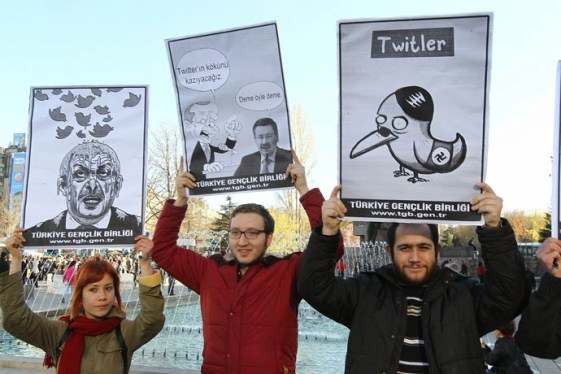
Turkey Plans False Flag Against Syria; Blocks YouTube, Twitter

Brandon Turbeville
Activist Post
Mar 27, 20014

In what appears to be the revelation of yet another attempt to instigate foreign military action on Syrian soil, a video posted to YouTube from an anonymous account allegedly provides the audio of Turkish intelligence Chief Hakan Fidan, Foreign Minister Ahmet Davutoglu, and Deputy Chief of Military Staff Yasar Guler as well as other top Turkish officials discussing a possible attack on Syria.

The operation, if implemented, would have been publicly predicated on the basis of “securing the tomb of Suleyman Shah,” the grandfather of the founder of the Ottoman empire. As Reuters reports, “Ankara regards the tomb as sovereign Turkish territory under a treaty signed with France in 1921, when Syria was under French rule. About two dozen Turkish special forces soldiers permanently guard it.”

As a result, Turkish authorities have moved to block access to YouTube, describing the recording as “villainous,” and a “wretched attack” on national security. This reaction has lent even more credence to the veracity of the recordings.

Two weeks ago, Turkey publicly threatened to respond to any attack on the tomb after a confrontation between fanatical death squads ISIL and other related “rebel” groups in the area.

However, it appears that the controversy over the danger posed to Suleyman’s tomb is nothing more than a weak excuse for overt military incursion into Syria. The idea is that Turkey will be able to claim that it is taking action against “Al-Qaeda” in order to protect Turkish territory, a justification that will be readily accepted by Western audiences.

It is important to point out that the Turkish plan is actually a false flag attack, since Turkey itself has been responsible for the facilitation, direction, and organization of many of the death squads operating in Syria. Indeed, the Turkey-Syria border is so wide open to Western-backed death squads that Turkish border stations might consider installing “death squad crossing” signs to warn other travelers.

The audio recording presents Foreign Ministry Under Secretary Feridun Sinirlioglu as stating “”An operation against ISIL has international legitimacy. We will define it as al Qaeda. There are no issues on the al Qaeda framework. When it comes to the Suleyman Shah tomb, it’s about the protection of national soil.”

Reportedly, the voice of Intelligence Chief Hakan Fidan responds, “Justification can be created. The matter is to create the will.”

TIB, the Turkish telecom authority, has responded by taking an “administrative measure” against Youtube, essentially blocking the website in Turkey. This measure comes a week after Turkish authorities blocked access to Twitter.

According to Reuters, “A source in Erdogan’s office said the video sharing service was blocked as a precaution after the voice recordings created a “national security issue” and said it may lift the ban if YouTube agreed to remove the content.”

If the recordings are real, then Turkey’s attempted false flag attack is yet one more act of aggression against Syria. Turkey has, for some time, acted as a conduit for death squad terrorists into Syria.

Only four days ago, on March 24, Turkey shot down a Syrian fighter jet which Turkey claims violated its airspace. Syrian officials, however, state that it was Turkey who violated Syrian airspace in an attempt to interfere with Syrian operations against death squads near Latakia. It is notable that the Syrian jet crashed on Syrian territory, not Turkish land.

The strike against the Syrian jet was not necessarily an isolated incident as the attack took place alongside a major offensive of “rebels” who pushed across the Turkey-Syria border simultaneously.

It was also reported that Turkey fired a number of artillery and tank shells against Syria military positions.

Eyewitnesses reported seeing Turkish special forces accompanying the death squads across the borders.

As Mimi Al-Laham writes for Land Destroyer Report,

The Al Qaeda attack and takeover of the Kassab border crossing has caused up to2000 to 6000 Armenian Syrians to flee the area. Mass looting and destruction of religious sites was reported by residents (similar to criminal acts carried out in the recently liberated city of Yabroud).

Armenians are once again refugees due to the Turkish government like their ancestors who fled the Armenian Holocaust decades ago.

There has been no mention on the BBC of NATO’s open support for Al Qaeda groups. The attack comes in the backdrop of mass rallies against Turkish President Erdogan, who recently banned Twitter.

The battles in Latakia are ongoing, with the Syrian military inflicting heavy losses on Al Qaeda militants.

Recently by Brandon Turbeville:

Brandon Turbeville is an author out of Florence, South Carolina. He has a Bachelor’s Degree from Francis Marion University and is the author of six books, Codex Alimentarius — The End of Health Freedom, 7 Real ConspiraciesFive Sense Solutions and Dispatches From a Dissident, volume 1 and volume 2, and The Road to Damascus: The Anglo-American Assault on Syria. Turbeville has published over 275 articles dealing on a wide variety of subjects including health, economics, government corruption, and civil liberties. Brandon Turbeville’s podcast Truth on The Tracks can be found every Monday night 9 pm EST at UCYTV.  He is available for radio and TV interviews. Please contact activistpost (at) gmail.com.