Russia has slammed as “unacceptable” calls by some European countries for use of force against the Syrian government, following claims that it had used chemical weapons in a recent deadly attack.
In a statement released on Friday by the country’s Foreign Ministry, it said Moscow is against further propaganda targeting the Syrian regime.
“Against the background of another anti-Syrian wave of propaganda, we believe calls from some European countries to apply pressure on the UN Security Council and already now take a decision on the use of force are unacceptable,” Russian Foreign Ministry said in the statement.
In addition, Russian Foreign Ministry said evidence was mounting that the attack was “clearly provocative in nature” and that footage posted online claiming to incriminate the Syrian regime had been posted before the chemical attack took place. It also accused the insurgents of “directly impeding an objective investigation” of the incident.
There were also calls by the Ministry earlier on Friday for Takfiri militants operating in Syria to “ensure safe access” for the UN investigation team to the area where chemical weapons were allegedly used.
The head of the so-called Syrian National Coalition, George Sabra, claimed on August 21 that 1,300 people were killed in a government chemical attack on militant strongholds in Damascus suburbs of Ain Tarma, Zamalka and Jobar.
However, the Syrian government vehemently dismissed the baseless claims, saying the new accusations were fabricated to distract the visiting team of the UN chemical weapons experts and to cover up militants’ losses.
Meanwhile, the UN children’s agency, UNICEF, reported on the same day that one million Syrian children now live as refugees abroad and another two million are displaced within the country as a result of the ongoing fighting.
According to the UN, more than 100,000 people have been killed and millions of others displaced in Syria since March 2011.
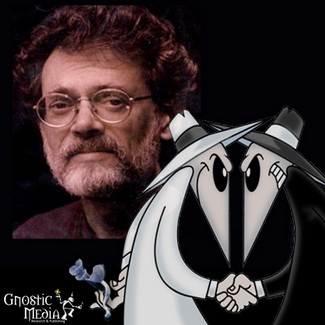
This explosive audio clip that was just brought to my attention today by “Scott” reveals, in Terence McKenna’s own words, that he was in fact an agent.
This audio clip comes from Dec. 1994 from his lecture at the Esalen Institute which may be found here:
Questioner: I’m real curious about one thing. Why is important for you to do this?
Terence McKenna: I wonder myself. Um. You mean am I the, uh, alien ambassador whether I like it or not? [laughs]. Well often when asked this question I’ve said it beats honest work. I mean, my brother is a PhD in three subjects and works in hard science and uh yet I don’t think it’s brought him immense happiness. Not that he’s despondent. But uh I was always kind of a slider. You know?
And certainly when I reached La Churerra in 1971 I had a price on my head by the FBI, I was running out of money, I was at the end of my rope. And then “THEY” recruited me. And said, you know, with a mouth like yours there’s a place for you in our organization. And, uh, I’ve worked in deep background positions about which the less said the better. And then about 15 years ago they shifted me into public relations and I’ve been there to the present.
I think ideas get me high. And I like the feeling of understanding and I love diversity to the point of weirdness.
Questioner: it seems that there’s more to it than that for you. Because, you know, being tuned in to ideas and turned on by ideas is one thing, but you can keep that just to self. The sharing of it is something else. I think that’s what we’re getting at. [??
Terence: well one thing is, I’m really fascinated… I think of myself as a pretty savvy person, and not easily led into false dogma…
Hear the entire lecture here (See hours 4:21:50 – 4:24:05):
This explosive audio clip that was just brought to my attention today by “Scott” reveals, in Terence McKenna’s own words, that he was in fact an agent.
This audio clip comes from Dec. 1994 from his lecture at the Esalen Institute which may be found here:
Questioner: I’m real curious about one thing. Why is important for you to do this?
Terence McKenna: I wonder myself. Um. You mean am I the, uh, alien ambassador whether I like it or not? [laughs]. Well often when asked this question I’ve said it beats honest work. I mean, my brother is a PhD in three subjects and works in hard science and uh yet I don’t think it’s brought him immense happiness. Not that he’s despondent. But uh I was always kind of a slider. You know?
And certainly when I reached La Churerra in 1971 I had a price on my head by the FBI, I was running out of money, I was at the end of my rope. And then “THEY” recruited me. And said, you know, with a mouth like yours there’s a place for you in our organization. And, uh, I’ve worked in deep background positions about which the less said the better. And then about 15 years ago they shifted me into public relations and I’ve been there to the present.
I think ideas get me high. And I like the feeling of understanding and I love diverse city to the point of weirdness.
Questioner: it seems that there’s more to it than that for you. Because, you know, being tuned in to ideas and turned on by ideas is one thing, but you can keep that just to self. The sharing of it is something else. I think that’s what we’re getting at. [??
Terence: well one thing is, I’m really fascinated… I think of myself as a pretty savvy person, and not easily led into false dogma…
This explosive audio clip that was just brought to my attention today by “Scott” reveals, in Terence McKenna’s own words, that he was in fact an agent.
This audio clip comes from Dec. 1994 from his lecture at the Esalen Institute which may be found here:
Questioner: I’m real curious about one thing. Why is important for you to do this?
Terence McKenna: I wonder myself. Um. You mean am I the, uh, alien ambassador whether I like it or not? [laughs]. Well often when asked this question I’ve said it beats honest work. I mean, my brother is a PhD in three subjects and works in hard science and uh yet I don’t think it’s brought him immense happiness. Not that he’s despondent. But uh I was always kind of a slider. You know?
And certainly when I reached La Churerra in 1971 I had a price on my head by the FBI, I was running out of money, I was at the end of my rope. And then “THEY” recruited me. And said, you know, with a mouth like yours there’s a place for you in our organization. And, uh, I’ve worked in deep background positions about which the less said the better. And then about 15 years ago they shifted me into public relations and I’ve been there to the present.
I think ideas get me high. And I like the feeling of understanding and I love diverse city to the point of weirdness.
Questioner: it seems that there’s more to it than that for you. Because, you know, being tuned in to ideas and turned on by ideas is one thing, but you can keep that just to self. The sharing of it is something else. I think that’s what we’re getting at. [??
Terence: well one thing is, I’m really fascinated… I think of myself as a pretty savvy person, and not easily led into false dogma…
This explosive audio clip that was just brought to my attention today by “Scott” reveals, in Terence McKenna’s own words, that he was in fact an agent.
This audio clip comes from Dec. 1994 from his lecture at the Esalen Institute which may be found here:
Questioner: I’m real curious about one thing. Why is important for you to do this?
Terence McKenna: I wonder myself. Um. You mean am I the, uh, alien ambassador whether I like it or not? [laughs]. Well often when asked this question I’ve said it beats honest work. I mean, my brother is a PhD in three subjects and works in hard science and uh yet I don’t think it’s brought him immense happiness. Not that he’s despondent. But uh I was always kind of a slider. You know?
And certainly when I reached La Churerra in 1971 I had a price on my head by the FBI, I was running out of money, I was at the end of my rope. And then “THEY” recruited me. And said, you know, with a mouth like yours there’s a place for you in our organization. And, uh, I’ve worked in deep background positions about which the less said the better. And then about 15 years ago they shifted me into public relations and I’ve been there to the present.
I think ideas get me high. And I like the feeling of understanding and I love diverse city to the point of weirdness.
Questioner: it seems that there’s more to it than that for you. Because, you know, being tuned in to ideas and turned on by ideas is one thing, but you can keep that just to self. The sharing of it is something else. I think that’s what we’re getting at. [??
Terence: well one thing is, I’m really fascinated… I think of myself as a pretty savvy person, and not easily led into false dogma…
Unusually heavy rainfall occurred near the Amur river which marks the dividing line between China and Russia from the end of July to mid-August 2013. Starting on August 10, 2013, areas of northeastern China began to experience flooding.
From August 15 to 17, heavy rainfall worsened the problem, causing the worst flooding in the region in more than a decade. Nankouqian Township, one of the hardest-hit areas, saw 44.9 centimeters (17.7 in) of rain, half the average annual total, on August 16 alone. By August 18, water levels at 61 reservoirs surpassed the “danger” level. Parts of Liaoning province saw an incredible 40cm in just 24 hours, according to China’s provincial flood control and drought relief headquarters. Fushun city in the Liaoning province was especially hard hit as rainstorms caused several rivers in the city to overflow.
Israel’s Supreme Court has ruled that water fluoridation in the country must end by 2014, according to news reports. This landmark decision goes even further than legislation by the health minister Yael German earlier in the year that would have ended mandatory fluoridation nationwide, reports the Irish publication Hot Press.
Israel is one of the few countries that widely fluoridates, besides the United States, Canada, Ireland, New Zealand and Australia. Fluoridation, the addition of fluoride to public drinking water supplies to reduce cavities, is the subject of intense controversy, especially outside of the United States. But opposition to the practice, on the grounds that fluoride has adverse effects on the thyroid, brain and bones, and is an unethical form of mass-medication, appears to be growing.
Israel’s decision to ban fluoridation follows a vote to preclude the practice in Portland, Ore., and Wichita, Kan. It was also recently overturned in Hamilton, the fourth most populous city in New Zealand.
This is a huge victory in the fluoride debate. In recent years we have witnessed countless cities and municipalities end the practice of water fluoridation. But we have not seen a whole country (who was on the verge of making it mandatory) completely outlaw it.
Please share this information with your elected officials. City Councillors, mayors, MPP’s, MP’s, all of them!
I’ve written before about the problems involved in legislating against cyberbullying. I focused on the impossible issue of reaching a definition. Rape, assault, harassment: these are crimes with established parameters. All of them could also be called “bullying.” They could also be described as “mean,” and I suppose we could enact a law against being mean. But I’d rather have laws against specific crimes, rather than against vast swaths of vaguely defined human behaviour. Ultimately, bullying is in the eye of the bullied. For many, cyberbullying is equal to a negative thing said about them on the Internet. I’ve met restaurant owners who feel they’re being cyberbullied by Chowhound critics.
The problems with anti-cyberbullying laws don’t end there. Once a law establishes some flawed definition, it moves on to enforcement. Here’s how Nova Scotia’s new Cyber Safety Act, which went into effect yesterday, will go about stopping online abuse:
Someone feels that you’re cyberbullying them. They visit or phone the court and request a protection order against you (minors , or some reason, cannot do so, only adults). A judge decides if their claim meets the law’s definition. The definition of cyberbullying, in this particular bill, includes “any electronic communication” that ”ought reasonably be expected” to “humiliate” another person, or harm their “emotional well-being, self-esteem or reputation.”
If this is the standard, I don’t know a person who isn’t a cyberbully.
The issuing of a protection order is an ex parte process between your accuser and the court. You won’t have an opportunity to defend yourself. If a judge issues one against you, here’s what might happen:
The police can seize your computers and phone.
Your Internet connection can be shut off.
You can be ordered to stop using electronic devices entirely.
Your Internet Service Provider or Internet companies, such as Facebook, can be compelled to fork over all your data to the police.
You can be gagged by the court and prohibited from mentioning your accuser online.
If you violate any of these orders, you’ll face stiff fines and up to two years of jail time. At this point, your accuser can sue you in civil court.
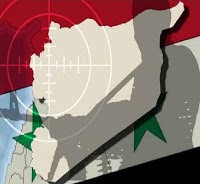
On Wednesday August 21, 2013, it was reported by numerous media outlets that a chemical weapons attack took place inside Syria which killed anywhere from 213 to 1300 people in the Damascus suburbs of Ain Tarma, Zamalka, and Jobar. The attacks were allegedly the result of rockets with chemical agents hitting the neighborhoods shortly before dawn. The attacks, if reports are accurate, would be the largest and most severe chemical weapons usage since the beginning of the Syrian destabilization campaign in 2011.
A nurse at Douma Emergency Collection facility, Bayan Baker, said the death toll, as collated from medical centers in the suburbs east of Damascus, was 213.
“Many of the casualties are women and children. They arrived with their pupil dilated, cold limbs and foam in their mouths. The doctors say these are typical symptoms of nerve gas victims,” the nurse said.
Extensive amateur video and photographs purporting to show victims appeared on the Internet. A video purportedly shot in the Kafr Batna neighborhood showed a room filled with more than 90 bodies, many of them children and a few women and elderly men. Most of the bodies appeared ashen or pale but with no visible injuries. About a dozen were wrapped in blankets.
Other footage showed doctors treating people in makeshift clinics. One video showed the bodies of a dozen people lying on the floor of a clinic, with no visible wounds. The narrator in the video said they were all members of a single family. In a corridor outside lay another five bodies.
A photograph taken by activists in Douma showed the bodies of at least 16 children and three adults, one wearing combat fatigues, laid at the floor of a room in a medical facility where bodies were collected.[1]
Deputy head of the Syrian National Coalition (Western-backed death squad umbrella coalition), George Sabra, has insisted that the death toll is 1,300.[2]
Predictably, the Syrian death squads are now claiming that the Syrian government was responsible for the chemical attacks and these assertions have been repeated with the implication of truth throughout the vast majority of mainstream media outlets. Even the Evans/Oweis article published by Reuters mentioned above, although not openly accusing the Syrian government of committing the atrocity, tacitly implies that this is the case.
US Army Private Bradley Manning, sentenced to 35 years for leaking classified documents on Wednesday, announced that he would like to live out the rest of his life as a woman. The whistleblower has asked to refer to him by the name Chelsea Manning. READ MORE: http://on.rt.com/aptei1
RT (Russia Today) is a global news network broadcasting from Moscow and Washington studios. RT is the first news channel to break the 1 billion YouTube views benchmark.

 Gnostic Media
 by Terry Wilson
 by Brandon Turbeville
 PN
PN 