HIGHLY POTENT NEWS THAT MIGHT CHANGE YOUR VIEWS

Latest

Up in smoke: Amsterdam’s mayor to ban marijuana at school

Russia Today
December 12, 2012

Employees put a sign forbidding people to smoke cannabis. (AFP Photo / Marcel Antonisse)

Amsterdam is to become the first city in the Netherlands where students will be formally banned from smoking marijuana at school. The city’s mayor introduced the law after receiving complaints from teachers that students showed up to class stoned.

­Under the current ‘policy of tolerance’ towards drugs, marijuana is considered a soft drug and though it is technically illegal, there is no active prosecution against the individual using it. Police cannot prosecute people for possession of small amounts, with up to five grams being deemed acceptable for personal use.

Some schools have already had prohibited smoking but done so as individual institutions, rather than city ordained legislation.

“This year we have introduced a ban on smoking. We have since become a smoke-free school,” Jolanda Hogewind, head of the Calvijn met Junior College, was quoted by Dutch national newspaper, Volkskrant, as saying. “If a student still smokes on the schoolyard, we warn once. In a second time we send a letter, and if the student persists in his behavior, we invite parents to a meeting,” said the director.

When the law is put in force, schools will be able to involve the police if teenagers are caught smoking on school premises.

However, some supporters of the initiative, like Hogewind, say that schools must be free to maintain their own rules.

All previous attempts to ban marijuana from schools have not succeeded, as the Council of State insisted that it was technically impossible to ban something which is illegal. But recent changes in drug law make this possible. The city will now be able to declare starting January 1 “no toking zones” – areas like schools and playgrounds where weed-smoking will be forbidden.

The law may also affect tourists as some 44 of the city’s 220 cannabis cafes – Amsterdam’s popular attraction among guests of the city – will have to close because they are less than 250 metres from a school.

Earlier there have been calls to introduce a national “weed pass” that would have blocked tourists from buying marijuana. But the initiative was widely opposed by Amsterdam.

Last month, the city major Van der Laan allowed coffee shops to stay open for tourists.

The capital will still have more coffee shops than The Hague, Rotterdam and Utrecht put together, local Parool newspaper reported.

The government is also planning to raise the age at which teenagers can buy cigarettes to 18.

Pot Smokers: You Are About to Experience a Costly Lesson in Federal Tyranny and Obama Betrayal

By Mike Adams
Natural News
December 11, 2012

Colorado and Washington pot smokers are lighting up in celebration after having achieved a stunning decriminalization victory at the ballot box.

Inhale while you can, my brothers and sisters, because Obama is already plotting how to re-criminalize your swag and nullify states’ rights.

Marijuana decriminalization, you see, was a states’ rights victory that more or less flipped Washington D.C. the finger.

From Obama’s point of view, this simply cannot be allowed to stand because it would set a precedent of the tyrannical federal government “allowing” states to decide their own laws, separate from federal law.

While the U.S. Constitution clearly encourages precisely such a structure, the U.S. federal government that exists today operates like a power-hungry gang of thugs who seek to crush anyone and anything that threatens to stand against it.

There does not even exist the facade of respecting the limitations of federal government described in the Constitution.

Mark my words: Obama, who is himself an admitted pot smoker, is coming after YOUR right to smoke pot.

It will start with polite-sounding lawsuits. The federal government will claim total control of all individual activity under the “commerce clause” of the U.S. Constitution and pressure a few key federal judges to overturn state decriminalization laws.

If, for some reason, that fails, the DEA — which operates much like a pack of hungry wolves barely restrained on a short leash — will be given the green light to start conduct armed federal raids in Washington and Colorado.

The point of the raids? To send the message that the feds are still in charge, regardless of what the voters say.

A lesson in power

All the pot smoking voters in Washington and Colorado are about to receive a valuable lesson in power. They think they have won a permanent victory for liberty, even if they don’t describe it in those words.

In reality, all they have done is antagonize federal forces of evil which are already planning a powerful counter-assault that will remind the slaves of America (the voters) who is really in charge.

And why? Because if marijuana decriminalization is not crushed by the political forces in Washington D.C., then its very existence might encourage other states to decriminalize things like industrial hemp farming, holistic medicine or even raw milk.

For God’s sake, states might behave under the misimpression that they control their own destiny!

On this subject, I’ve already published a list of five things any state could legalize right now in order to experience an economic golden age

. Each of these fives things would require states to assert their Tenth Amendment rights to nullify the power of the federal government within the state’s own borders. This is precisely what Colorado and Washington have done with marijuana decriminalization laws. They may not call it a “Tenth Amendment” initiative, but that’s exactly what it is.

Make no mistake that the federal government will use any means necessary to reverse this: Lawsuits, armed raids, false flag attacks, propaganda campaigns and so on. The federal government in America today is run by truly maniacal power-hungry criminals.

Ron Paul calls Washington bureaucrats “psychopathic tyrants.” There is absolutely nothing they won’t do to enforce their fabricated authority over the states and the People.

If it means marching into Colorado with federal troops and shoving rifles in the faces of small-time pot growers, that’s exactly what they will do. For those of you in Colorado and Washington right now, do not suffer under the delusion that you are now free to smoke pot with impunity.

You have merely achieved a reversible ballot victory that was only allowed to take place because the vote fraudsters were too busy stealing other elections (Prop 37!) to effectively defeat your marijuana decriminalization ballot measures.

It is good that you did achieve that victory, of course, because now the real lessons in liberty will be realized. At this point, Obama has no choice but to show his vindictive double standard where it’s okay for the President to campaign on the “coolness” of having smoked pot and inhaled, but his own voters who do the same thing will be arrested at gunpoint and incarcerated in federal prisons.

And if you’re black like Obama, by the way, your prison sentence will be double or triple that of white offenders.

That’s real tyranny, and that’s the real Obama. Those of you voted for Obama and are enjoying your temporarily-legalized pot in Colorado or Washington are about to learn a very costly lesson in federal tyranny.

Within a year, your states will be under assault by the feds, and your freedoms will be even further stripped away by the very President who campaigned on the idea that the government would listen and respond to the needs of the voters.

Obama lied. The federal government doesn’t want liberty in America; it wants CONTROL.

DEA agents are right now salivating at the thought of identifying, targeting and raiding small-time pot gardens in Colorado.

Those who flaunt their growing, harvesting or smoking will be the first who are targeted. Don’t say you weren’t warned.

To learn more about state nullification of federal tyranny, visit:
www.NullifyNow.com

[hat tip: TheIntelHub]

BREAKING: Marijuana Is Now Legal in Colorado!

by Phillip Smith
StoptheDrugWar.org

December 11, 2012

And then there were two. On Monday, December 10, 2012, Colorado Gov. John Hickenlooper signed an executive order certifying last month’s Amendment 64 victory and legalizing the use, possession, and limited cultivation of marijuana by adults 21 and over.

Colorado now joins Washington as states where voters approved marijuana legalization last month and where the will of the voters has now become law. In both states, it is only the possession (and cultivation in Colorado) parts of the new laws that are now in effect. Officials in Denver and Olympia have a matter of some months to craft and enact regulatory schemes for commercial marijuana cultivation and distribution — provided the federal government does not seek to block them from doing so.

While the federal government may seek to block implementation of regulations, it cannot make the two states recriminalize marijuana possession. And the states have no obligation to enforce federal marijuana laws.

In both states, however, it remains illegal to sell marijuana or cultivate it commercially pending the enactment of regulatory schemes. Still, pot possession is now legal in Washington and Colorado.

“Voters were loud and clear on Election Day,” Hickenlooper wrote. “We will begin working immediately with the General Assembly and state agencies to implement Amendment 64.”

In addition to the executive order certifying the election results, Hickenlooper also signed an executive order establishing a 24-person task force charged with coming up with a way to implement Amendment 64’s taxation and regulation provisions. The task force consists of government officials and other stakeholders, including representatives of medical marijuana patients producers and non-medical consumers, and will make recommendations to the legislature on how to establish a commercial marijuana market.

“All stakeholders share an interest in creating efficient and effective regulations that provide for the responsible development of the new marijuana laws,” the executive order said. “As such, there is a need to create a task force through which we can coordinate and create a regulatory structure that promotes the health and safety of the people of Colorado.”

Issues that will be addressed include: the need to amend current state and local laws regarding the possession, sale, distribution or transfer of marijuana and marijuana products to conform them to Amendment 64’s decriminalization provisions; the need for new regulations for such things as security requirements for marijuana establishments and for labeling requirements; education regarding long-term health effects of marijuana use and harmful effects of marijuana use by those under the age of 18; and the impact of Amendment 64 on employers and employees and the Colorado economy.

The task force will also work to reconcile Colorado and federal laws such that the new laws and regulations do not subject Colorado state and local governments and state and local government employees to prosecution by the federal government.

“Task force members are charged with finding practical and pragmatic solutions to the challenges of implementing Amendment 64 while at all times respecting the diverse perspectives that each member will bring to the work of the task force,” the executive order emphasized. “The task force shall respect the will of the voters of Colorado and shall not engage in a debate of the merits of marijuana legalization or Amendment 64.”

Marijuana legalization supporters cheered the issuance of the executive orders.

“This is a truly historic day. From this day forward, adults in Colorado will no longer be punished for the simple use and possession of marijuana. We applaud Gov. Hickenlooper for issuing this declaration in a timely fashion, so that adult possession arrests end across the state immediately,” said Mason Tvert, one of the two official proponents for Amendment 64 and newly appointed communications director for the Marijuana Policy Project.

“We look forward to working with the governor’s office and many other stakeholders on the implementation of Amendment 64,” Tvert continued. “We are certain that this will be a successful endeavor, and Colorado will become a model for other states to follow.”

Not everyone was as thrilled as Tvert. Both US Attorney for Colorado John Walsh and Colorado State Patrol James Wolfinbarger issued statements Monday warning respectively that marijuana is still illegal under federal law and that driving while impaired by marijuana is still a crime.

“The Department of Justice is reviewing the legalization initiatives recently passed in Colorado and Washington state,” Walsh said in his statement. “The Department’s responsibility to enforce the Controlled Substances Act remains unchanged. Neither states nor the executive branch can nullify a statute passed by Congress. In enacting the Controlled Substances Act, Congress determined that marijuana is a Schedule I controlled substance. Regardless of any changes in state law, including the change that will go into effect on December 10th in Colorado, growing, selling or possessing any amount of marijuana remains illegal under federal law. Members of the public are also advised to remember that it remains against federal law to bring any amount of marijuana onto federal property, including all federal buildings, national parks and forests, military installations, and courthouses.”

“The Colorado State Patrol would like to remind motorists that if you chose to consume marijuana and make the decision to drive that you are taking a huge risk,” Wolfinbarger said. “Drivers must realize that if you are stopped by law enforcement officials and it is determined that your ability to operate a motor vehicle has been affected to the slightest degree by drugs or alcohol or both, you may be arrested and subjected to prosecution under Colorado’s DUI/DUID laws. It is imperative that everyone takes responsibility for public safety when driving on Colorado’s highways.”

While the implementation of regulations for marijuana commerce in Colorado and Washington is by no means assured, the legalization of pot possession in the two states is a done deal. And with it, a huge hole has been blown through the wall of marijuana prohibition. Since the election last month, public opinion polls have shown increasing support — and in three out of four cases, majority support — for marijuana legalization, as well as little patience for federal interference in states that have legalized.

Marijuana prohibition may not be dead yet, but voters in Colorado and Washington have delivered a mortal blow. The clock is ticking.

Denver, CO

United States

Police Detective Wants More Cop Watch [video]

We Are Change
December 4, 2012

Retired NYPD Detective Carlton Berkeley talked to Luke Rudkowski at a recent Police Reform Organizing Project (PROP) event. Carlton Berkeley is President of Brothers and Sisters Who Care as well as an outspoken whistle blower on many of the NYPD’s most controversial policies. Luke and Carlton exchange in a dialog about holding the police accountable through video cameras and standing up against police intimidation.

Follow Luke at http://twitter.com/LukeWeAreChange
Support us by subscribing here http://bit.ly/P05Kqb

Check out our merchandise at http://wearechange.org/store/

Become a member of The Sponsor Lounge and get exclusive behind the scenes content while helping us grow! Join us today! http:///www.wearechange.org/donate

What Happens Next?

by David Borden
StoptheDrugWar.org
December 6, 2012

We noted this morning that marijuana is now legal in Washington State. (!) But what happens next?

As WA press noted, federal authorities had no plans to intervene at this time — the expected celebrations proceeded unmolested, at least we’ve not heard of any problems.

Seattle skyline

Of course that’s not what the feds would do. As we’ve noted here, most law enforcement is state and county and local — federal arrests for marijuana possession are a rarity, and mostly occur in places like national parks that are specifically federally controlled. Thinkers within and without our movement have been speculating what the federal response might be and what options they will legally have at their disposal once the courts weigh in.As one of our advisors, Eric Sterling, commented in our newsletter after the election, officials at the Dept. of Justice were taken by surprise, perhaps by the passage of the initiatives and certainly by the strong margins of victory. A New York Times story today by Jack Healy noted that the Obama administration has yet to announce any policy on the matter, but have simply noted that federal law remains unchanged. According to the article, officials asked about it referred to a statement released yesterday by the US Attorney in Seattle, Jenny Durkan:

“In enacting the Controlled Substances Act, Congress determined that marijuana is a Schedule I controlled substance,” [Durkan] said. “Regardless of any changes in state law, including the change that will go into effect on December 6 in Washington State, growing, selling or possessing any amount of marijuana remains illegal under federal law.”

Which tells us nothing we didn’t know. But Durkan did say that the administration is reviewing the initiatives. And according to Healy’s article, “several people familiar with the [administration’s] deliberations” say they are considering legal action. There are a few legal issues at stake:

  • Can the government “preempt” the states’ regulatory systems — that is, not just raid marijuana stores if they choose to, but prevent the state from exempting any growers or distributors or sellers under state law?
  • If they can, will that endanger the rest of the laws? The argument for that, Healy posits, would be that voters mightn’t have passed the laws without the regulations.
  • Do the state laws run afoul of our government’s treaty obligations, particularly the 1961 Single Convention on Drugs?

Many scholars are skeptical that a preemption challenge would succeed. Gregory Katsas, a DOJ official in the George W. Bush administration, pointed out to the Times that there is nothing in the laws that prevent the federal government from bringing marijuana cases in the states. The argument there is that the laws are not in “positive conflict” with the federal Controlled Substances Act (CSA), despite their clear “tension” with it. Several legal scholars submitted a brief in a California case on this subject earlier this year taking that viewpoint.

My takeaway from the brief was that the feds might not be able to preempt even the regulatory portions of the laws, and would probably have to amend the CSA to have a chance. The very same law that would be invoked in a court case, is the same one at work in prohibition of medical marijuana. And in 16 years of state medical marijuana laws, including now 10 dispensary states, no federal prosecutor has sought to invalidate any of these laws in court. That suggests they are not confident of what their prospects would be.

Regarding the treaties, my guess would be that the same reasons federal law might not preempt state marijuana legalization applies to the treaties too — marijuana is still federally illegal. The treaties do seem to frown even legalized possession. But they explicitly allow for alternatives to criminalizing possession, such as health and education-based approaches — which we don’t have as much of as we should, but which we do have. So it’s not clear that the treaties will be a problem either.

All that said, we do not know what will happen, and Congress’s power to regulate commerce is broad — the pressure on the feds to do something is greater, and the set of arguments they can bring to court are more numerous.

I am excited but also anxious about what may happen next. Are Amendment 64 and I-502 going to federal court? What will the courts say? Will the feds try to scare Washington and Colorado officials from implementing regulations — will the states’ governors stand up to them if they do, or will they seek delays as happened in a number of medical marijuana states? Will the federal raids being made against medical marijuana facilities be expanded when legalized marijuana stories eventually open? Such a strategy would be more effective in Washington, less so in Colorado where there will be more stores and where home growing is legal. But they can probably take down anyone in Colorado as they choose. Will there be threats to withhold highway funds over the laws, or law enforcement funds?

Hopefully the Obama administration will finally choose to be on the right side of history on this issue. But we’ll ses. What happens next? For now we wait — I am nervous but also excited.

Beyond NAFTA: Shaping the Future of North American Integration

by Dana Gabriel
BE YOUR OWN LEADER
December 10, 2012

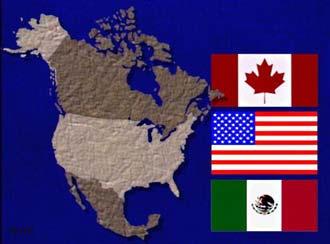
In a move that signalled the importance placed on the NAFTA partnership, Mexico’s new president visited the U.S. and Canada before his inauguration. This was seen as a step forward in further strengthening political, economic, energy and security ties between all three countries. Other recent high-level meetings and policy papers are also shaping the future of North American integration.

Before his recent trip to the U.S., Mexico’s new President Enrique Pena Nieto emphasized in a Washington Post editorial the opportunity both countries have to build on their economic partnership. He explained that, “in NAFTA we have a solid foundation to further integrate our economies through greater investments in finance, infrastructure, manufacturing and energy.” As part of his government’s strategy to reduce violence, he stated that it is, “important that our countries increase intelligence-sharing and crime-fighting techniques and promote cooperation among law enforcement agencies.” In a White House press release, Pena Nieto invited President Barack Obama to participate in the next North American Leaders Summit which will take place in Mexico sometime in 2013. With regards to U.S.-Mexico relations, Obama said that he was also looking forward to finding ways, “to strengthen our economic ties, our trade ties, our coordination along the border, improving our joint competitiveness, as well as common security issues.”

According to the new policy brief, A New Agenda with Mexico put out by the Woodrow Wilson Center, “declines in illegal immigration and organized crime violence in Mexico, open up an opportunity for U.S. policymakers to deepen the economic relationship.” The report recommended working, “together with Mexico and Canada to strengthen regional competitiveness and to grow North American exports to the world.” It further elaborated on how, “Economic issues can drive the next phase in deepening U.S.-Mexico cooperation. Investments in trusted shipper programs, pre-inspection programs, and enhanced border infrastructure will be crucial.” The study called on Washington to offer more, “support for Mexico’s criminal justice institutions, and strengthen U.S. anti-money laundering efforts in order to combat organized crime and violence.” It also recommended engaging, “Mexico more actively on hemispheric and extra-hemispheric foreign policy issues, ranging from terrorism to international trade and finance, as Mexico’s role as a global power grows.”

In a recent article, Laura Carlsen, director of the Americas Policy Program scrutinized some the new Mexican president’s policy initiatives. In the area of security, she pointed out that, “A real change in paradigm would require two measures that the Pena government has said it will not take: withdrawing the armed forces from counternarcotics efforts and renegotiating security cooperation with the U.S. government.” She noted, “Pena Nieto has reassured the U.S. that his administration will continue the drug war.” Carlsen acknowledged how, “The U.S. government has actively promoted and supported the drug war model of enforcement and interdiction through the Merida Initiative and spearheaded the massive expansion of U.S. counternarcotics activities in the country.” She further added, “U.S. defense, intelligence and security companies depend on the Mexican drug war to obtain multi-million dollar government contracts. The Pentagon and other U.S. agencies have achieved unprecedented freedom to act and even direct actions on Mexican soil.” As far as economic policy goes, Carlsen was also critical of President Pena Nieto’s commitment to deepen rather than fix NAFTA.

Just days before being sworn in as Mexico’s new president, Pena Nieto also visited Canada. In a press statement, Prime Minister Stephen Harper said he was looking forward to working with him in improving trade ties, as well as strengthening North American competitiveness and security. In an editorial that appeared in the Globe and Mail, Pena Nieto announced that, “One of the areas with the largest potential for co-operation between Mexico and Canada is energy production and development. Mexico’s energy sector is about to change. I want to enhance its potential by opening it up to national and foreign private investment.” He went on to say, “We can cultivate a closer relationship in this area in order to attain North American energy security.” Canada-U.S. energy issues are also at the forefront. Following his re-election, President Obama is under pressure to make a decision on the Keystone XL pipeline. The proposed project would carry oil from western Canada to the Texas gulf coast.

In the report, Forging a New Strategic Partnership between Canada and Mexico, Perrin Beatty and Andres Rozental recognized the opportunity both countries have to reshape bilateral relations. Among other things, the policy paper recommended removing the visa requirement for Mexican visitors to Canada. It supported increasing funding to the Anti-Crime Capacity Building Program which is aimed at enhancing the ability, “of government agencies, international organizations and non-governmental entities to prevent and respond to threats posed by transnational criminal activity throughout the Americas.” In addition, the study called for institutionalizing the North American Leaders Summit and establishing a complementary North American Business Council. It also advocated pursuing further economic cooperation with the U.S. on a pragmatic basis and suggested that, “Ongoing border and regulatory initiatives should be results-oriented and pursued in the most effective way possible, bilateral or trilateral, as the case may be. This policy recommendation can be extended to any North American issue, including continental security perimeter initiatives and anti-narcotics efforts.”

Last month’s NAFTA20 North America Summit examined NAFTA’s evolution, as well as its future prospects. Speaking at the conference, Thomas Donohue President and CEO of the U.S. Chamber of Commerce urged Canadian, Mexican and U.S. leaders to move forward with, “the integration of our markets to further rationalize our supply chains, increase efficiency, and better position North America in the global economy.” He went on to say, “We need to advance regulatory cooperation, streamline our border, and reform immigration practices to ensure the free flow of products, people, capital, and ideas.” Donohue concluded that Canada and Mexico joining the U.S. and other countries as part of the Trans-Pacific Partnership (TPP) trade agreement would help maximize the strength of the North American market. Meanwhile, there are growing concerns over the secrecy surrounding the TPP. This includes fears that it would grant corporations more power and further put the sovereignty of member nations at risk. It could also be used as a backdoor renegotiation of NAFTA without officially having to open it back up. With the 15th round of talks coming to a close in New Zealand, a final TPP deal could be reached before the end of 2013.

In October, Ottawa hosted the North American Forum. The annual get-together includes, “Canadian, Mexican and American thought leaders, whose purpose is to advance a shared vision of North America, and to contribute to improved relations among the three neighbors.” Much like other secretive gatherings, reporters were barred from entering the Forum’s events. This year’s discussions centered around energy and North American economic competitiveness. Canadian Defence Minister Peter MacKay also delivered a keynote address which focused on continental security issues. He highlighted the bilateral defence relations that the U.S. and Canada enjoy through NORAD. MacKay remarked on how, “Canada and Mexico are also becoming important strategic partners and stronger defence ties with Mexico are a priority.” He praised the first meeting of North American Defence Ministers as a, “great opportunity for our three nations to identify ways to work together to address shared defence and security challenges.” The trilateral defence meeting which took place in March is part of the process of integrating Mexico into NORAD and establishing a North American security perimeter.

While NAFTA partners pursue a trilateral approach with respect to different initiatives, the U.S. also has a separate bilateral border and regulatory agenda with Canada and Mexico. This is part of ongoing efforts to create a common economic and security perimeter. As the incremental path towards a North American Union continues, citizens from the U.S., Canada and Mexico are not being consulted, much less being given a choice in the matter even though the plan threatens the future sovereignty of each country.

Related articles by Dana Gabriel
Using the TPP to Renegotiate and Expand NAFTA
North American Integration and the Ties That Bind
NAFTA Partners Take Steps to Boost Trilateral Relationship
The North American Leaders Summit and Reviving Trilateral Integration

Dana Gabriel is an activist and independent researcher. He writes about trade, globalization, sovereignty, security, as well as other issues. Contact: beyourownleader@hotmail.com Visit his blog at Be Your Own Leader

DOCUMENTARY — Battle For Syria: View from the Frontline! [video w/ English subtitles]

Friends of Syria
December 9, 2012

Strange how the Western Media follows the terrorist stories and the Russians follow the government and the real Syrian people.  Yes the USA are always saying that it is the Russians that are in the wrong.

Make up your own mind when you see what is really happening, the films you will not see on Western media.  Yet Sky News has recently been showing the truth when it is in the country legally and speaking with the army. The BBC have always crossed the borders illegally with the help of the terrorists and published the terrorist lies and propaganda to call on foreign intervention.

The BBC and CNN have been caught out by showing fake propaganda films.